Loading...
Giuseppe Conte vs Khawaja Nazimuddin
Giuseppe Conte leads by 5.3 pts · 2 figures compared
…

Giuseppe Conte
Politician · Modern
55.4Total
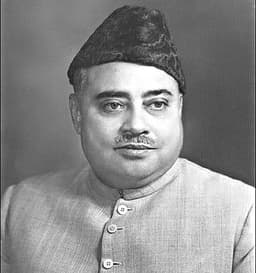
Khawaja Nazimuddin
Politician · Modern
50.1Total
Basic Information
Born
1964
1894
Died
—
1964
Era
Modern
Modern
Nationality
Italy
Pakistan
Occupation
Politician
Politician
Civilization
Western
Indian
Score Comparison
Military (10%)
50.0
46.3
Political (20%)
68.0
43.7
Influence (20%)
56.4
52.5
Legacy (20%)
43.3
41.7
Leadership (15%)
74.0
62.2
Strategy (15%)
42.1
60.0
TOTAL
55.4
50.1
Giuseppe Conte — Complete Timeline
2018 AD
Appointed Prime Minister of ItalyPolitical Action◆ Major
Conte was appointed Prime Minister by President Mattarella, leading a coalition between the Five Star Movement and the League. A law professor with no prior political experience, he became the head of a populist government.
PopulismCoalitionGovernment Formation
Impact: national
2019 AD
Formed Second Government with Five Star and PDPolitical Action◆ Major
After the League left the coalition, Conte formed a new government with the Five Star Movement and the Democratic Party. This shift moved the government from right-wing populism to a more centrist, pro-European stance.
Coalition ChangeGovernment FormationPro-European
Impact: national
2020 AD
Managed COVID-19 Pandemic ResponsePolitical Action◆ Major
Conte's government implemented one of Europe's strictest lockdowns to contain the COVID-19 pandemic. Italy became the first Western country to impose a nationwide quarantine, with significant economic and social costs.
COVID-19LockdownPublic Health
Impact: national
2021 AD
Resigned as Prime MinisterPolitical Action◆ Major
Conte resigned after the Italia Viva party withdrew support from his coalition, triggering a government crisis. He was succeeded by Mario Draghi, who formed a national unity government.
Government CrisisCoalition CollapseTransition
Impact: nationaldestructive
Khawaja Nazimuddin — Complete Timeline
1948 AD
Appointed Governor-General of PakistanPolitical Action◆ Major
Khawaja Nazimuddin succeeded Muhammad Ali Jinnah as Governor-General after Jinnah's death. He served as the ceremonial head of state during a critical period of consolidation. His tenure saw the early challenges of nation-building and the Kashmir conflict.
Governor-GeneralSuccession
Impact: national
1951 AD
Became Prime Minister of PakistanPolitical Action◆ Major
After the assassination of Liaquat Ali Khan, Nazimuddin became Prime Minister. He faced economic difficulties and political unrest. His government struggled to maintain stability and was dismissed in 1953 by Governor-General Ghulam Muhammad.
Prime MinisterPolitical Instability
Impact: national
1953 AD
Dismissed by Governor-General Ghulam MuhammadPolitical Action◆ Major
Governor-General Ghulam Muhammad dismissed Nazimuddin's government, citing its failure to maintain law and order during the anti-Ahmadiyya riots. The dismissal was controversial and set a precedent for executive overreach. It highlighted the fragility of parliamentary democracy in Pakistan.
DismissalConstitutional Crisis
Impact: nationaldestructive
Expert Analysis
Origins
Giuseppe Conte was born on August 8, 1964, in Volturara Appula, Italy, into a middle-class family. He studied law at the Sapienza University of Rome and later became a professor of private law. His academic career was distinguished, but he had no prior political experience before his premiership. Khawaja Nazimuddin was born on July 19, 1894, in Dhaka, British India (now Bangladesh), into an aristocratic Bengali Muslim family. He was educated at the University of Calcutta and later at the University of Cambridge, where he studied law. His early involvement in politics began with the All India Muslim League, and he served as the Chief Minister of East Bengal before Pakistan's independence.
Rise to Power
Conte's rise was sudden and unconventional. In 2018, he was proposed by the Five Star Movement and the League as a compromise candidate for Prime Minister, despite having no elected office. He was appointed on June 1, 2018, after President Mattarella approved his cabinet. Nazimuddin's path was more gradual. He served as the first Chief Minister of East Bengal from 1947, then became Governor-General of Pakistan on September 14, 1948, after Jinnah's death. After Liaquat Ali Khan's assassination in 1951, he became Prime Minister on October 17, 1951, inheriting a fragile new nation.
Leadership & Governance
Conte's leadership style was technocratic and consensus-driven, but he faced constant coalition pressures. His government implemented one of Europe's strictest lockdowns during COVID-19, with a total score of 74.0 in leadership. He managed a fragmented parliament, shifting from a right-wing coalition (with the League) to a left-wing one (with the Democratic Party) in 2019. Nazimuddin's governance was more traditional and bureaucratic. He struggled with economic instability, food shortages, and the language movement in East Pakistan. His leadership score of 62.2 reflects his cautious approach, but he failed to assert authority over the military and bureaucracy, leading to his dismissal.
Triumph & Tragedy
Conte's greatest success was managing Italy's COVID-19 response in the first wave, with a 68.0 political score. However, his failure to secure a stable coalition led to his resignation in February 2021, after Italia Vita withdrew support. His legacy score of 43.3 is limited due to his short tenure. Nazimuddin's triumph was presiding over Pakistan's early constitutional and administrative foundations. His tragedy was his dismissal by Governor-General Ghulam Muhammad on April 17, 1953, after failing to control anti-Ahmadiyya riots. He died shortly after, with a legacy score of 41.7.
Character & Destiny
Conte was a calm, methodical figure, often described as a "professor." His lack of political experience made him dependent on coalition partners, which ultimately led to his downfall. Nazimuddin was a devout, soft-spoken leader, but his indecisiveness and reliance on the establishment weakened his position. Both men were products of their circumstances: Conte of Italy's fragmented politics, Nazimuddin of Pakistan's unstable early years.
Legacy
Conte's legacy is tied to the COVID-19 pandemic; his policies influenced European responses. However, his impact is fleeting, as Italy's political system quickly moved on. Nazimuddin's legacy is more foundational: he helped shape Pakistan's early governance structures, but his dismissal set a precedent for military interference in politics. Neither left a lasting institutional change.
Conclusion
Giuseppe Conte had a greater impact than Khawaja Nazimuddin, as reflected in his total score of 55.4 versus 50.1. Conte navigated a global crisis with relatively high leadership (74.0) and political (68.0) scores, while Nazimuddin's scores are lower across the board. Conte's actions affected millions during a pandemic, while Nazimuddin's role was limited to a fledgling state's early struggles. Though both faced failures, Conte's crisis management in a major Western nation gives him a more significant, if temporary, legacy.
Rankings
🥇
Giuseppe ConteLeader
Mil: 50.0Pol: 68.0Inf: 56.4
55.4
🥈
Khawaja Nazimuddin
Mil: 46.3Pol: 43.7Inf: 52.5
50.1
+5.3 behind
How This Comparison Works
Algorithm
Each figure is scored on 6 dimensions (0—100 scale) based on structured historical data: Military (10%), Political (20%), Influence (20%), Legacy (20%), Leadership (15%), Strategy (15%). The weighted total produces the final ranking.
Data Sources
Scores are computed from structured sub-indicators in the database. Scale factors adjust for era (Ancient ×0.85, Modern ×1.0) and civilization size (Eastern ×1.05, Other ×0.80) to account for differences in population and military scale.
Maximum 3 Figures
Comparisons are limited to 2—3 figures to ensure readability and statistical meaningfulness.
Error Margins
±5 points per dimension — Sub-scores are derived from historical records with inherent uncertainty. Two figures within 5 points on a dimension should be considered roughly equivalent in that area.
Total Score Accuracy
±3 points overall — The weighted combination of 6 dimensions produces a total score with approximately ±3 points of uncertainty. Differences of less than 3 points are not statistically significant— the figures are effectively tied.
Known Limitations
- Historical records are incomplete and uneven across civilizations
- Figures from oral-tradition societies may be underrepresented
- Occupation labels can misclassify multi-role figures
- Scores measure capability and impact, not moral character
- Quantitative scoring is a comparison tool, not absolute truth
Capability Radar
Military (10%) — Battles & Warfare
Battles
27
42
Win Rate
29
46
Expansion
33
50
Political (20%) — Governance & Reform
Reform
45
30
Diplomacy
50
35
Economy
40
25
Influence (20%) — Cultural & Global Reach
Cultural
30
20
Global
40
25
Legacy (20%) — Historical Impact
Historical
35
30
Longevity
25
20
Leadership (15%) — Power & Stability
Tenure
55
40
Stability
35
20
Strategy (15%) — Tactics & Innovation
Strategy
37
53
Tactics
39
55
Reform
46
59
Similar Comparisons
Comments & Discussion
No comments yet. Be the first to share your thoughts!