Loading...
Gloria Macapagal Arroyo vs Milton Obote
Gloria Macapagal Arroyo leads by 2.8 pts · 2 figures compared
…

Gloria Macapagal Arroyo
Politician · Modern
53.2Total
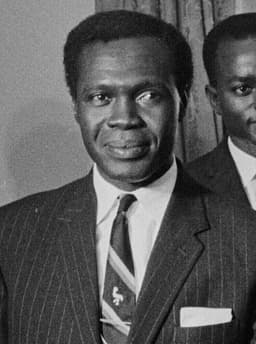
Milton Obote
Politician · Modern
50.4Total
Basic Information
Born
1947
1925
Died
—
—
Era
Modern
Modern
Nationality
Philippines
Uganda
Occupation
Politician
Politician
Civilization
Eastern
Other
Score Comparison
Military (10%)
47.6
41.6
Political (20%)
57.4
46.6
Influence (20%)
56.4
51.8
Legacy (20%)
46.7
43.3
Leadership (15%)
63.6
67.0
Strategy (15%)
45.0
53.8
TOTAL
53.2
50.4
Gloria Macapagal Arroyo — Complete Timeline
2001 AD
Elected President of the PhilippinesPolitical Action◆ Major
Gloria Macapagal Arroyo became president after the EDSA II Revolution ousted Joseph Estrada. She was the second female president of the Philippines and daughter of former President Diosdado Macapagal.
PresidencyEDSA IIPolitical Transition
Impact: national
2003 AD
Survived the Oakwood MutinyPolitical Action◆ Major
A group of junior military officers seized the Oakwood Premier Hotel in Makati, demanding Arroyo's resignation over corruption allegations. The mutiny was peacefully resolved, but it highlighted military unrest.
Military MutinyPolitical CrisisCorruption
Impact: national
2005 AD
Implemented the Expanded Value-Added TaxReform◆ Major
Arroyo signed the Expanded Value-Added Tax law, raising the VAT rate from 10% to 12% to address fiscal deficits. The reform increased government revenue but faced public opposition and legal challenges.
Tax ReformFiscal PolicyEconomic Reform
Impact: national
2011 AD
Arrested for electoral sabotagePolitical Action◆ Major
Arroyo was arrested on charges of electoral sabotage related to the 2007 senatorial elections. She was detained at the Veterans Memorial Medical Center, becoming the first former Philippine president to be held on such charges.
ArrestElectoral SabotageLegal Case
Impact: nationaldestructive
2016 AD
Pardoned by President Rodrigo DutertePolitical Action
President Rodrigo Duterte granted Arroyo absolute pardon for her electoral sabotage conviction, citing her poor health. The pardon allowed her release from detention and eventual return to politics as a congresswoman.
PardonLegal CaseDuterte
Impact: national
Milton Obote — Complete Timeline
1962 AD
Became first Prime Minister of independent UgandaPolitical Action◆ Major
Milton Obote became the first Prime Minister of Uganda upon independence from Britain. He led a coalition government with the Kabaka Yekka party, marking the beginning of his political dominance.
IndependencePrime MinisterUganda
Impact: nationalconstructive
1966 AD
Suspended the constitution and assumed executive powersPolitical Action◆ Major
Obote suspended the constitution, abolished the federal system, and assumed executive powers, effectively making himself President. He also ordered the arrest of several ministers and attacked the Lubiri Palace, forcing the Kabaka into exile.
Constitutional CrisisPower GrabKabaka Crisis
Impact: nationaldestructive
1971 AD
Overthrown by Idi AminPolitical Action◆ Major
While attending a Commonwealth summit in Singapore, Obote was overthrown in a military coup led by his army commander Idi Amin. Obote went into exile in Tanzania, beginning eight years of Amin's brutal rule.
CoupExileIdi Amin
Impact: nationaltragic
1980 AD
Returned to power after Tanzanian invasionWar◆ Major
Obote returned to Uganda after the Tanzanian army and Ugandan rebels overthrew Idi Amin. He won the 1980 general election, which was widely criticized as rigged, and became President again.
Return to PowerElectionTanzania
Impact: national
1985 AD
Second overthrow and exilePolitical Action◆ Major
Obote was overthrown for a second time by his own army commanders, led by Tito Okello and Bazilio Olara-Okello. He fled to Zambia, where he remained in exile until his death in 2005.
CoupExileEnd of Presidency
Impact: nationaltragic
Expert Analysis
Origins
Gloria Macapagal Arroyo was born on April 5, 1947, in San Juan, Philippines, to Diosdado Macapagal, the ninth president of the Philippines, and Evangelina Macapagal. She studied economics at Georgetown University (where she was a classmate of Bill Clinton) and later earned a PhD in economics from the University of the Philippines. Her father's political legacy provided a platform but also high expectations.
Milton Obote was born on December 28, 1925, in Akokoro, Uganda, to a Langi chief. He attended Makerere University but was expelled for political activism. He worked in Kenya and then returned to Uganda to enter politics. His rural, non-elite background contrasted with Arroyo's privileged upbringing.
Rise to Power
Arroyo entered politics in 1992 as a senator, then became vice president under Joseph Estrada in 1998. When Estrada was ousted in the EDSA II Revolution in January 2001, Arroyo succeeded him as president. She won a full term in 2004, defeating actor Fernando Poe Jr. in a highly contested election.
Obote rose through the Ugandan nationalist movement, founding the Uganda People's Congress (UPC). He became the first prime minister of independent Uganda in 1962, leading a coalition with the Kabaka Yekka party. In 1966, he suspended the constitution, abolished the federal system, and appointed himself president, centralizing power.
Leadership & Governance
Arroyo's leadership was technocratic and pro-market. She implemented the Expanded Value-Added Tax (EVAT) in 2005, raising the rate from 10% to 12%, which helped stabilize fiscal deficits but was unpopular. She also pursued peace talks with communist rebels and Muslim separatists. However, her administration was marred by corruption allegations and failed coup attempts, such as the 2003 Oakwood Mutiny. Her political score is 57.4, reflecting her ability to navigate crises but also her ethical compromises.
Obote's governance was marked by authoritarian centralization. He abolished traditional kingdoms, including the Buganda monarchy, and imposed a one-party state. His economic policies, such as the "Move to the Left" program, nationalized industries and led to economic decline. He was overthrown by Idi Amin in 1971, then returned to power in 1980 after Amin's fall, but his second term was plagued by civil war and human rights abuses. His leadership score is 67.0, indicating strong control but poor outcomes.
Triumph & Tragedy
Arroyo's triumphs include surviving multiple crises: the Oakwood Mutiny, impeachment attempts, and economic downturns. She oversaw GDP growth of over 5% in several years and increased infrastructure spending. Her tragedy was her arrest in 2011 for electoral sabotage, which tarnished her legacy. She was detained for nearly five years before being pardoned by President Rodrigo Duterte in 2016.
Obote's triumph was leading Uganda to independence and initially maintaining stability. He also returned to power after Amin's brutal regime. His tragedy was his authoritarian turn, the destruction of the Buganda kingdom, and the civil war that killed hundreds of thousands during his second term. He was overthrown again in 1985 and died in exile in Zambia in 2005.
Character & Destiny
Arroyo was pragmatic and resilient, often described as a "survivor." She used her economic expertise to push reforms but was willing to bend rules to stay in power. Her character led to a mixed legacy: effective governance but compromised integrity.
Obote was ideologically driven but ruthless. He centralized power to maintain control but alienated ethnic groups. His authoritarianism led to his downfall twice. Historians assess him as a nationalist who failed to build inclusive institutions.
Legacy
Arroyo's legacy is complex: she is credited with economic reforms and stability but condemned for corruption and electoral fraud. Her EVAT law remains in effect, and she influenced Philippine fiscal policy. Her legacy score is 46.7, reflecting the controversy.
Obote's legacy is largely negative in Uganda. His abolition of kingdoms and civil war are remembered as failures. However, he is recognized as a founding father of independence. His legacy score is 43.3.
Conclusion
Gloria Macapagal Arroyo had a greater impact than Milton Obote, as reflected in her higher total score (53.2 vs. 50.4). Arroyo's survival of multiple crises and implementation of lasting fiscal reforms outweigh Obote's brief stability and subsequent chaos. While both faced accusations of authoritarianism, Arroyo's democratic transitions (however flawed) and economic achievements provide a more substantial legacy. Obote's repeated overthrows and civil war mark his tenure as a cautionary tale. Therefore, Arroyo edges ahead in overall influence and governance.
Rankings
🥇
Gloria Macapagal ArroyoLeader
Mil: 47.6Pol: 57.4Inf: 56.4
53.2
🥈
Milton Obote
Mil: 41.6Pol: 46.6Inf: 51.8
50.4
+2.8 behind
How This Comparison Works
Algorithm
Each figure is scored on 6 dimensions (0—100 scale) based on structured historical data: Military (10%), Political (20%), Influence (20%), Legacy (20%), Leadership (15%), Strategy (15%). The weighted total produces the final ranking.
Data Sources
Scores are computed from structured sub-indicators in the database. Scale factors adjust for era (Ancient ×0.85, Modern ×1.0) and civilization size (Eastern ×1.05, Other ×0.80) to account for differences in population and military scale.
Maximum 3 Figures
Comparisons are limited to 2—3 figures to ensure readability and statistical meaningfulness.
Error Margins
±5 points per dimension — Sub-scores are derived from historical records with inherent uncertainty. Two figures within 5 points on a dimension should be considered roughly equivalent in that area.
Total Score Accuracy
±3 points overall — The weighted combination of 6 dimensions produces a total score with approximately ±3 points of uncertainty. Differences of less than 3 points are not statistically significant— the figures are effectively tied.
Known Limitations
- Historical records are incomplete and uneven across civilizations
- Figures from oral-tradition societies may be underrepresented
- Occupation labels can misclassify multi-role figures
- Scores measure capability and impact, not moral character
- Quantitative scoring is a comparison tool, not absolute truth
Capability Radar
Military (10%) — Battles & Warfare
Battles
34
10
Win Rate
38
10
Expansion
38
10
Political (20%) — Governance & Reform
Reform
55
40
Diplomacy
60
30
Economy
58
30
Influence (20%) — Cultural & Global Reach
Cultural
40
20
Global
40
20
Legacy (20%) — Historical Impact
Historical
45
40
Longevity
35
20
Leadership (15%) — Power & Stability
Tenure
72
55
Stability
45
15
Strategy (15%) — Tactics & Innovation
Strategy
39
10
Tactics
45
10
Reform
49
15
Similar Comparisons
Comments & Discussion
No comments yet. Be the first to share your thoughts!