Loading...
Gnaeus Julius Agricola vs Ma Chao
Gnaeus Julius Agricola leads by 1.2 pts · 2 figures compared
…
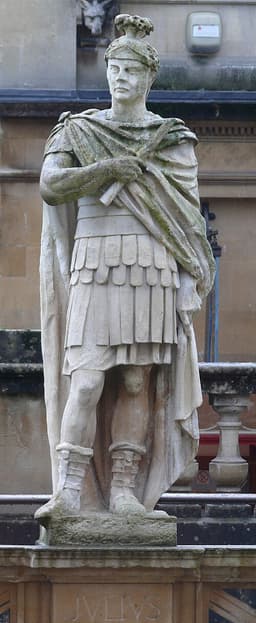
Gnaeus Julius Agricola
General · Ancient
52.5Total

Ma Chao
General · Ancient
51.3Total
Basic Information
Born
40
176
Died
93
222
Era
Ancient
Ancient
Nationality
Roman Empire
China
Occupation
General
General
Civilization
Western
Eastern
Score Comparison
Military (10%)
72.0
67.5
Political (20%)
35.1
35.0
Influence (20%)
54.1
51.8
Legacy (20%)
47.5
45.8
Leadership (15%)
61.1
62.6
Strategy (15%)
55.0
55.0
TOTAL
52.5
51.3
Gnaeus Julius Agricola — Complete Timeline
74 AD
Governorship of AquitaniaPolitical Action
Agricola was appointed governor of Aquitania, a Roman province in Gaul. He administered the province for three years, focusing on legal and financial reforms. This post prepared him for higher command and demonstrated his administrative skills.
Provincial AdministrationGaulCareer
Impact: regionalconstructive
78 AD
Conquest of the OrdovicesWar◆ Major
As governor of Britain, Agricola launched a campaign against the Ordovices tribe in northern Wales. He defeated them and then conquered the island of Anglesey, a stronghold of Druids and resistance, completing the Roman subjugation of Wales.
Roman BritainWalesMilitary Campaign
Impact: regional
83 AD
Battle of Mons GraupiusWar◆ Major
Agricola's army defeated a large Caledonian force led by Calgacus at Mons Graupius in northern Scotland. The Roman victory was decisive, but Agricola did not pursue the defeated tribes into the Highlands, leaving the conquest of Scotland incomplete.
BattleScotlandCaledonia
Impact: regional
Circumnavigation of BritainOther
Agricola ordered a Roman fleet to circumnavigate Britain, proving it was an island. The fleet sailed around the northern coast, encountering the Orkney Islands. This exploration provided valuable geographical knowledge and demonstrated Roman naval power.
ExplorationNavyGeography
Impact: regionalconstructive
Ma Chao — Complete Timeline
211 AD
Ma Chao's Revolt in Liang ProvinceWar◆ Major
Ma Chao, allied with Qiang and Hu tribes, led a rebellion against Cao Cao in Liang Province. He captured the city of Chang'an and threatened Cao Cao's western flank, forcing Cao Cao to personally lead a campaign against him.
RebellionLiang ProvinceCao Cao
Impact: regional
Battle of Tong PassWar◆ Major
Cao Cao's army faced Ma Chao's coalition at Tong Pass. Ma Chao's cavalry repeatedly charged Cao Cao's forces, nearly killing Cao Cao himself. However, Cao Cao used a feint to cross the Yellow River and outflank Ma Chao, forcing him to retreat.
BattleCavalryStrategic Retreat
Impact: regional
214 AD
Ma Chao's Defection to Zhang LuPolitical Action
After his defeat by Cao Cao, Ma Chao fled to Hanzhong and sought refuge with the warlord Zhang Lu. Zhang Lu gave him command of troops but grew suspicious of him, leading Ma Chao to eventually leave and join Liu Bei.
DefectionRefugeAlliance Shift
Impact: regional
Ma Chao's Service under Liu BeiPolitical Action◆ Major
Ma Chao surrendered to Liu Bei and was given command of troops. He played a key role in Liu Bei's conquest of Yi Province, and later was appointed General of the Vanguard. He was enfeoffed as Marquis of Taitai.
ServiceShu HanMarquis
Impact: regionalconstructive
Expert Analysis
Origins
Gnaeus Julius Agricola was born in 40 AD in the Roman colony of Forum Julii (modern Fréjus, France). His father was a senator, but his family fell into disgrace under Emperor Caligula. Agricola studied philosophy in Massilia (Marseille) before entering military service in Britain under Governor Suetonius Paulinus. His early career included service in Asia and as tribune of the plebs in Rome.
Ma Chao was born in 176 AD in Maoling, Fufeng Commandery (modern Xingping, Shaanxi), into a military family. His father Ma Teng was a warlord in Liang Province. Ma Chao grew up among Qiang tribesmen, learning cavalry warfare. He was known for his physical prowess, earning the nickname "Ma Chao the Splendid" for his handsome appearance and martial skill.
Rise to Power
Agricola rose through the Roman cursus honorum. He was quaestor in Asia under Salvius Titianus, then tribune of the plebs, and praetor in 68 AD. His big break came when he was appointed governor of Aquitania (73-76 AD), where he reformed financial administration. In 77 AD, Emperor Vespasian sent him as governor of Britain, where he launched campaigns to subdue the island.
Ma Chao inherited command of his father's troops after Ma Teng was killed by Cao Cao's forces in 211 AD. He then allied with Han Sui and the Qiang to revolt against Cao Cao. In 211 AD, Ma Chao captured Chang'an and threatened Cao Cao's heartland. At the Battle of Tong Pass (211 AD), Ma Chao's cavalry nearly killed Cao Cao, but Cao Cao's superior strategy using supply lines and feints forced Ma Chao to retreat.
Leadership & Governance
Agricola was a disciplined administrator. He Romanized Britain by building roads, forts, and promoting Latin education among the elite. He rotated troops to prevent mutiny and integrated Britons into the Roman army. His governance of Aquitania was praised for fairness—he reduced corruption and settled disputes efficiently.
Ma Chao was a charismatic but impulsive leader. He relied on personal valor and tribal alliances rather than bureaucratic governance. After his revolt failed, he fled to Zhang Lu, but his arrogance alienated him. He later served Liu Bei, who used him as a figurehead to attract Qiang support. Ma Chao was appointed General of the Vanguard but had little political influence.
Triumph & Tragedy
Agricola's greatest triumph was the conquest of the Ordovices in 77 AD and the subsequent campaign into Caledonia (Scotland). At the Battle of Mons Graupius (83 AD), his 20,000 legionaries defeated 30,000 Caledonians under Calgacus, killing 10,000 with only 360 Roman casualties. He also ordered the first circumnavigation of Britain, proving it was an island. His tragedy was being recalled by Emperor Domitian in 84 AD, likely due to jealousy. Agricola died in 93 AD, possibly poisoned by Domitian.
Ma Chao's triumph was his revolt in Liang Province, where he captured Chang'an and nearly killed Cao Cao. His cavalry tactics at Tong Pass were brilliant. His tragedy was his inability to maintain alliances—Han Sui betrayed him, and his family was executed by Cao Cao after his defeat. He ended his days as a minor general under Liu Bei, dying in 222 AD at age 46, reportedly from illness or depression.
Character & Destiny
Agricola was methodical and loyal. He served under multiple emperors without intrigue, focusing on military and administrative competence. His biographer Tacitus praised his moderation—he avoided the excesses of other governors. His destiny was to be a capable but not exceptional general, overshadowed by later figures like Trajan.
Ma Chao was brave but reckless. His personal courage at Tong Pass was legendary, but his political naivety led to his downfall. He trusted Han Sui despite warnings, and his harsh treatment of Zhang Lu's subordinates forced him to flee. His character—proud and vengeful—shaped his fate as a wandering warrior without a stable base.
Legacy
Agricola's legacy is the Romanization of Britain. He established the frontier system that lasted until Hadrian's Wall. His campaigns opened Scotland to Roman influence, though it was never fully conquered. Tacitus's biography "Agricola" preserved his deeds and became a model for Roman governors. His military score of 72.0 reflects his effective but limited achievements.
Ma Chao's legacy is as a folk hero in Chinese culture. He appears in the novel "Romance of the Three Kingdoms" as a fierce warrior. His cavalry tactics influenced later Chinese warfare, and his rebellion weakened Cao Cao, contributing to the Three Kingdoms division. His military score of 67.5 acknowledges his skill but also his strategic failures.
Conclusion
Agricola had greater impact. His conquest of Britain integrated the province into the Roman Empire for 400 years, spreading Roman law, language, and culture. Ma Chao, despite his dramatic battles, failed to establish lasting power. Agricola's score of 52.5 total vs Ma Chao's 51.3 reflects his superior leadership (61.1 vs 62.6) and legacy (47.5 vs 45.8). While Ma Chao was a more charismatic fighter, Agricola's systematic governance changed history more durably.
Rankings
🥇
Gnaeus Julius AgricolaLeader
Mil: 72.0Pol: 35.1Inf: 54.1
52.5
🥈
Ma Chao
Mil: 67.5Pol: 35.0Inf: 51.8
51.3
+1.2 behind
How This Comparison Works
Algorithm
Each figure is scored on 6 dimensions (0—100 scale) based on structured historical data: Military (10%), Political (20%), Influence (20%), Legacy (20%), Leadership (15%), Strategy (15%). The weighted total produces the final ranking.
Data Sources
Scores are computed from structured sub-indicators in the database. Scale factors adjust for era (Ancient ×0.85, Modern ×1.0) and civilization size (Eastern ×1.05, Other ×0.80) to account for differences in population and military scale.
Maximum 3 Figures
Comparisons are limited to 2—3 figures to ensure readability and statistical meaningfulness.
Error Margins
±5 points per dimension — Sub-scores are derived from historical records with inherent uncertainty. Two figures within 5 points on a dimension should be considered roughly equivalent in that area.
Total Score Accuracy
±3 points overall — The weighted combination of 6 dimensions produces a total score with approximately ±3 points of uncertainty. Differences of less than 3 points are not statistically significant— the figures are effectively tied.
Known Limitations
- Historical records are incomplete and uneven across civilizations
- Figures from oral-tradition societies may be underrepresented
- Occupation labels can misclassify multi-role figures
- Scores measure capability and impact, not moral character
- Quantitative scoring is a comparison tool, not absolute truth
Capability Radar
Military (10%) — Battles & Warfare
Battles
65
55
Win Rate
70
45
Expansion
75
40
Political (20%) — Governance & Reform
Reform
45
5
Diplomacy
50
25
Economy
40
5
Influence (20%) — Cultural & Global Reach
Cultural
35
40
Global
30
20
Legacy (20%) — Historical Impact
Historical
55
45
Longevity
40
40
Leadership (15%) — Power & Stability
Tenure
55
20
Stability
50
10
Strategy (15%) — Tactics & Innovation
Strategy
72
50
Tactics
68
60
Reform
30
10
Similar Comparisons
Comments & Discussion
No comments yet. Be the first to share your thoughts!