Loading...
Gnaeus Julius Agricola vs Sun Ce
Sun Ce leads by 0.3 pts · 2 figures compared
…
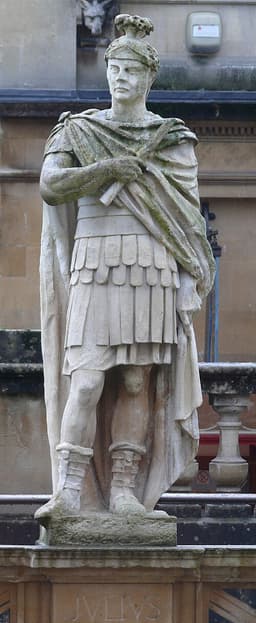
Gnaeus Julius Agricola
General · Ancient
52.5Total

Sun Ce
General · Ancient
52.8Total
Basic Information
Born
40
175
Died
93
200
Era
Ancient
Ancient
Nationality
Roman Empire
China
Occupation
General
General
Civilization
Western
Eastern
Score Comparison
Military (10%)
72.0
77.5
Political (20%)
35.1
25.0
Influence (20%)
54.1
58.0
Legacy (20%)
47.5
58.0
Leadership (15%)
61.1
35.4
Strategy (15%)
55.0
70.0
TOTAL
52.5
52.8
Gnaeus Julius Agricola — Complete Timeline
74 AD
Governorship of AquitaniaPolitical Action
Agricola was appointed governor of Aquitania, a Roman province in Gaul. He administered the province for three years, focusing on legal and financial reforms. This post prepared him for higher command and demonstrated his administrative skills.
Provincial AdministrationGaulCareer
Impact: regionalconstructive
78 AD
Conquest of the OrdovicesWar◆ Major
As governor of Britain, Agricola launched a campaign against the Ordovices tribe in northern Wales. He defeated them and then conquered the island of Anglesey, a stronghold of Druids and resistance, completing the Roman subjugation of Wales.
Roman BritainWalesMilitary Campaign
Impact: regional
83 AD
Battle of Mons GraupiusWar◆ Major
Agricola's army defeated a large Caledonian force led by Calgacus at Mons Graupius in northern Scotland. The Roman victory was decisive, but Agricola did not pursue the defeated tribes into the Highlands, leaving the conquest of Scotland incomplete.
BattleScotlandCaledonia
Impact: regional
Circumnavigation of BritainOther
Agricola ordered a Roman fleet to circumnavigate Britain, proving it was an island. The fleet sailed around the northern coast, encountering the Orkney Islands. This exploration provided valuable geographical knowledge and demonstrated Roman naval power.
ExplorationNavyGeography
Impact: regionalconstructive
Sun Ce — Complete Timeline
195 AD
Conquest of JiangdongWar
Sun Ce led a campaign to conquer the Jiangdong region (south of the Yangtze River). With support from Zhou Yu and other allies, he defeated local warlords including Liu Yao and Yan Baihu, establishing a power base that would become Eastern Wu.
Three KingdomsJiangdongEastern WuConquest
Impact: regionalconstructive
197 AD
Battle of ShentingWar◆ Major
Sun Ce defeated the warlord Liu Xun at the Battle of Shenting. This victory allowed him to annex the territories of Lujiang and further expand his control over the Yangtze River basin.
Three KingdomsBattleLiu Xun
Impact: regional
200 AD
Assassination by Xu Gong's RetainersPolitical Action
Sun Ce was ambushed and fatally wounded by retainers of Xu Gong, a former rival he had executed. He died shortly after at age 25, leaving his younger brother Sun Quan to inherit his domain, which later became the Kingdom of Wu.
Three KingdomsAssassinationSun QuanEastern Wu
Impact: regionaltragic
Expert Analysis
Origins
Gnaeus Julius Agricola was born in 40 AD in the Roman colony of Forum Julii (modern Fréjus, France) to a senator of Gallic origin. His father, Lucius Julius Graecinus, was executed by Emperor Caligula for refusing to prosecute a senator. Agricola was educated in Massilia (Marseille) and initially pursued a military career, serving as tribune in Britain under Governor Suetonius Paulinus. His mother, Julia Procilla, managed the family estates after his father's death.
Sun Ce was born in 175 AD in Fuchun (modern Hangzhou, China) during the turbulent late Eastern Han dynasty. His father, Sun Jian, was a warlord and general who died in battle when Sun Ce was 17. Sun Ce's family was of modest origin, but his father's military connections provided opportunities. He was raised by his mother, Lady Wu, and developed a close friendship with Zhou Yu, who later became his chief strategist.
Rise to Power
Agricola's rise was methodical and supported by the imperial system. After serving as tribune in Britain, he held a series of quaestorships in Asia and tribunate in Rome. In 70 AD, he was appointed legate of the XX Legion in Britain, where he gained military experience. His big break came in 77 AD when Emperor Vespasian appointed him governor of Britain, a position he held for seven years. Agricola used this tenure to launch campaigns that expanded Roman control into northern Britain and Wales.
Sun Ce's rise was rapid and personal. After his father's death, he sought service under warlord Yuan Shu, who gave him command of a small force. In 194 AD, Sun Ce led a campaign to conquer the Jiangdong region (south of the Yangtze River), starting with just a few hundred men. With the help of Zhou Yu and other allies, he defeated local warlords like Liu Yao and Yan Baihu, building a territorial base. By 199 AD, he controlled most of the Jiangdong area, establishing the foundation for the future Kingdom of Wu.
Leadership & Governance
Agricola governed Britain with a focus on Romanization. He built forts, roads, and encouraged the adoption of Roman customs among the native Britons. He personally led military campaigns but also delegated to subordinates. Agricola's administration was efficient, improving tax collection and justice. However, his approach was top-down, imposing Roman culture rather than integrating local traditions. His military leadership was cautious, avoiding overextension despite victories.
Sun Ce was a charismatic and aggressive leader who led from the front. He was known for his personal bravery and ability to inspire loyalty. His governance in Jiangdong was pragmatic, co-opting local elites and rewarding allies. He established a merit-based system, promoting capable individuals like Zhou Yu and Zhang Zhao. However, his governance was cut short by his early death, leaving his brother Sun Quan to consolidate the state. Sun Ce's leadership score of 35.4 reflects his short tenure and lack of administrative depth compared to Agricola's 61.1.
Triumph & Tragedy
Agricola's greatest triumph was the conquest of the Ordovices in 77 AD and the decisive victory at the Battle of Mons Graupius in 83 AD, where an estimated 10,000 Caledonians were killed against only 360 Romans. He also ordered the first circumnavigation of Britain, proving it was an island. His tragedy was that after his recall by Emperor Domitian in 84 AD, his conquests were gradually abandoned, and the Roman frontier retreated south. He died in 93 AD, possibly poisoned on Domitian's orders, though this is unconfirmed.
Sun Ce's triumph was the swift conquest of Jiangdong, establishing a powerful base that became the Eastern Wu kingdom. He defeated warlord Liu Xun at the Battle of Shenting and expanded his territory. His tragedy was his assassination in 200 AD at age 25 by retainers of Xu Gong, a former rival he had executed. This cut short his career and left his young brother Sun Quan to inherit a fragile state. Sun Ce's death was a direct result of his ruthless elimination of enemies, which created vengeful survivors.
Character & Destiny
Agricola was described by his son-in-law Tacitus as a man of moderation, integrity, and competence. He balanced military ambition with political caution, avoiding the pitfalls that led to many senatorial executions under Domitian. His character was shaped by Stoic philosophy, leading him to accept his recall without protest. His destiny was to be a capable but ultimately limited governor, whose achievements were not fully sustained.
Sun Ce was impulsive, bold, and charismatic. He was known as the 'Little Conqueror' for his aggressive tactics and personal courage. However, his hot temper and tendency to make enemies led to his downfall. Ancient Chinese historians note that he often acted without considering long-term consequences. His death at a young age sealed his legacy as a brilliant but incomplete figure, like Alexander the Great in the West.
Legacy
Agricola's legacy is mixed. His military campaigns in Britain were later abandoned by Rome, and no permanent conquest north of the Forth-Clyde line was achieved. However, his writings (via Tacitus) provided a detailed account of Roman Britain and the Caledonian leader Calgacus's speech. His score of 47.5 in legacy reflects his modest long-term impact. In contrast, Sun Ce's legacy score of 58.0 is higher because his conquest of Jiangdong directly led to the Three Kingdoms state of Eastern Wu, which lasted until 280 AD. He is remembered as a founding father in Chinese history, and his story is celebrated in the classic novel 'Romance of the Three Kingdoms'.
Conclusion
While Agricola was a capable Roman governor who expanded the empire's reach, his conquests were temporary and his influence limited to Roman historiography. Sun Ce, despite his short life, established a kingdom that endured for decades and shaped Chinese history. With a total score of 52.8 to Agricola's 52.5, Sun Ce narrowly edges out his Roman counterpart. However, the gap is statistically insignificant, and both men were overshadowed by their successors: Agricola by Trajan and Hadrian, Sun Ce by his brother Sun Quan. Ultimately, Sun Ce's foundation of Eastern Wu had a more lasting impact on Chinese civilization than Agricola's temporary conquests in Britain.
Rankings
🥇
Sun CeLeader
Mil: 77.5Pol: 25.0Inf: 58.0
52.8
🥈
Gnaeus Julius Agricola
Mil: 72.0Pol: 35.1Inf: 54.1
52.5
+0.3 behind
How This Comparison Works
Algorithm
Each figure is scored on 6 dimensions (0—100 scale) based on structured historical data: Military (10%), Political (20%), Influence (20%), Legacy (20%), Leadership (15%), Strategy (15%). The weighted total produces the final ranking.
Data Sources
Scores are computed from structured sub-indicators in the database. Scale factors adjust for era (Ancient ×0.85, Modern ×1.0) and civilization size (Eastern ×1.05, Other ×0.80) to account for differences in population and military scale.
Maximum 3 Figures
Comparisons are limited to 2—3 figures to ensure readability and statistical meaningfulness.
Error Margins
±5 points per dimension — Sub-scores are derived from historical records with inherent uncertainty. Two figures within 5 points on a dimension should be considered roughly equivalent in that area.
Total Score Accuracy
±3 points overall — The weighted combination of 6 dimensions produces a total score with approximately ±3 points of uncertainty. Differences of less than 3 points are not statistically significant— the figures are effectively tied.
Known Limitations
- Historical records are incomplete and uneven across civilizations
- Figures from oral-tradition societies may be underrepresented
- Occupation labels can misclassify multi-role figures
- Scores measure capability and impact, not moral character
- Quantitative scoring is a comparison tool, not absolute truth
Capability Radar
Military (10%) — Battles & Warfare
Battles
65
75
Win Rate
70
80
Expansion
75
75
Political (20%) — Governance & Reform
Reform
45
20
Diplomacy
50
50
Economy
40
30
Influence (20%) — Cultural & Global Reach
Cultural
35
60
Global
30
40
Legacy (20%) — Historical Impact
Historical
55
70
Longevity
40
65
Leadership (15%) — Power & Stability
Tenure
55
30
Stability
50
25
Strategy (15%) — Tactics & Innovation
Strategy
72
80
Tactics
68
85
Reform
30
40
Similar Comparisons
Comments & Discussion
No comments yet. Be the first to share your thoughts!