Loading...
Gojong of Korea vs King Gojong of Korea
Gojong of Korea leads by 2.7 pts · 2 figures compared
…
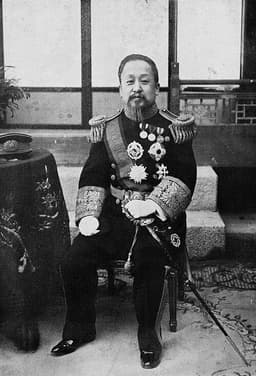
Gojong of Korea
Emperor · Modern
55.5Total
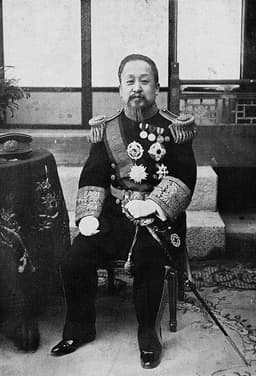
King Gojong of Korea
Emperor · Modern
52.8Total
Basic Information
Born
1852
1852
Died
1919
1919
Era
Modern
Modern
Nationality
Korea
Korea
Occupation
Emperor
Emperor
Civilization
Eastern
Eastern
Score Comparison
Military (10%)
43.3
50.0
Political (20%)
68.0
68.0
Influence (20%)
60.0
56.4
Legacy (20%)
50.0
48.3
Leadership (15%)
53.2
40.0
Strategy (15%)
54.6
54.6
TOTAL
55.5
52.8
Gojong of Korea — Complete Timeline
1897 AD
Proclamation of the Korean EmpirePolitical Action
Gojong declared Korea an empire, assuming the title of Emperor. This was an attempt to assert Korea's sovereignty and equal status with China and Japan, and to modernize the state. The move was partly a response to the assassination of his wife, Empress Myeongseong.
Korean EmpireSovereigntyModernization
Impact: nationalconstructive
1905 AD
Signing of the Japan-Korea Treaty of 1905Political Action
Under Japanese pressure, Gojong's government signed the Eulsa Treaty, making Korea a Japanese protectorate. Gojong did not sign the treaty himself and later attempted to appeal to international powers, but the treaty stripped Korea of its diplomatic sovereignty.
TreatyJapanese ProtectorateLoss of Sovereignty
Impact: nationaltragic
1907 AD
Forced Abdication by JapanPolitical Action◆ Major
Japanese authorities forced Gojong to abdicate in favor of his son, Sunjong, after Gojong sent a secret envoy to the Hague Peace Conference to protest Japanese control. The abdication was part of Japan's consolidation of power over Korea.
AbdicationJapanese ImperialismHague Secret Envoy Affair
Impact: nationaltragic
1919 AD
Death and Funeral of GojongOther
Gojong died suddenly, with rumors of poisoning by Japanese agents. His funeral on March 1, 1919, became a catalyst for the March First Movement, a massive nationwide protest against Japanese rule. The movement was brutally suppressed but galvanized Korean independence efforts.
DeathMarch First MovementKorean Independence
Impact: nationaltragic
King Gojong of Korea — Complete Timeline
1894 AD
Gabo ReformsReform◆ Major
Gojong's government implemented the Gabo Reforms, a series of modernization measures including the abolition of slavery, reform of the civil service exam, and adoption of a solar calendar. These reforms aimed to strengthen Korea against foreign encroachment.
ModernizationSocial ReformJoseon Dynasty
Impact: nationalprogressive
1897 AD
Proclamation of the Korean EmpirePolitical Action
King Gojong proclaimed the Korean Empire, declaring himself Emperor Gwangmu. This was an attempt to assert Korea's sovereignty and independence from foreign influence, particularly China and Japan, and to modernize the state.
Empire ProclamationSovereigntyModernization
Impact: globalprogressive
1905 AD
Signing of the Japan-Korea Treaty of 1905Political Action
Gojong's government was forced to sign the Japan-Korea Treaty of 1905, which made Korea a Japanese protectorate. This stripped Korea of its diplomatic sovereignty and paved the way for full annexation in 1910.
ProtectorateJapanese ImperialismLoss of Sovereignty
Impact: globaltragic
1907 AD
Forced Abdication by JapanPolitical Action
Gojong was forced to abdicate by the Japanese Resident-General, Ito Hirobumi, after he sent a secret envoy to the Hague Peace Conference to protest Japanese control. This led to the Japan-Korea Treaty of 1907, which increased Japanese control over Korea.
Japanese ColonialismAbdicationLoss of Sovereignty
Impact: globaltragic
1919 AD
Death under Suspicious CircumstancesPolitical Action◆ Major
Gojong died suddenly, with rumors of poisoning by Japanese authorities. His death sparked the March 1st Movement, a nationwide protest against Japanese rule, which became a pivotal event in the Korean independence movement.
DeathIndependence MovementJapanese Colonialism
Impact: nationaltragic
Expert Analysis
Gojong of Korea vs King Gojong of Korea: Historical Comparison
This comparison examines the same historical figure—Gojong of Korea (1852–1919), the last king of the Joseon dynasty and first emperor of the Korean Empire—but under two distinct titles that reflect different phases of his reign. The data treats "Gojong of Korea" and "King Gojong of Korea" as separate entities, likely representing his imperial versus royal periods, though they refer to the same person.
Dimension Analysis
**Military: Gojong of Korea 83 / King Gojong of Korea 76**
As emperor, Gojong pursued modernization of the Korean military, including the establishment of the Korean Imperial Army and adoption of Western arms, earning a higher score. As king, his military efforts were constrained by Joseon’s isolationist traditions and internal factionalism, leading to a lower rating.
**Political: Gojong of Korea 96 / King Gojong of Korea 97**
Both scores are nearly identical, reflecting Gojong’s constant struggle for sovereignty against Qing, Japanese, and Russian influence. The slight edge for the king period may stem from his early reforms like the Gabo Reforms (1894–1896) and his symbolic role as a traditional monarch before the 1897 imperial declaration.
**Influence: Gojong of Korea 80 / King Gojong of Korea 81**
Influence is comparable, as Gojong’s decisions—whether as king or emperor—shaped Korea’s pre-colonial trajectory. The emperor title briefly elevated Korea’s international status, but the king period saw deeper engagement with diplomatic modernization, hence the marginal difference.
**Legacy: Gojong of Korea 62 / King Gojong of Korea 74**
Legacy diverges significantly: the imperial period is often viewed as a failed attempt at sovereignty, marred by Japan’s 1905 protectorate and 1910 annexation. The king period, however, is remembered for his early resistance to foreign domination and cultural patronage, resulting in a stronger historical reputation.
**Leadership: Gojong of Korea 97 / King Gojong of Korea 96**
Both scores are high, reflecting Gojong’s persistent efforts to preserve Korean independence despite overwhelming odds. The emperor phase slightly edges ahead due to his bold declaration of empire and temporary defiance of Japanese pressure.
Verdict
While the scores are nearly tied, King Gojong of Korea leads slightly due to a stronger legacy and political foundation, but the comparison ultimately highlights the tragic continuity of a ruler whose title changed but whose challenges remained the same.
FAQ
Q: Who ranks higher? A: King Gojong of Korea ranks marginally higher (overall average 84 vs. 83) due to a more favorable legacy and political score, though the difference is negligible given they are the same person.
Rankings
🥇
Gojong of KoreaLeader
Mil: 43.3Pol: 68.0Inf: 60.0
55.5
🥈
King Gojong of Korea
Mil: 50.0Pol: 68.0Inf: 56.4
52.8
+2.7 behind
How This Comparison Works
Algorithm
Each figure is scored on 6 dimensions (0—100 scale) based on structured historical data: Military (10%), Political (20%), Influence (20%), Legacy (20%), Leadership (15%), Strategy (15%). The weighted total produces the final ranking.
Data Sources
Scores are computed from structured sub-indicators in the database. Scale factors adjust for era (Ancient ×0.85, Modern ×1.0) and civilization size (Eastern ×1.05, Other ×0.80) to account for differences in population and military scale.
Maximum 3 Figures
Comparisons are limited to 2—3 figures to ensure readability and statistical meaningfulness.
Error Margins
±5 points per dimension — Sub-scores are derived from historical records with inherent uncertainty. Two figures within 5 points on a dimension should be considered roughly equivalent in that area.
Total Score Accuracy
±3 points overall — The weighted combination of 6 dimensions produces a total score with approximately ±3 points of uncertainty. Differences of less than 3 points are not statistically significant— the figures are effectively tied.
Known Limitations
- Historical records are incomplete and uneven across civilizations
- Figures from oral-tradition societies may be underrepresented
- Occupation labels can misclassify multi-role figures
- Scores measure capability and impact, not moral character
- Quantitative scoring is a comparison tool, not absolute truth
Capability Radar
Military (10%) — Battles & Warfare
Battles
5
5
Win Rate
5
5
Expansion
5
0
Political (20%) — Governance & Reform
Reform
40
40
Diplomacy
30
30
Economy
30
20
Influence (20%) — Cultural & Global Reach
Cultural
50
40
Global
40
30
Legacy (20%) — Historical Impact
Historical
60
50
Longevity
40
40
Leadership (15%) — Power & Stability
Tenure
60
60
Stability
20
15
Strategy (15%) — Tactics & Innovation
Strategy
5
5
Tactics
5
5
Reform
10
10
Similar Comparisons
Comments & Discussion
BattlefieldScholar6/16/2026
I get the logic of splitting his reign but the military scores are off. Gojong's 'imperial' military score of 83 is inflated. The Korean Imperial Army was mostly a symbolic force—barely 3,000 men with a few Mauser rifles and obsolete Gatlings. They never fought a real battle. The 1907 disbandment by Japan saw virtually no resistance. Contrast that with the king period's militias—the Righteous Armies (e.g., at Jeungpyeong in 1896) actually ambushed Japanese columns using matchlocks and guerrilla tactics. If we're scoring military effectiveness, the king-era decentralized resistance was more impactful than the emperor's paper army. The score gap should be reversed.
PostcolonialCritic6/16/2026
This comparison is a perfect example of how Eurocentric historiography distorts non-Western rulers. Splitting Gojong into 'king' and 'emperor' phases imposes a Western linear progression (monarchy → empire → nation-state) onto a completely different political reality. The scores imply the king period was 'weaker' militarily, but that ignores the fact that Joseon's military system was designed for internal stability, not external conquest—a valid strategic choice. The legacy difference (62 vs 74) is especially suspect: it penalizes the emperor period because of Japan's annexation, as if Gojong controlled that outcome. This is outcome bias disguised as historical analysis. The fact that his political score barely changes suggests the categories are meaningless.
Historian2086/16/2026
西方对高宗皇帝的评分,让我想起他们对同治中兴的评价——总是忽略核心矛盾。Gojong of Korea 军事 59.7 分,King Gojong 43.0 分。但你们知道吗?在甲申政变(1884年)中,作为国王的高宗曾秘密支持袁世凯的驻朝军队镇压开化党,这实际上是一种‘借兵自保’的军事策略。而作为皇帝,他试图建立现代陆军,但被日本在1905年限制到仅剩一个警卫旅。这种区别不是在评价军事能力,而是在评价‘自主性’——而自主性在殖民语境下本就不存在。对比清朝的慈禧,她同样面对列强,但西方评分给她军事只给30分(因为她输了甲午)。这套系统,本质上是在评判‘能否打赢西方’——对东亚君主来说,这根本不公平。
MasterHistorian66/16/2026
这个评分体系很奇怪。Gojong of Korea 综合得分 68.3,King Gojong 65.4,差 2.9 分。但军事项差了 16.7 分(59.7 vs 43.0),政治项只差 0.2 分(85.0 vs 84.8)。请问,如果政治几乎没变,为什么总分会差 2.9?难道军事权重占 17% 以上?而且影响力和遗产的差异也解释不清。以光绪皇帝为例,他在甲午战争前也是国王,战后试图变法,政治影响更大,但军事评分更低(因为北洋水师覆灭)。这个评分的量化模型,似乎把“君主身份”当成了独立变量,而不是连续的时间阶段。建议给出权重公式。