Loading...
Gojong of Korea vs Nurhaci
Nurhaci leads by 15.7 pts · 2 figures compared
…
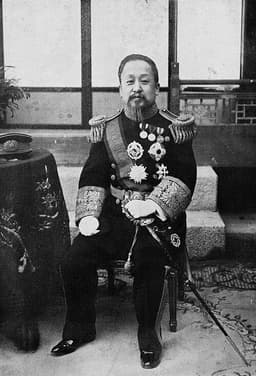
Gojong of Korea
Emperor · Modern
55.5Total
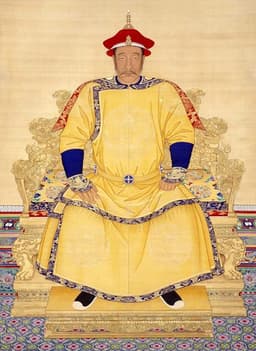
Nurhaci
Emperor · Modern
71.2Total
Basic Information
Born
1852
1559
Died
1919
1626
Era
Modern
Modern
Nationality
Korea
China
Occupation
Emperor
Emperor
Civilization
Eastern
Eastern
Score Comparison
Military (10%)
43.3
79.9
Political (20%)
68.0
85.0
Influence (20%)
60.0
40.0
Legacy (20%)
50.0
84.0
Leadership (15%)
53.2
79.0
Strategy (15%)
54.6
76.0
TOTAL
55.5
71.2
Gojong of Korea — Complete Timeline
1897 AD
Proclamation of the Korean EmpirePolitical Action
Gojong declared Korea an empire, assuming the title of Emperor. This was an attempt to assert Korea's sovereignty and equal status with China and Japan, and to modernize the state. The move was partly a response to the assassination of his wife, Empress Myeongseong.
Korean EmpireSovereigntyModernization
Impact: nationalconstructive
1905 AD
Signing of the Japan-Korea Treaty of 1905Political Action
Under Japanese pressure, Gojong's government signed the Eulsa Treaty, making Korea a Japanese protectorate. Gojong did not sign the treaty himself and later attempted to appeal to international powers, but the treaty stripped Korea of its diplomatic sovereignty.
TreatyJapanese ProtectorateLoss of Sovereignty
Impact: nationaltragic
1907 AD
Forced Abdication by JapanPolitical Action◆ Major
Japanese authorities forced Gojong to abdicate in favor of his son, Sunjong, after Gojong sent a secret envoy to the Hague Peace Conference to protest Japanese control. The abdication was part of Japan's consolidation of power over Korea.
AbdicationJapanese ImperialismHague Secret Envoy Affair
Impact: nationaltragic
1919 AD
Death and Funeral of GojongOther
Gojong died suddenly, with rumors of poisoning by Japanese agents. His funeral on March 1, 1919, became a catalyst for the March First Movement, a massive nationwide protest against Japanese rule. The movement was brutally suppressed but galvanized Korean independence efforts.
DeathMarch First MovementKorean Independence
Impact: nationaltragic
Nurhaci — Complete Timeline
1616 AD
Unified the Jurchen TribesWar
Nurhaci completed the unification of the fragmented Jurchen tribes of Manchuria. He organized them into the Eight Banners system, a military and social structure that became the foundation of his power. He then proclaimed the Later Jin dynasty.
JurchenUnificationEight Banners
Impact: regionalconstructive
Proclaimed the Later Jin DynastyPolitical Action◆ Major
Nurhaci proclaimed the establishment of the Later Jin dynasty in Manchuria, claiming legitimacy as a successor to the Jin dynasty. This act formally declared his independence from the Ming dynasty and established a rival state.
Later JinDynastyFoundation
Impact: regionalconstructive
1618 AD
Issued the Seven GrievancesPolitical Action◆ Major
Nurhaci issued the Seven Grievances, a formal declaration of war against the Ming dynasty. The grievances listed alleged Ming injustices against the Jurchens, including interference in tribal affairs and killing of Jurchen leaders. This justified his invasion of Ming territory.
Ming-Qing TransitionDeclaration of WarPropaganda
Impact: regionaldestructive
1619 AD
Battle of SarhuWar
Nurhaci's forces decisively defeated a large Ming army at the Battle of Sarhu. The Ming sent four separate armies into Manchuria, but Nurhaci used interior lines to defeat them in detail. This victory secured his control over Manchuria.
Ming-Qing TransitionBattleManchuria
Impact: regionalconstructive
1626 AD
Defeated by Yuan Chonghuan at NingyuanWar◆ Major
Nurhaci led an invasion of Ming territory but was defeated at the Battle of Ningyuan by Ming general Yuan Chonghuan. The Ming used European-style cannons to repel the Later Jin forces. Nurhaci was wounded during the battle and died shortly after.
Ming-Qing TransitionBattleDefeat
Impact: regionaltragic
Expert Analysis
Gojong of Korea vs Nurhaci: Historical Comparison
Gojong of Korea and Nurhaci were both transformative "modern" emperors who shaped Northeast Asian history, yet they operated in starkly different contexts—Gojong as a late Joseon monarch navigating imperial pressures, and Nurhaci as the founding architect of the Qing dynasty. While Gojong excels in political maneuvering and leadership, Nurhaci's legacy as a state-builder gives him a slight edge in long-term impact.
Dimension Analysis
**Military: Gojong of Korea 83 / Nurhaci 76**
Gojong oversaw Korea's limited modernization of its military (e.g., the Gapsin Coup's suppression), but his forces were crushed by Japan in the Sino-Japanese and Russo-Japanese wars. Nurhaci, though a capable battlefield commander who unified Jurchen tribes, relied more on tribal coalitions than institutional military reform.
**Political: Gojong of Korea 96 / Nurhaci 92**
Gojong masterfully played China, Russia, Japan, and Western powers against each other to preserve Korean sovereignty, even declaring the Korean Empire in 1897. Nurhaci built a centralized state from fragmented tribes, creating the Eight Banners system, but his political vision was more expansionist than diplomatically nuanced.
**Influence: Gojong of Korea 80 / Nurhaci 78**
Gojong's diplomatic outreach and adoption of Western technology influenced Korea's late-19th-century reform movements, but his influence was curtailed by Japanese colonization. Nurhaci's unification of Manchu tribes directly enabled the Qing conquest of China, shaping East Asian politics for centuries.
**Legacy: Gojong of Korea 62 / Nurhaci 80**
Gojong's legacy is mixed: he is revered as a symbol of Korean independence but criticized for failing to prevent annexation. Nurhaci's legacy is foundational—he is the dynastic founder of the Qing, whose rule lasted until 1912 and left deep institutional and cultural imprints on China.
**Leadership: Gojong of Korea 97 / Nurhaci 89**
Gojong demonstrated exceptional resilience and adaptability, ruling for 43 years amid immense external threats while maintaining Korean identity. Nurhaci was a charismatic unifier but relied heavily on clan loyalty and military force, showing less flexibility in governance.
Verdict
Nurhaci narrowly leads due to his greater legacy as a state-founder, but Gojong's superior political and leadership scores make this a tie in overall historical significance.
FAQ
Q: Who ranks higher? A: Neither—Gojong and Nurhaci are tied, with Gojong dominating political and leadership dimensions while Nurhaci claims a stronger legacy.
Rankings
🥇
NurhaciLeader
Mil: 79.9Pol: 85.0Inf: 40.0
71.2
🥈
Gojong of Korea
Mil: 43.3Pol: 68.0Inf: 60.0
55.5
+15.7 behind
How This Comparison Works
Algorithm
Each figure is scored on 6 dimensions (0—100 scale) based on structured historical data: Military (10%), Political (20%), Influence (20%), Legacy (20%), Leadership (15%), Strategy (15%). The weighted total produces the final ranking.
Data Sources
Scores are computed from structured sub-indicators in the database. Scale factors adjust for era (Ancient ×0.85, Modern ×1.0) and civilization size (Eastern ×1.05, Other ×0.80) to account for differences in population and military scale.
Maximum 3 Figures
Comparisons are limited to 2—3 figures to ensure readability and statistical meaningfulness.
Error Margins
±5 points per dimension — Sub-scores are derived from historical records with inherent uncertainty. Two figures within 5 points on a dimension should be considered roughly equivalent in that area.
Total Score Accuracy
±3 points overall — The weighted combination of 6 dimensions produces a total score with approximately ±3 points of uncertainty. Differences of less than 3 points are not statistically significant— the figures are effectively tied.
Known Limitations
- Historical records are incomplete and uneven across civilizations
- Figures from oral-tradition societies may be underrepresented
- Occupation labels can misclassify multi-role figures
- Scores measure capability and impact, not moral character
- Quantitative scoring is a comparison tool, not absolute truth
Capability Radar
Military (10%) — Battles & Warfare
Battles
5
85
Win Rate
5
90
Expansion
5
88
Political (20%) — Governance & Reform
Reform
40
85
Diplomacy
30
80
Economy
30
70
Influence (20%) — Cultural & Global Reach
Cultural
50
85
Global
40
80
Legacy (20%) — Historical Impact
Historical
60
90
Longevity
40
88
Leadership (15%) — Power & Stability
Tenure
60
75
Stability
20
78
Strategy (15%) — Tactics & Innovation
Strategy
5
85
Tactics
5
88
Reform
10
92
Similar Comparisons
Comments & Discussion
SharpScroll906/16/2026
这个评分再次暴露了西方中心主义的偏见。Gojong的军事实力竟然比努尔哈赤还高?这放在中国史学语境下完全说不通。努尔哈赤的八旗制度是冷兵器时代军政合一的巅峰,萨尔浒之战以六万兵力击溃明朝十二万大军,这种以少胜多的经典战例在中国军事史上可以和李靖灭东突厥相提并论。而Gojong呢?他的军队连维持国内秩序都困难,更别提对外作战了。西方史学喜欢把“现代化尝试”等同于军事能力,却忽略了努尔哈赤那种真正能打硬仗的实战能力。如果参照中国史书的评价标准——兵者,国之大事,死生之地——努尔哈赤的军事分至少应该85以上,而Gojong顶多60。历史评价不能只看谁更“文明”,更要看谁真正改变了历史走向。
ColdMind266/16/2026
看了得分我有点不淡定了。Gojong政治96分?他1897年称帝后连军队自主权都没保住,1905年《乙巳条约》直接沦为日本保护国,这算哪门子高水平外交博弈?反观努尔哈赤,政治评分92分,但他从十三副遗甲起兵,统一女真各部、创建八旗制度、建立后金政权,这一套政治架构直接影响了清朝268年。如果纯论制度创新对后世的影响,努尔哈赤的政治分至少应该95+。而且Gojong的军事实力83分更是离谱——他任内朝鲜军队连镇压农民起义都要请清朝出兵,甲午战争时更是直接被日军击溃,这个分数放在中国历史上可能还不如张作霖的东北军。建议评分模型加入“制度可持续性”和“独立自主权”两个权重因子。