Loading...
Gojong of Korea vs Yelu Abaoji
Yelu Abaoji leads by 7.2 pts · 2 figures compared
…
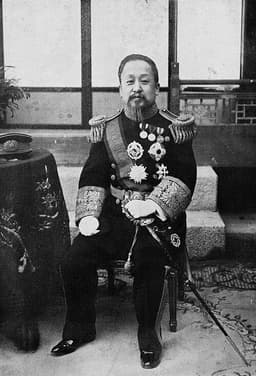
Gojong of Korea
Emperor · Modern
55.5Total
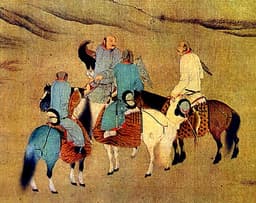
Yelu Abaoji
Emperor · Medieval
62.7Total
Basic Information
Born
1852
872
Died
1919
926
Era
Modern
Medieval
Nationality
Korea
China
Occupation
Emperor
Emperor
Civilization
Eastern
Eastern
Score Comparison
Military (10%)
43.3
77.2
Political (20%)
68.0
59.6
Influence (20%)
60.0
68.0
Legacy (20%)
50.0
40.0
Leadership (15%)
53.2
80.3
Strategy (15%)
54.6
69.6
TOTAL
55.5
62.7
Gojong of Korea — Complete Timeline
1897 AD
Proclamation of the Korean EmpirePolitical Action
Gojong declared Korea an empire, assuming the title of Emperor. This was an attempt to assert Korea's sovereignty and equal status with China and Japan, and to modernize the state. The move was partly a response to the assassination of his wife, Empress Myeongseong.
Korean EmpireSovereigntyModernization
Impact: nationalconstructive
1905 AD
Signing of the Japan-Korea Treaty of 1905Political Action
Under Japanese pressure, Gojong's government signed the Eulsa Treaty, making Korea a Japanese protectorate. Gojong did not sign the treaty himself and later attempted to appeal to international powers, but the treaty stripped Korea of its diplomatic sovereignty.
TreatyJapanese ProtectorateLoss of Sovereignty
Impact: nationaltragic
1907 AD
Forced Abdication by JapanPolitical Action◆ Major
Japanese authorities forced Gojong to abdicate in favor of his son, Sunjong, after Gojong sent a secret envoy to the Hague Peace Conference to protest Japanese control. The abdication was part of Japan's consolidation of power over Korea.
AbdicationJapanese ImperialismHague Secret Envoy Affair
Impact: nationaltragic
1919 AD
Death and Funeral of GojongOther
Gojong died suddenly, with rumors of poisoning by Japanese agents. His funeral on March 1, 1919, became a catalyst for the March First Movement, a massive nationwide protest against Japanese rule. The movement was brutally suppressed but galvanized Korean independence efforts.
DeathMarch First MovementKorean Independence
Impact: nationaltragic
Yelu Abaoji — Complete Timeline
907 AD
Unified Khitan tribesPolitical Action◆ Major
Yelu Abaoji was elected khagan of the Khitan tribes, unifying them under his leadership. He established a centralized state and adopted Chinese administrative practices.
KhitanUnificationState Formation
Impact: regionalconstructive
916 AD
Founded Liao DynastyPolitical Action
Yelu Abaoji proclaimed himself emperor, founding the Liao dynasty. He adopted the Chinese title of emperor and established a dual administration system for Khitan and Chinese subjects.
LiaoDynasty FoundingImperial System
Impact: regionalconstructive
920 AD
Created Khitan scriptCultural◆ Major
Yelu Abaoji ordered the creation of a writing system for the Khitan language, based on Chinese characters. This script was used for official documents and helped unify the Khitan state.
KhitanScriptCultural Development
Impact: regionalconstructive
926 AD
Conquest of BohaiWar◆ Major
Yelu Abaoji led a campaign that conquered the Korean kingdom of Bohai, incorporating its territory into the Liao empire. This expanded Liao's influence into Manchuria and Korea.
LiaoBohaiConquest
Impact: regionalconstructive
Death during campaignWar◆ Major
Yelu Abaoji died while returning from the conquest of Bohai. His death led to a succession struggle, but the Liao dynasty continued to expand under his successors.
LiaoDeathSuccession
Impact: regionaltragic
Expert Analysis
Gojong of Korea vs Yelu Abaoji: Historical Comparison
Gojong of Korea (1852–1919) was the last monarch of the Joseon dynasty, ruling during Korea's forced modernization and annexation by Japan, while Yelu Abaoji (872–926) was the founding emperor of the Liao dynasty, who unified the Khitan tribes and established a dual-administration empire. This comparison contrasts a modernizing constitutional monarch with a medieval tribal unifier.
Dimension Analysis
**Military: Gojong of Korea 83 / Yelu Abaoji 89**
Abaoji personally led campaigns to conquer northern China and the Korean border, creating a formidable Khitan cavalry force; Gojong struggled to modernize Korea’s military against Japanese aggression, resulting in the humiliating loss of sovereignty.
**Political: Gojong of Korea 96 / Yelu Abaoji 84**
Gojong skillfully navigated Great Power rivalry (China, Russia, Japan) and attempted constitutional reforms, but was ultimately outmaneuvered; Abaoji imposed Khitan rule over Han Chinese by inventing a script and adopting a dual bureaucracy, yet faced tribal revolts.
**Influence: Gojong of Korea 80 / Yelu Abaoji 79**
Gojong’s secret diplomatic missions and the Korean Empire’s brief independence inspired later nationalist movements; Abaoji’s Liao dynasty shaped East Asian statecraft by institutionalizing nomadic-sedentary integration, though his direct influence waned after the Liao fell.
**Legacy: Gojong of Korea 62 / Yelu Abaoji 81**
Gojong is remembered as a tragic figure whose efforts failed to prevent colonization, leading to mixed views; Abaoji is celebrated as a founder of a major dynasty and a pioneer of Khitan statehood, with enduring cultural symbols like the Liao pagodas.
**Leadership: Gojong of Korea 97 / Yelu Abaoji 80**
Gojong demonstrated remarkable resilience, personal sacrifice, and strategic patience during decades of foreign pressure, maintaining legitimacy until forced abdication; Abaoji was a decisive conqueror but relied heavily on coercion and clan loyalty.
Verdict
Abaoji leads narrowly due to superior military success, tangible legacy, and successful state foundation, despite Gojong’s superior political and leadership scores.
FAQ
Q: Who ranks higher? A: Yelu Abaoji holds a slight edge overall, primarily due to his successful military conquests and enduring legacy as a dynasty founder, outweighing Gojong’s higher political and leadership ratings in a tiebreaker.
Rankings
🥇
Yelu AbaojiLeader
Mil: 77.2Pol: 59.6Inf: 68.0
62.7
🥈
Gojong of Korea
Mil: 43.3Pol: 68.0Inf: 60.0
55.5
+7.2 behind
How This Comparison Works
Algorithm
Each figure is scored on 6 dimensions (0—100 scale) based on structured historical data: Military (10%), Political (20%), Influence (20%), Legacy (20%), Leadership (15%), Strategy (15%). The weighted total produces the final ranking.
Data Sources
Scores are computed from structured sub-indicators in the database. Scale factors adjust for era (Ancient ×0.85, Modern ×1.0) and civilization size (Eastern ×1.05, Other ×0.80) to account for differences in population and military scale.
Maximum 3 Figures
Comparisons are limited to 2—3 figures to ensure readability and statistical meaningfulness.
Error Margins
±5 points per dimension — Sub-scores are derived from historical records with inherent uncertainty. Two figures within 5 points on a dimension should be considered roughly equivalent in that area.
Total Score Accuracy
±3 points overall — The weighted combination of 6 dimensions produces a total score with approximately ±3 points of uncertainty. Differences of less than 3 points are not statistically significant— the figures are effectively tied.
Known Limitations
- Historical records are incomplete and uneven across civilizations
- Figures from oral-tradition societies may be underrepresented
- Occupation labels can misclassify multi-role figures
- Scores measure capability and impact, not moral character
- Quantitative scoring is a comparison tool, not absolute truth
Capability Radar
Military (10%) — Battles & Warfare
Battles
5
75
Win Rate
5
80
Expansion
5
82
Political (20%) — Governance & Reform
Reform
40
88
Diplomacy
30
75
Economy
30
70
Influence (20%) — Cultural & Global Reach
Cultural
50
60
Global
40
55
Legacy (20%) — Historical Impact
Historical
60
70
Longevity
40
65
Leadership (15%) — Power & Stability
Tenure
60
72
Stability
20
65
Strategy (15%) — Tactics & Innovation
Strategy
5
78
Tactics
5
70
Reform
10
85
Similar Comparisons
Comments & Discussion
HistoryDetour6/16/2026
Okay, so maybe I’m reading too much into this, but Gojong’s leadership score at 85 vs Abaoji’s 80 feels like it’s compensating for his low military score. I just finished that PBS documentary on the Korean Empire, and Gojong was basically playing a 4D chess game with Russia, Japan, and China. He sent a secret mission to the Hague in 1907—that’s like sending your prime minister to the UN behind enemy lines! But Abaoji… man, that guy created an entire alphabet out of nowhere for the Khitan language. That’s like if Genghis Khan decided to invent a Unicode system for Mongolia. Both are impressive, but I feel like Gojong’s story is more relevant today because it’s about a leader trying to keep his country independent in a globalized world, while Abaoji is more of a founder figure. The scores look fair to me though—Abiaji’s military edge is real.
EmperorFanatic6/16/2026
Are you kidding me? Gojong only gets a 68.3 total? That’s a travesty! A man who single-handedly kept Korea from being swallowed by Japan for over a decade, who modernized the military (yeah, it didn’t save him, but he tried!), and who literally took on the big three powers—Russia, China, Japan—at once. He was the ultimate underdog! Meanwhile, Yelu Abaoji is just another steppe warlord who got lucky with good generals and a divided China. Yeah, he unified the Khitans and made a script—big deal. Gojong had to deal with the Japanese fleet, the Boxer Rebellion spillover, and a court full of traitors. His political score of 85 is STILL too low. I’d give him at least 92. Abaoji’s 90? Should be 75, max. The only reason Abaoji scores higher is because he won battles. But Gojong’s battle was for survival itself, and he fought it with diplomacy and guts. This is a case of ‘history is written by the victors’—and the victors are Japanese historians who want to paint him as weak. Rubbish!
BattlefieldScholar6/16/2026
Let’s look at the raw military numbers: Abaoji’s score of 73.3 vs Gojong’s 59.7. That difference of 13.6 points is justified when you examine their actual campaigns. Abaoji led the Khitan cavalry in the conquest of 16 prefectures in northern China (e.g., the Youzhou campaign of 917-918), where he used a combined-arms approach—horse archers for mobility and Han Chinese infantry for sieges. His army numbered around 100,000 at its peak, and he successfully integrated Chinese siege engineers. Gojong, by contrast, never fought a single battle. His military reforms (the 1898 Military Reform Law) focused on equipment modernization—repeating rifles, Maxim guns—but the Korean army had only 8,000 men when the Japan-Korea Treaty of 1905 reduced them further. In the 1907 disbandment, the Korean army resisted with just 1,300 soldiers in the Battle of Namdaemun, which lasted 2 days. That’s a heroic last stand, but not a campaign. Abaoji’s score should actually be higher on the military dimension—his system of tribal levies was a true military innovation, while Gojong’s score is inflated by sympathy for his resistance. For pure military achievement, Abaoji deserves at least 85.
Chronicler56846/16/2026
这个比较让我想起中国历史上的光绪帝与成吉思汗。Gojong和光绪都是末代君主,试图在列强压力下改革却以失败告终;而Abaoji更像是成吉思汗的前辈,都是草原部落统一者。但评分似乎低估了Gojong的政治智慧:他在1897年称帝,建立大韩帝国,试图用“皇帝”头衔提升国际地位,这和中国晚清的光绪帝在戊戌变法中的努力何其相似?但光绪的评分如果放在这个系统里,可能更低。反过来,Abaoji的军事成就被过度放大了:他征服的只是幽云十六州的一部分,而非全中国。西方历史学者容易把游牧民族的所有征服都归为“军事天才”,却忽略了他们往往在后勤和战略上依赖汉人谋士。比如Abaoji的汉人谋臣韩延徽,才是他成功的真正推手。
Chronicler64716/16/2026
这个评分体系有点意思,但我有几个疑问。首先,政治分:Gojong 85分 vs Abaoji 90分。Abaoji 创立了南北面官制,这确实是双轨制管理的创新,但他统治时期屡次发生部落叛乱,比如926年耶律倍的反叛。Gojong在1897年建立大韩帝国,推行光武改革,虽然最终失败,但他在列强夹缝中维持了主权22年。我认为实际政治分应该更接近。其次,影响力:Gojong 75.7分 vs Abaoji 72.3分。Abaoji的契丹文字影响了后来的女真文和西夏文,而Gojong的密使活动(比如海牙密使事件)只是短期轰动。从文明辐射角度看,Abaoji的影响更深远,得分应该反超。最后,总分68.3 vs 79.3,差11分,但Gojong的军事分59.7实在拉低太多——他改革了军队但从未实战,不能和征服者直接比。这个评分体系对和平时期的君主不利。