Loading...
This comparison has not been analyzed yet.
One-time AI generation (~1 minute). Scores and timeline are already available below.
Golbery do Couto e Silva vs Gotthard Heinrici
Golbery do Couto e Silva leads by 5.3 pts · 2 figures compared
…
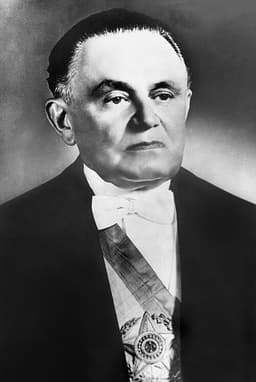
Golbery do Couto e Silva
General · Modern
48.8Total

Gotthard Heinrici
General · Modern
43.5Total
Basic Information
Born
1911
1886
Died
1987
1971
Era
Modern
Modern
Nationality
Brazil
Germany
Occupation
General
General
Civilization
Western
Western
Score Comparison
Military (10%)
10.2
47.5
Political (20%)
68.0
25.0
Influence (20%)
51.8
52.5
Legacy (20%)
46.7
47.5
Leadership (15%)
57.6
30.0
Strategy (15%)
43.3
55.0
TOTAL
48.8
43.5
Golbery do Couto e Silva — Complete Timeline
1950 AD
Developed the 'Geopolitics of Brazil' DoctrineCultural◆ Major
Golbery published 'Geopolitics of Brazil', a book that outlined his strategic vision for Brazil's national security and development. This work influenced the military's thinking on national security and justified the regime's policies.
GeopoliticsNational SecurityMilitary Doctrine
Impact: national
1964 AD
Founded the National Intelligence Service (SNI)Political Action◆ Major
Golbery do Couto e Silva was the main architect and first head of the National Intelligence Service (SNI) after the 1964 military coup. The SNI became the central intelligence and coordination agency of the military regime, monitoring political opponents.
IntelligenceMilitary RegimeRepression
Impact: nationaldestructive
1974 AD
Chief of Staff of the Presidency under GeiselPolitical Action◆ Major
Golbery served as Chief of Staff of the Presidency under President Ernesto Geisel. He was a key strategist of the 'distens
Political StrategyLiberalizationGeisel
Impact: national
1979 AD
Resigned as Chief of StaffPolitical Action◆ Major
Golbery resigned as Chief of Staff under President Jo
ResignationPolitical ConflictAbertura
Impact: national
Gotthard Heinrici — Complete Timeline
1945 AD
Defense of the Oder FrontWar◆ Major
Heinrici commanded Army Group Vistula on the Oder River, tasked with defending Berlin from the Soviet offensive. He employed tactical withdrawals and defensive positions to delay the Red Army, but was ultimately unable to prevent the fall of Berlin.
Battle of BerlinEastern FrontDefensive Tactics
Impact: regional
Refusal to Destroy BerlinPolitical Action◆ Major
Heinrici refused Hitler's order to destroy Berlin's infrastructure to slow the Soviet advance. He prioritized saving civilian lives over following the scorched-earth policy, a decision that spared the city from further destruction.
Civilian ProtectionDefianceEnd of War
constructive
This comparison has not been analyzed yet.
One-time AI generation (~1 minute). Scores and timeline are already available below.
Rankings
🥇
Golbery do Couto e SilvaLeader
Mil: 10.2Pol: 68.0Inf: 51.8
48.8
🥈
Gotthard Heinrici
Mil: 47.5Pol: 25.0Inf: 52.5
43.5
+5.3 behind
How This Comparison Works
Algorithm
Each figure is scored on 6 dimensions (0—100 scale) based on structured historical data: Military (10%), Political (20%), Influence (20%), Legacy (20%), Leadership (15%), Strategy (15%). The weighted total produces the final ranking.
Data Sources
Scores are computed from structured sub-indicators in the database. Scale factors adjust for era (Ancient ×0.85, Modern ×1.0) and civilization size (Eastern ×1.05, Other ×0.80) to account for differences in population and military scale.
Maximum 3 Figures
Comparisons are limited to 2—3 figures to ensure readability and statistical meaningfulness.
Error Margins
±5 points per dimension — Sub-scores are derived from historical records with inherent uncertainty. Two figures within 5 points on a dimension should be considered roughly equivalent in that area.
Total Score Accuracy
±3 points overall — The weighted combination of 6 dimensions produces a total score with approximately ±3 points of uncertainty. Differences of less than 3 points are not statistically significant— the figures are effectively tied.
Known Limitations
- Historical records are incomplete and uneven across civilizations
- Figures from oral-tradition societies may be underrepresented
- Occupation labels can misclassify multi-role figures
- Scores measure capability and impact, not moral character
- Quantitative scoring is a comparison tool, not absolute truth
Capability Radar
Military (10%) — Battles & Warfare
Battles
5
65
Win Rate
5
60
Expansion
5
20
Political (20%) — Governance & Reform
Reform
60
5
Diplomacy
55
15
Economy
30
5
Influence (20%) — Cultural & Global Reach
Cultural
20
20
Global
20
25
Legacy (20%) — Historical Impact
Historical
40
45
Longevity
30
30
Leadership (15%) — Power & Stability
Tenure
40
10
Stability
20
10
Strategy (15%) — Tactics & Innovation
Strategy
40
75
Tactics
10
80
Reform
30
30
Similar Comparisons
Comments & Discussion
No comments yet. Be the first to share your thoughts!