Loading...
Gordon Brown vs Helen Suzman
Helen Suzman leads by 4.3 pts · 2 figures compared
…
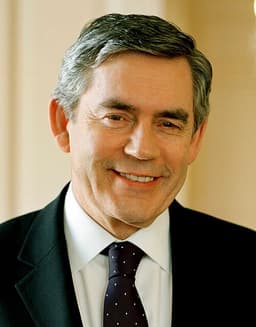
Gordon Brown
Politician · Modern
53.1Total

Helen Suzman
Politician · Modern
57.4Total
Basic Information
Born
1951
1917
Died
—
2009
Era
Modern
Modern
Nationality
United Kingdom
South Africa
Occupation
Politician
Politician
Civilization
Western
Other
Score Comparison
Military (10%)
50.0
50.0
Political (20%)
55.0
72.0
Influence (20%)
55.0
58.3
Legacy (20%)
48.3
52.0
Leadership (15%)
66.0
68.0
Strategy (15%)
41.7
38.3
TOTAL
53.1
57.4
Gordon Brown — Complete Timeline
1997 AD
Introduced the Fiscal Rules as ChancellorReform◆ Major
As Chancellor, Brown introduced the 'Golden Rule' and 'Sustainable Investment Rule' for fiscal policy. These rules aimed to ensure responsible public finances and were credited with maintaining economic stability during his tenure.
Economic PolicyFiscal RulesChancellor
Impact: nationalconstructive
2007 AD
Appointed Prime MinisterPolitical Action◆ Major
Brown succeeded Tony Blair as Prime Minister of the United Kingdom without a general election. He had served as Chancellor of the Exchequer for ten years and was widely expected to take over the leadership of the Labour Party.
Political TransitionLabour PartyPrime Minister
Impact: national
2008 AD
Led the G20 Response to the Global Financial CrisisPolitical Action
Brown played a leading role in coordinating the international response to the global financial crisis. He hosted the G20 summit in London in 2009, securing commitments for fiscal stimulus and financial regulation reforms.
Financial CrisisG20International Cooperation
Impact: globalconstructive
Nationalization of Northern RockPolitical Action◆ Major
Brown's government nationalized the failing bank Northern Rock after a bank run. The decision was controversial but aimed at stabilizing the financial system. It was the first nationalization of a UK bank in decades.
Financial CrisisBank NationalizationEconomic Intervention
Impact: national
2010 AD
Lost the 2010 General ElectionPolitical Action◆ Major
Brown led the Labour Party to defeat in the 2010 general election, resulting in a hung parliament. He resigned as prime minister after failing to form a coalition government with the Liberal Democrats, ending 13 years of Labour government.
General ElectionLabour DefeatHung Parliament
Impact: nationaltragic
Helen Suzman — Complete Timeline
1961 AD
Elected to Parliament as Progressive Party MPPolitical Action
Suzman was elected to the South African Parliament as a member of the Progressive Party, which opposed apartheid. She became the sole parliamentary voice against the government's racial policies for over a decade.
ParliamentAnti-ApartheidProgressive Party
Impact: nationalconstructive
Lone Anti-Apartheid Voice in ParliamentPolitical Action◆ Major
For 13 years, Suzman was the only MP consistently opposing apartheid legislation. She used parliamentary privilege to question ministers, expose abuses, and advocate for the rights of non-white South Africans, often facing hostility from fellow MPs.
Anti-ApartheidParliamentAdvocacy
Impact: nationalconstructive
1967 AD
Visited Nelson Mandela in PrisonPolitical Action◆ Major
Suzman visited Nelson Mandela on Robben Island, becoming one of the few people allowed to see him. She reported on his conditions and helped maintain contact between political prisoners and the outside world.
Nelson MandelaRobben IslandPrison Visit
Impact: nationalconstructive
1978 AD
Received the United Nations Human Rights PrizeCultural◆ Major
Suzman was awarded the United Nations Human Rights Prize in recognition of her courageous opposition to apartheid. The award highlighted her international reputation as a symbol of resistance to racial oppression.
Human RightsAwardInternational Recognition
Impact: globalconstructive
1989 AD
Retired from ParliamentPolitical Action◆ Major
Suzman retired from Parliament after 36 years of service. By then, the anti-apartheid movement had grown, and she had mentored a new generation of opposition MPs. Her retirement marked the end of an era of lone parliamentary opposition.
RetirementParliamentLegacy
Impact: nationalconstructive
Expert Analysis
Origins
Gordon Brown was born in 1951 in Glasgow, Scotland, into a family of ministers. His father was a Church of Scotland minister, and Brown grew up in a strict religious environment. He excelled academically, attending Kirkcaldy High School and later the University of Edinburgh, where he earned a PhD in history at age 21. His early political activism included student politics and opposition to apartheid, but his focus remained on domestic economic policy.
Helen Suzman was born in 1917 in Germiston, South Africa, into a Jewish family of Lithuanian descent. She attended Parktown Convent and later the University of the Witwatersrand, where she studied economics and statistics. After marrying Dr. Moses Suzman, she worked as a statistician and lecturer. Her entry into politics was driven by her revulsion at the National Party's apartheid policies after 1948.
Rise to Power
Brown entered Parliament in 1983 as MP for Dunfermline East. He quickly rose through Labour ranks, becoming Shadow Chief Secretary to the Treasury in 1987 and Shadow Chancellor in 1992. His reputation as a serious economist grew. In 1997, after Labour's landslide victory, he became Chancellor of the Exchequer, a position he held for ten years. Brown's control over economic policy gave him immense influence within the government, often clashing with Prime Minister Tony Blair.
Suzman was elected to the South African Parliament in 1953 as a member of the United Party. After the United Party split over apartheid, she joined the Progressive Party in 1959. In the 1961 election, the Progressive Party won only one seat—hers. For the next 13 years, Suzman was the sole parliamentary voice consistently opposing apartheid, using her position to question ministers and expose abuses.
Leadership & Governance
Brown as Chancellor introduced the 'Golden Rule'—borrowing only to invest—and the 'Sustainable Investment Rule' to keep debt low. These fiscal rules initially brought stability. However, his tenure as Prime Minister (2007-2010) was dominated by the global financial crisis. Brown led the G20 response, hosting the 2009 London summit that secured coordinated stimulus and bank bailouts, preventing a deeper depression. His leadership style was hands-on but often described as micromanaging; he struggled with public communication.
Suzman's governance was that of a principled opposition. She had no executive power, but used parliamentary privilege to challenge apartheid laws. She visited prisons, exposed torture, and championed human rights. Her strategy was to use facts and logic to dismantle the regime's arguments. She mentored younger anti-apartheid MPs, including Helen Zille. Her approach was persistent rather than charismatic, but effective in keeping the flame of opposition alive.
Triumph & Tragedy
Brown's greatest triumph was his role in the G20 response to the financial crisis, which scored 55.0 in political influence. The coordinated action stabilized global markets. However, his tragedy was the 2010 election defeat, where Labour lost 91 seats and Brown resigned. His failure to call an early election in 2007 (when he enjoyed high popularity) is seen as a strategic error.
Suzman's triumph was her lonely stand: for 13 years she was the only MP opposing apartheid, earning her the United Nations Human Rights Prize in 1978. Her tragedy is that despite her efforts, apartheid persisted until the 1990s. She was often vilified by the government and faced death threats. However, her legacy as a moral beacon is secure.
Character & Destiny
Brown was cerebral and driven, but prone to moodiness and indecision. His character, scoring 66.0 in leadership, was shaped by a sense of duty and a belief in social justice. Yet his lack of political savvy and poor media skills undermined his premiership. Suzman, scoring 68.0 in leadership, was courageous, principled, and tenacious. She never wavered from her anti-apartheid stance, even when it was dangerous. Her character was one of quiet resolve.
Legacy
Brown's legacy is mixed. His fiscal rules were abandoned after the crisis, and Labour's defeat ended 13 years of government. However, his international coordination during the crisis is studied as a model. His political score is 55.0 and legacy 48.3. Suzman's legacy is more straightforward: she is celebrated as a human rights icon. Her political score of 72.0 reflects her impact despite being in opposition. She inspired future generations and helped lay the groundwork for democracy.
Conclusion
Helen Suzman had greater impact relative to her circumstances. While Brown operated within a powerful government and achieved significant crisis management, Suzman's lone voice against a brutal regime required immense courage and yielded moral authority that outlasts her. Her legacy score of 52.0 is higher than Brown's 48.3, and her political score of 72.0 far exceeds his 55.0. In the context of their times, Suzman's principled stand against apartheid was a more transformative force than Brown's technocratic management.
Rankings
🥇
Helen SuzmanLeader
Mil: 50.0Pol: 72.0Inf: 58.3
57.4
🥈
Gordon Brown
Mil: 50.0Pol: 55.0Inf: 55.0
53.1
+4.3 behind
How This Comparison Works
Algorithm
Each figure is scored on 6 dimensions (0—100 scale) based on structured historical data: Military (10%), Political (20%), Influence (20%), Legacy (20%), Leadership (15%), Strategy (15%). The weighted total produces the final ranking.
Data Sources
Scores are computed from structured sub-indicators in the database. Scale factors adjust for era (Ancient ×0.85, Modern ×1.0) and civilization size (Eastern ×1.05, Other ×0.80) to account for differences in population and military scale.
Maximum 3 Figures
Comparisons are limited to 2—3 figures to ensure readability and statistical meaningfulness.
Error Margins
±5 points per dimension — Sub-scores are derived from historical records with inherent uncertainty. Two figures within 5 points on a dimension should be considered roughly equivalent in that area.
Total Score Accuracy
±3 points overall — The weighted combination of 6 dimensions produces a total score with approximately ±3 points of uncertainty. Differences of less than 3 points are not statistically significant— the figures are effectively tied.
Known Limitations
- Historical records are incomplete and uneven across civilizations
- Figures from oral-tradition societies may be underrepresented
- Occupation labels can misclassify multi-role figures
- Scores measure capability and impact, not moral character
- Quantitative scoring is a comparison tool, not absolute truth
Capability Radar
Military (10%) — Battles & Warfare
Battles
29
23
Win Rate
30
25
Expansion
32
29
Political (20%) — Governance & Reform
Reform
60
85
Diplomacy
55
75
Economy
70
30
Influence (20%) — Cultural & Global Reach
Cultural
30
60
Global
55
60
Legacy (20%) — Historical Impact
Historical
40
70
Longevity
30
65
Leadership (15%) — Power & Stability
Tenure
65
65
Stability
50
40
Strategy (15%) — Tactics & Innovation
Strategy
38
32
Tactics
40
35
Reform
43
38
Similar Comparisons
Comments & Discussion
No comments yet. Be the first to share your thoughts!