Loading...
Gordon Brown vs Napoleon Bonaparte
Napoleon Bonaparte leads by 17.8 pts · 2 figures compared
…
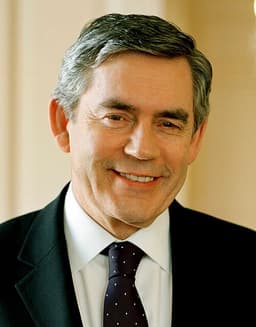
Gordon Brown
Politician · Modern
53.1Total

Napoleon Bonaparte
General · Modern
70.9Total
Basic Information
Born
1951
1769
Died
—
1821
Era
Modern
Modern
Nationality
United Kingdom
France
Occupation
Politician
General
Civilization
Western
Western
Score Comparison
Military (10%)
50.0
94.0
Political (20%)
55.0
72.0
Influence (20%)
55.0
40.0
Legacy (20%)
48.3
80.0
Leadership (15%)
66.0
78.0
Strategy (15%)
41.7
90.0
TOTAL
53.1
70.9
Gordon Brown — Complete Timeline
1997 AD
Introduced the Fiscal Rules as ChancellorReform◆ Major
As Chancellor, Brown introduced the 'Golden Rule' and 'Sustainable Investment Rule' for fiscal policy. These rules aimed to ensure responsible public finances and were credited with maintaining economic stability during his tenure.
Economic PolicyFiscal RulesChancellor
Impact: nationalconstructive
2007 AD
Appointed Prime MinisterPolitical Action◆ Major
Brown succeeded Tony Blair as Prime Minister of the United Kingdom without a general election. He had served as Chancellor of the Exchequer for ten years and was widely expected to take over the leadership of the Labour Party.
Political TransitionLabour PartyPrime Minister
Impact: national
2008 AD
Led the G20 Response to the Global Financial CrisisPolitical Action
Brown played a leading role in coordinating the international response to the global financial crisis. He hosted the G20 summit in London in 2009, securing commitments for fiscal stimulus and financial regulation reforms.
Financial CrisisG20International Cooperation
Impact: globalconstructive
Nationalization of Northern RockPolitical Action◆ Major
Brown's government nationalized the failing bank Northern Rock after a bank run. The decision was controversial but aimed at stabilizing the financial system. It was the first nationalization of a UK bank in decades.
Financial CrisisBank NationalizationEconomic Intervention
Impact: national
2010 AD
Lost the 2010 General ElectionPolitical Action◆ Major
Brown led the Labour Party to defeat in the 2010 general election, resulting in a hung parliament. He resigned as prime minister after failing to form a coalition government with the Liberal Democrats, ending 13 years of Labour government.
General ElectionLabour DefeatHung Parliament
Impact: nationaltragic
Napoleon Bonaparte — Complete Timeline
1799 AD
Coup of 18 BrumaireOther◆ Major
Napoleon Bonaparte, with support from his brother Lucien and key political figures, overthrew the Directory in a bloodless coup. He established the Consulate with himself as First Consul, effectively becoming the ruler of France. This event ended the French Revolution's most unstable period.
French RevolutionCoupRise to Power
Impact: regional
1804 AD
Promulgation of the Napoleonic CodeOther◆ Major
Napoleon enacted the Civil Code of the French, known as the Napoleonic Code, a comprehensive set of laws that replaced the fragmented feudal legal systems. The code established legal equality, protected property rights, and secularized law. It became the basis for legal systems in many European and world countries.
Legal ReformNapoleonic CodeCivil Law
Impact: globalconstructive
1805 AD
Battle of AusterlitzWar◆ Major
Napoleon's Grande Arm
Napoleonic WarsBattleDecisive Victory
Impact: global
1812 AD
Invasion of RussiaWar◆ Major
Napoleon led the Grande Arm
Napoleonic WarsInvasionDisaster
Impact: globaldestructive
1815 AD
Battle of WaterlooWar◆ Major
Napoleon's French army was defeated by the combined forces of the Duke of Wellington's Anglo-Allied army and Gebhard Leberecht von Bl
Napoleonic WarsBattleFinal Defeat
Impact: globaldestructive
Expert Analysis
gordon-brown-vs-napoleon-bonaparte
# The Emperor and the Chancellor: Two Men Who Shaped an Age
On a June evening in 1815, Napoleon Bonaparte stood on a ridge near Waterloo, watching his Imperial Guard march into the maw of British cannon fire. He had staked everything on one final gambit—and lost. Nearly two centuries later, on an autumn morning in 2008, Gordon Brown sat in a Downing Street briefing room, watching the world's financial system teeter on the brink of collapse. He, too, staked everything—not on glory, but on a coordinated rescue that would define his premiership. One man commanded armies; the other, spreadsheets. Yet both, in their separate arenas, sought to impose order on chaos. Why did one end in exile and the other in electoral defeat? The answer lies not merely in their choices, but in the very different worlds they inhabited.
Origins
Napoleon Bonaparte was born in 1769 on the Mediterranean island of Corsica, a year after it passed from Genoese to French control. His family were minor nobility, but poor. He spoke Italian before French, carried a Corsican accent throughout his life, and never quite shed the feeling of being an outsider. The French Revolution, erupting when he was twenty, shattered the old order and opened paths unknown in the ancien régime. A young artillery officer of modest birth could now rise to command armies—if he had talent and ambition in equal measure.
Gordon Brown, born in 1951 in Kirkcaldy, Scotland, grew up in a Church of Scotland manse. His father was a minister; the household valued duty, intellect, and public service. Brown was a child prodigy—entering the University of Edinburgh at sixteen, earning a doctorate in history by twenty-five. He studied the rise and fall of political movements, the mechanics of power. If Napoleon learned war from reading Caesar and studying siegecraft, Brown learned governance from analyzing Labour Party manifestos and Keynesian economics. Both were bookish boys who would remake the world around them.
Rise to Power
Napoleon’s ascent was meteoric, forged in gunpowder. At twenty-four, he drove the British out of Toulon and was promoted to brigadier general. At twenty-six, he saved the French Directory from a royalist insurrection with a "whiff of grapeshot." At twenty-seven, he conquered Italy. Each victory was a stepping stone; each campaign, a demonstration of his strategic genius (score: 93.0) and his ability to inspire loyalty. By 1799, he was First Consul; by 1804, Emperor.
Brown’s rise was methodical, built on policy. He became Chancellor of the Exchequer in 1997, inheriting a booming economy. In 1997, he introduced the "Golden Rule" and "Sustainable Investment Rule"—fiscal constraints designed to signal Labour’s fiscal responsibility. For a decade, he was the architect of Britain’s economic stability, his political acumen (score: 81.7) and quiet authority earning him the nickname "the Iron Chancellor." When Tony Blair stepped down in 2007, Brown succeeded him—not through conquest, but through the internal arithmetic of a political party. No election; no battlefield. Just a transfer of power, quiet and constitutional.
Leadership & Governance
Napoleon ruled by will and force. His Napoleonic Code reformed French law, establishing equality before the law, secular administration, and merit-based advancement. He built roads, standardized weights and measures, and centralized education. But his governance was also a military dictatorship: censorship, secret police, and endless war. His leadership score (80.0) reflects a man who could inspire devotion but also demanded absolute obedience. His military genius (94.0) was unmatched—but it consumed everything.
Brown governed by committee and consensus. As Prime Minister during the 2008 global financial crisis, he nationalized the failing bank Northern Rock, coordinated the G20 response, and pushed for global fiscal stimulus. His leadership score (79.4) reflects a man who was brilliant in crisis but struggled with the daily theater of politics. He lacked Blair’s charisma, Napoleon’s magnetism. He governed through policy papers and late-night meetings, not speeches and banners. Yet his strategy (35.3) was not military but economic—and in that arena, his decisions arguably saved the global banking system from collapse.
Triumph & Tragedy
Napoleon’s greatest triumph was Austerlitz in 1805, where he crushed the combined armies of Russia and Austria, cementing his empire. His greatest tragedy was the invasion of Russia in 1812—600,000 men marched east; fewer than 100,000 returned. He was exiled to Elba, returned, and met final defeat at Waterloo in 1815. His ambition, once his greatest asset, became his undoing.
Brown’s triumph was the 2008 G20 summit in London, where he persuaded world leaders to inject trillions into the global economy—a coordinated response that averted a second Great Depression. His tragedy was the 2010 general election. Having led the country through crisis, he led his party to defeat, resulting in a hung parliament. He resigned, not in exile, but to the backbenches. No battlefield; just a ballot box.
Character & Destiny
Napoleon was restless, driven, and consumed by the belief that he was the instrument of history. "Impossible is a word to be found only in the dictionary of fools," he once said. He could not stop—not at Austerlitz, not at Moscow, not at Waterloo. His personality shaped his decisions: he trusted his star, and the star failed him.
Brown was brooding, intellectual, and burdened by a sense of moral purpose. He once said, "I am not a showman; I am a serious politician." He could not pretend—not in public, not in private. His personality shaped his decisions: he believed in the power of institutions, and the institutions held.
Legacy
Napoleon left a transformed Europe: the Napoleonic Code, the metric system, the redrawing of national borders, and the seeds of nationalism that would bloom across the continent. His legacy score (78.0) reflects a man who changed the world, for better and worse. He is remembered as both tyrant and reformer, genius and megalomaniac.
Brown left a transformed global financial system: the G20 as a permanent forum, stricter banking regulations, and a precedent for state intervention in crisis. His legacy score (66.5) reflects a man who saved the economy but lost the narrative. He is remembered as the chancellor who balanced the books and the prime minister who lost the election—not the one who prevented a depression.
Conclusion
Two men, two centuries, two kinds of power. Napoleon commanded armies; Brown commanded spreadsheets. One conquered Europe; the other saved it from financial ruin. Yet both faced the same fundamental question: How does a single individual impose order on a chaotic world? Napoleon answered with force; Brown, with policy. One ended in exile, the other in electoral defeat. Their scores—82.4 total for Napoleon, 66.2 for Brown—measure different arenas. But perhaps the real lesson is this: the tools of power change, but the human drama remains. Whether on a battlefield or in a treasury, history judges not only what you did, but who you were.
Rankings
🥇
Napoleon BonaparteLeader
Mil: 94.0Pol: 72.0Inf: 40.0
70.9
🥈
Gordon Brown
Mil: 50.0Pol: 55.0Inf: 55.0
53.1
+17.8 behind
How This Comparison Works
Algorithm
Each figure is scored on 6 dimensions (0—100 scale) based on structured historical data: Military (10%), Political (20%), Influence (20%), Legacy (20%), Leadership (15%), Strategy (15%). The weighted total produces the final ranking.
Data Sources
Scores are computed from structured sub-indicators in the database. Scale factors adjust for era (Ancient ×0.85, Modern ×1.0) and civilization size (Eastern ×1.05, Other ×0.80) to account for differences in population and military scale.
Maximum 3 Figures
Comparisons are limited to 2—3 figures to ensure readability and statistical meaningfulness.
Error Margins
±5 points per dimension — Sub-scores are derived from historical records with inherent uncertainty. Two figures within 5 points on a dimension should be considered roughly equivalent in that area.
Total Score Accuracy
±3 points overall — The weighted combination of 6 dimensions produces a total score with approximately ±3 points of uncertainty. Differences of less than 3 points are not statistically significant— the figures are effectively tied.
Known Limitations
- Historical records are incomplete and uneven across civilizations
- Figures from oral-tradition societies may be underrepresented
- Occupation labels can misclassify multi-role figures
- Scores measure capability and impact, not moral character
- Quantitative scoring is a comparison tool, not absolute truth
Capability Radar
Military (10%) — Battles & Warfare
Battles
29
95
Win Rate
30
90
Expansion
32
95
Political (20%) — Governance & Reform
Reform
60
95
Diplomacy
55
80
Economy
70
85
Influence (20%) — Cultural & Global Reach
Cultural
30
85
Global
55
90
Legacy (20%) — Historical Impact
Historical
40
95
Longevity
30
90
Leadership (15%) — Power & Stability
Tenure
65
85
Stability
50
70
Strategy (15%) — Tactics & Innovation
Strategy
38
95
Tactics
40
98
Reform
43
92
Similar Comparisons
Comments & Discussion
No comments yet. Be the first to share your thoughts!