Loading...
Gordon Brown vs Pravind Jugnauth
Gordon Brown leads by 0.6 pts · 2 figures compared
…
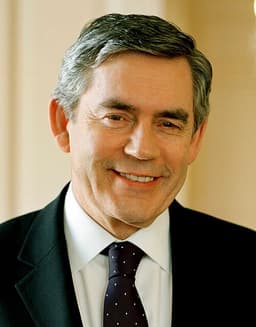
Gordon Brown
Politician · Modern
53.1Total

Pravind Jugnauth
Politician · Modern
52.5Total
Basic Information
Born
1951
1961
Died
—
—
Era
Modern
Modern
Nationality
United Kingdom
Mauritius
Occupation
Politician
Politician
Civilization
Western
Other
Score Comparison
Military (10%)
50.0
49.5
Political (20%)
55.0
53.8
Influence (20%)
55.0
52.5
Legacy (20%)
48.3
41.7
Leadership (15%)
66.0
77.2
Strategy (15%)
41.7
44.0
TOTAL
53.1
52.5
Gordon Brown — Complete Timeline
1997 AD
Introduced the Fiscal Rules as ChancellorReform◆ Major
As Chancellor, Brown introduced the 'Golden Rule' and 'Sustainable Investment Rule' for fiscal policy. These rules aimed to ensure responsible public finances and were credited with maintaining economic stability during his tenure.
Economic PolicyFiscal RulesChancellor
Impact: nationalconstructive
2007 AD
Appointed Prime MinisterPolitical Action◆ Major
Brown succeeded Tony Blair as Prime Minister of the United Kingdom without a general election. He had served as Chancellor of the Exchequer for ten years and was widely expected to take over the leadership of the Labour Party.
Political TransitionLabour PartyPrime Minister
Impact: national
2008 AD
Led the G20 Response to the Global Financial CrisisPolitical Action
Brown played a leading role in coordinating the international response to the global financial crisis. He hosted the G20 summit in London in 2009, securing commitments for fiscal stimulus and financial regulation reforms.
Financial CrisisG20International Cooperation
Impact: globalconstructive
Nationalization of Northern RockPolitical Action◆ Major
Brown's government nationalized the failing bank Northern Rock after a bank run. The decision was controversial but aimed at stabilizing the financial system. It was the first nationalization of a UK bank in decades.
Financial CrisisBank NationalizationEconomic Intervention
Impact: national
2010 AD
Lost the 2010 General ElectionPolitical Action◆ Major
Brown led the Labour Party to defeat in the 2010 general election, resulting in a hung parliament. He resigned as prime minister after failing to form a coalition government with the Liberal Democrats, ending 13 years of Labour government.
General ElectionLabour DefeatHung Parliament
Impact: nationaltragic
Pravind Jugnauth — Complete Timeline
2017 AD
Became Prime Minister of MauritiusPolitical Action◆ Major
Pravind Jugnauth succeeded his father, Sir Anerood Jugnauth, as Prime Minister. He took office after his father resigned, continuing the Jugnauth family's political dominance. The transition was smooth but criticized as dynastic.
SuccessionDynastyMauritius
Impact: national
2018 AD
Economic Growth and Infrastructure ProjectsOther◆ Major
Under Jugnauth, Mauritius saw continued economic growth, with investments in infrastructure like the Metro Express light rail and road projects. The economy diversified into fintech and services. However, public debt increased.
EconomyInfrastructureMetro Express
Impact: nationalconstructive
2019 AD
Won 2019 General ElectionPolitical Action◆ Major
Jugnauth led the Militant Socialist Movement (MSM) to victory in the general election, securing 42 of 70 seats. His alliance won a majority, allowing him to continue as Prime Minister. The election was seen as a mandate for his leadership.
ElectionMSMMauritius
Impact: national
Navigated Chagos Islands DisputePolitical Action◆ Major
Jugnauth continued Mauritius' claim over the Chagos Archipelago, including Diego Garcia. The International Court of Justice ruled the UK's administration illegal. Jugnauth pushed for decolonization, but the UK and US maintained control.
ChagosDecolonizationICJ
Impact: global
2020 AD
Led Response to MV Wakashio Oil SpillOther◆ Major
A Japanese bulk carrier, MV Wakashio, ran aground off Mauritius, spilling over 1,000 tons of oil. Jugnauth's government faced criticism for a slow initial response. The spill damaged coral reefs and marine life, leading to a state of emergency.
Oil SpillEnvironmental DisasterMV Wakashio
Impact: regionaltragic
Controversial Appointment of JudgesPolitical Action
Jugnauth's government appointed several judges, including the Chief Justice, amid allegations of political interference. Critics argued the appointments undermined judicial independence. The opposition protested the moves.
JudiciaryAppointmentsControversy
Impact: nationaldestructive
Expert Analysis
Origins
Gordon Brown was born on February 20, 1951, in Giffnock, Scotland, to a Presbyterian minister father and a mother who was a teacher. His upbringing in a religious household instilled a sense of moral duty. He excelled academically, attending the University of Edinburgh, where he earned a PhD in history at age 24. His early political career began in local government, but his rise was marked by his role as Shadow Chancellor under Tony Blair.
Pravind Jugnauth was born on December 25, 1961, in La Caverne, Mauritius, into a political dynasty. His father, Sir Anerood Jugnauth, served as Prime Minister and President. Pravind studied law at the University of Buckingham and later at the Middle Temple in London. He entered politics in the 1990s, winning a seat in the National Assembly in 2000.
Rise to Power
Brown's ascent was gradual. He served as Chancellor of the Exchequer from 1997 to 2007, overseeing a period of economic growth. His fiscal policies, including independence for the Bank of England, earned him a reputation as a competent steward. However, his long wait for the premiership created tension with Blair. In 2007, he became Prime Minister without a general election, succeeding Blair after a decade of Labour governance.
Jugnauth's rise was more direct. He became Deputy Prime Minister and Minister of Finance in 2000 under his father. In 2017, after his father resigned, Pravind assumed the premiership. He consolidated power by leading the Militant Socialist Movement (MSM) to victory in the 2019 general election, winning 42 of 70 seats. His path was smoothed by familial connections, but he maintained control through electoral success.
Leadership & Governance
Brown's leadership was tested by the 2008 global financial crisis. He advocated for coordinated international action, hosting the G20 summit in London in 2009, securing over $1 trillion in pledges. Domestically, he nationalized Northern Rock and injected capital into banks. However, his governance style was described as cautious and micro-managing. His political score of 55.0 reflects mixed results: his fiscal rules as Chancellor had limited impact during the crisis.
Jugnauth's leadership is characterized by a pragmatic approach. He prioritized infrastructure, launching the Metro Express light rail and road projects. Economically, Mauritius grew at 3.5% annually under his tenure. He faced criticism for his handling of the MV Wakashio oil spill in 2020, with a slow initial response. His leadership score of 77.2 suggests strong execution, but his military score of 49.5 is negligible given Mauritius's lack of a standing army.
Triumph & Tragedy
Brown's greatest triumph was his role in averting a global depression. The G20 summit he hosted committed to fiscal stimulus and financial regulation. His tragedy was losing the 2010 general election, leading to a hung parliament and his resignation. The Labour Party's defeat ended 13 years of government. His legacy score of 48.3 reflects that his crisis management was overshadowed by electoral failure.
Jugnauth's triumph includes winning the 2019 election and advancing the Chagos Islands case at the International Court of Justice, which ruled the UK's administration unlawful. His tragedy is the oil spill, which damaged Mauritius's environment and tourism. His legacy score of 41.7 is lower due to limited global influence and challenges in diversifying the economy beyond sugar and tourism.
Character & Destiny
Brown was known for his intellect and seriousness, but also for a lack of charisma. His personality shaped his fate: his cautious nature helped stabilize the economy but made him a poor campaigner. He scored 41.7 in strategy, indicating difficulty in long-term planning.
Jugnauth is seen as a steady hand, but his reliance on family networks has drawn criticism. His strategy score of 44.0 suggests moderate effectiveness. His character is defined by persistence, as seen in his pursuit of the Chagos claim, but his destiny is tied to his father's legacy.
Legacy
Brown's legacy is tied to the financial crisis. The G20 remains a key forum for economic coordination. His fiscal rules were abandoned, but his approach to banking regulation influenced later reforms. He is remembered as a competent crisis manager but a failed political leader.
Jugnauth's legacy is still unfolding. He has strengthened Mauritius's international standing through the Chagos dispute. Domestically, infrastructure projects have modernized the island. However, his long-term impact may be limited by the small size of Mauritius and economic vulnerabilities.
Conclusion
Gordon Brown had a greater overall impact due to his role in the global financial crisis. His actions influenced international economic policy, and his G20 coordination had lasting effects. While Jugnauth has been effective in Mauritius, his influence is regional. Brown scored 53.1 to Jugnauth's 52.5, reflecting a narrow but significant gap. Brown's legacy, though mixed, changed the course of the global economy, whereas Jugnauth's changes are more localized. Thus, Brown edges ahead in historical significance.
Rankings
🥇
Gordon BrownLeader
Mil: 50.0Pol: 55.0Inf: 55.0
53.1
🥈
Pravind Jugnauth
Mil: 49.5Pol: 53.8Inf: 52.5
52.5
+0.6 behind
How This Comparison Works
Algorithm
Each figure is scored on 6 dimensions (0—100 scale) based on structured historical data: Military (10%), Political (20%), Influence (20%), Legacy (20%), Leadership (15%), Strategy (15%). The weighted total produces the final ranking.
Data Sources
Scores are computed from structured sub-indicators in the database. Scale factors adjust for era (Ancient ×0.85, Modern ×1.0) and civilization size (Eastern ×1.05, Other ×0.80) to account for differences in population and military scale.
Maximum 3 Figures
Comparisons are limited to 2—3 figures to ensure readability and statistical meaningfulness.
Error Margins
±5 points per dimension — Sub-scores are derived from historical records with inherent uncertainty. Two figures within 5 points on a dimension should be considered roughly equivalent in that area.
Total Score Accuracy
±3 points overall — The weighted combination of 6 dimensions produces a total score with approximately ±3 points of uncertainty. Differences of less than 3 points are not statistically significant— the figures are effectively tied.
Known Limitations
- Historical records are incomplete and uneven across civilizations
- Figures from oral-tradition societies may be underrepresented
- Occupation labels can misclassify multi-role figures
- Scores measure capability and impact, not moral character
- Quantitative scoring is a comparison tool, not absolute truth
Capability Radar
Military (10%) — Battles & Warfare
Battles
29
20
Win Rate
30
25
Expansion
32
30
Political (20%) — Governance & Reform
Reform
60
45
Diplomacy
55
50
Economy
70
50
Influence (20%) — Cultural & Global Reach
Cultural
30
30
Global
55
25
Legacy (20%) — Historical Impact
Historical
40
30
Longevity
30
20
Leadership (15%) — Power & Stability
Tenure
65
60
Stability
50
55
Strategy (15%) — Tactics & Innovation
Strategy
38
29
Tactics
40
34
Reform
43
35
Similar Comparisons
Comments & Discussion
No comments yet. Be the first to share your thoughts!