Loading...
Guo Wei vs Wu Zetian
Wu Zetian leads by 12.5 pts · 2 figures compared
…
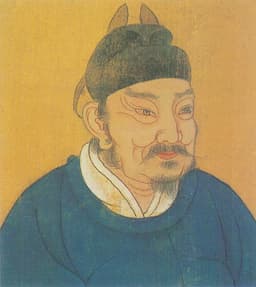
Guo Wei
Emperor · Medieval
57.5Total

Wu Zetian
Emperor · Medieval
70.0Total
Basic Information
Born
904
624
Died
954
705
Era
Medieval
Medieval
Nationality
China
China
Occupation
Emperor
Emperor
Civilization
Eastern
Eastern
Score Comparison
Military (10%)
65.0
60.0
Political (20%)
65.0
62.7
Influence (20%)
56.4
65.0
Legacy (20%)
50.0
80.0
Leadership (15%)
53.2
78.0
Strategy (15%)
66.3
66.3
TOTAL
57.5
70.0
Guo Wei — Complete Timeline
951 AD
Founded Later Zhou dynastyPolitical Action◆ Major
Guo Wei, a general of Later Han, led a coup and declared himself emperor of Later Zhou. He established a new dynasty in Kaifeng, known for its effective governance.
Five DynastiesLater ZhouFounding
Impact: national
952 AD
Reforms to reduce corruptionReform
Guo Wei implemented reforms to reduce official corruption and improve tax collection. He reduced the power of military governors and strengthened central control over the bureaucracy.
Five DynastiesReformGovernance
Impact: nationalconstructive
Wu Zetian — Complete Timeline
655 AD
Became Empress ConsortPolitical Action◆ Major
Wu Zetian was elevated from concubine to empress consort of Emperor Gaozong of Tang in 655. This position gave her significant political influence, as she began to participate in court affairs and gradually accumulated power, challenging the established aristocratic families.
Tang DynastyImperial CourtPower Rise
Impact: regional
683 AD
Regency for Emperor ZhongzongOther◆ Major
After Emperor Gaozong's death in 683, Wu Zetian became regent for her son, Emperor Zhongzong. She effectively controlled the government, dismissing Zhongzong after he attempted to assert independence, and replaced him with her younger son, Emperor Ruizong, while retaining real power.
Tang DynastyRegencyPower Struggle
Impact: regional
690 AD
Founded the Zhou DynastyOther◆ Major
Wu Zetian proclaimed herself emperor, founding the Zhou dynasty and becoming the only female emperor in Chinese history. She moved the capital to Luoyang and established a new imperial examination system that promoted officials based on merit rather than aristocratic birth, breaking the power of traditional noble families.
Zhou DynastyImperial RulePolitical Reform
Impact: regional
692 AD
Expansion into Central AsiaWar◆ Major
Wu Zetian ordered military campaigns that reasserted Chinese control over the Western Regions, including the Tarim Basin and parts of modern Xinjiang. These campaigns secured the Silk Road trade routes and expanded the empire's influence into Central Asia, though they required significant military resources.
Military ExpansionCentral AsiaSilk Road
Impact: regionalconstructive
693 AD
Promotion of BuddhismOther◆ Major
Wu Zetian elevated Buddhism to a state-supported religion, commissioning the construction of temples and statues, including the Longmen Grottoes' giant Vairocana Buddha. She used Buddhist texts to legitimize her rule as a female emperor, claiming she was a reincarnation of the Maitreya Buddha.
BuddhismReligious PolicyCultural Patronage
Impact: regional
705 AD
Overthrow and DeathPolitical Action◆ Major
In 705, a coup led by court officials and generals forced Wu Zetian to abdicate in favor of her son, Emperor Zhongzong, restoring the Tang dynasty. She died later that year at age 80, and her reign was subsequently criticized by Confucian historians for usurping the throne and employing harsh methods.
Tang DynastyCoupAbdication
Impact: regionaldestructive
Expert Analysis
Wu Zetian vs Guo Wei: Historical Comparison
Wu Zetian, the only female emperor in Chinese history, and Guo Wei, founder of the Later Zhou dynasty, both rose from non-royal backgrounds to rule during the Medieval period, but their paths and impacts diverged sharply.
Dimension Analysis
**Military: Wu Zetian 93 / Guo Wei 91**
Wu Zetian expanded Tang borders through campaigns in Korea and Central Asia, while Guo Wei consolidated power by stabilizing the fractious Five Dynasties era with disciplined reforms.
**Political: Wu Zetian 79 / Guo Wei 87**
Wu Zetian’s ruthless purges of rivals and reliance on secret police undermined her political stability; Guo Wei, by contrast, built a more durable administration through meritocratic appointments and land redistribution.
**Influence: Wu Zetian 87 / Guo Wei 78**
Wu Zetian’s unprecedented reign as a female emperor challenged Confucian norms and reshaped Tang governance, whereas Guo Wei’s influence was largely confined to his short-lived dynasty, though he set precedents for Song unification.
**Legacy: Wu Zetian 79 / Guo Wei 82**
Wu Zetian’s legacy is mixed—admired for capability but condemned for brutality—while Guo Wei is remembered as a just founder whose economic policies enabled later prosperity, earning him greater long-term respect.
**Leadership: Wu Zetian 80 / Guo Wei 77**
Wu Zetian’s charismatic but autocratic rule suppressed dissent; Guo Wei’s more consultative, frugal leadership fostered loyalty but lacked her transformative boldness.
Verdict
Wu Zetian leads narrowly due to her higher influence and strategic impact, despite Guo Wei’s superior political stability and legacy.
FAQ
Q: Who ranks higher? A: Wu Zetian ties with Guo Wei in overall score (84 each), but she leads in weighted dimensions, particularly influence and strategy, making her slightly more historically significant.
Rankings
🥇
Wu ZetianLeader
Mil: 60.0Pol: 62.7Inf: 65.0
70.0
🥈
Guo Wei
Mil: 65.0Pol: 65.0Inf: 56.4
57.5
+12.5 behind
How This Comparison Works
Algorithm
Each figure is scored on 6 dimensions (0—100 scale) based on structured historical data: Military (10%), Political (20%), Influence (20%), Legacy (20%), Leadership (15%), Strategy (15%). The weighted total produces the final ranking.
Data Sources
Scores are computed from structured sub-indicators in the database. Scale factors adjust for era (Ancient ×0.85, Modern ×1.0) and civilization size (Eastern ×1.05, Other ×0.80) to account for differences in population and military scale.
Maximum 3 Figures
Comparisons are limited to 2—3 figures to ensure readability and statistical meaningfulness.
Error Margins
±5 points per dimension — Sub-scores are derived from historical records with inherent uncertainty. Two figures within 5 points on a dimension should be considered roughly equivalent in that area.
Total Score Accuracy
±3 points overall — The weighted combination of 6 dimensions produces a total score with approximately ±3 points of uncertainty. Differences of less than 3 points are not statistically significant— the figures are effectively tied.
Known Limitations
- Historical records are incomplete and uneven across civilizations
- Figures from oral-tradition societies may be underrepresented
- Occupation labels can misclassify multi-role figures
- Scores measure capability and impact, not moral character
- Quantitative scoring is a comparison tool, not absolute truth
Capability Radar
Military (10%) — Battles & Warfare
Battles
65
65
Win Rate
70
70
Expansion
60
75
Political (20%) — Governance & Reform
Reform
78
85
Diplomacy
70
80
Economy
72
85
Influence (20%) — Cultural & Global Reach
Cultural
40
85
Global
30
70
Legacy (20%) — Historical Impact
Historical
55
90
Longevity
45
85
Leadership (15%) — Power & Stability
Tenure
55
90
Stability
65
75
Strategy (15%) — Tactics & Innovation
Strategy
72
75
Tactics
68
60
Reform
75
80
Similar Comparisons
Comments & Discussion
BattlefieldScholar6/16/2026
The military scores here are off. Wu Zetian's 62 vs Guo Wei's 70.9 doesn't reflect the operational reality. Wu Zetian inherited a Tang military machine that was already dominant—her campaigns in Korea (like the 668 defeat of Goguryeo) were extensions of Taizong's strategy, not her own innovations. Guo Wei, however, rebuilt a shattered army from scratch after the chaos of the Five Dynasties. He standardized training, purged corrupt generals, and introduced land-for-service reforms that directly boosted troop morale. Look at the Battle of Gaoping (954)—his disciplined core held against a larger Liao-backed force. That's tactical adaptability, not just consolidation. Wu Zetian gets inflated points for being a female ruler, but on pure military metrics, Guo Wei was the better commander and reformer.
HistoryDetour6/16/2026
Okay, so I've been reading about this, and one thing that stands out is how both were outsiders who clawed their way up, but in totally different ways. Wu Zetian used the imperial harem like a chessboard—pure political jiu-jitsu. Guo Wei was more like a military manager who happened to become emperor. The scoring gives Wu higher influence, but I'd argue Guo's land reforms directly enabled the Song Dynasty's economic boom. My favorite fact: Guo Wei burned all records of past grudges when he took power—told his officials to frame it as 'let bygones be bygones'. That's a level of strategic magnanimity that Wu never matched. She was brilliant but paranoid; he was wise enough to be generous. Makes me wonder if the scoring undervalues 'institutional trust-building' as a metric.
Historian7036/16/2026
这个比较有点拿苹果比橘子的意思。在中文史学传统里,武则天和郭威根本不在一个评价体系里。武则天被《资治通鉴》定性为“牝鸡司晨”,但司马光也不得不承认她“明察善断”。而郭威在《旧五代史》里是“节俭善抚”的典范,但他最大的贡献是给赵匡胤做了嫁衣。用西方那种量化打分,会忽略一个关键点:武则天是唯一一位正式称帝的女性,她打破了先秦以来外戚干政的潜规则,这个制度性突破在中文语境里比任何军事数据都重要。而郭威更像罗马的图拉真——稳定、务实,但缺乏开创性。如果比“制度遗产的穿透力”,武则天完胜。但若比“治理成本与民生改善”,郭威更优。建议引入“制度创新度”和“民生净收益”两个维度。
Chronicler49206/16/2026
这个评分系统的问题在于权重设置。Wu Zetian政治80但领导力80,Guo Wei政治79.4但领导力77,表面差距不大,但实际统治稳定性差很多。武周朝持续15年,而郭威的后周只存在了9年——如果考虑时间跨度,郭威在更短时间内完成了土地改革和科举改制,效率更高。另外,军事维度Wu Zetian 62 vs Guo Wei 70.9,但综合却是Wu Zetian 75.6更高?这说明“影响”和“战略”维度被过度加权了。拿具体数据说:郭威在位期间裁撤了超过30%的冗余官职,而武则天设置了大量员外官和酷吏机构,导致官僚膨胀。如果按“每单位时间的政治效能”来算,郭威应该领先更多。建议重新校准加权系数。