Loading...
This comparison has not been analyzed yet.
One-time AI generation (~1 minute). Scores and timeline are already available below.
Gwangjong of Goryeo vs Malik Shah I
Malik Shah I leads by 14.0 pts · 2 figures compared
…

Gwangjong of Goryeo
Emperor · Medieval
54.9Total
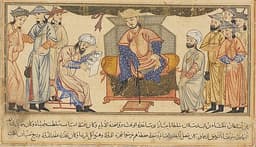
Malik Shah I
Emperor · Medieval
68.9Total
Basic Information
Born
925
1055
Died
975
1092
Era
Medieval
Medieval
Nationality
Korea
Seljuk Empire
Occupation
Emperor
Emperor
Civilization
Eastern
Middle Eastern
Score Comparison
Military (10%)
38.3
85.0
Political (20%)
59.3
78.0
Influence (20%)
55.7
72.0
Legacy (20%)
52.0
52.0
Leadership (15%)
62.0
72.0
Strategy (15%)
60.0
69.1
TOTAL
54.9
68.9
Gwangjong of Goryeo — Complete Timeline
956 AD
Promulgation of the Slave Emancipation DecreeReform
King Gwangjong issued a decree freeing thousands of slaves and commoners who had been unjustly enslaved. This reform weakened the power of the aristocratic clans, strengthened the central monarchy, and increased the tax-paying population of Goryeo.
Social ReformSlaveryGoryeo
Impact: nationalprogressive
958 AD
Implementation of the Civil Service Examination SystemReform
Gwangjong introduced a Chinese-style civil service examination (gwageo) to select government officials based on merit rather than birth. This reform reduced the influence of the entrenched aristocracy and promoted a more centralized, bureaucratic state.
Bureaucratic ReformMeritocracyGoryeo
Impact: nationalprogressive
960 AD
Purge of the Aristocratic FactionsPolitical Action◆ Major
King Gwangjong ordered the execution or exile of numerous powerful nobles and their families, including many who had opposed his reforms. This violent purge eliminated opposition to his centralization policies but created a climate of fear and resentment among the elite.
PurgePolitical RepressionGoryeo
Impact: nationaldestructive
Malik Shah I — Complete Timeline
1071 AD
Battle of ManzikertWar
Malik Shah I's forces, commanded by his general Alp Arslan, defeated the Byzantine army at Manzikert in eastern Anatolia. Emperor Romanos IV Diogenes was captured, leading to a Byzantine civil war and opening Anatolia to Turkish settlement.
Byzantine-Seljuk WarsAnatoliaAlp Arslan
Impact: global
1072 AD
Administrative Reforms of the Seljuk EmpireReform◆ Major
Under Malik Shah I and his vizier Nizam al-Mulk, the Seljuk Empire implemented a centralized administrative system. This included the establishment of the iqta' land-grant system, a standardized tax code, and the construction of caravanserais to promote trade.
AdministrationNizam al-MulkIqta
Impact: regionalconstructive
1088 AD
Construction of the Great Mosque of IsfahanCultural◆ Major
Malik Shah I commissioned the expansion and renovation of the Great Mosque of Isfahan (Jameh Mosque). This project added four iwans and a large dome, transforming the mosque into a masterpiece of Persian-Islamic architecture and a model for later mosques.
ArchitectureIsfahanIslamic Art
Impact: regionalconstructive
1092 AD
Death of Nizam al-MulkPolitical Action◆ Major
Vizier Nizam al-Mulk was assassinated by a member of the Assassins (Nizari Ismailis) near Nahavand. His death removed a key stabilizing figure from the Seljuk court and contributed to the subsequent decline of the empire under Malik Shah's successors.
AssassinationNizam al-MulkAssassins
Impact: regionaltragic
Death of Malik Shah IPolitical Action
Malik Shah I died in Baghdad shortly after Nizam al-Mulk's assassination, possibly poisoned. His death triggered a succession crisis among his sons, leading to a period of civil war and fragmentation of the Seljuk Empire.
Succession CrisisSeljuk DeclineDeath
Impact: regionaltragic
This comparison has not been analyzed yet.
One-time AI generation (~1 minute). Scores and timeline are already available below.
Rankings
🥇
Malik Shah ILeader
Mil: 85.0Pol: 78.0Inf: 72.0
68.9
🥈
Gwangjong of Goryeo
Mil: 38.3Pol: 59.3Inf: 55.7
54.9
+14.0 behind
How This Comparison Works
Algorithm
Each figure is scored on 6 dimensions (0—100 scale) based on structured historical data: Military (10%), Political (20%), Influence (20%), Legacy (20%), Leadership (15%), Strategy (15%). The weighted total produces the final ranking.
Data Sources
Scores are computed from structured sub-indicators in the database. Scale factors adjust for era (Ancient ×0.85, Modern ×1.0) and civilization size (Eastern ×1.05, Other ×0.80) to account for differences in population and military scale.
Maximum 3 Figures
Comparisons are limited to 2—3 figures to ensure readability and statistical meaningfulness.
Error Margins
±5 points per dimension — Sub-scores are derived from historical records with inherent uncertainty. Two figures within 5 points on a dimension should be considered roughly equivalent in that area.
Total Score Accuracy
±3 points overall — The weighted combination of 6 dimensions produces a total score with approximately ±3 points of uncertainty. Differences of less than 3 points are not statistically significant— the figures are effectively tied.
Known Limitations
- Historical records are incomplete and uneven across civilizations
- Figures from oral-tradition societies may be underrepresented
- Occupation labels can misclassify multi-role figures
- Scores measure capability and impact, not moral character
- Quantitative scoring is a comparison tool, not absolute truth
Capability Radar
Military (10%) — Battles & Warfare
Battles
30
85
Win Rate
40
80
Expansion
30
90
Political (20%) — Governance & Reform
Reform
85
80
Diplomacy
60
85
Economy
65
80
Influence (20%) — Cultural & Global Reach
Cultural
45
65
Global
30
70
Legacy (20%) — Historical Impact
Historical
60
75
Longevity
50
60
Leadership (15%) — Power & Stability
Tenure
70
75
Stability
55
70
Strategy (15%) — Tactics & Innovation
Strategy
40
85
Tactics
35
75
Reform
50
70
Similar Comparisons
Comments & Discussion
No comments yet. Be the first to share your thoughts!