Loading...
Malik Shah I vs Napoleon Bonaparte
Napoleon Bonaparte leads by 2.0 pts · 2 figures compared
…
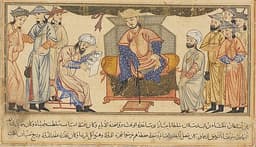
Malik Shah I
Emperor · Medieval
68.9Total

Napoleon Bonaparte
General · Modern
70.9Total
Basic Information
Born
1055
1769
Died
1092
1821
Era
Medieval
Modern
Nationality
Seljuk Empire
France
Occupation
Emperor
General
Civilization
Middle Eastern
Western
Score Comparison
Military (10%)
85.0
94.0
Political (20%)
78.0
72.0
Influence (20%)
72.0
40.0
Legacy (20%)
52.0
80.0
Leadership (15%)
72.0
78.0
Strategy (15%)
69.1
90.0
TOTAL
68.9
70.9
Malik Shah I — Complete Timeline
1071 AD
Battle of ManzikertWar
Malik Shah I's forces, commanded by his general Alp Arslan, defeated the Byzantine army at Manzikert in eastern Anatolia. Emperor Romanos IV Diogenes was captured, leading to a Byzantine civil war and opening Anatolia to Turkish settlement.
Byzantine-Seljuk WarsAnatoliaAlp Arslan
Impact: global
1072 AD
Administrative Reforms of the Seljuk EmpireReform◆ Major
Under Malik Shah I and his vizier Nizam al-Mulk, the Seljuk Empire implemented a centralized administrative system. This included the establishment of the iqta' land-grant system, a standardized tax code, and the construction of caravanserais to promote trade.
AdministrationNizam al-MulkIqta
Impact: regionalconstructive
1088 AD
Construction of the Great Mosque of IsfahanCultural◆ Major
Malik Shah I commissioned the expansion and renovation of the Great Mosque of Isfahan (Jameh Mosque). This project added four iwans and a large dome, transforming the mosque into a masterpiece of Persian-Islamic architecture and a model for later mosques.
ArchitectureIsfahanIslamic Art
Impact: regionalconstructive
1092 AD
Death of Nizam al-MulkPolitical Action◆ Major
Vizier Nizam al-Mulk was assassinated by a member of the Assassins (Nizari Ismailis) near Nahavand. His death removed a key stabilizing figure from the Seljuk court and contributed to the subsequent decline of the empire under Malik Shah's successors.
AssassinationNizam al-MulkAssassins
Impact: regionaltragic
Death of Malik Shah IPolitical Action
Malik Shah I died in Baghdad shortly after Nizam al-Mulk's assassination, possibly poisoned. His death triggered a succession crisis among his sons, leading to a period of civil war and fragmentation of the Seljuk Empire.
Succession CrisisSeljuk DeclineDeath
Impact: regionaltragic
Napoleon Bonaparte — Complete Timeline
1799 AD
Coup of 18 BrumaireOther◆ Major
Napoleon Bonaparte, with support from his brother Lucien and key political figures, overthrew the Directory in a bloodless coup. He established the Consulate with himself as First Consul, effectively becoming the ruler of France. This event ended the French Revolution's most unstable period.
French RevolutionCoupRise to Power
Impact: regional
1804 AD
Promulgation of the Napoleonic CodeOther◆ Major
Napoleon enacted the Civil Code of the French, known as the Napoleonic Code, a comprehensive set of laws that replaced the fragmented feudal legal systems. The code established legal equality, protected property rights, and secularized law. It became the basis for legal systems in many European and world countries.
Legal ReformNapoleonic CodeCivil Law
Impact: globalconstructive
1805 AD
Battle of AusterlitzWar◆ Major
Napoleon's Grande Arm
Napoleonic WarsBattleDecisive Victory
Impact: global
1812 AD
Invasion of RussiaWar◆ Major
Napoleon led the Grande Arm
Napoleonic WarsInvasionDisaster
Impact: globaldestructive
1815 AD
Battle of WaterlooWar◆ Major
Napoleon's French army was defeated by the combined forces of the Duke of Wellington's Anglo-Allied army and Gebhard Leberecht von Bl
Napoleonic WarsBattleFinal Defeat
Impact: globaldestructive
Expert Analysis
malik-shah-i-2-vs-napoleon-bonaparte
# The Sultan and the Emperor: Two Visions of Power in an Age of Empire
In the autumn of 1092, as Malik Shah I lay dying in Baghdad—perhaps poisoned, perhaps struck down by fever—the Great Seljuk Empire he had ruled for two decades began to crumble before his body grew cold. Seven hundred years later, on a June evening in 1815, Napoleon Bonaparte watched his Imperial Guard break and flee at Waterloo, a defeat so total that it would end not just a campaign but an era. Both men had built empires that stretched across continents. Both had commanded armies that changed the course of history. Yet one is remembered as a titan of military genius, the other as a footnote in the rise of Turkic power. Why? The answer lies not in their achievements, but in the worlds they inherited and the choices they made.
Origins
Napoleon was born in 1769 on Corsica, an island that had only recently passed from Genoese to French control. He was neither French by blood nor noble by birth—his family belonged to the minor Corsican gentry, speaking Italian at home and nursing resentments against their new overlords. The French Revolution, erupting when he was twenty, shattered the old hierarchies and created a vacuum into which a brilliant artillery officer could climb. Napoleon was a child of chaos, shaped by a world where birth mattered less than ambition.
Malik Shah I, by contrast, was born into power. His grandfather Tughril had founded the Seljuk dynasty, his father Alp Arslan had crushed the Byzantines at Manzikert in 1071, and the young prince inherited not just a throne but a system of governance already tested in battle. The Seljuks were steppe warriors who had conquered Persia, Iraq, and Anatolia, but they ruled a civilization far older and more sophisticated than themselves. Malik Shah’s challenge was not to invent a new order, but to master an existing one—to become Persian in court, Islamic in faith, and Turkic in military might.
Rise to Power
Napoleon’s ascent was meteoric. At twenty-four, he cleared the streets of Paris with a “whiff of grapeshot” during the Royalist uprising of 1795. At twenty-six, he led a ragged army across the Alps into Italy and carved victories from the Austrian Empire. By thirty, he had conquered Egypt—a disaster in military terms, but a masterstroke of propaganda. He understood that in an age of newspapers and revolutionary fervor, perception was power. When he returned to France in 1799, he overthrew the Directory in a coup and made himself First Consul. Five years later, he crowned himself Emperor.
Malik Shah’s path was different. He became sultan in 1072 at the age of seventeen, inheriting an empire his father had built. But his father had died not in battle, but by the knife of a captured garrison commander—a reminder that in the Seljuk world, power was always personal and always precarious. The young sultan’s first task was to secure his throne against his own uncles and cousins, a civil war that consumed his early reign. Where Napoleon seized power, Malik Shah had to defend it.
Leadership & Governance
Here the two men diverge most sharply. Napoleon was a military genius of the first rank—his scores of 94 in military and 93 in strategy reflect a mind that revolutionized warfare. He moved armies faster than his enemies, concentrated force at decisive points, and understood that morale was a weapon. But his political score of 75 reveals the flaw: he could conquer Europe but could not govern it. The Napoleonic Code was a genuine reform, standardizing law across France and influencing civil codes worldwide. Yet his empire was a pyramid of conquest, held together by his own presence. When he fell, it collapsed.
Malik Shah’s genius was administrative. With his vizier Nizam al-Mulk—one of history’s great statesmen—he built a centralized bureaucracy that collected taxes, maintained roads, and supported scholars. The Great Mosque of Isfahan, expanded under his patronage in 1088, still stands as a monument to his era’s architectural and spiritual ambition. The Seljuk Empire under Malik Shah was not a collection of conquered provinces but a coherent state, governed by Persian-speaking officials who knew how to manage a complex society. His military score of 67.8 is modest, but he understood that lasting power came from systems, not battles.
Triumph & Tragedy
Napoleon’s greatest triumph was Austerlitz in 1805, where he destroyed the combined armies of Russia and Austria in a single day. His greatest tragedy was the invasion of Russia in 1812—half a million men marched east, fewer than thirty thousand returned. The disaster was not a mistake of tactics but of strategy: he could not understand that a nation’s will to resist mattered more than its army’s size.
Malik Shah’s triumph was the expansion of the Seljuk Empire to its greatest extent, from the Mediterranean to the borders of China. His tragedy came in 1092, when Nizam al-Mulk was assassinated by the Assassins—a secretive sect of Nizari Ismailis who struck at the heart of the state. The vizier’s death was a wound that never healed; Malik Shah himself died months later, and the succession crisis that followed tore the empire apart. Where Napoleon’s fall came from external defeat, Malik Shah’s came from internal collapse.
Character & Destiny
Napoleon was restless, arrogant, and endlessly ambitious. “Impossible is not in my dictionary,” he supposedly said, and he lived as if it were true. But his character was also his curse: he could not stop, could not compromise, could not share power. Destiny for him was a stage, and he would play the lead role or none at all.
Malik Shah was more enigmatic. He ruled through delegation, trusted his vizier, and built institutions that outlasted him. But that same trust proved fatal—when Nizam al-Mulk fell, the sultan had no one to replace him. His character was that of a manager, not a conqueror, and in the brutal politics of the medieval Middle East, that made him vulnerable.
Legacy
Napoleon’s legacy is immense. He reshaped Europe’s borders, inspired nationalism, and left a legal code that still governs millions. His name is synonymous with military genius, and his campaigns are studied in every war college. But his empire lasted barely a decade.
Malik Shah’s legacy is quieter but perhaps deeper. The Seljuk Empire did not survive him, but it laid the foundations for the Ottoman Empire that would dominate the Middle East for six centuries. The Persian administrative traditions he preserved influenced Islamic governance for generations. His name is less known, but his influence is woven into the fabric of a region.
Conclusion
Standing at the edge of the Mediterranean, Napoleon once said, “Europe is a molehill—everything has always depended on the East.” He was wrong about many things, but not about that. The East had produced empires that lasted centuries, built not on the brilliance of one man but on the endurance of institutions. Napoleon was a comet—blazing, unforgettable, and brief. Malik Shah was a star—steady, illuminating, and ultimately consumed by the darkness around it. Both were great, but greatness takes many forms, and history remembers the spectacular more often than the sustainable.
Rankings
🥇
Napoleon BonaparteLeader
Mil: 94.0Pol: 72.0Inf: 40.0
70.9
🥈
Malik Shah I
Mil: 85.0Pol: 78.0Inf: 72.0
68.9
+2.0 behind
How This Comparison Works
Algorithm
Each figure is scored on 6 dimensions (0—100 scale) based on structured historical data: Military (10%), Political (20%), Influence (20%), Legacy (20%), Leadership (15%), Strategy (15%). The weighted total produces the final ranking.
Data Sources
Scores are computed from structured sub-indicators in the database. Scale factors adjust for era (Ancient ×0.85, Modern ×1.0) and civilization size (Eastern ×1.05, Other ×0.80) to account for differences in population and military scale.
Maximum 3 Figures
Comparisons are limited to 2—3 figures to ensure readability and statistical meaningfulness.
Error Margins
±5 points per dimension — Sub-scores are derived from historical records with inherent uncertainty. Two figures within 5 points on a dimension should be considered roughly equivalent in that area.
Total Score Accuracy
±3 points overall — The weighted combination of 6 dimensions produces a total score with approximately ±3 points of uncertainty. Differences of less than 3 points are not statistically significant— the figures are effectively tied.
Known Limitations
- Historical records are incomplete and uneven across civilizations
- Figures from oral-tradition societies may be underrepresented
- Occupation labels can misclassify multi-role figures
- Scores measure capability and impact, not moral character
- Quantitative scoring is a comparison tool, not absolute truth
Capability Radar
Military (10%) — Battles & Warfare
Battles
85
95
Win Rate
80
90
Expansion
90
95
Political (20%) — Governance & Reform
Reform
80
95
Diplomacy
85
80
Economy
80
85
Influence (20%) — Cultural & Global Reach
Cultural
65
85
Global
70
90
Legacy (20%) — Historical Impact
Historical
75
95
Longevity
60
90
Leadership (15%) — Power & Stability
Tenure
75
85
Stability
70
70
Strategy (15%) — Tactics & Innovation
Strategy
85
95
Tactics
75
98
Reform
70
92
Similar Comparisons
Comments & Discussion
Thunderbolt of Anatolia6/17/2026
As a military historian, I’ll take Malik Shah any day. Napoleon’s brilliance was reactive, exploiting cannon and chaos, but Malik Shah inherited a mobile horse-archer army from Alp Arslan and expanded it across Syria, Anatolia, and Persia without a single Waterloo-level collapse. His 1071 victory at Manzikert wasn’t just a battle—it cracked open Byzantium for centuries. Napoleon lost his edge at Borodino; Malik Shah died with his empire still swelling. That’s real momentum.
数字幽灵6/17/2026
数据上拿破仑碾压,但这不是简单的对比。拿破仑指挥了超过60场战役,马尔克沙只亲征几次,后者更多的是依赖维齐尔尼扎姆·穆勒克的行政体系。可惜,1092年尼扎姆被刺杀后,马尔克沙的帝国迅速分裂。拿破仑的滑铁卢虽然惨败,但百日王朝再起时仍能动员数十万军队。马尔克沙死后,塞尔柱连像样的继承人战争都没打赢。数据不会撒谎。
江湖散人6/17/2026
我更喜欢马尔克沙的故事。他是中亚传统的代表——游牧民族的崛起,而拿破仑是西方启蒙运动的产物,两者根本不同。马尔克沙的塞尔柱帝国奠定了突厥人在安纳托利亚的基础,间接催生了后来的奥斯曼帝国。拿破仑的法国帝国只延续了十几年。论持久影响力,马尔克沙赢了。再说,拿破仑死于流放,马尔克沙尽管有阴谋,但却死在权力巅峰。
Corsican Ghost6/17/2026
Revisionist take: both were overrated. Napoleon’s genius was tactical, not strategic—his Continental System choked France’s economy, and his Egyptian campaign was a logistical disaster. Malik Shah’s “greatness” is a myth boosted by Persian chroniclers; his father Alp Arslan did the heavy lifting at Manzikert. Malik Shah spent his reign consolidating, not conquering. Neither left a lasting institution—the Seljuk state fragmented within decades, and Napoleon’s empire lasted a generation. Give me G
Chronicler20026/17/2026
Classics scholar here: Napoleon is the better comparison to Alexander, not Malik Shah. Malik Shah ruled a Persianate court where Persian was the language of literature and Turkish the tongue of war—a civilizational hybrid that stabilized his realm. Napoleon forced his code and metric system onto Europe, a raw imposition. The Seljuk sultan fostered a renaissance in Isfahan, building observatories and patronizing Omar Khayyam; Napoleon burned libraries in Egypt. Legacy isn’t just conquest.