Loading...
H. H. Kung vs Joseph Kabila
Joseph Kabila leads by 0.9 pts · 2 figures compared
…

H. H. Kung
Politician · Modern
46.3Total
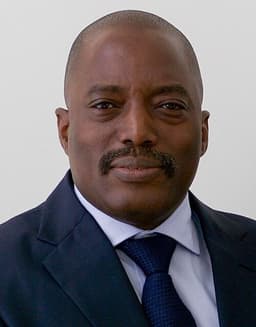
Joseph Kabila
Politician · Modern
47.2Total
Basic Information
Born
1881
1971
Died
1967
—
Era
Modern
Modern
Nationality
China
Congo
Occupation
Politician
Politician
Civilization
Eastern
Other
Score Comparison
Military (10%)
11.3
20.0
Political (20%)
68.0
40.8
Influence (20%)
50.2
49.4
Legacy (20%)
40.0
40.8
Leadership (15%)
65.0
74.0
Strategy (15%)
26.3
54.6
TOTAL
46.3
47.2
H. H. Kung — Complete Timeline
1933 AD
Appointment as Finance MinisterPolitical Action◆ Major
H. H. Kung became Minister of Finance of the Republic of China. He implemented currency reform, including the nationalization of silver and the establishment of the fabi (legal tender) system, which stabilized China's economy during the war with Japan.
Republic of ChinaFinanceCurrency Reform
Impact: nationalconstructive
1936 AD
Negotiation of the Sino-American Silver AgreementPolitical Action◆ Major
Kung negotiated an agreement with the United States to purchase Chinese silver, providing China with foreign exchange reserves to back its new currency. This helped stabilize the Chinese economy during the Second Sino-Japanese War.
Republic of ChinaDiplomacyEconomy
Impact: nationalconstructive
Joseph Kabila — Complete Timeline
2001 AD
Became President of the Democratic Republic of the CongoPolitical Action◆ Major
Joseph Kabila became President of the DRC at age 29 after his father Laurent Kabila's assassination. He inherited a country embroiled in the Second Congo War and faced the challenge of ending the conflict.
PresidencySuccessionDRC
Impact: national
2002 AD
Signed Sun City AgreementPolitical Action
Kabila's government signed the Sun City Agreement, a peace deal that ended the Second Congo War. The agreement established a transitional government and paved the way for democratic elections.
Peace AgreementSecond Congo WarTransition
Impact: regionalconstructive
2006 AD
Won First Democratic Elections in DRCPolitical Action◆ Major
Joseph Kabila won the first democratic presidential elections in the DRC since independence, defeating Jean-Pierre Bemba in a runoff. The elections were largely peaceful but marred by allegations of irregularities.
ElectionsDemocracyDRC
Impact: nationalconstructive
2016 AD
Refused to Step Down After 2016 ElectionsPolitical Action◆ Major
Kabila's refusal to step down after his constitutional term limit expired in 2016 sparked political crisis and protests. He remained in power until 2019, citing delays in organizing elections.
Constitutional CrisisTerm LimitsPolitical Instability
Impact: nationaldestructive
2019 AD
Peacefully Transferred Power to Félix TshisekediPolitical Action
Joseph Kabila peacefully transferred power to opposition leader F
Power TransferDemocracyDRC
Impact: nationalconstructive
Expert Analysis
Origins
H. H. Kung (1881–1967) was born into a wealthy banking family in Shanxi, China. His family's fortune, built through banking and commerce, provided him with a privileged education. He studied at Oberlin College and Yale University in the United States, earning a degree in economics. His marriage to Soong Ai-ling, sister of Soong Mei-ling (wife of Chiang Kai-shek), connected him to the powerful Soong dynasty, which dominated Republican China's politics and finance.
Joseph Kabila (born 1971) was born in Hewa Bora, Belgian Congo, to Laurent Kabila, a rebel leader. He grew up in Tanzania and Uganda, receiving military training in Tanzania and China. His father's rise from rebel to president of the Democratic Republic of the Congo (DRC) in 1997 placed Joseph in a politically volatile environment. He attended military academies and became involved in the army, but his formal education was limited compared to Kung's.
Rise to Power
H. H. Kung's rise was driven by family connections and expertise in finance. In 1933, he became Minister of Finance of the Republic of China under Chiang Kai-shek. His key achievement was the 1935 currency reform, which nationalized silver and established the fabi (legal tender) system. This reform aimed to stabilize China's economy and fund the war against Japan. Kung also negotiated the Sino-American Silver Agreement in 1936, securing U.S. purchases of Chinese silver to build foreign exchange reserves. His political power peaked during the Second Sino-Japanese War, but he faced criticism for corruption and mismanagement.
Joseph Kabila became president at age 29 after his father's assassination in January 2001. He inherited a country mired in the Second Congo War (1998–2003), involving multiple African nations. His rise was not through electoral mandate but familial succession. He consolidated power by signing the Sun City Agreement in 2002, which ended the war and established a transitional government. In 2006, he won the DRC's first democratic presidential elections, defeating Jean-Pierre Bemba in a runoff. This marked a turning point, giving him democratic legitimacy.
Leadership & Governance
Kung's leadership focused on fiscal policy and economic stabilization. He implemented the fabi currency to unify China's monetary system and reduce reliance on silver. However, his tenure was marred by hyperinflation during the war, as the government printed money to finance military expenses. His governance style was top-down, relying on personal connections and patronage. He scored 65.0 in leadership but only 26.3 in strategy, reflecting his inability to control inflation.
Kabila's governance was defined by post-conflict reconstruction and political maneuvering. He oversaw the transition from war to peace, demobilizing militias and holding elections. His leadership score of 74.0 reflects his ability to maintain stability and negotiate peace, but his political score of 40.8 shows his challenges with democratic governance. He amended the constitution in 2011 to change electoral rules and delayed elections after 2016, sparking protests. His strategy score of 54.6 indicates mixed success in consolidating power.
Triumph & Tragedy
Kung's triumph was the 1935 currency reform, which temporarily stabilized China's economy and provided resources for the war. However, his failure was the resulting hyperinflation, which destroyed savings and undermined public trust. By 1949, the fabi was worthless, contributing to the Nationalist government's collapse. His legacy is tainted by corruption allegations; he amassed a personal fortune while millions suffered.
Kabila's triumph was ending the Second Congo War, which killed over 5 million people, and overseeing the first democratic elections in 2006. His peaceful transfer of power in 2019 to Félix Tshisekedi was a landmark for the DRC. His tragedy was the 2016–2018 political crisis, where his refusal to step down led to violence and instability. He also failed to address widespread poverty and corruption, scoring only 40.8 on legacy.
Character & Destiny
Kung was pragmatic and detail-oriented, but his wealth and connections insulated him from the consequences of his policies. He was criticized for prioritizing personal gain over national interest. His destiny was tied to the Nationalist regime's fate; he fled to Taiwan after the Communist victory in 1949.
Kabila was cautious and resilient, often described as reserved. His early inexperience was offset by his ability to navigate complex political and military landscapes. His destiny was shaped by the weight of a failed state; he maintained power through a mix of coercion and negotiation. His decision to step down in 2019 surprised many, but it preserved his legacy as a transitional figure.
Legacy
Kung's monetary reforms influenced modern Chinese economic history but are overshadowed by the hyperinflation disaster. He is remembered as a symbol of the Nationalist era's corruption. His score of 40.0 in legacy reflects this mixed assessment.
Kabila's legacy is more significant: he brought peace to a war-torn nation and facilitated a democratic transition. However, his failure to strengthen institutions left the DRC fragile. His legacy score of 40.8 is similar to Kung's, but his impact on millions of lives is larger.
Conclusion
Joseph Kabila had a greater impact than H. H. Kung. While Kung's currency reform was notable, his failures contributed to economic collapse. Kabila ended a devastating war and managed a peaceful transfer of power, a rare achievement in African politics. With a total score of 47.2 versus Kung's 46.3, Kabila's leadership in crisis resolution outweighs Kung's financial reforms. History judges Kabila as a flawed but pivotal figure in the DRC's development, while Kung's legacy is largely negative.
Rankings
🥇
Joseph KabilaLeader
Mil: 20.0Pol: 40.8Inf: 49.4
47.2
🥈
H. H. Kung
Mil: 11.3Pol: 68.0Inf: 50.2
46.3
+0.9 behind
How This Comparison Works
Algorithm
Each figure is scored on 6 dimensions (0—100 scale) based on structured historical data: Military (10%), Political (20%), Influence (20%), Legacy (20%), Leadership (15%), Strategy (15%). The weighted total produces the final ranking.
Data Sources
Scores are computed from structured sub-indicators in the database. Scale factors adjust for era (Ancient ×0.85, Modern ×1.0) and civilization size (Eastern ×1.05, Other ×0.80) to account for differences in population and military scale.
Maximum 3 Figures
Comparisons are limited to 2—3 figures to ensure readability and statistical meaningfulness.
Error Margins
±5 points per dimension — Sub-scores are derived from historical records with inherent uncertainty. Two figures within 5 points on a dimension should be considered roughly equivalent in that area.
Total Score Accuracy
±3 points overall — The weighted combination of 6 dimensions produces a total score with approximately ±3 points of uncertainty. Differences of less than 3 points are not statistically significant— the figures are effectively tied.
Known Limitations
- Historical records are incomplete and uneven across civilizations
- Figures from oral-tradition societies may be underrepresented
- Occupation labels can misclassify multi-role figures
- Scores measure capability and impact, not moral character
- Quantitative scoring is a comparison tool, not absolute truth
Capability Radar
Military (10%) — Battles & Warfare
Battles
16
15
Win Rate
17
20
Expansion
20
10
Political (20%) — Governance & Reform
Reform
35
30
Diplomacy
30
40
Economy
45
25
Influence (20%) — Cultural & Global Reach
Cultural
15
15
Global
15
20
Legacy (20%) — Historical Impact
Historical
20
25
Longevity
10
20
Leadership (15%) — Power & Stability
Tenure
40
65
Stability
20
20
Strategy (15%) — Tactics & Innovation
Strategy
26
15
Tactics
26
10
Reform
29
25
Similar Comparisons
Comments & Discussion
No comments yet. Be the first to share your thoughts!