Loading...
Haile Selassie vs Mohammad Reza Pahlavi
Haile Selassie leads by 4.0 pts · 2 figures compared
…

Haile Selassie
Emperor · Modern
57.5Total
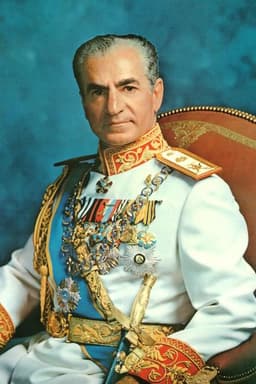
Mohammad Reza Pahlavi
Emperor · Modern
53.5Total
Basic Information
Born
1892
1919
Died
1975
1980
Era
Modern
Modern
Nationality
Ethiopia
Iran
Occupation
Emperor
Emperor
Civilization
Other
Middle Eastern
Score Comparison
Military (10%)
25.0
22.6
Political (20%)
55.0
55.0
Influence (20%)
65.0
62.0
Legacy (20%)
55.0
48.3
Leadership (15%)
72.0
74.0
Strategy (15%)
60.0
43.3
TOTAL
57.5
53.5
Haile Selassie — Complete Timeline
1930 AD
Coronation as EmperorPolitical Action◆ Major
Haile Selassie was crowned Emperor of Ethiopia at Addis Ababa, taking the throne name Haile Selassie I. The coronation was a grand ceremony attended by foreign dignitaries, symbolizing Ethiopia's sovereignty.
CoronationEmperorSovereignty
Impact: nationalconstructive
1936 AD
Italian Invasion and ExileWar
Italy invaded Ethiopia, and Haile Selassie's forces were defeated. He fled into exile in England, where he appealed to the League of Nations for help, famously denouncing the invasion and the failure of collective security.
InvasionExileLeague of Nations
Impact: globaltragic
Address to the League of NationsPolitical Action◆ Major
Haile Selassie addressed the League of Nations in Geneva, condemning Italy's use of chemical weapons and the League's failure to protect Ethiopia. His speech became a symbol of African resistance and international justice.
SpeechLeague of NationsChemical Weapons
Impact: global
1941 AD
Return to Ethiopia and RestorationWar◆ Major
Haile Selassie returned to Ethiopia with British forces, leading a campaign to liberate the country from Italian occupation. He was restored to the throne, reestablishing Ethiopian independence.
LiberationRestorationBritish Alliance
Impact: nationalconstructive
1955 AD
Constitution of 1955Reform◆ Major
Haile Selassie promulgated a new constitution that established a bicameral parliament and limited civil rights. While it allowed for some representation, it maintained imperial authority and did not create a fully democratic system.
ConstitutionParliamentReform
Impact: national
1974 AD
Overthrow and DeathPolitical Action
Haile Selassie was overthrown by the Derg, a Marxist military junta, after a period of famine and unrest. He was placed under house arrest and died in 1975 under disputed circumstances, ending the Solomonic dynasty.
CoupDergEnd of Dynasty
Impact: nationaltragic
Mohammad Reza Pahlavi — Complete Timeline
1953 AD
1953 Iranian coup d'étatPolitical Action
Mohammad Reza Pahlavi was reinstated as Shah after a CIA- and MI6-backed coup overthrew Prime Minister Mohammad Mossadegh. The coup ended Iran's democratic experiment and established the Shah's authoritarian rule, fueling long-term resentment.
CoupMossadeghUS intervention
Impact: nationaldestructive
1963 AD
White RevolutionReform◆ Major
The Shah launched the White Revolution, a series of land reforms, modernization, and women's suffrage. While it aimed to modernize Iran, it disrupted traditional rural life, concentrated wealth, and alienated the clergy and landowners.
Land reformModernizationWomen's rights
Impact: national
1971 AD
1971 2,500-year celebration of the Persian EmpireCultural
The Shah hosted an extravagant celebration at Persepolis to mark 2,500 years of the Persian monarchy. The event was criticized for its opulence and disregard for Iran's poverty, fueling opposition to his regime.
ExtravagancePropagandaOpposition
Impact: nationaldestructive
1979 AD
Islamic Revolution and exilePolitical Action
Mass protests led by Ayatollah Khomeini overthrew the Shah's regime. Mohammad Reza Pahlavi fled Iran in January 1979, eventually seeking medical treatment abroad. He died in exile in Egypt in 1980, never returning to Iran.
RevolutionExileKhomeini
Impact: globaltragic
Expert Analysis
Origins
**Haile Selassie** was born Tafari Makonnen on July 23, 1892, in Ejersa Goro, Ethiopia. He was a member of the Solomonic dynasty, claiming descent from King Solomon and the Queen of Sheba. His father, Ras Makonnen, was a governor and cousin to Emperor Menelik II. Tafari was educated at home by French missionaries and Ethiopian clergy, learning Amharic, French, and English. He was appointed governor of Sidamo province at age 14, gaining administrative experience.
**Mohammad Reza Pahlavi** was born on October 26, 1919, in Tehran, Iran. He was the son of Reza Shah, a military officer who founded the Pahlavi dynasty. Mohammad Reza was educated at the Institute Le Rosey in Switzerland and later at Tehran's military academy. His father abdicated in 1941 under Allied pressure, making Mohammad Reza Shah at age 21.
Rise to Power
Haile Selassie rose through a combination of noble birth, strategic marriages, and political acumen. He became governor of Harar in 1916 and was named regent for Empress Zewditu. In 1923, he secured Ethiopia's admission to the League of Nations. He was crowned Emperor on November 2, 1930, after Zewditu's death. His coronation was a global media event, symbolizing Ethiopia's sovereignty.
Mohammad Reza Pahlavi's rise was more abrupt. After his father's forced abdication, he became Shah in 1941 during World War II. Initially a constitutional monarch, he faced power struggles with Prime Minister Mohammad Mossadegh. In 1953, a CIA- and MI6-backed coup overthrew Mossadegh, giving the Shah absolute control. He then consolidated power through the military and secret police (SAVAK).
Leadership & Governance
Haile Selassie pursued modernization cautiously. He introduced Ethiopia's first constitution in 1931, establishing a bicameral parliament, but retained absolute power. He abolished slavery, reformed education, and built infrastructure. However, his land tenure system favored nobles and the church, leaving peasants impoverished. He centralized governance, undermining regional lords, but corruption persisted.
Mohammad Reza Pahlavi's White Revolution (1963) was a top-down modernization program: land redistribution, women's suffrage, literacy campaigns, and industrial expansion. Oil revenues funded rapid urbanization and military buildup. However, the reforms disrupted rural life, created a new bourgeoisie, and alienated clerics and traditionalists. The Shah's authoritarian rule relied on SAVAK, suppressing dissent with torture and executions.
Triumph & Tragedy
Haile Selassie's greatest triumph was his address to the League of Nations in 1936, condemning Italy's invasion and use of chemical weapons. His speech made him a global symbol of anti-colonialism. He was restored to power in 1941 after British forces liberated Ethiopia. His tragedy came later: a devastating famine in 1973 killed over 200,000, which his government denied. The ensuing unrest led to his overthrow by the Derg in 1974. He died under house arrest, possibly murdered.
Mohammad Reza Pahlavi's triumph was Iran's rapid modernization and increased international influence. He hosted the 1971 Persepolis celebration, showcasing Iran's ancient heritage. His tragedy was the Islamic Revolution of 1979, which overthrew him. The revolution was fueled by opposition from clerics, intellectuals, and the poor, who resented his autocracy, Western alignment, and corruption. He died in exile in Egypt in 1980.
Character & Destiny
Haile Selassie was reserved, diplomatic, and patient. He believed in gradual reform and often compromised with elites. His faith in international institutions proved misplaced when the League failed to protect Ethiopia. His later years showed a disconnect from his people's suffering, contributing to his downfall. Historians assess him as a visionary who failed to adapt to changing times.
Mohammad Reza Pahlavi was indecisive and paranoid, but ambitious. He sought to transform Iran into a modern, secular power. His reliance on repression and foreign support, especially the U.S., made him vulnerable. He ignored warnings about popular discontent, believing his military and intelligence services could crush any uprising. His character—aloof, entitled, and insecure—alienated potential allies.
Legacy
Haile Selassie's legacy is complex. He is revered in Rastafarianism as a divine figure, but in Ethiopia he is criticized for failing to prevent famine and for authoritarian rule. His support for the Organization of African Unity (now AU) and his anti-colonial stance remain influential. Ethiopia's current government has distanced itself from his monarchy.
Mohammad Reza Pahlavi's legacy is deeply contested. In Iran, he is remembered as a puppet of the West and a tyrant. Abroad, some view him as a modernizer who tried to drag Iran into the 20th century. His White Revolution's land reforms are partially credited with later agricultural development. The Islamic Republic defines itself in opposition to his regime.
Conclusion
Comparing their scores, Haile Selassie (TOTAL 57.5) leads Mohammad Reza Pahlavi (53.5) by 4 points. Selassie's higher Leadership (72.0 vs 74.0 is a statistical tie, but his Strategy 60.0 vs 43.3 is decisive) and Legacy (55.0 vs 48.3) reflect his broader influence. However, the Shah's modernization was more aggressive and transformative. Yet Selassie's impact on global anti-colonialism and Rastafarianism gives him a more enduring cultural footprint. Both were autocrats whose failures led to their downfalls. Selassie's greater historical impact stems from his symbolic role in African independence and his unique religious legacy. The Shah's revolution created a theocracy that reshaped the Middle East, but Selassie's influence transcends politics into spirituality.
Rankings
🥇
Haile SelassieLeader
Mil: 25.0Pol: 55.0Inf: 65.0
57.5
🥈
Mohammad Reza Pahlavi
Mil: 22.6Pol: 55.0Inf: 62.0
53.5
+4.0 behind
How This Comparison Works
Algorithm
Each figure is scored on 6 dimensions (0—100 scale) based on structured historical data: Military (10%), Political (20%), Influence (20%), Legacy (20%), Leadership (15%), Strategy (15%). The weighted total produces the final ranking.
Data Sources
Scores are computed from structured sub-indicators in the database. Scale factors adjust for era (Ancient ×0.85, Modern ×1.0) and civilization size (Eastern ×1.05, Other ×0.80) to account for differences in population and military scale.
Maximum 3 Figures
Comparisons are limited to 2—3 figures to ensure readability and statistical meaningfulness.
Error Margins
±5 points per dimension — Sub-scores are derived from historical records with inherent uncertainty. Two figures within 5 points on a dimension should be considered roughly equivalent in that area.
Total Score Accuracy
±3 points overall — The weighted combination of 6 dimensions produces a total score with approximately ±3 points of uncertainty. Differences of less than 3 points are not statistically significant— the figures are effectively tied.
Known Limitations
- Historical records are incomplete and uneven across civilizations
- Figures from oral-tradition societies may be underrepresented
- Occupation labels can misclassify multi-role figures
- Scores measure capability and impact, not moral character
- Quantitative scoring is a comparison tool, not absolute truth
Capability Radar
Military (10%) — Battles & Warfare
Battles
45
15
Win Rate
40
10
Expansion
30
10
Political (20%) — Governance & Reform
Reform
60
70
Diplomacy
75
60
Economy
50
55
Influence (20%) — Cultural & Global Reach
Cultural
70
55
Global
70
55
Legacy (20%) — Historical Impact
Historical
75
60
Longevity
65
30
Leadership (15%) — Power & Stability
Tenure
85
65
Stability
40
20
Strategy (15%) — Tactics & Innovation
Strategy
50
25
Tactics
35
20
Reform
55
60
Similar Comparisons
Comments & Discussion
No comments yet. Be the first to share your thoughts!