Loading...
Haile Selassie vs Wilhelm I
Wilhelm I leads by 13.8 pts · 2 figures compared
…

Haile Selassie
Emperor · Modern
57.5Total
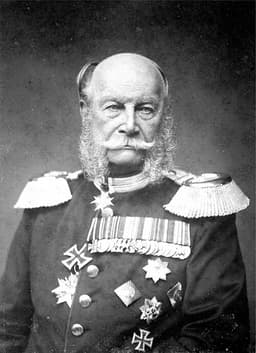
Wilhelm I
Emperor · Modern
71.3Total
Basic Information
Born
1892
1797
Died
1975
1888
Era
Modern
Modern
Nationality
Ethiopia
Germany
Occupation
Emperor
Emperor
Civilization
Other
Western
Score Comparison
Military (10%)
25.0
65.0
Political (20%)
55.0
72.0
Influence (20%)
65.0
72.0
Legacy (20%)
55.0
72.0
Leadership (15%)
72.0
80.0
Strategy (15%)
60.0
60.0
TOTAL
57.5
71.3
Haile Selassie — Complete Timeline
1930 AD
Coronation as EmperorPolitical Action◆ Major
Haile Selassie was crowned Emperor of Ethiopia at Addis Ababa, taking the throne name Haile Selassie I. The coronation was a grand ceremony attended by foreign dignitaries, symbolizing Ethiopia's sovereignty.
CoronationEmperorSovereignty
Impact: nationalconstructive
1936 AD
Italian Invasion and ExileWar
Italy invaded Ethiopia, and Haile Selassie's forces were defeated. He fled into exile in England, where he appealed to the League of Nations for help, famously denouncing the invasion and the failure of collective security.
InvasionExileLeague of Nations
Impact: globaltragic
Address to the League of NationsPolitical Action◆ Major
Haile Selassie addressed the League of Nations in Geneva, condemning Italy's use of chemical weapons and the League's failure to protect Ethiopia. His speech became a symbol of African resistance and international justice.
SpeechLeague of NationsChemical Weapons
Impact: global
1941 AD
Return to Ethiopia and RestorationWar◆ Major
Haile Selassie returned to Ethiopia with British forces, leading a campaign to liberate the country from Italian occupation. He was restored to the throne, reestablishing Ethiopian independence.
LiberationRestorationBritish Alliance
Impact: nationalconstructive
1955 AD
Constitution of 1955Reform◆ Major
Haile Selassie promulgated a new constitution that established a bicameral parliament and limited civil rights. While it allowed for some representation, it maintained imperial authority and did not create a fully democratic system.
ConstitutionParliamentReform
Impact: national
1974 AD
Overthrow and DeathPolitical Action
Haile Selassie was overthrown by the Derg, a Marxist military junta, after a period of famine and unrest. He was placed under house arrest and died in 1975 under disputed circumstances, ending the Solomonic dynasty.
CoupDergEnd of Dynasty
Impact: nationaltragic
Wilhelm I — Complete Timeline
1862 AD
Appointed Otto von Bismarck as Minister President of PrussiaPolitical Action
Wilhelm I appointed Otto von Bismarck as Minister President of Prussia to resolve a constitutional crisis over military reforms. Bismarck's appointment led to a period of conservative dominance and aggressive foreign policy that culminated in German unification.
BismarckPrussiaGerman Unification
Impact: global
1866 AD
Led Prussia in the Austro-Prussian WarWar◆ Major
Wilhelm I, as King of Prussia, led the Prussian army in the Austro-Prussian War. The decisive Prussian victory at K
Austro-Prussian WarGerman UnificationMilitary
Impact: regional
1871 AD
Proclaimed German Emperor at VersaillesPolitical Action
Wilhelm I was proclaimed German Emperor in the Hall of Mirrors at the Palace of Versailles, following the Franco-Prussian War. This event formally unified the German states into the German Empire, with Wilhelm as hereditary emperor and Bismarck as chancellor.
German UnificationEmpireFranco-Prussian War
Impact: globalconstructive
1878 AD
Survived Two Assassination AttemptsOther◆ Major
Wilhelm I survived two assassination attempts in May and June 1878. The first attempt by Max H
Assassination AttemptAnti-Socialist LawsBismarck
Impact: nationaltragic
Expert Analysis
Origins
**Haile Selassie** was born Tafari Makonnen on July 23, 1892, in Ejersa Goro, Ethiopia. He was the son of Ras Makonnen, a governor and cousin of Emperor Menelik II. Educated at home by Ethiopian clergy and French missionaries, he learned Amharic, French, and English. His early exposure to European diplomacy shaped his later internationalist approach.
**Wilhelm I** was born on March 22, 1797, in Berlin, Prussia, the second son of King Frederick William III. He received a military education typical of Prussian royalty, serving in the Prussian army against Napoleon. His conservative upbringing and military background influenced his reliance on strong ministers like Bismarck.
Rise to Power
Selassie rose through provincial governance, becoming governor of Sidamo and later Harar. In 1916, he engineered the overthrow of Lij Iyasu and became regent for Empress Zewditu. He was crowned Emperor on November 2, 1930, after Zewditu's death. His coronation was a global media event, symbolizing Ethiopia's modernization.
Wilhelm I became King of Prussia in 1861 after his brother Frederick William IV's death. He faced a constitutional crisis over military reforms, which he resolved by appointing Otto von Bismarck as Minister President in 1862. Bismarck then guided Prussia through wars against Denmark (1864), Austria (1866), and France (1870-71), culminating in Wilhelm's proclamation as German Emperor on January 18, 1871, at Versailles.
Leadership & Governance
Selassie centralized power, reducing the autonomy of regional nobles. He modernized Ethiopia's administration, education, and infrastructure. He introduced a constitution in 1931 that created a parliament, though real power remained with him. He also led Ethiopia into the League of Nations. However, his governance score of 72.0 reflects limited institutional reform; the 1931 constitution granted no democratic rights.
Wilhelm I, with a leadership score of 80.0, delegated governance to Bismarck, who enacted social welfare programs (health insurance in 1883, accident insurance in 1884) and maintained authoritarian control. Wilhelm's military score of 65.0 reflects his role as commander-in-chief, but his political score of 72.0 is partly due to Bismarck's statecraft. He preferred a constitutional monarchy but accepted Bismarck's Realpolitik.
Triumph & Tragedy
Selassie's greatest triumph was his 1936 address to the League of Nations, condemning Italian chemical weapons and the League's inaction. His return to Ethiopia in 1941 with British support restored his throne. His tragedy was the 1973-74 famine, which killed 200,000, and his overthrow by the Derg in 1974. He died under house arrest in 1975, possibly murdered. His influence score of 65.0 reflects his symbolism for Rastafarianism, but his legacy score of 55.0 is diminished by his failure to address famine.
Wilhelm I's triumph was unifying Germany, creating a major European power. He survived two assassination attempts in 1878, which Bismarck used to pass anti-socialist laws. His tragedy was the social tensions in the new empire, including the Kulturkampf against Catholics and suppression of socialists. His legacy score of 72.0 reflects the creation of a unified German state, but his political score of 72.0 is tied to Bismarck's shadow.
Character & Destiny
Selassie was reserved, diplomatic, and deeply religious. He believed in Ethiopia's sovereignty and his divine right to rule. His reliance on international bodies like the League of Nations proved futile against Italian aggression. His character score of 57.5 overall reflects his inability to adapt to internal crises; he was overthrown by a Marxist coup.
Wilhelm I was conservative, dutiful, and modest, often deferring to Bismarck. He was not a strategic genius (strategy score 60.0) but provided stability. His survival of assassination attempts hardened his resolve. His character allowed Bismarck to dominate policy, leading to both unification and authoritarian governance.
Legacy
Selassie's legacy is mixed. He is revered by Rastafarians as a messianic figure, but in Ethiopia, he is criticized for failing to modernize enough and for the famine. His influence score of 65.0 is due to his symbolic status, but his military score of 25.0 reflects his defeat by Italy. The League of Nations speech remains a powerful critique of collective security failures.
Wilhelm I's legacy is the German Empire, which lasted until 1918 and shaped European history. His military score of 65.0 and political score of 72.0 reflect his role in unification. However, his reliance on Bismarck meant his personal impact was limited. The anti-socialist laws and authoritarian structures contributed to future conflicts.
Conclusion
Wilhelm I had a greater impact on world history, with a total score of 71.3 versus Haile Selassie's 57.5. Wilhelm unified Germany, altering the European balance of power and leading to two world wars. Selassie, while symbolically important, failed to protect Ethiopia from invasion or prevent internal collapse. His legacy is more cultural than geopolitical. Therefore, Wilhelm I is the more historically significant figure.
Rankings
🥇
Wilhelm ILeader
Mil: 65.0Pol: 72.0Inf: 72.0
71.3
🥈
Haile Selassie
Mil: 25.0Pol: 55.0Inf: 65.0
57.5
+13.8 behind
How This Comparison Works
Algorithm
Each figure is scored on 6 dimensions (0—100 scale) based on structured historical data: Military (10%), Political (20%), Influence (20%), Legacy (20%), Leadership (15%), Strategy (15%). The weighted total produces the final ranking.
Data Sources
Scores are computed from structured sub-indicators in the database. Scale factors adjust for era (Ancient ×0.85, Modern ×1.0) and civilization size (Eastern ×1.05, Other ×0.80) to account for differences in population and military scale.
Maximum 3 Figures
Comparisons are limited to 2—3 figures to ensure readability and statistical meaningfulness.
Error Margins
±5 points per dimension — Sub-scores are derived from historical records with inherent uncertainty. Two figures within 5 points on a dimension should be considered roughly equivalent in that area.
Total Score Accuracy
±3 points overall — The weighted combination of 6 dimensions produces a total score with approximately ±3 points of uncertainty. Differences of less than 3 points are not statistically significant— the figures are effectively tied.
Known Limitations
- Historical records are incomplete and uneven across civilizations
- Figures from oral-tradition societies may be underrepresented
- Occupation labels can misclassify multi-role figures
- Scores measure capability and impact, not moral character
- Quantitative scoring is a comparison tool, not absolute truth
Capability Radar
Military (10%) — Battles & Warfare
Battles
45
40
Win Rate
40
75
Expansion
30
80
Political (20%) — Governance & Reform
Reform
60
70
Diplomacy
75
65
Economy
50
60
Influence (20%) — Cultural & Global Reach
Cultural
70
50
Global
70
75
Legacy (20%) — Historical Impact
Historical
75
80
Longevity
65
70
Leadership (15%) — Power & Stability
Tenure
85
85
Stability
40
75
Strategy (15%) — Tactics & Innovation
Strategy
50
60
Tactics
35
30
Reform
55
55
Similar Comparisons
Comments & Discussion
No comments yet. Be the first to share your thoughts!