Loading...
Halil Hamid Pasha vs Sheikh Hasina
Sheikh Hasina leads by 9.2 pts · 2 figures compared
…
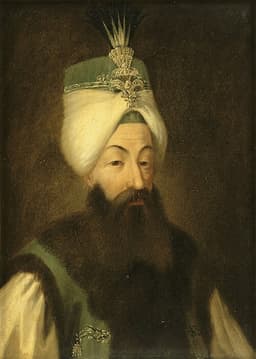
Halil Hamid Pasha
Politician · Modern
50.0Total

Sheikh Hasina
Politician · Modern
59.2Total
Basic Information
Born
1736
1947
Died
1785
—
Era
Modern
Modern
Nationality
Ottoman Empire
Bangladesh
Occupation
Politician
Politician
Civilization
Middle Eastern
Indian
Score Comparison
Military (10%)
40.8
41.5
Political (20%)
62.7
59.3
Influence (20%)
48.6
62.0
Legacy (20%)
43.3
52.0
Leadership (15%)
64.5
78.0
Strategy (15%)
38.6
60.0
TOTAL
50.0
59.2
Halil Hamid Pasha — Complete Timeline
1782 AD
Military ReformsReform◆ Major
As grand vizier, Halil Hamid Pasha initiated reforms to modernize the Ottoman military, including the establishment of a new artillery corps and the recruitment of European advisors. These reforms were precursors to later Tanzimat changes.
ReformMilitaryModernization
Impact: nationalconstructive
Grand Vizier AppointmentPolitical Action
Halil Hamid Pasha was appointed grand vizier by Sultan Abdul Hamid I. His appointment was part of a wave of reformist officials, but his tenure was cut short by conservative opposition and his eventual execution.
AppointmentReformAdministration
Impact: nationalconstructive
1785 AD
Execution on SuspicionOther◆ Major
Halil Hamid Pasha was executed by order of Sultan Abdul Hamid I on suspicion of plotting against the throne. His death ended his reformist tenure, which had included military and administrative changes, and highlighted the dangers of court politics.
ExecutionOttoman PoliticsReform
Impact: nationaltragic
Sheikh Hasina — Complete Timeline
1996 AD
Elected Prime Minister for the first timePolitical Action◆ Major
Sheikh Hasina led the Awami League to victory in the June 1996 general election, becoming Prime Minister of Bangladesh. This marked her first term in office, beginning a political career that would make her the longest-serving prime minister in the country's history.
ElectionAwami LeagueDemocracy
Impact: nationalconstructive
1997 AD
Signed the Chittagong Hill Tracts Peace AccordPolitical Action◆ Major
Sheikh Hasina's government signed a peace accord with the Parbatya Chattagram Jana Sanghati Samiti, ending a two-decade-long insurgency in the Chittagong Hill Tracts. The agreement granted autonomy and land rights to indigenous communities, though implementation has been partial.
Peace accordChittagong Hill TractsInsurgency
Impact: nationalconstructive
2004 AD
Assassination attempt at KotaliparaPolitical Action◆ Major
A grenade attack targeted Sheikh Hasina during a rally in Kotalipara, Gopalganj. The attack killed 24 people and injured hundreds, including Hasina. The incident was widely attributed to political opponents and remains a key event in Bangladesh's political violence.
Assassination attemptPolitical violenceAwami League
Impact: nationaltragic
2009 AD
Implemented the Digital Bangladesh initiativeReform◆ Major
Sheikh Hasina's government launched the Digital Bangladesh program, aiming to expand internet access, digitize government services, and promote ICT education. The initiative contributed to economic growth and improved public service delivery, though digital divides persist.
DigitalizationICTEconomic development
Impact: nationalconstructive
2019 AD
Began fourth consecutive term as Prime MinisterPolitical Action◆ Major
Sheikh Hasina was sworn in for a fourth consecutive term after the Awami League won the 2018 general election. The election was criticized by opposition parties and international observers for irregularities and lack of a level playing field.
ElectionControversyLongest-serving
Impact: national
Expert Analysis
Origins
Halil Hamid Pasha (born 1736) was an Ottoman statesman who rose from humble beginnings in the provincial town of Isparta. His father was a minor official, and Halil received a traditional Islamic education before entering the imperial bureaucracy. He served as a scribe in the Divan (imperial council) and gained experience in fiscal administration. By contrast, Sheikh Hasina (born 1947) is the daughter of Sheikh Mujibur Rahman, the founding father of Bangladesh. She grew up in the political crucible of East Pakistan, witnessing her father's imprisonment and the 1971 Liberation War. She studied at the University of Dhaka, earning a degree in history, and was active in student politics. While Halil's origins were modest and bureaucratic, Hasina's were dynastic and revolutionary.
Rise to Power
Halil Hamid Pasha's rise was gradual and meritocratic. He served as chief treasurer (defterdar) and then as grand vizier from 1782 to 1785 under Sultan Abdul Hamid I. His appointment came during a period of Ottoman military decline after the disastrous Russo-Turkish War of 1768-1774. He gained the sultan's trust by proposing financial and military reforms. In contrast, Sheikh Hasina's rise was turbulent and often violent. After her father's assassination in 1975, she lived in exile in India until 1981. She returned to Bangladesh to lead the Awami League, but faced repeated military interventions and assassinations. She won her first election in 1996, becoming prime minister. Her path was shaped by mass movements and political upheaval, while Halil's was through palace appointments.
Leadership & Governance
Halil Hamid Pasha's governance focused on military modernization. He established a new artillery corps and reformed the Janissary corps, but his efforts were limited by conservative opposition. He also attempted to streamline tax collection and reduce corruption, scoring 64.5 in leadership. However, his political score of 62.7 reflects his inability to navigate court intrigues. Sheikh Hasina, with a leadership score of 78.0, has governed through a mix of economic development and authoritarian tendencies. She launched the Digital Bangladesh initiative, expanding internet access and digitizing government services. She also signed the Chittagong Hill Tracts Peace Accord in 1997, ending a two-decade insurgency. Her political score of 59.3 reflects her dominance but also criticisms of democratic backsliding.
Triumph & Tragedy
Halil Hamid Pasha's greatest success was his military reforms, which laid the groundwork for later Ottoman modernization. His tragedy was his execution in 1785 on suspicion of plotting against the sultan, a fate that cut short his reforms. He scored 40.8 in military and 43.3 in legacy. Sheikh Hasina's triumphs include leading Bangladesh to rapid economic growth, with GDP per capita rising from $400 in 1996 to over $1,900 in 2020. She survived a 2004 grenade attack that killed 24 people. Her tragedies include accusations of authoritarianism, the 2018 election criticized by opposition, and her handling of the 2013 Shahbag protests. She scored 52.0 in legacy and 62.0 in influence.
Character & Destiny
Halil Hamid Pasha was a reformer in a conservative system, characterized by determination but political naivety. His decision to push reforms without securing a power base led to his downfall. Sheikh Hasina is known for her resilience and iron will, shaped by the trauma of her father's assassination and her own near-death experiences. She has centralized power, often at the expense of democratic institutions. Her character has led to long-term stability but also polarization. Halil's destiny was a tragic end; Hasina's is continued dominance.
Legacy
Halil Hamid Pasha's legacy is as a precursor to the Tanzimat reforms of the 19th century. His military changes influenced later reformers, but his overall impact was limited by his short tenure. He scored 43.3 in legacy. Sheikh Hasina's legacy is more tangible: Bangladesh has transformed from a poverty-stricken nation to a lower-middle-income country. The Digital Bangladesh initiative has fostered a tech industry, and the peace accord brought stability to the Chittagong Hill Tracts. However, her authoritarian turn may tarnish her legacy. She scored 52.0 in legacy, reflecting her greater concrete achievements.
Conclusion
Sheikh Hasina has had a greater impact than Halil Hamid Pasha. Her total score of 59.2 compared to his 50.0 reflects her longer tenure and more tangible achievements. While Halil attempted reforms in a declining empire, Hasina has overseen Bangladesh's economic transformation. Her leadership score of 78.0 far exceeds his 64.5, and her influence score of 62.0 vs his 48.6 shows her broader reach. Although both faced opposition, Hasina's survival and sustained governance have produced lasting change. Halil's reforms were cut short; Hasina's have shaped a nation.
Rankings
🥇
Sheikh HasinaLeader
Mil: 41.5Pol: 59.3Inf: 62.0
59.2
🥈
Halil Hamid Pasha
Mil: 40.8Pol: 62.7Inf: 48.6
50.0
+9.2 behind
How This Comparison Works
Algorithm
Each figure is scored on 6 dimensions (0—100 scale) based on structured historical data: Military (10%), Political (20%), Influence (20%), Legacy (20%), Leadership (15%), Strategy (15%). The weighted total produces the final ranking.
Data Sources
Scores are computed from structured sub-indicators in the database. Scale factors adjust for era (Ancient ×0.85, Modern ×1.0) and civilization size (Eastern ×1.05, Other ×0.80) to account for differences in population and military scale.
Maximum 3 Figures
Comparisons are limited to 2—3 figures to ensure readability and statistical meaningfulness.
Error Margins
±5 points per dimension — Sub-scores are derived from historical records with inherent uncertainty. Two figures within 5 points on a dimension should be considered roughly equivalent in that area.
Total Score Accuracy
±3 points overall — The weighted combination of 6 dimensions produces a total score with approximately ±3 points of uncertainty. Differences of less than 3 points are not statistically significant— the figures are effectively tied.
Known Limitations
- Historical records are incomplete and uneven across civilizations
- Figures from oral-tradition societies may be underrepresented
- Occupation labels can misclassify multi-role figures
- Scores measure capability and impact, not moral character
- Quantitative scoring is a comparison tool, not absolute truth
Capability Radar
Military (10%) — Battles & Warfare
Battles
22
45
Win Rate
25
47
Expansion
26
48
Political (20%) — Governance & Reform
Reform
70
70
Diplomacy
40
65
Economy
30
75
Influence (20%) — Cultural & Global Reach
Cultural
20
55
Global
10
55
Legacy (20%) — Historical Impact
Historical
40
60
Longevity
20
50
Leadership (15%) — Power & Stability
Tenure
30
85
Stability
20
55
Strategy (15%) — Tactics & Innovation
Strategy
31
51
Tactics
36
56
Reform
38
56
Similar Comparisons
Comments & Discussion
No comments yet. Be the first to share your thoughts!