Loading...
Halil Hamid Pasha vs Napoleon Bonaparte
Napoleon Bonaparte leads by 20.9 pts · 2 figures compared
…
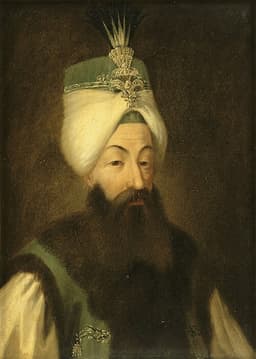
Halil Hamid Pasha
Politician · Modern
50.0Total

Napoleon Bonaparte
General · Modern
70.9Total
Basic Information
Born
1736
1769
Died
1785
1821
Era
Modern
Modern
Nationality
Ottoman Empire
France
Occupation
Politician
General
Civilization
Middle Eastern
Western
Score Comparison
Military (10%)
40.8
94.0
Political (20%)
62.7
72.0
Influence (20%)
48.6
40.0
Legacy (20%)
43.3
80.0
Leadership (15%)
64.5
78.0
Strategy (15%)
38.6
90.0
TOTAL
50.0
70.9
Halil Hamid Pasha — Complete Timeline
1782 AD
Military ReformsReform◆ Major
As grand vizier, Halil Hamid Pasha initiated reforms to modernize the Ottoman military, including the establishment of a new artillery corps and the recruitment of European advisors. These reforms were precursors to later Tanzimat changes.
ReformMilitaryModernization
Impact: nationalconstructive
Grand Vizier AppointmentPolitical Action
Halil Hamid Pasha was appointed grand vizier by Sultan Abdul Hamid I. His appointment was part of a wave of reformist officials, but his tenure was cut short by conservative opposition and his eventual execution.
AppointmentReformAdministration
Impact: nationalconstructive
1785 AD
Execution on SuspicionOther◆ Major
Halil Hamid Pasha was executed by order of Sultan Abdul Hamid I on suspicion of plotting against the throne. His death ended his reformist tenure, which had included military and administrative changes, and highlighted the dangers of court politics.
ExecutionOttoman PoliticsReform
Impact: nationaltragic
Napoleon Bonaparte — Complete Timeline
1799 AD
Coup of 18 BrumaireOther◆ Major
Napoleon Bonaparte, with support from his brother Lucien and key political figures, overthrew the Directory in a bloodless coup. He established the Consulate with himself as First Consul, effectively becoming the ruler of France. This event ended the French Revolution's most unstable period.
French RevolutionCoupRise to Power
Impact: regional
1804 AD
Promulgation of the Napoleonic CodeOther◆ Major
Napoleon enacted the Civil Code of the French, known as the Napoleonic Code, a comprehensive set of laws that replaced the fragmented feudal legal systems. The code established legal equality, protected property rights, and secularized law. It became the basis for legal systems in many European and world countries.
Legal ReformNapoleonic CodeCivil Law
Impact: globalconstructive
1805 AD
Battle of AusterlitzWar◆ Major
Napoleon's Grande Arm
Napoleonic WarsBattleDecisive Victory
Impact: global
1812 AD
Invasion of RussiaWar◆ Major
Napoleon led the Grande Arm
Napoleonic WarsInvasionDisaster
Impact: globaldestructive
1815 AD
Battle of WaterlooWar◆ Major
Napoleon's French army was defeated by the combined forces of the Duke of Wellington's Anglo-Allied army and Gebhard Leberecht von Bl
Napoleonic WarsBattleFinal Defeat
Impact: globaldestructive
Expert Analysis
halil-hamid-pasha-vs-napoleon-bonaparte
# The Reformer and the Conqueror: Two Visions of Power in an Age of Revolution
In the spring of 1785, a carriage rattled through the streets of Istanbul carrying a man who had once held the second highest office in the Ottoman Empire. Halil Hamid Pasha, grand vizier to Sultan Abdul Hamid I, was on his way to execution. His crime? Suspicion of disloyalty—a charge as vague as it was fatal. Just three years earlier, he had been the sultan’s most trusted minister, a reformer who dared to modernize an empire that was slowly crumbling. Half a world away, a young Corsican artillery officer named Napoleon Bonaparte was graduating from military school in Paris, his ambition already burning brighter than the candles that lit his cramped quarters. Neither man could have known that their divergent paths would illuminate the deepest questions of power: What does it take to change a world? And what price does history exact from those who try?
Origins
Halil Hamid Pasha was born in 1736 into the intricate web of Ottoman bureaucracy, a world where loyalty to the sultan was the only currency that mattered. He rose through the ranks of the civil service, mastering the arts of diplomacy and administration in an empire that had long since passed its zenith. The Ottoman state in the late eighteenth century was a giant exhausted by centuries of expansion, its military outdated, its treasury depleted, its provinces slipping away. Halil Hamid saw the decay clearly—he had read accounts of European military innovations, studied the reforms of Peter the Great, and understood that the empire’s survival depended on change.
Napoleon Bonaparte, born in 1769 on the island of Corsica, grew up in a world turned upside down by revolution. His family was minor nobility, but his education was French, his ambitions European. The French Revolution of 1789 shattered the old order, creating opportunities that a young artillery officer could seize with audacity and brilliance. Where Halil Hamid worked within a system that demanded deference, Napoleon learned to exploit chaos. One man inherited a dying empire; the other inherited a world being reborn.
Rise to Power
Halil Hamid Pasha’s ascent was methodical, the product of decades of service. In 1782, Sultan Abdul Hamid I appointed him grand vizier—a position of immense responsibility but limited authority. The sultan remained absolute, and any reformer’s power depended on royal favor, not popular support. Halil Hamid’s opportunity came in the form of military crisis: the Ottoman army had suffered humiliating defeats against Russia, and the need for modernization was undeniable. He began to recruit European experts, ordered new artillery, and attempted to reorganize the Janissary corps—the elite infantry that had become a conservative, corrupt obstacle to change.
Napoleon’s rise was meteoric. In 1793, he was a young captain; by 1796, he commanded the French army in Italy, winning battles that astounded Europe. His Italian campaign of 1796–1797 was a masterpiece of speed, deception, and decisive engagement. Where Halil Hamid had to persuade a suspicious sultan and navigate a court of rivals, Napoleon simply conquered. His victories gave him political power, and in 1799, he overthrew the French government in a coup d’état, becoming First Consul. By 1804, he crowned himself Emperor of the French. The difference was not merely talent—it was the structure of power. Napoleon rose in a revolutionary republic where merit could outrank birth; Halil Hamid rose in an autocracy where no amount of talent could overcome the sultan’s whim.
Leadership & Governance
Napoleon ruled with a combination of military genius and administrative brilliance. His Napoleonic Code, enacted in 1804, standardized French law, enshrined property rights, and spread revolutionary principles across Europe. He reformed education, built infrastructure, and centralized the state. His military strategy—aggressive, mobile, and devastating—conquered most of continental Europe. He understood that power required not just victory but legitimacy, and he sought both through conquest and law.
Halil Hamid Pasha governed in a different key. His military reforms of 1782 aimed to create a modern army, but he faced relentless opposition. The Janissaries saw reform as a threat to their privileges; conservative clerics denounced innovation as impiety; and the sultan himself was cautious, fearing that a strong vizier might become a rival. Halil Hamid’s greatest achievement was laying the groundwork for future reforms—he invited French military advisors, established new training programs, and began the slow process of change. But he could not move fast enough. In 1785, his enemies convinced the sultan that he was plotting treason. He was executed, his reforms abandoned, his vision unfinished.
Triumph & Tragedy
Napoleon’s triumph was his empire—at its height in 1810, he ruled directly or indirectly over 70 million Europeans. His tragedy was his overreach: the disastrous invasion of Russia in 1812, the loss of his army, and the coalition that finally defeated him at Waterloo in 1815. He died in exile on Saint Helena, a prisoner of the British, his ambition finally contained.
Halil Hamid Pasha’s tragedy was more intimate: he was killed by the very system he sought to save. His triumph was not in victory but in example. The reforms he attempted would be taken up later by others—Sultan Mahmud II would destroy the Janissaries in 1826, and the Tanzimat reforms of the mid-nineteenth century would finally modernize the Ottoman state. But Halil Hamid did not live to see it. He was a pioneer executed by the forces of reaction.
Character & Destiny
Napoleon was driven by an insatiable hunger for glory. “I am not an ordinary man,” he once said, and he proved it through sheer force of will. His confidence bordered on arrogance, his ambition on megalomania. But he also possessed a cold, calculating intelligence that could assess a battlefield or a political situation in minutes. His downfall came from the same qualities that made him great: he could not stop, could not compromise, could not accept limits.
Halil Hamid Pasha was a different kind of man: cautious, patient, a bureaucrat rather than a warrior. He understood that reform in an autocracy required stealth and persuasion. But his caution could not save him. In a system where power depended entirely on the sultan’s favor, no amount of loyalty was enough. His execution was not a judgment of his character but a symptom of the Ottoman state’s dysfunction—a machine that consumed its own best servants.
Legacy
Napoleon’s legacy is monumental. He reshaped Europe’s borders, spread revolutionary ideals, and inspired nationalism across the continent. The Napoleonic Code remains the basis of law in many countries. He is remembered as both a liberator and a tyrant, a military genius and a cautionary tale of overreach. His name is synonymous with ambition.
Halil Hamid Pasha is largely forgotten outside academic circles. His scores—a total of 61.4, compared to Napoleon’s 82.4—reflect a life cut short, reforms incomplete. But his story matters precisely because it is not a story of triumph. It is a story of what happens when a reformer works within a system that cannot reform itself. He was a man of vision in an empire of inertia, a seed planted in barren soil.
Conclusion
Standing at the edge of the modern world, these two men faced the same question: How does an old order change? Napoleon answered by smashing the old order and building his own, riding the wave of revolution to empire. Halil Hamid answered by trying to repair the old order from within, hoping that gradual change could save it. One conquered Europe; the other was executed by his own sultan. Their fates were not simply the result of talent or luck—they were written in the structures of power they served. Napoleon’s France was a society in flux, where a man of genius could rise to the top. Halil Hamid’s Ottoman Empire was a society frozen in hierarchy, where even the most capable servant remained a servant. History does not always reward the boldest or the wisest. Sometimes it rewards the fortunate—those born into the right time, the right place, the right system. And that is the most sobering lesson of all.
Rankings
🥇
Napoleon BonaparteLeader
Mil: 94.0Pol: 72.0Inf: 40.0
70.9
🥈
Halil Hamid Pasha
Mil: 40.8Pol: 62.7Inf: 48.6
50.0
+20.9 behind
How This Comparison Works
Algorithm
Each figure is scored on 6 dimensions (0—100 scale) based on structured historical data: Military (10%), Political (20%), Influence (20%), Legacy (20%), Leadership (15%), Strategy (15%). The weighted total produces the final ranking.
Data Sources
Scores are computed from structured sub-indicators in the database. Scale factors adjust for era (Ancient ×0.85, Modern ×1.0) and civilization size (Eastern ×1.05, Other ×0.80) to account for differences in population and military scale.
Maximum 3 Figures
Comparisons are limited to 2—3 figures to ensure readability and statistical meaningfulness.
Error Margins
±5 points per dimension — Sub-scores are derived from historical records with inherent uncertainty. Two figures within 5 points on a dimension should be considered roughly equivalent in that area.
Total Score Accuracy
±3 points overall — The weighted combination of 6 dimensions produces a total score with approximately ±3 points of uncertainty. Differences of less than 3 points are not statistically significant— the figures are effectively tied.
Known Limitations
- Historical records are incomplete and uneven across civilizations
- Figures from oral-tradition societies may be underrepresented
- Occupation labels can misclassify multi-role figures
- Scores measure capability and impact, not moral character
- Quantitative scoring is a comparison tool, not absolute truth
Capability Radar
Military (10%) — Battles & Warfare
Battles
22
95
Win Rate
25
90
Expansion
26
95
Political (20%) — Governance & Reform
Reform
70
95
Diplomacy
40
80
Economy
30
85
Influence (20%) — Cultural & Global Reach
Cultural
20
85
Global
10
90
Legacy (20%) — Historical Impact
Historical
40
95
Longevity
20
90
Leadership (15%) — Power & Stability
Tenure
30
85
Stability
20
70
Strategy (15%) — Tactics & Innovation
Strategy
31
95
Tactics
36
98
Reform
38
92
Similar Comparisons
Comments & Discussion
Ottoman's Last, Best Hope6/17/2026
Calling this a comparison between equals is like comparing a firefly to a supernova. Halil Hamid Pasha faced the impossible task of reforming a rotting empire while a paranoid sultan held the knife. Napoleon inherited a revolutionary nation ready to explode outward. The key difference? Halil had ONE window for reform (1783-1785), and even that got him executed. Napoleon had twenty years of failures AND successes. One man's vision cost his head; the other's built an empire.
The Dying Vizier6/17/2026
说白了,这根本就不是同一量级的对决。Halil Hamid当了两年大维齐尔就被砍头,连宫廷政变都玩不转,搁拿破仑手下连个营长都当不了。你仔细看数据,1783年他改革奥斯曼军队时,西帕希骑兵还信弯刀能砍赢火枪,这种认知差距能比?拿破仑26岁已经是法军统帅了,Halil 26岁时连个省长都不是。历史就是如此残酷——有些人生来就是赢家,有些人注定被时代碾压。