Loading...
Hammurabi vs Theodosius the Great
Theodosius the Great leads by 0.1 pts · 2 figures compared
…
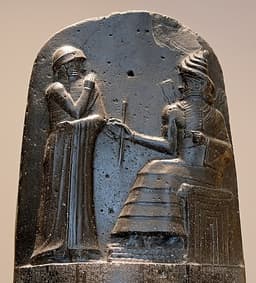
Hammurabi
Emperor · Ancient
69.4Total
Theodosius the Great
Emperor · Ancient
69.5Total
Basic Information
Born
-1810
347
Died
-1750
395
Era
Ancient
Ancient
Nationality
Babylon
Roman Empire
Occupation
Emperor
Emperor
Civilization
Middle Eastern
Western
Score Comparison
Military (10%)
60.0
65.0
Political (20%)
62.7
65.0
Influence (20%)
68.0
75.0
Legacy (20%)
80.0
75.0
Leadership (15%)
80.0
68.0
Strategy (15%)
50.0
55.0
TOTAL
69.4
69.5
Hammurabi — Complete Timeline
1763 BC
Conquest of MesopotamiaWar◆ Major
Hammurabi conquered the city-states of Larsa, Mari, and Eshnunna, uniting most of Mesopotamia under Babylonian rule. This created the Babylonian Empire and made Babylon the dominant power in the region.
ConquestEmpireBabylon
Impact: regional
1754 BC
Promulgation of the Code of HammurabiCultural
Hammurabi issued a comprehensive legal code inscribed on a stele, containing 282 laws covering trade, property, family, and crime. The code established the principle of lex talionis (eye for an eye) and influenced later legal systems.
LawCodeMesopotamia
Impact: globalconstructive
1750 BC
Construction of Babylon's fortificationsOther
Hammurabi ordered the construction of extensive city walls, canals, and temples in Babylon. These projects strengthened the city's defenses and infrastructure, solidifying its status as a major urban center.
ConstructionInfrastructureBabylon
constructive
Theodosius the Great — Complete Timeline
380 AD
Edict of ThessalonicaReform
Theodosius issued the Edict of Thessalonica, declaring Nicene Christianity the official state religion of the Roman Empire. All other Christian sects were deemed heretical, and pagan practices were increasingly suppressed.
ChristianityReligious PolicyState Religion
Impact: globalprogressive
390 AD
Massacre of ThessalonicaPolitical Action◆ Major
Theodosius ordered a massacre in Thessalonica after a riot killed a Roman official. Thousands of citizens were killed in the circus. Bishop Ambrose of Milan excommunicated Theodosius until he performed public penance.
MassacreChurch-State RelationsAmbrose
Impact: regionaldestructive
394 AD
Battle of the FrigidusWar◆ Major
Theodosius defeated the usurper Eugenius and his general Arbogast at the Battle of the Frigidus. The victory reunited the Roman Empire under Theodosius's rule for the last time before its permanent division.
Civil WarReunificationEugenius
Impact: national
395 AD
Division of the Roman EmpirePolitical Action
Upon his death, Theodosius divided the Roman Empire between his sons: Arcadius received the East and Honorius the West. This division became permanent, leading to the separate development of the Byzantine and Western Roman Empires.
Imperial DivisionSuccessionByzantine Empire
Impact: global
Expert Analysis
Origins
**Hammurabi** (c. 1810–1750 BCE) was the sixth king of the First Babylonian Dynasty, born into a ruling family in the city-state of Babylon. His father, Sin-Muballit, had expanded Babylonian territory, but Babylon was still a minor power in Mesopotamia. Hammurabi received a traditional education in scribal arts, law, and military tactics, preparing him for kingship at a young age. He ascended the throne around 1792 BCE, inheriting a modest kingdom centered on Babylon.
**Theodosius the Great** (c. 347–395 CE) was born in Cauca, Hispania, into a prominent Roman military family. His father, Count Theodosius, was a high-ranking general who served Emperor Valentinian I. Theodosius received a rigorous military education and served in the Roman army from his youth. After his father's execution under dubious circumstances, Theodosius retired to private life but was recalled to command by Emperor Gratian in 378 CE, following the disastrous Battle of Adrianople.
Rise to Power
Hammurabi's rise was gradual and diplomatic. For the first two decades of his reign, he focused on internal consolidation, building temples, fortifications, and canals. He formed alliances with powerful neighbors like Larsa and Mari. In 1764 BCE, he began a series of military campaigns, first defeating Elam, then turning against his former allies. By 1761 BCE, he had conquered Larsa, Mari, and Eshnunna, uniting all of Mesopotamia under Babylonian rule. His strategic use of alliances and timing—attacking when rivals were weak—secured his dominance.
Theodosius rose to power amid crisis. After the Eastern Roman Emperor Valens died at Adrianople (378 CE), Emperor Gratian appointed Theodosius as co-emperor for the East in 379 CE. Theodosius had to rebuild the army and stabilize the Danube frontier. He skillfully negotiated a settlement with the Goths in 382 CE, allowing them to settle within the empire as foederati. This pragmatic move bought peace but sowed future problems. Theodosius then faced two civil wars: against Magnus Maximus (387–388 CE) and the usurper Eugenius (394 CE). His victory at the Battle of the Frigidus in 394 CE reunited the empire under his sole rule.
Leadership & Governance
Hammurabi's governance is best known through his legal code, the Code of Hammurabi, inscribed on a stele around 1754 BCE. The code contained 282 laws covering trade, property, family, and crime, establishing a uniform legal system across his empire. It introduced the principle of lex talionis ("an eye for an eye") but also differentiated punishments based on social class. Hammurabi also invested heavily in infrastructure: he built canals for irrigation, fortified Babylon with massive walls, and constructed temples to win divine favor. His administrative style was centralized, with governors appointed to oversee provinces.
Theodosius governed with a strong religious agenda. In 380 CE, he issued the Edict of Thessalonica, making Nicene Christianity the official state religion of the Roman Empire. He outlawed Arianism and other Christian sects, and closed pagan temples. This marked a decisive shift from religious tolerance to enforced orthodoxy. Theodosius also reformed the military, relying more on barbarian recruits, and issued laws against corruption. However, his governance was marred by the Massacre of Thessalonica in 390 CE, when he ordered the slaughter of thousands of citizens in retaliation for a riot—an act that led Bishop Ambrose to deny him communion until he did public penance.
Triumph & Tragedy
Hammurabi's greatest triumph was the unification of Mesopotamia and the creation of a legal code that influenced later civilizations. His code is one of the earliest and most complete legal documents, providing insight into ancient society. His military campaigns expanded Babylon from a city-state to an empire. However, his empire began to decline after his death; his successors could not maintain control, and Babylon fell to the Hittites in 1595 BCE. The code itself was lost and only rediscovered in 1901 CE.
Theodosius's triumphs include establishing Nicene Christianity as the state religion, which shaped Western civilization for over a millennium. He also temporarily reunited the Roman Empire and defeated usurpers. His greatest tragedy was the permanent division of the empire after his death: he split it between his sons Arcadius (East) and Honorius (West). This division became permanent, weakening the empire and contributing to the fall of the West in 476 CE. The Massacre of Thessalonica also stained his reputation.
Character & Destiny
Hammurabi was a pragmatic and calculating ruler. He used diplomacy and alliances before resorting to war, and his legal code reflects a desire for order and control. He portrayed himself as a shepherd to his people, chosen by the gods. His character—disciplined, legalistic, and ambitious—drove him to build a lasting legacy through law. However, his empire's fragility after his death suggests he did not create institutions that outlasted his personal rule.
Theodosius was a devout Christian and a capable general, but also prone to harshness (Thessalonica) and political miscalculations. His decision to divide the empire was practical for succession but ultimately disastrous. He showed flexibility in dealing with barbarians, but his religious intolerance alienated large segments of the population. Historian A.H.M. Jones described him as 'an emperor of average ability' but noted his religious policies had profound consequences.
Legacy
Hammurabi's legacy is primarily legal. The Code of Hammurabi is a foundational text in the history of law, influencing later codes such as those of Assyria and Israel. His name is synonymous with ancient justice. His military and political achievements, however, are less remembered. In terms of scores, Hammurabi scores 80.0 in Legacy and 80.0 in Leadership, but only 60.0 in Military and 50.0 in Strategy.
Theodosius's legacy is religious. He cemented Nicene Christianity as the dominant faith in Europe, ending state paganism and Arianism. His division of the empire had lasting political consequences, leading to the Byzantine Empire in the East and the collapse of the West. He is a saint in the Eastern Orthodox Church. His scores are 75.0 in Influence and Legacy, 65.0 in Military, and 55.0 in Strategy.
Conclusion
While Theodosius has a slightly higher total score (69.5 vs 69.4), Hammurabi's impact on legal systems is more enduring and universal. Theodosius's religious policies, though transformative, were specific to Christianity and the Roman world. Hammurabi's code influenced legal thinking across cultures and centuries, from ancient Israel to modern law. Therefore, Hammurabi has greater overall impact due to his foundational role in legal history, despite Theodosius's higher composite score.
Rankings
🥇
Theodosius the GreatLeader
Mil: 65.0Pol: 65.0Inf: 75.0
69.5
🥈
Hammurabi
Mil: 60.0Pol: 62.7Inf: 68.0
69.4
+0.1 behind
How This Comparison Works
Algorithm
Each figure is scored on 6 dimensions (0—100 scale) based on structured historical data: Military (10%), Political (20%), Influence (20%), Legacy (20%), Leadership (15%), Strategy (15%). The weighted total produces the final ranking.
Data Sources
Scores are computed from structured sub-indicators in the database. Scale factors adjust for era (Ancient ×0.85, Modern ×1.0) and civilization size (Eastern ×1.05, Other ×0.80) to account for differences in population and military scale.
Maximum 3 Figures
Comparisons are limited to 2—3 figures to ensure readability and statistical meaningfulness.
Error Margins
±5 points per dimension — Sub-scores are derived from historical records with inherent uncertainty. Two figures within 5 points on a dimension should be considered roughly equivalent in that area.
Total Score Accuracy
±3 points overall — The weighted combination of 6 dimensions produces a total score with approximately ±3 points of uncertainty. Differences of less than 3 points are not statistically significant— the figures are effectively tied.
Known Limitations
- Historical records are incomplete and uneven across civilizations
- Figures from oral-tradition societies may be underrepresented
- Occupation labels can misclassify multi-role figures
- Scores measure capability and impact, not moral character
- Quantitative scoring is a comparison tool, not absolute truth
Capability Radar
Military (10%) — Battles & Warfare
Battles
65
65
Win Rate
70
70
Expansion
65
50
Political (20%) — Governance & Reform
Reform
90
85
Diplomacy
75
75
Economy
70
60
Influence (20%) — Cultural & Global Reach
Cultural
85
85
Global
80
85
Legacy (20%) — Historical Impact
Historical
90
90
Longevity
95
95
Leadership (15%) — Power & Stability
Tenure
80
70
Stability
75
55
Strategy (15%) — Tactics & Innovation
Strategy
60
75
Tactics
55
60
Reform
50
55
Similar Comparisons
Comments & Discussion
No comments yet. Be the first to share your thoughts!