Loading...
Han Xin vs Julius Caesar
Julius Caesar leads by 22.4 pts · 2 figures compared
…
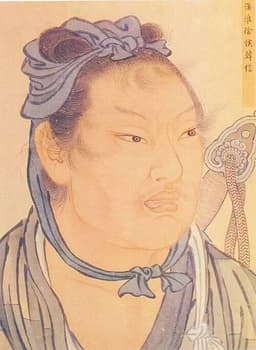
Han Xin
General · Ancient
60.4Total

Julius Caesar
General · Ancient
82.8Total
Basic Information
Born
-230
-100
Died
-196
-44
Era
Ancient
Ancient
Nationality
China
Roman Republic
Occupation
General
General
Civilization
Eastern
Western
Score Comparison
Military (10%)
88.0
88.0
Political (20%)
25.0
78.0
Influence (20%)
65.0
85.0
Legacy (20%)
70.8
82.0
Leadership (15%)
33.5
80.0
Strategy (15%)
88.6
85.0
TOTAL
60.4
82.8
Han Xin — Complete Timeline
205 BC
Battle of JingxingWar◆ Major
Han Xin led a Han army through the narrow Jingxing Pass, facing a larger Zhao force. He used a stratagem of placing his troops with their backs to a river, forcing them to fight without retreat. The Han won decisively, capturing the Zhao king.
Military StrategyZhao CampaignDecisive Victory
Impact: regional
204 BC
Battle of Wei RiverWar◆ Major
Han Xin defeated the Qi army at the Wei River. He used a feigned retreat to lure the Qi forces across the river, then attacked them while they were crossing. This victory secured the Qi state for Han and eliminated a major rival.
Qi CampaignMilitary TacticsRiver Battle
Impact: regional
203 BC
Appointment as King of QiPolitical Action
After his victories, Liu Bang appointed Han Xin as King of Qi, granting him control over the conquered territory. This elevated Han Xin from general to a regional ruler, but also created tensions with Liu Bang, who feared his growing power.
AppointmentFeudal TitlePower Dynamics
Impact: regional
201 BC
Demotion and ArrestPolitical Action◆ Major
Emperor Gaozu, suspecting Han Xin of rebellion, tricked him into attending a meeting and arrested him. Han Xin was demoted from king to marquis and placed under house arrest in Chang'an. This reflected the emperor's fear of powerful generals.
Political PurgeHouse ArrestImperial Suspicion
Impact: nationaltragic
196 BC
Execution of Han XinPolitical Action◆ Major
Han Xin was executed on charges of plotting rebellion with Chen Xi. He was killed in the palace by Empress L
ExecutionPolitical ViolenceLü Zhi
Impact: nationaltragic
Julius Caesar — Complete Timeline
58 BC
Gallic WarsWar◆ Major
Caesar, as proconsul of Gaul, launched a series of campaigns that conquered all of Gaul (modern France, Belgium, and parts of Switzerland). He fought numerous battles, including against the Helvetii, the Belgae, and the Gallic chieftain Vercingetorix. The wars brought immense wealth and a loyal army to Caesar.
Gallic WarsConquestRoman Expansion
Impact: regional
49 BC
Crossing the RubiconPolitical Action◆ Major
Caesar led Legio XIII across the Rubicon River into Italy, defying the Roman Senate's order to disband his army. This act triggered a civil war against Pompey and the Optimates, ultimately leading to Caesar's dictatorship and the end of the Roman Republic.
Roman Civil WarEnd of RepublicPower Struggle
Impact: global
48 BC
Battle of PharsalusWar◆ Major
Caesar's outnumbered army defeated the larger forces of Pompey the Great at Pharsalus in Greece. Caesar's tactical use of a reserve line to counter Pompey's cavalry charge proved decisive. Pompey fled to Egypt, where he was assassinated, leaving Caesar as the undisputed master of the Roman world.
Roman Civil WarBattleDecisive Victory
Impact: regional
44 BC
Appointment as Dictator for LifePolitical Action◆ Major
The Roman Senate appointed Caesar dictator perpetuo (dictator for life), granting him unprecedented personal power. This move concentrated military, legislative, and judicial authority in one person, effectively ending the Roman Republic's traditional system of checks and balances and alarming many senators.
DictatorshipEnd of RepublicPower Consolidation
Impact: regionaldestructive
Assassination on the Ides of MarchPolitical Action◆ Major
A group of Roman senators, led by Marcus Junius Brutus and Gaius Cassius Longinus, stabbed Caesar to death at a meeting of the Senate in the Theatre of Pompey. The assassination was intended to restore the Republic, but instead triggered another civil war that led to the rise of the Roman Empire.
AssassinationRoman PoliticsEnd of Republic
Impact: globaldestructive
Expert Analysis
han-xin-vs-julius-caesar
# The General and the Strategist: Two Paths to Glory and Ruin
On a spring morning in 44 BCE, Julius Caesar walked into the Senate chamber in Rome, ignoring a soothsayer's warning and the whispered omens of his wife's nightmares. Within minutes, he lay bleeding from twenty-three dagger wounds, his toga soaked in blood, his life's work crumbling into civil war. Half a world away and two centuries earlier, another military genius met a similar fate: Han Xin, the architect of the Han dynasty's greatest victories, was lured into a palace trap by Empress Lü Zhi and executed on charges of conspiracy. Both men conquered vast territories, rewrote the rules of warfare, and died at the hands of those they trusted. Yet their stories diverge in ways that reveal the deepest fault lines between two civilizations—and two kinds of ambition.
Origins
Caesar was born into the patrician Julian clan, a family with ancient lineage but dwindling political influence. His Rome was a republic in crisis: senatorial corruption, street violence between factions, and slave revolts had eroded faith in traditional governance. From childhood, Caesar absorbed the competitive ethos of the Roman elite—the relentless pursuit of *dignitas*, personal honor and standing, measured by military glory and political office. He was no natural soldier; his early reputation came from daring political stunts and a scandalous affair with the wife of a powerful senator.
Han Xin came from far humbler beginnings. In the chaos following the Qin dynasty's collapse, he was a wandering youth so poor that he endured the ultimate humiliation of Chinese tradition: a local bully forced him to crawl between his legs rather than fight. Han Xin bore the shame in silence. He was not born into power; he had to invent himself from nothing. The China of his era was a battleground of rival kingdoms, where loyalty was fluid and betrayal was routine. While Caesar inherited a name, Han Xin inherited only hunger—and a burning desire to prove his worth through strategy alone.
Rise to Power
Caesar's ascent was a masterclass in political maneuvering. He forged the First Triumvirate with Pompey and Crassus, secured the governorship of Gaul, and then spent eight years conquering a territory that stretched from the Alps to the English Channel. His *Commentaries on the Gallic War* were not just records of battles—they were propaganda masterpieces, designed to make his name legendary in Rome. When the Senate ordered him to disband his army, he crossed the Rubicon River in 49 BCE, uttering the famous phrase *"Alea iacta est"*—the die is cast. Civil war followed, and within four years, Caesar was dictator for life.
Han Xin's rise was slower and more precarious. He initially served under Xiang Yu, the dominant warlord of the day, but was ignored. Then he found Liu Bang, a cunning peasant leader who would become the first Han emperor. Liu Bang gave Han Xin command only after the general's dramatic "crossing of the sword" threat—a legendary moment when Han Xin refused to serve unless given real power. Once trusted, Han Xin delivered a string of victories that rival any in military history. At the Battle of Jingxing in 205 BCE, he led a small army through a narrow pass, placed his troops with their backs to a river so they had no retreat, and crushed a much larger Zhao force. The stratagem became a classic of Chinese military doctrine: "fight to the death" as a deliberate tactic.
Leadership & Governance
Caesar and Han Xin could not have been more different as rulers. Caesar was a political animal who understood that military victory was only the first step. He reformed the calendar, granted citizenship to provincials, launched massive building projects, and centralized power in his own hands—all while maintaining the fiction that he was restoring the Republic. His leadership style was personal and charismatic; he pardoned former enemies, promoted talent regardless of class, and cultivated an aura of invincibility. Yet his political genius contained the seeds of his destruction: by concentrating power in himself, he made the Senate irrelevant and terrified the old aristocracy.
Han Xin was a pure strategist, almost innocent of politics. He fought brilliant campaigns that secured the Han dynasty's hold on China—defeating the Qi army at the Wei River in 204 BCE with a feigned retreat that lured the enemy into a trap—but he never built a political base. When Liu Bang appointed him King of Qi in 203 BCE, Han Xin accepted the title without understanding its implications. He was a weapon, not a statesman. His military score of 90.5 surpasses Caesar's 88.0, but his political score of 39.1 is a catastrophic contrast to Caesar's 78.0. Han Xin could outthink any general on the battlefield, but he could not read the politics of his own court.
Triumph & Tragedy
Caesar's greatest moment was his triumph over Pompey at the Battle of Pharsalus in 48 BCE, where he defeated a larger army with veteran legionaries and tactical brilliance. His tragedy was the Ides of March: he had pardoned his enemies, appointed them to office, and then walked into their trap. His final words to Brutus—"Et tu, Brute?"—echo through history as the ultimate betrayal.
Han Xin's triumph was the conquest of the Qi kingdom, which broke the back of Xiang Yu's resistance and made the Han dynasty possible. His tragedy was his demotion and arrest in 201 BCE, when Liu Bang—now Emperor Gaozu—tricked him into a meeting and stripped him of his title. Two years later, Empress Lü Zhi had him executed in the palace, his body torn apart by hooks and knives in a punishment reserved for traitors. He died not on a battlefield, but in a trap far crueler than any he had set for his enemies.
Character & Destiny
Caesar's character was a restless engine of ambition. He could be generous, calculating, and ruthless by turns. His affair with Cleopatra, his pardons of enemies, his refusal to wear a crown while accumulating absolute power—all reveal a man who wanted to be loved and feared in equal measure. His destiny was to destroy the Republic he claimed to save, and to create an empire that would outlast him by centuries.
Han Xin's character was shaped by his early humiliation and his single-minded devotion to military craft. He was proud, touchy about his low birth, and politically naive. He once advised Liu Bang to break a treaty, then hesitated when asked to rebel himself. That hesitation cost him everything. His destiny was to be the architect of a dynasty that would not trust him, and to die forgotten by the emperor he had made.
Legacy
Caesar's legacy is the Roman Empire itself. His name became synonymous with autocracy: "Kaiser" in German and "Tsar" in Russian both derive from "Caesar." His military reforms, his calendar, his centralization of power—all shaped Western civilization for two millennia. He is remembered as a founder, a tyrant, and a martyr, debated by every generation.
Han Xin's legacy is more subtle but equally profound. In China, he is revered as one of the "Three Heroes of the Early Han Dynasty," a master of military strategy whose tactics are still studied in modern war colleges. The idiom "to suffer humiliation before achieving greatness" comes directly from his story. Yet his political failure serves as a cautionary tale: in Chinese historiography, he is the brilliant general who could not navigate the treacherous currents of court politics. His legacy score of 83.7 nearly matches Caesar's 82.0, but his influence is confined to the military sphere—while Caesar remade the world, Han Xin only conquered it.
Conclusion
Standing at the crossing of two fates, we see that Caesar and Han Xin were mirror images of each other. Caesar had everything a general could want—lineage, political instinct, charisma—and used them to build a personal empire. Han Xin had nothing but genius, and used it to build an empire for another man. One died because he had too much power; the other because he had too little. Their stories remind us that in the game of thrones, military brilliance is never enough. The general who cannot read the politics of his age will be read by history as a warning. And the general who reads politics too well may find that his own dagger is sharpest.
Rankings
🥇
Julius CaesarLeader
Mil: 88.0Pol: 78.0Inf: 85.0
82.8
🥈
Han Xin
Mil: 88.0Pol: 25.0Inf: 65.0
60.4
+22.4 behind
How This Comparison Works
Algorithm
Each figure is scored on 6 dimensions (0—100 scale) based on structured historical data: Military (10%), Political (20%), Influence (20%), Legacy (20%), Leadership (15%), Strategy (15%). The weighted total produces the final ranking.
Data Sources
Scores are computed from structured sub-indicators in the database. Scale factors adjust for era (Ancient ×0.85, Modern ×1.0) and civilization size (Eastern ×1.05, Other ×0.80) to account for differences in population and military scale.
Maximum 3 Figures
Comparisons are limited to 2—3 figures to ensure readability and statistical meaningfulness.
Error Margins
±5 points per dimension — Sub-scores are derived from historical records with inherent uncertainty. Two figures within 5 points on a dimension should be considered roughly equivalent in that area.
Total Score Accuracy
±3 points overall — The weighted combination of 6 dimensions produces a total score with approximately ±3 points of uncertainty. Differences of less than 3 points are not statistically significant— the figures are effectively tied.
Known Limitations
- Historical records are incomplete and uneven across civilizations
- Figures from oral-tradition societies may be underrepresented
- Occupation labels can misclassify multi-role figures
- Scores measure capability and impact, not moral character
- Quantitative scoring is a comparison tool, not absolute truth
Capability Radar
Military (10%) — Battles & Warfare
Battles
95
95
Win Rate
95
92
Expansion
90
97
Political (20%) — Governance & Reform
Reform
30
90
Diplomacy
50
85
Economy
20
82
Influence (20%) — Cultural & Global Reach
Cultural
85
88
Global
80
94
Legacy (20%) — Historical Impact
Historical
90
95
Longevity
88
96
Leadership (15%) — Power & Stability
Tenure
40
75
Stability
25
60
Strategy (15%) — Tactics & Innovation
Strategy
97
94
Tactics
98
96
Reform
85
88
Similar Comparisons
Comments & Discussion
No comments yet. Be the first to share your thoughts!