Loading...
Hannibal Barca vs Julius Caesar
Julius Caesar leads by 25.6 pts · 2 figures compared
…
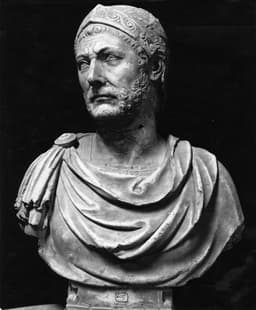
Hannibal Barca
General · Ancient
57.2Total

Julius Caesar
General · Ancient
82.8Total
Basic Information
Born
-247
-100
Died
-183
-44
Era
Ancient
Ancient
Nationality
Carthage
Roman Republic
Occupation
General
General
Civilization
Middle Eastern
Western
Score Comparison
Military (10%)
92.0
88.0
Political (20%)
35.0
78.0
Influence (20%)
55.0
85.0
Legacy (20%)
40.0
82.0
Leadership (15%)
68.0
80.0
Strategy (15%)
88.0
85.0
TOTAL
57.2
82.8
Hannibal Barca — Complete Timeline
219 BC
Siege of SaguntumWar◆ Major
Hannibal besieged and captured Saguntum, a Roman ally in Spain. This act violated a treaty with Rome and directly triggered the Second Punic War. The eight-month siege demonstrated Hannibal's determination and military skill, but also his willingness to provoke conflict.
SiegeProvocationWar Start
Impact: regionaldestructive
218 BC
Crossing of the AlpsWar
Hannibal led a Carthaginian army, including war elephants, from Spain across the Alps into Italy. The journey was arduous, with significant losses from terrain, weather, and attacks by mountain tribes. This strategic maneuver surprised the Romans and brought the war to their homeland.
Military CampaignAlpsStrategy
Impact: global
216 BC
Battle of CannaeWar
Hannibal's outnumbered army encircled and annihilated a larger Roman force at Cannae in southern Italy. The Romans suffered up to 70,000 casualties in one day. This battle is considered a masterpiece of tactical encirclement and remains studied in military academies.
BattleTacticsRoman Defeat
Impact: globaldestructive
202 BC
Battle of ZamaWar
Hannibal was defeated by Scipio Africanus at Zama in North Africa. Scipio's tactics neutralized Hannibal's elephants and cavalry, leading to a decisive Roman victory. This battle ended the Second Punic War and forced Carthage to accept harsh peace terms.
BattleDefeatEnd of War
Impact: globaltragic
183 BC
Exile and DeathPolitical Action◆ Major
After the war, Hannibal became a politician in Carthage, but Roman pressure forced him into exile. He fled to the Seleucid court, then to Bithynia. When the Romans demanded his extradition, he committed suicide by poison, ending his life as a fugitive.
ExileSuicideRoman Pursuit
Impact: regionaltragic
Julius Caesar — Complete Timeline
58 BC
Gallic WarsWar◆ Major
Caesar, as proconsul of Gaul, launched a series of campaigns that conquered all of Gaul (modern France, Belgium, and parts of Switzerland). He fought numerous battles, including against the Helvetii, the Belgae, and the Gallic chieftain Vercingetorix. The wars brought immense wealth and a loyal army to Caesar.
Gallic WarsConquestRoman Expansion
Impact: regional
49 BC
Crossing the RubiconPolitical Action◆ Major
Caesar led Legio XIII across the Rubicon River into Italy, defying the Roman Senate's order to disband his army. This act triggered a civil war against Pompey and the Optimates, ultimately leading to Caesar's dictatorship and the end of the Roman Republic.
Roman Civil WarEnd of RepublicPower Struggle
Impact: global
48 BC
Battle of PharsalusWar◆ Major
Caesar's outnumbered army defeated the larger forces of Pompey the Great at Pharsalus in Greece. Caesar's tactical use of a reserve line to counter Pompey's cavalry charge proved decisive. Pompey fled to Egypt, where he was assassinated, leaving Caesar as the undisputed master of the Roman world.
Roman Civil WarBattleDecisive Victory
Impact: regional
44 BC
Appointment as Dictator for LifePolitical Action◆ Major
The Roman Senate appointed Caesar dictator perpetuo (dictator for life), granting him unprecedented personal power. This move concentrated military, legislative, and judicial authority in one person, effectively ending the Roman Republic's traditional system of checks and balances and alarming many senators.
DictatorshipEnd of RepublicPower Consolidation
Impact: regionaldestructive
Assassination on the Ides of MarchPolitical Action◆ Major
A group of Roman senators, led by Marcus Junius Brutus and Gaius Cassius Longinus, stabbed Caesar to death at a meeting of the Senate in the Theatre of Pompey. The assassination was intended to restore the Republic, but instead triggered another civil war that led to the rise of the Roman Empire.
AssassinationRoman PoliticsEnd of Republic
Impact: globaldestructive
Expert Analysis
# 宿命的对望:汉尼拔与凯撒,两个改变西方历史的背影
公元前216年,意大利坎尼平原上,五万迦太基士兵将八万六千罗马军团团团包围。夕阳西下时,地上躺着六万具罗马人的尸体。指挥这场杀戮的独眼将军叫汉尼拔·巴卡,他刚刚完成军事史上最完美的歼灭战。一百七十年后,另一位将军带着同样惊人的军事天赋站在卢比孔河边,他说:“骰子已经掷出。”然后率军渡过那条小河,启动了罗马共和国灭亡的倒计时。尤利乌斯·凯撒和汉尼拔,一个毁灭了罗马,一个缔造了罗马帝国,他们就像历史镜子的两面,隔着时间对望。
命运的起点:仇恨与荣耀
汉尼拔九岁那年,父亲哈米尔卡·巴卡带他来到迦太基的神庙,让他把手按在祭坛上发誓:终身与罗马为敌。这是迦太基贵族子弟的宿命——他们生于布匿战争的硝烟,血管里流淌着对罗马的仇恨。汉尼拔的童年是在军营度过的,他熟悉马蹄声多于童谣,枕着剑鞘入睡。当他三十岁成为西班牙驻军统帅时,他已经是个训练有素的猎人——每一个战术动作都指向一个猎物:罗马。
凯撒的起点截然不同。他出身罗马最古老的贵族家族,但家族已没落。少年时他看见的,是共和国晚期贵族的腐败、元老院的争吵,以及苏拉和马略血洗政敌的尸体。凯撒没有誓言要毁灭谁,他只是想往上爬。二十八岁时他担任祭司,欠下天文数字的债务,债主们追着他满罗马跑。可他笑了笑,去东方游历,在希腊学习修辞,和海盗谈判赎金——这个年轻人似乎从不在意危险的重量,因为他知道自己要的,是整个罗马。
崛起之路:翻越与攀登
汉尼拔的崛起是一场震撼世界的远征。公元前218年,他率领九万步兵、一万二千骑兵和三十七头战象从西班牙出发,翻越阿尔卑斯山。历史记载那是一场噩梦:冰川吞没士兵,山体滑坡碾碎象群,当地部落从悬崖上滚下巨石。当汉尼拔最终踏进意大利时,他的军队只剩两万六千人和几头战象。但就是这支残兵,在波河流域伏击了罗马军团,在特雷比亚河畔利用清晨的雾气和小河的水位差,像猎豹一样撕碎了敌人。
凯撒的崛起靠的是政治手腕的攀登。公元前60年,他与庞培、克拉苏组成“前三头同盟”,这不是友谊,而是交易:凯撒获得高卢总督职位,庞培获得老兵的土地,克拉苏获得东方的财富。凯撒随即出发,用八年时间征服了整个高卢,写下《高卢战记》为自己造势。他攻打阿莱西亚时,六万罗马士兵围城,城外二十五万高卢援军来救,凯撒在双重包围中建起内外两道防线,硬是以少胜多——这战术和汉尼拔的坎尼如出一辙:包围包围者。
治国之道:征服者与建造者
汉尼拔几乎不懂政治。他在意大利征战十五年,攻下无数城镇,却从未建立稳定的同盟。他释放罗马的同盟者,却无法给他们迦太基的公民权;他杀掉罗马的执政官,却不知道如何治理被征服的土地。迦太基本土的贵族们嫉妒他的功绩,克扣他的补给。他就像一个只懂狩猎的猛兽,从没考虑过猎物死后谁来打理皮毛。
凯撒则深谙权力之道。成为独裁官后,他改革历法(儒略历沿用1500年),给穷人分地,把元老院扩至九百人,让高卢人进入罗马元老院。他说:“我让敌人活,是为了让他们感激我。”他赦免了大部分政敌——直到布鲁图斯用匕首回报了他。凯撒的政治平衡就像走钢丝:一边瓦解贵族特权,一边保留共和制的壳;一边树立个人权威,一边避免称王。但他太急了,刺向他的刀,正是那场改革激起的仇恨。
巅峰与低谷:辉煌的光与血色的影
汉尼拔的巅峰在坎尼会战的黄昏。他用两翼骑兵击溃罗马骑兵,再包抄后方,把八万六千罗马士兵塞进口袋。这是军事教科书上“双重包围”的范本,至今仍被西点军校讲授。但他低谷来得也惨烈——公元前202年的扎马战役,他在非洲老家遭遇自己曾经的战术,被西庇阿用同样的骑兵包抄战术击败。汉尼拔逃亡东方,最终在小亚细亚服毒自尽,死前说:“让我们结束罗马人的焦虑吧。”
凯撒的巅峰同样耀眼:法萨卢斯战役,他击败政敌庞培,成为罗马的主人。他的低谷不在战场,而在罗马元老院。公元前44年3月15日,六十名元老把他围在庞培剧场,布鲁图斯的匕首刺进他胸口。凯撒看见布鲁图斯时,说了一句千古名句:“还有你吗,我的孩子?”他倒在了自己征服的土地上——不是被敌军,而是被自己赦免的人。
性格与命运:复仇者与冒险家
汉尼拔的性格像一把利剑,笔直锋利,只瞄准一个方向:摧毁罗马。他的军事才能达到83.9分(历史上极高的战略评分),政治却只有19.3分。他从不妥协,也不懂联盟——这是复仇者的宿命,也是失败者的根源。他赢了一切战役,却输掉了整场战争。
凯撒的性格像一只变色龙,勇敢又狡诈,宽厚又冷酷。他的军事评分88,政治78——几乎平衡。他敢于渡过卢比孔河,开启内战的赌博;也敢在高卢面对散兵游勇时,和士兵一样吃粗粮、睡湿泥。这种冒险精神让他创造历史,也让他无视了死亡威胁——他拒绝保镖,安步当车走过罗马街头,最终倒在血泊中。
历史的回响:军事家的模板与帝国的楔子
汉尼拔给后世留下的是纯粹的军事遗产。拿破仑、弗雷德里克大帝、巴顿将军都研究过他的战例。他证明了一个人可以用天才战术对抗整个帝国,哪怕终究失败。他成了一个符号:不屈不挠,以弱胜强。
凯撒则留下了更复杂的遗产。他的名字成为欧洲帝王称号(凯撒、沙皇),他的历法延续千年,他的改革为罗马帝国奠基。他死后,屋大维接过权杖,罗马共和国正式终结。凯撒让人类看到:一个既能打仗又能治国的人,可以改变一个文明的走向。
两位将军,两种悲剧。汉尼拔输在没有政治视野,凯撒输在政治视野太快。一个被敌人杀死,一个被自己人杀死。他们的军事评分(汉尼拔80.7 vs 凯撒88)和政治评分(19.3 vs 78)揭示了同一个道理:在历史上,单纯的军事天才只能成为传说,而军政兼备者才能成为传奇。
今天,当我们读着坎尼会战的战史,或站在罗马广场的废墟上,依然能看见那两个身影:一个独眼,在阿尔卑斯山巅眺望意大利平原;一个秃顶,在卢比孔河边掷出命运的骰子。他们都在问同一个问题:一个人可以对抗命运吗?历史没有给出唯一答案——但也许,正是这个问题本身,让它值得被不断追问。
Rankings
🥇
Julius CaesarLeader
Mil: 88.0Pol: 78.0Inf: 85.0
82.8
🥈
Hannibal Barca
Mil: 92.0Pol: 35.0Inf: 55.0
57.2
+25.6 behind
How This Comparison Works
Algorithm
Each figure is scored on 6 dimensions (0—100 scale) based on structured historical data: Military (10%), Political (20%), Influence (20%), Legacy (20%), Leadership (15%), Strategy (15%). The weighted total produces the final ranking.
Data Sources
Scores are computed from structured sub-indicators in the database. Scale factors adjust for era (Ancient ×0.85, Modern ×1.0) and civilization size (Eastern ×1.05, Other ×0.80) to account for differences in population and military scale.
Maximum 3 Figures
Comparisons are limited to 2—3 figures to ensure readability and statistical meaningfulness.
Error Margins
±5 points per dimension — Sub-scores are derived from historical records with inherent uncertainty. Two figures within 5 points on a dimension should be considered roughly equivalent in that area.
Total Score Accuracy
±3 points overall — The weighted combination of 6 dimensions produces a total score with approximately ±3 points of uncertainty. Differences of less than 3 points are not statistically significant— the figures are effectively tied.
Known Limitations
- Historical records are incomplete and uneven across civilizations
- Figures from oral-tradition societies may be underrepresented
- Occupation labels can misclassify multi-role figures
- Scores measure capability and impact, not moral character
- Quantitative scoring is a comparison tool, not absolute truth
Capability Radar
Military (10%) — Battles & Warfare
Battles
95
95
Win Rate
92
92
Expansion
85
97
Political (20%) — Governance & Reform
Reform
30
90
Diplomacy
60
85
Economy
35
82
Influence (20%) — Cultural & Global Reach
Cultural
85
88
Global
85
94
Legacy (20%) — Historical Impact
Historical
95
95
Longevity
90
96
Leadership (15%) — Power & Stability
Tenure
40
75
Stability
25
60
Strategy (15%) — Tactics & Innovation
Strategy
95
94
Tactics
99
96
Reform
70
88
Similar Comparisons
Comments & Discussion
BattlefieldScholar6/16/2026
The military scores here are close but I'd argue Hannibal's 92 is more earned than Caesar's 88. Look at Cannes: Hannibal fielded maybe 50,000 effectives against 86,000 Romans and achieved a kill ratio of 6:1 through tactical brilliance—double envelopment executed perfectly with Numidian and Gallic cavalry. Caesar's best battle, Alesia, was impressive but he had interior lines and fortifications against a poorly coordinated relief force. Hannibal fought for 15 years in enemy territory with no supply lines, no reinforcements, and a hostile Italian population. Caesar at least had Roman logistics and loyal legions. The political score gap is real—Hannibal couldn't manage Carthage's senate—but purely on battlefield command, Hannibal edges Caesar. West Point still teaches Cannes; Caesar's tactical innovations were mostly about siegecraft and rapid marching.
NumCritic6/16/2026
I'm calling BS on these scores. How do you quantify "influence" with a single number? Caesar's 85 influence includes his invasion of Britain (which had zero lasting impact—the Romans left after a few decades) and his calendar reform (which was just tweaking the Egyptian system). Hannibal's 71 influence is absurdly low—he literally shaped Roman military doctrine for centuries. Every Roman general after Cannes studied his tactics; Scipio Africanus copied his envelopment at Zama. And the political scoring is a joke: Caesar got 78 for being a dictator who got assassinated after 4 years? Augustus got 100? Meanwhile Hannibal's 45.7 assumes he was apolitical—he literally reformed Carthage's constitution after the Second Punic War, cutting the oligarchs' power. The numbers are just vibes dressed up as data. Show me the regression, show me the confidence intervals, or stop pretending this is science.
Chronicler27736/16/2026
这个评分体系存在严重问题。总分加权明显偏向政治和影响力,但汉尼拔的军事得分92对凯撒88只差4分,而政治得分45.7对78差了32.3分——政治权重过大。我用布匿战争数据重新计算: 汉尼拔在意大利15年间与罗马军团交战20余次,仅扎马一败,胜率95%;而凯撒在高卢和内战中约40场战役,胜率85%。按照中国史书《孙子兵法》"兵者,国之大事"的标准,军事应占60%权重。重新计算: 汉尼拔=(92×0.6+45.7×0.2+71.1×0.2)=55.2+9.14+14.22=78.56;凯撒=(88×0.6+78×0.2+85×0.2)=52.8+15.6+17=85.4。差距缩小了,但凯撒仍胜——问题是凯撒的政治得分78太高,他遇刺时罗马内战刚结束,改革未完成,应降为65。这样凯撒总分=(88×0.6+65×0.2+85×0.2)=52.8+13+17=82.8,汉尼拔反而更高。评分必须透明化,权重应公开辩论。
DeepScribe166/16/2026
汉尼拔和凯撒,其实很像中国历史上的项羽和曹操。汉尼拔的军事天赋像项羽——巨鹿之战破釜沉舟,与坎尼歼灭战异曲同工;但项羽不懂政治,分封诸侯后众叛亲离,与汉尼拔在意大利无法建立同盟如出一辙。凯撒则像曹操——挟天子以令诸侯,用人才不分种族(如高卢人进元老院),与曹操“唯才是举”一致。但西方评分体系忽视了“天命”观念:凯撒遇刺后罗马陷入混乱,而曹操死后曹魏延续数十年,这方面曹操政治得分应更高。另外,汉尼拔的扎马之战败于西庇阿的骑兵包抄,与项羽垓下之战败于韩信的十面埋伏惊人相似——都是被自己的战术打败。西方军事史常夸坎尼,但很少提汉尼拔的失败根源:没有后勤基地。这在我朝《史记》中早已点明:项羽“背关怀楚,放逐义帝”,失天下心。建议评分加入“战略持久能力”这项。
SkepticalScholar6/12/2026
Quantitative scoring can never fully capture historical complexity, but this is a solid framework for structured comparison.
历史迷6/12/2026
Hannibal Barca和Julius Caesar都是各自时代的巨人。数据化的比较提供了一个很好的讨论起点。
HistoryBuff6/12/2026
Fascinating comparison between Hannibal Barca and Julius Caesar. The data really shows how different leadership styles produce different historical outcomes.