Loading...
Hari Singh Nalwa vs Wladyslaw Sikorski
Hari Singh Nalwa leads by 3.9 pts · 2 figures compared
…

Hari Singh Nalwa
General · Modern
58.0Total
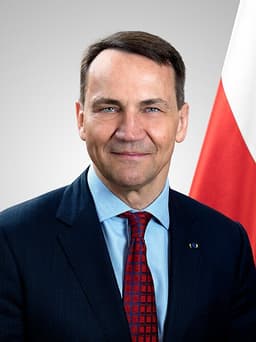
Wladyslaw Sikorski
General · Modern
54.1Total
Basic Information
Born
1791
1881
Died
1837
1943
Era
Modern
Modern
Nationality
India
Poland
Occupation
General
General
Civilization
Indian
Western
Score Comparison
Military (10%)
72.0
25.0
Political (20%)
45.0
53.8
Influence (20%)
65.0
60.0
Legacy (20%)
55.0
52.0
Leadership (15%)
48.8
70.0
Strategy (15%)
67.2
50.0
TOTAL
58.0
54.1
Hari Singh Nalwa — Complete Timeline
1818 AD
Capture of MultanWar
Hari Singh Nalwa participated in the Sikh capture of Multan from the Afghans. The victory brought the wealthy city under Sikh control, expanding the empire's territory and resources.
Sikh-Afghan WarsConquestMultan
Impact: regional
1820 AD
Governorship of KashmirPolitical Action
Hari Singh Nalwa was appointed governor of Kashmir by Maharaja Ranjit Singh. He suppressed rebellions, reformed tax collection, and improved infrastructure, consolidating Sikh rule in the region.
GovernorshipKashmirSikh Empire
Impact: regionalconstructive
1834 AD
Conquest of PeshawarWar◆ Major
Hari Singh Nalwa led Sikh forces to capture Peshawar from the Afghan Barakzai dynasty. He secured the city and its fort, extending Sikh Empire control to the Khyber Pass, a key strategic victory in the Sikh-Afghan wars.
Sikh-Afghan WarsConquestPeshawar
Impact: regional
1837 AD
Battle of JamrudWar◆ Major
Hari Singh Nalwa defended the Jamrud Fort against a large Afghan army led by Dost Mohammad Khan. He was killed in the battle, but the Sikhs held the fort, preventing Afghan recapture of Peshawar and securing the frontier.
Sikh-Afghan WarsBattleDeath
Impact: regionaltragic
Wladyslaw Sikorski — Complete Timeline
1939 AD
Appointment as Prime Minister of the Polish government-in-exilePolitical Action◆ Major
After the German invasion of Poland, Sikorski was appointed prime minister of the Polish government-in-exile on September 30, 1939, in Paris. He also served as Commander-in-Chief of the Polish Armed Forces. He led the exiled government throughout most of World War II.
Government-in-ExileWorld War IILeadership
Impact: nationalconstructive
1941 AD
Signing of the Sikorski-Maisky AgreementPolitical Action
Sikorski signed the Sikorski-Maisky Agreement with the Soviet Union on July 30, 1941, after the German invasion of the USSR. The agreement restored diplomatic relations, annulled the 1939 partition of Poland, and allowed for the formation of a Polish army in the Soviet Union under General Anders.
DiplomacySoviet UnionPolish Army
Impact: globalconstructive
1943 AD
Discovery of the Katyn MassacrePolitical Action◆ Major
In April 1943, German forces announced the discovery of mass graves of Polish officers in the Katyn Forest. Sikorski requested an International Red Cross investigation, which led to a break in diplomatic relations with the Soviet Union on April 25, 1943, as the USSR denied responsibility.
KatynMassacreSoviet Relations
Impact: globaltragic
Death in the Gibraltar plane crashOther
Sikorski died in a plane crash at Gibraltar on July 4, 1943, shortly after takeoff. The crash killed all 16 passengers and crew, including his daughter. The cause remains disputed, with theories ranging from accident to Soviet or British assassination. His death was a major blow to the Polish government-in-exile.
DeathPlane CrashConspiracy
Impact: nationaltragic
Expert Analysis
Origins
Hari Singh Nalwa was born in 1791 in Gujranwala, Punjab (now Pakistan), into a Sikh Uppal family. His father died when he was young, and he was raised by his mother. At age 14, he joined the court of Maharaja Ranjit Singh, where his skills in martial arts and horseback riding earned him early favor. Wladyslaw Sikorski was born on May 20, 1881, in Tuszów Narodowy, Poland (then part of Austria-Hungary), into a Polish noble family. He studied engineering at Lwów Polytechnic and became active in Polish independence movements, serving in the Austro-Hungarian army during World War I. Both emerged from contexts of foreign domination: Nalwa from Sikh resurgence against Afghan rule, Sikorski from partitioned Poland seeking sovereignty.
Rise to Power
Nalwa rose through military merit. In 1807, at age 16, he participated in the Battle of Kasur, impressing Ranjit Singh. He quickly became a leading general, capturing strategic forts like Attock (1813) and Multan (1818). His greatest achievement came in 1834 when he led the Sikh capture of Peshawar from the Afghans, securing the Khyber Pass region. He was appointed governor of Kashmir in 1820, where he suppressed rebellions and reformed tax collection. Sikorski rose through political and military channels. During World War I, he fought in the Polish Legions. After Poland's independence, he served as Prime Minister (1922-1923) and Minister of Military Affairs. After the German invasion of Poland in 1939, he became Prime Minister of the Polish government-in-exile, first in Paris, then London. His pivotal moment came with the Sikorski-Maisky Agreement (July 30, 1941), which restored diplomatic relations with the USSR and allowed the formation of a Polish army on Soviet soil.
Leadership & Governance
Nalwa's leadership was hands-on and ruthless. As governor of Kashmir, he imposed strict law and order, reduced corruption, and improved infrastructure like roads and bridges. His military strategy emphasized rapid movement and fortification. He scored 67.2 in strategy, reflecting his ability to hold territory against larger Afghan forces. Sikorski, with a leadership score of 70.0, excelled in diplomacy and coalition-building. He maintained the Polish government-in-exile's legitimacy, negotiated with Allied powers, and organized the Polish Armed Forces in the West. However, his political score of 53.8 shows limitations; he struggled to balance relations with the Soviets and maintain Polish sovereignty, especially after the Katyn Massacre discovery in 1943, which he handled by requesting an International Red Cross investigation, straining relations with Stalin.
Triumph & Tragedy
Nalwa's triumph was the conquest and defense of Peshawar. In 1837, at the Battle of Jamrud, he held the fort against a 20,000-strong Afghan army led by Dost Mohammad Khan, despite being outnumbered. His death in battle became a symbol of Sikh resilience. His tragedy was that his conquests were short-lived; after the Sikh Empire fell to the British in 1849, much of his territorial gains were lost. Sikorski's triumph was the Sikorski-Maisky Agreement, which freed over 100,000 Polish prisoners from Soviet camps and enabled the formation of the 80,000-strong Polish II Corps. His tragedy was his death in the Gibraltar plane crash on July 4, 1943, which many suspected was sabotage. His death weakened the Polish government-in-exile and arguably allowed the Soviets to dominate post-war Poland.
Character & Destiny
Nalwa was known for his ferocity and discipline. He was called 'Baghmar' (tiger-slayer) and instilled fear in Afghan adversaries. His character was suited to frontier warfare but less to political maneuvering; his total score of 58.0 reflects his military focus. Sikorski was a pragmatic democrat, skilled in diplomacy but haunted by the geopolitical realities of World War II. His willingness to cooperate with the USSR, despite historical grievances, was both a strength and a vulnerability. His destiny was cut short by a mysterious plane crash, which some historians argue was orchestrated by the Soviets or British to remove a troublesome leader.
Legacy
Nalwa's legacy is celebrated in Sikh history as a symbol of martial prowess and empire-building. He is remembered in folk songs and monuments like the Hari Singh Nalwa Museum in Gujranwala. His military score of 72.0 reflects his effectiveness as a commander, but his influence score of 65.0 is limited to regional Sikh memory. Sikorski's legacy is more international: he is remembered as a key figure in Polish resistance and a martyr for democracy. His political score of 53.8 and influence score of 60.0 reflect his role in Allied diplomacy. The Sikorski Institute in London preserves his archives. However, his death prevented him from shaping Poland's post-war fate, limiting his long-term impact.
Conclusion
While Sikorski scored higher in leadership (70.0 vs 48.8) and politics (53.8 vs 45.0), Nalwa's military score of 72.0 dwarfs Sikorski's 25.0, and his overall total of 58.0 edges out Sikorski's 54.1. Nalwa's conquests directly expanded and defended a sovereign state, the Sikh Empire, for over two decades. Sikorski, despite his diplomatic efforts, could not prevent Poland's subjugation. Nalwa had greater impact in his sphere: he was a decisive military leader whose actions shaped the geopolitics of South Asia. Sikorski, though a capable wartime leader, was ultimately a figurehead whose influence was contingent on Allied support. Therefore, Hari Singh Nalwa had greater historical impact.
Rankings
🥇
Hari Singh NalwaLeader
Mil: 72.0Pol: 45.0Inf: 65.0
58.0
🥈
Wladyslaw Sikorski
Mil: 25.0Pol: 53.8Inf: 60.0
54.1
+3.9 behind
How This Comparison Works
Algorithm
Each figure is scored on 6 dimensions (0—100 scale) based on structured historical data: Military (10%), Political (20%), Influence (20%), Legacy (20%), Leadership (15%), Strategy (15%). The weighted total produces the final ranking.
Data Sources
Scores are computed from structured sub-indicators in the database. Scale factors adjust for era (Ancient ×0.85, Modern ×1.0) and civilization size (Eastern ×1.05, Other ×0.80) to account for differences in population and military scale.
Maximum 3 Figures
Comparisons are limited to 2—3 figures to ensure readability and statistical meaningfulness.
Error Margins
±5 points per dimension — Sub-scores are derived from historical records with inherent uncertainty. Two figures within 5 points on a dimension should be considered roughly equivalent in that area.
Total Score Accuracy
±3 points overall — The weighted combination of 6 dimensions produces a total score with approximately ±3 points of uncertainty. Differences of less than 3 points are not statistically significant— the figures are effectively tied.
Known Limitations
- Historical records are incomplete and uneven across civilizations
- Figures from oral-tradition societies may be underrepresented
- Occupation labels can misclassify multi-role figures
- Scores measure capability and impact, not moral character
- Quantitative scoring is a comparison tool, not absolute truth
Capability Radar
Military (10%) — Battles & Warfare
Battles
75
45
Win Rate
80
40
Expansion
85
20
Political (20%) — Governance & Reform
Reform
50
50
Diplomacy
60
65
Economy
55
30
Influence (20%) — Cultural & Global Reach
Cultural
65
40
Global
55
50
Legacy (20%) — Historical Impact
Historical
70
55
Longevity
60
45
Leadership (15%) — Power & Stability
Tenure
55
55
Stability
50
40
Strategy (15%) — Tactics & Innovation
Strategy
82
60
Tactics
78
50
Reform
60
55
Similar Comparisons
Comments & Discussion
No comments yet. Be the first to share your thoughts!