Loading...
Shigeyoshi Inoue vs Wladyslaw Sikorski
Wladyslaw Sikorski leads by 14.8 pts · 2 figures compared
…

Shigeyoshi Inoue
General · Modern
39.3Total
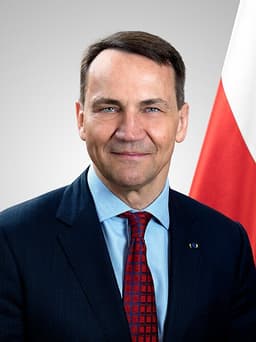
Wladyslaw Sikorski
General · Modern
54.1Total
Basic Information
Born
1889
1881
Died
1975
1943
Era
Modern
Modern
Nationality
Japan
Poland
Occupation
General
General
Civilization
Eastern
Western
Score Comparison
Military (10%)
35.0
25.0
Political (20%)
25.0
53.8
Influence (20%)
49.4
60.0
Legacy (20%)
40.0
52.0
Leadership (15%)
36.9
70.0
Strategy (15%)
41.7
50.0
TOTAL
39.3
54.1
Shigeyoshi Inoue — Complete Timeline
1941 AD
Appointed Commander of the Fourth FleetPolitical Action◆ Major
Inoue was appointed commander of the Fourth Fleet, responsible for Japanese naval operations in the South Pacific. He oversaw the capture of Guam, Wake Island, and the Solomon Islands in the early months of the Pacific War.
Fourth FleetWorld War IISouth Pacific
Impact: regional
1942 AD
Commanded the Fourth Fleet at the Battle of the Coral SeaWar
Inoue commanded the Japanese Fourth Fleet during the Battle of the Coral Sea. The battle was the first naval engagement fought entirely by aircraft carriers. Although a tactical draw, it stopped the Japanese advance on Port Moresby and marked the first check on Japanese expansion.
Battle of the Coral SeaWorld War IINaval Battle
Impact: regional
Ordered the Withdrawal from the Port Moresby InvasionWar◆ Major
After the Battle of the Coral Sea, Inoue ordered the Japanese invasion force for Port Moresby to turn back, despite the battle being a tactical draw. This decision was criticized by some naval officers but preserved the invasion force for future operations.
Port MoresbyWorld War IIWithdrawal
Impact: regional
Wladyslaw Sikorski — Complete Timeline
1939 AD
Appointment as Prime Minister of the Polish government-in-exilePolitical Action◆ Major
After the German invasion of Poland, Sikorski was appointed prime minister of the Polish government-in-exile on September 30, 1939, in Paris. He also served as Commander-in-Chief of the Polish Armed Forces. He led the exiled government throughout most of World War II.
Government-in-ExileWorld War IILeadership
Impact: nationalconstructive
1941 AD
Signing of the Sikorski-Maisky AgreementPolitical Action
Sikorski signed the Sikorski-Maisky Agreement with the Soviet Union on July 30, 1941, after the German invasion of the USSR. The agreement restored diplomatic relations, annulled the 1939 partition of Poland, and allowed for the formation of a Polish army in the Soviet Union under General Anders.
DiplomacySoviet UnionPolish Army
Impact: globalconstructive
1943 AD
Discovery of the Katyn MassacrePolitical Action◆ Major
In April 1943, German forces announced the discovery of mass graves of Polish officers in the Katyn Forest. Sikorski requested an International Red Cross investigation, which led to a break in diplomatic relations with the Soviet Union on April 25, 1943, as the USSR denied responsibility.
KatynMassacreSoviet Relations
Impact: globaltragic
Death in the Gibraltar plane crashOther
Sikorski died in a plane crash at Gibraltar on July 4, 1943, shortly after takeoff. The crash killed all 16 passengers and crew, including his daughter. The cause remains disputed, with theories ranging from accident to Soviet or British assassination. His death was a major blow to the Polish government-in-exile.
DeathPlane CrashConspiracy
Impact: nationaltragic
Expert Analysis
Origins
Shigeyoshi Inoue was born on December 4, 1889, in Miyagi Prefecture, Japan. He graduated from the Imperial Japanese Naval Academy in 1909 and later studied at the Naval War College. Inoue's early career included service in World War I and various staff positions. Wladyslaw Sikorski was born on May 20, 1881, in Tuszów Narodowy, then part of the Austro-Hungarian Empire. He studied engineering at Lwów Polytechnic and became involved in Polish independence movements. Sikorski served in the Austro-Hungarian army during World War I and later joined the Polish Legions.
Rise to Power
Inoue rose through the ranks of the Imperial Japanese Navy, becoming a rear admiral in 1937. He commanded the Fourth Fleet from 1941, overseeing the capture of Guam and Wake Island early in the Pacific War. His key turning point was the Battle of the Coral Sea in May 1942, where his fleet attempted to invade Port Moresby. Sikorski rose to prominence in interwar Poland, serving as Prime Minister from 1922 to 1923 and Minister of Military Affairs. After the German invasion of Poland in 1939, he became Prime Minister of the Polish government-in-exile on September 30, 1939, in Paris. His turning point was signing the Sikorski-Maisky Agreement with the Soviet Union on July 30, 1941, which restored diplomatic relations and allowed for the formation of a Polish army in the USSR.
Leadership & Governance
Inoue's leadership was characterized by caution and adherence to doctrine. At the Battle of the Coral Sea, he faced the first carrier-versus-carrier battle in history. After the battle ended in a tactical draw, Inoue ordered the Port Moresby invasion force to turn back, a decision criticized by some as overly cautious. He scored 36.9 in leadership, reflecting his conservative approach. Sikorski, scoring 70.0 in leadership, was a dynamic political and military leader. As prime minister of the exile government, he coordinated Polish military efforts with the Allies, raised troops, and maintained morale. He personally lobbied Churchill and Roosevelt for Polish interests. His governance was marked by diplomatic skill and relentless advocacy for Poland's sovereignty.
Triumph & Tragedy
Inoue's greatest success was the capture of Guam and Wake Island in 1941, achieving strategic objectives. His greatest failure was the Coral Sea campaign, where despite inflicting heavy losses on the US Navy, he failed to secure Port Moresby. The withdrawal cost Japan momentum and led to his reassignment. Inoue scored 35.0 in military and 41.7 in strategy. Sikorski's triumph was the Sikorski-Maisky Agreement, which freed tens of thousands of Polish prisoners and created a 75,000-strong army. His tragedy was the discovery of the Katyn Massacre in April 1943, which led to a breakdown in Soviet-Polish relations. Sikorski's death in the Gibraltar plane crash on July 4, 1943, was a devastating blow to Polish hopes. He scored 25.0 in military but 53.8 in political and 60.0 in influence.
Character & Destiny
Inoue was a cautious, methodical commander who prioritized preserving his fleet over aggressive risk-taking. His decision at Coral Sea reflected a defensive mindset. He survived the war but was marginalized. Sikorski was a determined, charismatic statesman who combined military experience with political acumen. His death in mysterious circumstances at Gibraltar remains controversial. Historians assess him as a pivotal figure whose loss severely weakened Polish representation among the Allies.
Legacy
Inoue's legacy is limited; he is remembered primarily for the Coral Sea withdrawal, which historians debate as prudent or timid. He scored 49.4 in influence and 40.0 in legacy. Sikorski's legacy is substantial: he is honored as a national hero in Poland, with monuments and streets named after him. His political legacy includes the Polish government-in-exile and the enduring symbol of resistance. He scored 60.0 in influence and 52.0 in legacy.
Conclusion
While Inoue played a role in early Pacific campaigns, his impact was narrowly tactical and ultimately overshadowed by Japan's defeat. Sikorski, with a total score of 54.1 against Inoue's 39.3, had far greater influence on the course of World War II and the post-war order. His diplomatic achievements and leadership of the Polish resistance shaped Allied policies and preserved Polish statehood. Therefore, Wladyslaw Sikorski had a greater and more lasting impact on history.
Rankings
🥇
Wladyslaw SikorskiLeader
Mil: 25.0Pol: 53.8Inf: 60.0
54.1
🥈
Shigeyoshi Inoue
Mil: 35.0Pol: 25.0Inf: 49.4
39.3
+14.8 behind
How This Comparison Works
Algorithm
Each figure is scored on 6 dimensions (0—100 scale) based on structured historical data: Military (10%), Political (20%), Influence (20%), Legacy (20%), Leadership (15%), Strategy (15%). The weighted total produces the final ranking.
Data Sources
Scores are computed from structured sub-indicators in the database. Scale factors adjust for era (Ancient ×0.85, Modern ×1.0) and civilization size (Eastern ×1.05, Other ×0.80) to account for differences in population and military scale.
Maximum 3 Figures
Comparisons are limited to 2—3 figures to ensure readability and statistical meaningfulness.
Error Margins
±5 points per dimension — Sub-scores are derived from historical records with inherent uncertainty. Two figures within 5 points on a dimension should be considered roughly equivalent in that area.
Total Score Accuracy
±3 points overall — The weighted combination of 6 dimensions produces a total score with approximately ±3 points of uncertainty. Differences of less than 3 points are not statistically significant— the figures are effectively tied.
Known Limitations
- Historical records are incomplete and uneven across civilizations
- Figures from oral-tradition societies may be underrepresented
- Occupation labels can misclassify multi-role figures
- Scores measure capability and impact, not moral character
- Quantitative scoring is a comparison tool, not absolute truth
Capability Radar
Military (10%) — Battles & Warfare
Battles
30
45
Win Rate
25
40
Expansion
15
20
Political (20%) — Governance & Reform
Reform
5
50
Diplomacy
15
65
Economy
5
30
Influence (20%) — Cultural & Global Reach
Cultural
10
40
Global
15
50
Legacy (20%) — Historical Impact
Historical
20
55
Longevity
10
45
Leadership (15%) — Power & Stability
Tenure
20
55
Stability
10
40
Strategy (15%) — Tactics & Innovation
Strategy
30
60
Tactics
35
50
Reform
10
55
Similar Comparisons
Comments & Discussion
No comments yet. Be the first to share your thoughts!