Loading...
Harold Alexander vs Norman Schwarzkopf
Harold Alexander leads by 3.4 pts · 2 figures compared
…

Harold Alexander
General · Modern
62.3Total
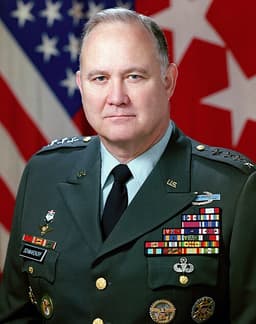
Norman Schwarzkopf
General · Modern
58.9Total
Basic Information
Born
1891
1934
Died
1969
—
Era
Modern
Modern
Nationality
United Kingdom
United States
Occupation
General
General
Civilization
Western
Western
Score Comparison
Military (10%)
74.7
78.0
Political (20%)
68.0
45.0
Influence (20%)
58.3
55.0
Legacy (20%)
52.0
58.0
Leadership (15%)
70.0
62.0
Strategy (15%)
65.4
68.1
TOTAL
62.3
58.9
Harold Alexander — Complete Timeline
1940 AD
Commanded the Dunkirk EvacuationOther◆ Major
As commander of the British 1st Corps, Alexander oversaw the evacuation of Allied troops from Dunkirk from May 26 to June 4, 1940. He organized the defense of the perimeter and ensured the orderly withdrawal of over 330,000 soldiers under constant German air and ground attack.
World War IIDunkirkEvacuation
Impact: globalconstructive
1942 AD
Commanded Burma CampaignWar◆ Major
Alexander was appointed commander of British forces in Burma in March 1942. He led a difficult retreat from Burma to India as Japanese forces advanced, successfully preserving the core of the British Indian Army despite heavy losses and difficult terrain, preventing a complete collapse.
World War IIBurma CampaignRetreat
Impact: regionaldestructive
1943 AD
Appointed Commander of 15th Army GroupOther◆ Major
Alexander was appointed commander of the 15th Army Group in December 1943, responsible for all Allied ground forces in the Mediterranean theater. He directed the Italian Campaign, including the Anzio landings and the advance through central Italy, coordinating British, American, and other Allied units.
World War IIItalian CampaignCommand
Impact: regional
1944 AD
Capture of RomeOther◆ Major
Alexander's forces captured Rome on June 4, 1944, after a hard-fought campaign that included the Battle of Monte Cassino and the Anzio breakout. The capture of the Italian capital was a significant psychological victory, though it came just two days before the D-Day landings in Normandy.
World War IIItalian CampaignVictory
Impact: regionalconstructive
1946 AD
Appointed Governor General of CanadaPolitical Action◆ Major
Alexander was appointed Governor General of Canada in 1946, serving as the representative of King George VI until 1952. He performed ceremonial and constitutional duties, including opening Parliament and representing the Crown in Canada, and was well-regarded for his diplomatic skills.
Post-WarCanadaGovernor General
Impact: national
Norman Schwarzkopf — Complete Timeline
1990 AD
Appointed Commander of Coalition Forces for Operation Desert ShieldOther◆ Major
In August 1990, Schwarzkopf was appointed Commander-in-Chief of U.S. Central Command and overall commander of coalition forces in the Persian Gulf. He oversaw the buildup of over 500,000 troops in Saudi Arabia to deter Iraqi aggression after the invasion of Kuwait.
Gulf WarMilitary BuildupCoalition Command
Impact: global
1991 AD
Executed Operation Desert Storm Ground CampaignWar◆ Major
Schwarzkopf planned and executed the 100-hour ground offensive that began on February 24, 1991. Using a left-hook maneuver through the Iraqi desert, coalition forces outflanked Iraqi defenses, liberating Kuwait and destroying much of the Iraqi Republican Guard with minimal coalition casualties.
Gulf WarMilitary VictoryOperational Planning
Impact: global
Negotiated Ceasefire at SafwanOther◆ Major
On March 3, 1991, Schwarzkopf met with Iraqi military commanders at Safwan airfield to negotiate the terms of the ceasefire ending the Gulf War. He secured Iraqi agreement to return prisoners, provide minefield maps, and cease military operations, though he allowed Iraqi helicopters to fly, later criticized as enabling suppression of uprisings.
Gulf WarCeasefirePost-War Settlement
Impact: regional
1992 AD
Published Autobiography 'It Doesn't Take a Hero'Other
Schwarzkopf published his autobiography 'It Doesn't Take a Hero' in September 1992. The book detailed his military career from Vietnam through the Gulf War, becoming a bestseller and providing his personal account of the decision-making process during Operation Desert Storm.
AutobiographyMilitary MemoirPublic Figure
Impact: national
Expert Analysis
Origins
Harold Alexander was born on December 10, 1891, in London, England, into an aristocratic family. He was the third son of the Earl of Caledon. Alexander was educated at Harrow and the Royal Military College, Sandhurst, and was commissioned into the Irish Guards in 1911. He served with distinction in World War I, earning the Military Cross and being wounded multiple times.
Norman Schwarzkopf was born on August 22, 1934, in Trenton, New Jersey, to a military family. His father, Herbert Norman Schwarzkopf, was a West Point graduate and served as the first superintendent of the New Jersey State Police. Young Norman attended the Valley Forge Military Academy and later West Point, graduating in 1956. He served two tours in Vietnam, where he earned three Silver Stars for valor.
Rise to Power
Alexander's rise accelerated during World War II. He commanded the British 1st Corps during the Dunkirk evacuation (May–June 1940), successfully extracting over 330,000 troops. He then served as Commander-in-Chief of British forces in Burma in 1942, leading a difficult retreat to India. In 1943, he was appointed Commander of the 15th Army Group, overseeing Allied forces in the Mediterranean. His leadership in the Italian campaign, including the capture of Rome on June 4, 1944, solidified his reputation.
Schwarzkopf's rise came through the Vietnam War and subsequent command positions. He served as a battalion commander in Vietnam and later as a brigade commander. He attended the Army War College and held various staff and command roles. In August 1990, after Iraq invaded Kuwait, Schwarzkopf was appointed Commander-in-Chief of U.S. Central Command and overall commander of coalition forces for Operation Desert Shield. This marked his ascent to global prominence.
Leadership & Governance
Alexander's leadership style was calm, diplomatic, and collaborative. He managed multinational forces effectively, balancing the interests of British, American, and other allies. He delegated operational command to his subordinates, such as General Oliver Leese in Italy. His governance approach was methodical; he focused on logistics and maintaining morale. For example, he ensured steady supply lines during the Italian campaign, which involved difficult terrain and German defensive positions.
Schwarzkopf, known as "Stormin' Norman," had a more aggressive and direct style. He was hands-on and demanding, often personally overseeing planning. He built a cohesive coalition of 34 nations, demonstrating diplomatic skill. His leadership during Desert Storm involved a bold left-hook maneuver that outflanked Iraqi forces, leading to a 100-hour ground war. He also negotiated the ceasefire at Safwan on March 3, 1991, setting terms that included Iraq's acceptance of UN resolutions.
Triumph & Tragedy
Alexander's greatest triumph was the capture of Rome in 1944, a strategic victory that boosted Allied morale. He also successfully commanded the evacuation at Dunkirk, saving the British Army. However, he faced failures, including the stalled advance in Italy after Rome, due to the Gothic Line and resource diversion to Operation Dragoon. His Burma retreat, while successful in preserving his army, was a withdrawal in the face of Japanese advances.
Schwarzkopf's triumph was the overwhelming success of Desert Storm, which liberated Kuwait with minimal coalition casualties. He skillfully executed a deception plan that convinced Iraqis the main attack would come from the sea, while the actual ground assault swept from the west. However, his failure was the decision to halt the offensive after 100 hours, allowing the Republican Guard to escape and Saddam Hussein to remain in power. Critics argue that this failure to destroy the Iraqi army led to later conflicts. Schwarzkopf's scores reflect these mixed outcomes: Military 78.0, but Political 45.0.
Character & Destiny
Alexander was known for his composure and gentlemanly demeanor. He was a skilled diplomat, which served him well in coalition warfare and later as Governor General of Canada (1946–1952). His destiny was shaped by his ability to manage large, multinational operations, but he lacked the aggressive drive to exploit victories fully. His strategic score of 65.4 reflects a competent but not revolutionary approach.
Schwarzkopf was charismatic and volatile, earning his nickname through his temper. He was a meticulous planner but also impulsive in decision-making. His destiny was tied to the Gulf War, which made him a national hero. However, his political naivety (score 45.0) limited his influence beyond the military sphere. He retired in 1991 and focused on public speaking and charity work.
Legacy
Alexander's legacy is as a steady commander who contributed to Allied victory in the Mediterranean. His role at Dunkirk and in Italy is studied in military history. He also served as Governor General, representing the Crown. However, his long-term impact is lessened by the overshadowing of the Italian campaign by the Normandy invasion. His total score of 62.3 reflects solid but not exceptional performance.
Schwarzkopf's legacy is defined by the Gulf War, which reshaped modern warfare with its use of precision weapons and joint operations. The "left hook" maneuver became a case study in military schools. He also demonstrated the effectiveness of multinational coalitions. However, the incomplete victory and subsequent Iraq War tarnish his legacy. His total score of 58.9 is slightly lower than Alexander's.
Conclusion
While both generals achieved significant victories, Harold Alexander had a greater overall impact. His leadership spanned multiple critical campaigns—Dunkirk, Burma, and Italy—and his diplomatic skills were essential for coalition management. Schwarzkopf's Desert Storm was a brilliant tactical success, but its strategic outcome was incomplete. Alexander's total score of 62.3 vs. 58.9 reflects his broader influence and longer career. The capture of Rome and the salvation of the British Army at Dunkirk are enduring contributions to the Allied victory in World War II. Thus, Alexander stands as the more historically significant commander.
Rankings
🥇
Harold AlexanderLeader
Mil: 74.7Pol: 68.0Inf: 58.3
62.3
🥈
Norman Schwarzkopf
Mil: 78.0Pol: 45.0Inf: 55.0
58.9
+3.4 behind
How This Comparison Works
Algorithm
Each figure is scored on 6 dimensions (0—100 scale) based on structured historical data: Military (10%), Political (20%), Influence (20%), Legacy (20%), Leadership (15%), Strategy (15%). The weighted total produces the final ranking.
Data Sources
Scores are computed from structured sub-indicators in the database. Scale factors adjust for era (Ancient ×0.85, Modern ×1.0) and civilization size (Eastern ×1.05, Other ×0.80) to account for differences in population and military scale.
Maximum 3 Figures
Comparisons are limited to 2—3 figures to ensure readability and statistical meaningfulness.
Error Margins
±5 points per dimension — Sub-scores are derived from historical records with inherent uncertainty. Two figures within 5 points on a dimension should be considered roughly equivalent in that area.
Total Score Accuracy
±3 points overall — The weighted combination of 6 dimensions produces a total score with approximately ±3 points of uncertainty. Differences of less than 3 points are not statistically significant— the figures are effectively tied.
Known Limitations
- Historical records are incomplete and uneven across civilizations
- Figures from oral-tradition societies may be underrepresented
- Occupation labels can misclassify multi-role figures
- Scores measure capability and impact, not moral character
- Quantitative scoring is a comparison tool, not absolute truth
Capability Radar
Military (10%) — Battles & Warfare
Battles
75
85
Win Rate
70
95
Expansion
65
70
Political (20%) — Governance & Reform
Reform
40
40
Diplomacy
65
75
Economy
45
50
Influence (20%) — Cultural & Global Reach
Cultural
40
55
Global
50
65
Legacy (20%) — Historical Impact
Historical
55
65
Longevity
45
50
Leadership (15%) — Power & Stability
Tenure
55
55
Stability
60
70
Strategy (15%) — Tactics & Innovation
Strategy
78
85
Tactics
72
80
Reform
60
60
Similar Comparisons
Comments & Discussion
No comments yet. Be the first to share your thoughts!