Loading...
Ariel Sharon vs Norman Schwarzkopf
Norman Schwarzkopf leads by 0.6 pts · 2 figures compared
…
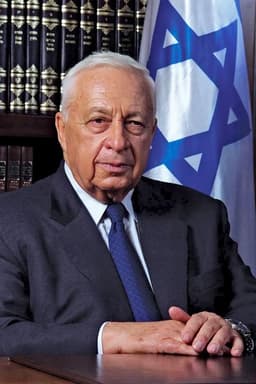
Ariel Sharon
General · Modern
58.3Total
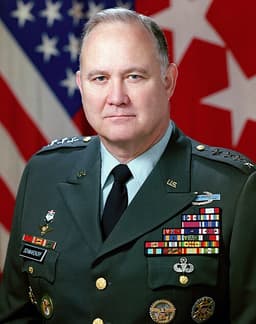
Norman Schwarzkopf
General · Modern
58.9Total
Basic Information
Born
1928
1934
Died
—
—
Era
Modern
Modern
Nationality
Israel
United States
Occupation
General
General
Civilization
Middle Eastern
Western
Score Comparison
Military (10%)
67.3
78.0
Political (20%)
45.0
45.0
Influence (20%)
56.7
55.0
Legacy (20%)
54.0
58.0
Leadership (15%)
68.0
62.0
Strategy (15%)
69.1
68.1
TOTAL
58.3
58.9
Ariel Sharon — Complete Timeline
1982 AD
Command of the 1982 Lebanon WarWar◆ Major
As Minister of Defense, Sharon directed the Israeli invasion of Lebanon to expel the PLO. The war led to the Sabra and Shatila massacre, for which an Israeli commission found Sharon indirectly responsible, forcing his resignation as defense minister.
Lebanon WarSabra and ShatilaMilitary Campaign
Impact: regionaldestructive
2001 AD
Election as Prime MinisterPolitical Action◆ Major
Sharon was elected prime minister of Israel in a special election, defeating Ehud Barak. His victory came during the Second Intifada, and he adopted a hardline security policy, including military operations in Palestinian areas.
ElectionSecond IntifadaSecurity Policy
Impact: national
2005 AD
Disengagement from GazaPolitical Action◆ Major
Sharon implemented the unilateral disengagement plan, withdrawing all Israeli settlers and military forces from the Gaza Strip and dismantling four settlements in the West Bank. The move was controversial within Israel but internationally supported.
Gaza WithdrawalSettlementsUnilateral Action
Impact: regionalconstructive
Norman Schwarzkopf — Complete Timeline
1990 AD
Appointed Commander of Coalition Forces for Operation Desert ShieldOther◆ Major
In August 1990, Schwarzkopf was appointed Commander-in-Chief of U.S. Central Command and overall commander of coalition forces in the Persian Gulf. He oversaw the buildup of over 500,000 troops in Saudi Arabia to deter Iraqi aggression after the invasion of Kuwait.
Gulf WarMilitary BuildupCoalition Command
Impact: global
1991 AD
Executed Operation Desert Storm Ground CampaignWar◆ Major
Schwarzkopf planned and executed the 100-hour ground offensive that began on February 24, 1991. Using a left-hook maneuver through the Iraqi desert, coalition forces outflanked Iraqi defenses, liberating Kuwait and destroying much of the Iraqi Republican Guard with minimal coalition casualties.
Gulf WarMilitary VictoryOperational Planning
Impact: global
Negotiated Ceasefire at SafwanOther◆ Major
On March 3, 1991, Schwarzkopf met with Iraqi military commanders at Safwan airfield to negotiate the terms of the ceasefire ending the Gulf War. He secured Iraqi agreement to return prisoners, provide minefield maps, and cease military operations, though he allowed Iraqi helicopters to fly, later criticized as enabling suppression of uprisings.
Gulf WarCeasefirePost-War Settlement
Impact: regional
1992 AD
Published Autobiography 'It Doesn't Take a Hero'Other
Schwarzkopf published his autobiography 'It Doesn't Take a Hero' in September 1992. The book detailed his military career from Vietnam through the Gulf War, becoming a bestseller and providing his personal account of the decision-making process during Operation Desert Storm.
AutobiographyMilitary MemoirPublic Figure
Impact: national
Expert Analysis
Origins
Ariel Sharon was born in 1928 in Kfar Malal, British Mandate of Palestine, to parents who were part of the Second Aliyah. He joined the Haganah at age 14 and later studied at the Hebrew University of Jerusalem. His early military experiences included commanding a platoon during the 1948 Arab-Israeli War, where he was wounded at Latrun.
Norman Schwarzkopf was born in 1934 in Trenton, New Jersey, to a military family; his father was a police superintendent. He graduated from West Point in 1956 and served in the Vietnam War as a battalion advisor. He later earned a master's degree in mechanical engineering from the University of Southern California.
Rise to Power
Sharon rose through the ranks of the Israeli Defense Forces (IDF), leading Unit 101 and pioneering counter-insurgency tactics in the 1950s. His key turning point came in 1973 when he led the crossing of the Suez Canal during the Yom Kippur War, restoring his reputation after the 1973 war's initial setbacks. He entered politics in 1973 and served as Minister of Defense from 1981 to 1983.
Schwarzkopf's rise included command of the 1st Battalion, 6th Infantry in Vietnam, and later as commander of the 24th Mechanized Infantry Division. In 1988, he became Commander-in-Chief of U.S. Central Command. His major turning point was the Iraqi invasion of Kuwait in August 1990, when he was appointed overall commander of coalition forces for Operation Desert Shield.
Leadership & Governance
Sharon's leadership style was aggressive and unilateral. As Minister of Defense, he directed the 1982 Lebanon War, aiming to expel the PLO and install a friendly government. His governance as Prime Minister (2001-2006) focused on security during the Second Intifada, including building the West Bank barrier. His most dramatic move was the 2005 unilateral disengagement from Gaza, withdrawing all settlers and troops without negotiations.
Schwarzkopf led the coalition with a collaborative yet decisive style. He built consensus among 39 nations and executed the "left hook" ground campaign in Operation Desert Storm. The 100-hour offensive in February 1991 destroyed Iraqi forces with minimal coalition casualties. His leadership scores 62.0, compared to Sharon's 68.0, reflecting Sharon's longer political tenure.
Triumph & Tragedy
Sharon's greatest triumph was the Gaza disengagement, which removed 8,000 settlers and reduced Israeli military presence, though it led to Hamas control. His greatest failure was the Sabra and Shatila massacre (1982), where Lebanese Christian militias killed hundreds of civilians under Israeli control. An Israeli commission found him indirectly responsible, forcing his resignation as Defense Minister. His military score of 67.3 reflects mixed results.
Schwarzkopf's triumph was the swift Gulf War victory, liberating Kuwait with 148 U.S. combat deaths. His failure was the ceasefire at Safwan, where he allowed Iraqi helicopters to fly, which Saddam used to suppress uprisings. His military score of 78.0 reflects operational success, but political outcomes were less controlled.
Character & Destiny
Sharon was known as "The Bulldozer" for his blunt, determined personality. His decisions shaped Israel's borders and security policy, but also led to controversy and isolation. His character drove him to take bold risks, from crossing the Suez to disengagement, but also caused conflicts with allies.
Schwarzkopf, nicknamed "Stormin' Norman" for his temper, was a charismatic leader who inspired troops. He was meticulous in planning and media-savvy, but his political naivete at Safwan showed a gap between military and diplomatic skills. His influence score of 55.0 is close to Sharon's 56.7.
Legacy
Sharon's legacy is mixed: he is remembered for expanding settlements and then dismantling them. His Gaza disengagement remains controversial, and his actions in Lebanon are condemned. He changed Israeli policy unilaterally, setting precedents for future withdrawals. His total score is 58.3.
Schwarzkopf's legacy is as a victorious general who demonstrated U.S. military dominance. The Gulf War strategy influenced subsequent operations. He is less politically significant but remains a symbol of coalition warfare. His total score is 58.9, slightly higher.
Conclusion
While Schwarzkopf achieved a clearer military victory with higher scores in military (78.0 vs 67.3) and strategy (68.1 vs 69.1), Sharon had greater long-term impact on the Middle East. Sharon's political leadership and unilateral actions reshaped Israeli borders and the Israeli-Palestinian conflict. However, Schwarzkopf's Gulf War victory had immediate global consequences, restoring Kuwait and demonstrating U.S. power. Taking a stance: Schwarzkopf had greater impact in terms of decisive military success and global influence, though Sharon's political legacy is more enduring in the region.
Rankings
🥇
Norman SchwarzkopfLeader
Mil: 78.0Pol: 45.0Inf: 55.0
58.9
🥈
Ariel Sharon
Mil: 67.3Pol: 45.0Inf: 56.7
58.3
+0.6 behind
How This Comparison Works
Algorithm
Each figure is scored on 6 dimensions (0—100 scale) based on structured historical data: Military (10%), Political (20%), Influence (20%), Legacy (20%), Leadership (15%), Strategy (15%). The weighted total produces the final ranking.
Data Sources
Scores are computed from structured sub-indicators in the database. Scale factors adjust for era (Ancient ×0.85, Modern ×1.0) and civilization size (Eastern ×1.05, Other ×0.80) to account for differences in population and military scale.
Maximum 3 Figures
Comparisons are limited to 2—3 figures to ensure readability and statistical meaningfulness.
Error Margins
±5 points per dimension — Sub-scores are derived from historical records with inherent uncertainty. Two figures within 5 points on a dimension should be considered roughly equivalent in that area.
Total Score Accuracy
±3 points overall — The weighted combination of 6 dimensions produces a total score with approximately ±3 points of uncertainty. Differences of less than 3 points are not statistically significant— the figures are effectively tied.
Known Limitations
- Historical records are incomplete and uneven across civilizations
- Figures from oral-tradition societies may be underrepresented
- Occupation labels can misclassify multi-role figures
- Scores measure capability and impact, not moral character
- Quantitative scoring is a comparison tool, not absolute truth
Capability Radar
Military (10%) — Battles & Warfare
Battles
75
85
Win Rate
70
95
Expansion
60
70
Political (20%) — Governance & Reform
Reform
55
40
Diplomacy
50
75
Economy
45
50
Influence (20%) — Cultural & Global Reach
Cultural
55
55
Global
60
65
Legacy (20%) — Historical Impact
Historical
65
65
Longevity
50
50
Leadership (15%) — Power & Stability
Tenure
60
55
Stability
40
70
Strategy (15%) — Tactics & Innovation
Strategy
80
85
Tactics
85
80
Reform
65
60
Similar Comparisons
Comments & Discussion
No comments yet. Be the first to share your thoughts!