Loading...
Harold Harefoot vs William of Holland
William of Holland leads by 3.3 pts · 2 figures compared
…
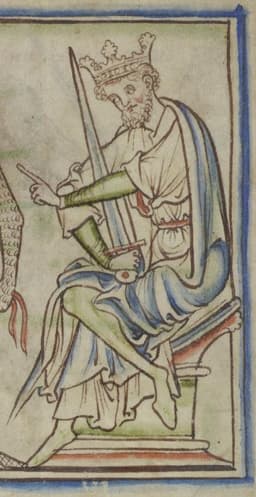
Harold Harefoot
Emperor · Medieval
36.6Total
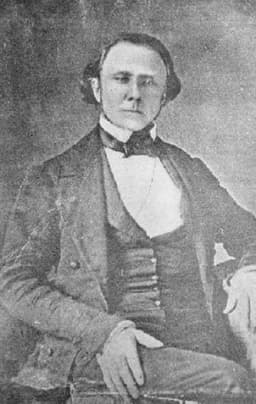
William of Holland
Emperor · Medieval
39.9Total
Basic Information
Born
1015
1227
Died
1040
1256
Era
Medieval
Medieval
Nationality
England
Holy Roman Empire
Occupation
Emperor
Emperor
Civilization
Western
Western
Score Comparison
Military (10%)
20.0
50.0
Political (20%)
27.9
30.7
Influence (20%)
47.1
46.3
Legacy (20%)
35.8
36.7
Leadership (15%)
39.0
39.0
Strategy (15%)
38.6
36.8
TOTAL
36.6
39.9
Harold Harefoot — Complete Timeline
1035 AD
Regency for HarthacnutPolitical Action◆ Major
After Cnut's death, Harold Harefoot acted as regent for his half-brother Harthacnut, who was in Denmark. Harold controlled much of England, while Harthacnut's mother Emma held Wessex.
RegencySuccessionPower Struggle
Impact: national
1037 AD
Claim to the ThronePolitical Action◆ Major
Harold Harefoot was accepted as king of England by the Witan, the council of nobles. He ruled alone, while Harthacnut remained in Denmark unable to assert his claim.
CoronationSuccessionUsurpation
Impact: national
1040 AD
Death of Harold HarefootPolitical Action◆ Major
Harold died at Oxford on March 17, 1040. His death allowed Harthacnut to claim the English throne without opposition.
DeathSuccessionEnd of Reign
Impact: nationaltragic
William of Holland — Complete Timeline
1247 AD
Elected Anti-King of GermanyPolitical Action◆ Major
William of Holland was elected anti-king of Germany by the papal faction opposing Conrad IV. This election was part of the conflict between the Hohenstaufen dynasty and the Papacy, with William serving as a rival claimant to the German throne.
ElectionAnti-kingPapal Conflict
Impact: regional
1248 AD
Crowned King of GermanyPolitical Action◆ Major
William of Holland was crowned King of Germany in Aachen by the Archbishop of Cologne. This coronation solidified his position as the papal-backed rival to Conrad IV, though his authority was limited to parts of western Germany.
CoronationAnti-kingGermany
Impact: regional
1256 AD
Drowned in a Frozen LakeOther◆ Major
William of Holland drowned after falling through ice on a frozen lake near Hoogwoud in the Netherlands. His death ended his reign as anti-king and contributed to the ongoing instability of the Great Interregnum.
DeathAccidentGreat Interregnum
Impact: regionaltragic
Expert Analysis
Origins
Harold Harefoot (c. 1015–1040) was the son of King Cnut the Great of England and Denmark and his first wife, Ælfgifu of Northampton. His birth was likely in the early 1010s, though exact records are sparse. He grew up in the shadow of his father's vast North Sea Empire, which included England, Denmark, Norway, and parts of Sweden. Harold's upbringing was steeped in the politics of the Anglo-Danish court, where his mother Ælfgifu was a powerful figure. His half-brother Harthacnut, born to Cnut's second wife Emma of Normandy, was favored as heir to the English throne, leaving Harold to rely on his mother's faction.
William of Holland (c. 1227–1256) was born into the House of Holland, a county in the Holy Roman Empire. His father was Floris IV, Count of Holland, and his mother was Matilda of Brabant. William inherited the county at a young age after his father's death in 1234, initially under a regency. He was educated in the chivalric traditions of the Low Countries and became a vassal of the Holy Roman Empire. His early years were marked by the ongoing struggle between the Hohenstaufen dynasty (Emperor Frederick II and his son Conrad IV) and the Papacy, which would later propel him onto the imperial stage.
Rise to Power
Harold Harefoot's rise began after Cnut's death on November 12, 1035. Harthacnut, the designated heir, was in Denmark dealing with a rebellion in Norway. Harold's mother Ælfgifu quickly moved to secure power for her son, capitalizing on Harthacnut's absence. The Witan, the English council of nobles, was divided: Leofric of Mercia supported Harold, while Godwin of Wessex backed Harthacnut. Initially, Harold was appointed regent, but by 1037 he had consolidated enough support to be recognized as full king. The Anglo-Saxon Chronicle records that Harold was "chosen as king over all England" in 1037. His claim was solidified by the forced exile of Emma of Normandy and the blinding of Alfred Aetheling, a rival claimant, in 1036.
William of Holland's rise came through papal intervention. In the conflict between the Hohenstaufen and the Papacy, Pope Innocent IV sought a rival king to oppose Conrad IV of Germany. In 1247, William was elected anti-king by a faction of princes loyal to the Pope, with the support of the Archbishops of Cologne and Mainz. He was crowned King of Germany in Aachen on November 1, 1248, by the Archbishop of Cologne. However, his authority was never widely recognized; most German princes remained loyal to Conrad IV. William's power base was limited to the Rhineland and his home county of Holland. His reign was a constant struggle to assert his claim against the Hohenstaufen.
Leadership & Governance
Harold Harefoot's leadership was characterized by consolidation and pragmatism. He relied heavily on his mother's faction and the support of Mercian nobles. His governance focused on maintaining stability in the absence of Harthacnut. He did not issue major legal reforms or expand royal authority; instead, he managed the existing Anglo-Danish administration. His reign saw the continued operation of the Danelaw and the collection of taxes, including the heregeld (army tax). However, his rule was marked by the brutal treatment of rivals, such as the blinding and death of Alfred Aetheling, which damaged his reputation with the Church and the Godwin family.
William of Holland's leadership was shaped by his role as anti-king. He attempted to establish a functional court and administration, but his resources were limited. He issued charters and sought to build alliances through marriage and grants of land. His governance was heavily dependent on papal support and the loyalty of a few prince-bishops. He lacked the financial and military means to challenge Conrad IV effectively. His strategy was to leverage the ecclesiastical network, but he failed to secure broad secular support. His reign was a series of military campaigns that yielded little territory.
Triumph & Tragedy
Harold Harefoot's greatest success was securing the English throne in 1037 despite being the younger, less favored son. He ruled England for three years without major internal rebellion, demonstrating political acumen. His greatest failure was the mishandling of Alfred Aetheling's death, which alienated powerful nobles like Godwin and created a blood feud that would erupt after his death. Additionally, his reign was too short to establish a lasting dynasty or legacy.
William of Holland's triumph was his coronation in Aachen, the traditional seat of German kings, which lent legitimacy to his claim. He also managed to maintain his position for nine years, outlasting several Hohenstaufen setbacks. His tragedy was his death: while pursuing a local feud in Holland, he fell through the ice of a frozen lake and drowned on January 28, 1256. This ignominious end underscored his inability to secure his realm. His military score of 50.0 reflects his active campaigning, but his political score of 30.7 highlights his failure to build a broad coalition.
Character & Destiny
Harold Harefoot was determined and ruthless, as shown by his willingness to blind a rival prince. He was politically astute in using his mother's network and the Witan's divisions. However, his lack of a strong military presence (military score 20.0) and short reign suggest he was more a product of circumstance than a transformative leader. His destiny was tied to the fragile North Sea Empire; his death allowed Harthacnut to reclaim the throne without a fight.
William of Holland was a pawn in the papal-Hohenstaufen conflict. He was pious and loyal to the Church, but his character lacked the strategic vision to overcome his limited resources. His strategy score of 36.8 indicates he was not a master planner. His death by drowning in a frozen lake epitomizes the perils of medieval politics: a minor incident ending a major claim. Historians often view him as a footnote in German history.
Legacy
Harold Harefoot's legacy is minimal. He is remembered as a short-lived king who bridged the gap between Cnut and Harthacnut. His rule did not produce lasting institutions or changes. He scored 35.8 in legacy. In contrast, William of Holland's legacy is slightly higher (36.7) because his anti-kingship contributed to the weakening of the Hohenstaufen, indirectly aiding the eventual rise of the Habsburgs. His drowning became a cautionary tale about the fragility of power. Neither figure had a profound impact on world history.
Conclusion
William of Holland had a slightly greater impact than Harold Harefoot, as reflected in his total score of 39.9 versus 36.6. William's reign, though ineffective, was part of the larger struggle that reshaped the Holy Roman Empire. Harold's rule was a brief interregnum that changed nothing. While both were minor figures, William's role in the papal-Hohenstaufen conflict gives him a small edge. Neither comes close to the great emperors, but in this comparison, William of Holland takes the lead.
Rankings
🥇
William of HollandLeader
Mil: 50.0Pol: 30.7Inf: 46.3
39.9
🥈
Harold Harefoot
Mil: 20.0Pol: 27.9Inf: 47.1
36.6
+3.3 behind
How This Comparison Works
Algorithm
Each figure is scored on 6 dimensions (0—100 scale) based on structured historical data: Military (10%), Political (20%), Influence (20%), Legacy (20%), Leadership (15%), Strategy (15%). The weighted total produces the final ranking.
Data Sources
Scores are computed from structured sub-indicators in the database. Scale factors adjust for era (Ancient ×0.85, Modern ×1.0) and civilization size (Eastern ×1.05, Other ×0.80) to account for differences in population and military scale.
Maximum 3 Figures
Comparisons are limited to 2—3 figures to ensure readability and statistical meaningfulness.
Error Margins
±5 points per dimension — Sub-scores are derived from historical records with inherent uncertainty. Two figures within 5 points on a dimension should be considered roughly equivalent in that area.
Total Score Accuracy
±3 points overall — The weighted combination of 6 dimensions produces a total score with approximately ±3 points of uncertainty. Differences of less than 3 points are not statistically significant— the figures are effectively tied.
Known Limitations
- Historical records are incomplete and uneven across civilizations
- Figures from oral-tradition societies may be underrepresented
- Occupation labels can misclassify multi-role figures
- Scores measure capability and impact, not moral character
- Quantitative scoring is a comparison tool, not absolute truth
Capability Radar
Military (10%) — Battles & Warfare
Battles
5
15
Win Rate
5
20
Expansion
5
10
Political (20%) — Governance & Reform
Reform
0
10
Diplomacy
10
15
Economy
5
10
Influence (20%) — Cultural & Global Reach
Cultural
5
10
Global
5
5
Legacy (20%) — Historical Impact
Historical
10
15
Longevity
5
5
Leadership (15%) — Power & Stability
Tenure
15
20
Stability
10
5
Strategy (15%) — Tactics & Innovation
Strategy
5
15
Tactics
5
10
Reform
0
5
Similar Comparisons
Comments & Discussion
No comments yet. Be the first to share your thoughts!