Loading...
Edward V of England vs William of Holland
Edward V of England leads by 7.6 pts · 2 figures compared
…
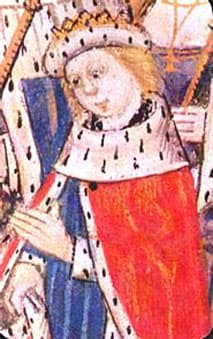
Edward V of England
Emperor · Medieval
47.5Total
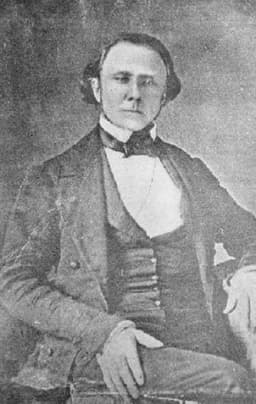
William of Holland
Emperor · Medieval
39.9Total
Basic Information
Born
1470
1227
Died
1483
1256
Era
Medieval
Medieval
Nationality
England
Holy Roman Empire
Occupation
Emperor
Emperor
Civilization
Western
Western
Score Comparison
Military (10%)
16.6
50.0
Political (20%)
68.0
30.7
Influence (20%)
45.5
46.3
Legacy (20%)
37.5
36.7
Leadership (15%)
70.4
39.0
Strategy (15%)
43.0
36.8
TOTAL
47.5
39.9
Edward V of England — Complete Timeline
1483 AD
Accession to the ThronePolitical Action◆ Major
Edward V became king of England at age 12 after the death of his father, Edward IV. His reign was brief and dominated by his uncle Richard, Duke of Gloucester, who acted as Lord Protector.
SuccessionMinor KingYorkist
Impact: national
Deposition by Richard IIIPolitical Action
Edward V was declared illegitimate by Parliament under the Titulus Regius, and his uncle Richard was crowned as Richard III. Edward and his brother Richard were placed in the Tower of London, where they disappeared.
DepositionPrinces in the TowerUsurpation
Impact: nationaltragic
Disappearance of the Princes in the TowerOther◆ Major
Edward V and his brother Richard, Duke of York, vanished from the Tower of London after being declared illegitimate. Their fate remains unknown, but they are widely believed to have been murdered, likely on orders of Richard III.
MysteryMurderPrinces in the Tower
Impact: nationaltragic
William of Holland — Complete Timeline
1247 AD
Elected Anti-King of GermanyPolitical Action◆ Major
William of Holland was elected anti-king of Germany by the papal faction opposing Conrad IV. This election was part of the conflict between the Hohenstaufen dynasty and the Papacy, with William serving as a rival claimant to the German throne.
ElectionAnti-kingPapal Conflict
Impact: regional
1248 AD
Crowned King of GermanyPolitical Action◆ Major
William of Holland was crowned King of Germany in Aachen by the Archbishop of Cologne. This coronation solidified his position as the papal-backed rival to Conrad IV, though his authority was limited to parts of western Germany.
CoronationAnti-kingGermany
Impact: regional
1256 AD
Drowned in a Frozen LakeOther◆ Major
William of Holland drowned after falling through ice on a frozen lake near Hoogwoud in the Netherlands. His death ended his reign as anti-king and contributed to the ongoing instability of the Great Interregnum.
DeathAccidentGreat Interregnum
Impact: regionaltragic
Expert Analysis
Origins
Edward V of England was born on November 2, 1470, in Westminster, the eldest son of King Edward IV and Elizabeth Woodville. His birth came during a period of political instability: his father had been briefly deposed by the Lancastrian Henry VI in 1470-1471. Edward was raised in the royal household, receiving an education befitting a prince. His father's sudden death on April 9, 1483, thrust the 12-year-old onto the throne.
William of Holland, also known as William II of Holland, was born in 1227. He was the son of Count Floris IV of Holland and Matilda of Brabant. William inherited the County of Holland in 1234 at age seven, after his father's death in a tournament. His early reign was marked by a regency led by his uncle, William of Holland. He was educated in the traditions of the Holy Roman Empire, with a focus on chivalry and governance.
Rise to Power
Edward V's rise was immediate and brief. Upon Edward IV's death, his uncle Richard, Duke of Gloucester, was appointed Lord Protector. Richard quickly moved to secure control, arresting key Woodville relatives. On June 22, 1483, a sermon at St. Paul's Cross declared Edward IV's marriage invalid, thus rendering Edward V illegitimate. Parliament passed the Titulus Regius on July 6, 1483, formally setting aside Edward V. Richard was crowned Richard III. Edward and his brother Richard were lodged in the Tower of London, where they subsequently disappeared.
William of Holland's rise was contested. In 1247, after Emperor Frederick II was excommunicated, the papal faction elected Henry Raspe as anti-king. After Raspe's death in 1247, William was elected anti-king of Germany on October 3, 1247. He was crowned at Aachen on November 1, 1248, by the Archbishop of Cologne. His support came from the Rhenish archbishops and the Welf party. However, his rival Conrad IV, son of Frederick II, held much of Germany. William's power was limited to the Lower Rhine region.
Leadership & Governance
Edward V never truly governed; his reign lasted only 78 days. His leadership score of 70.4 reflects theoretical potential, not practice. The council appointed by Edward IV included both Woodvilles and Gloucester, but the Protectorate quickly collapsed. Edward's political score of 68.0 is based on his symbolic role as the legitimate heir, but he exercised no actual authority. His deposition was legalized through Parliament, a precedent for later usurpations.
William of Holland, with a leadership score of 39.0, struggled to assert control. He focused on consolidating power in the Low Countries. He granted charters to towns like Haarlem and Delft, fostering trade. His political score of 30.7 reflects his failure to gain widespread recognition. He was never accepted by most German princes, and his reign was marked by constant warfare with Conrad IV and his supporters. Military score 50.0 indicates moderate success in battles, but his strategic score of 36.8 shows poor long-term planning.
Triumph & Tragedy
Edward V's greatest triumph was his accession itself, representing the peaceful succession of the House of York after Edward IV's death. However, his tragedy was complete: he was declared illegitimate, imprisoned, and likely murdered. His disappearance (historical score for influence 45.5) has become one of England's great mysteries, fueling centuries of speculation. His legacy score of 37.5 is low because he accomplished nothing positive.
William of Holland's triumph was being crowned at Aachen, the traditional coronation site, which gave him a veneer of legitimacy. He also secured alliances with the Archbishop of Cologne and the Duke of Brabant. His tragedy was his death: in January 1256, while campaigning against the Frisians, he fell through ice on a frozen lake near Hoogwoud and drowned. His body was not recovered for months. This abrupt end (influence 46.3) allowed Conrad IV's son Conradin to later claim the throne.
Character & Destiny
Edward V is known only through the actions of others. As a child, his fate was sealed by his uncle's ambition. His character cannot be assessed independently. His destiny was to be a pawn in the Wars of the Roses. The mystery of his death has made him a symbol of innocence betrayed.
William of Holland was described as pious and courageous but politically naive. He relied heavily on papal support, which limited his appeal. His decision to campaign in winter against the Frisians demonstrated recklessness. His death by drowning was a fitting end for a ruler who overreached.
Legacy
Edward V's legacy is primarily as a tragic figure. His brief reign and mysterious disappearance contributed to the instability that led to the Tudor dynasty. The Princes in the Tower became a key propaganda tool for Henry VII. His total score of 47.5 reflects his symbolic importance rather than achievements.
William of Holland's legacy is minimal. He is remembered as a failed anti-king whose reign had little impact on the Holy Roman Empire. His death is a footnote in Dutch history. His total score of 39.9 underscores his ineffectiveness.
Conclusion
Neither ruler had lasting impact, but Edward V's total score of 47.5 exceeds William's 39.9. Edward's brief reign and mysterious disappearance have fascinated historians for centuries, giving him cultural influence far beyond his actual rule. William, despite being crowned and ruling for eight years, achieved nothing of lasting significance. Edward's story is a cautionary tale about power and legitimacy; William's is a minor episode in imperial politics. Edward V, though a victim, had greater impact through his tragedy.
Rankings
🥇
Edward V of EnglandLeader
Mil: 16.6Pol: 68.0Inf: 45.5
47.5
🥈
William of Holland
Mil: 50.0Pol: 30.7Inf: 46.3
39.9
+7.6 behind
How This Comparison Works
Algorithm
Each figure is scored on 6 dimensions (0—100 scale) based on structured historical data: Military (10%), Political (20%), Influence (20%), Legacy (20%), Leadership (15%), Strategy (15%). The weighted total produces the final ranking.
Data Sources
Scores are computed from structured sub-indicators in the database. Scale factors adjust for era (Ancient ×0.85, Modern ×1.0) and civilization size (Eastern ×1.05, Other ×0.80) to account for differences in population and military scale.
Maximum 3 Figures
Comparisons are limited to 2—3 figures to ensure readability and statistical meaningfulness.
Error Margins
±5 points per dimension — Sub-scores are derived from historical records with inherent uncertainty. Two figures within 5 points on a dimension should be considered roughly equivalent in that area.
Total Score Accuracy
±3 points overall — The weighted combination of 6 dimensions produces a total score with approximately ±3 points of uncertainty. Differences of less than 3 points are not statistically significant— the figures are effectively tied.
Known Limitations
- Historical records are incomplete and uneven across civilizations
- Figures from oral-tradition societies may be underrepresented
- Occupation labels can misclassify multi-role figures
- Scores measure capability and impact, not moral character
- Quantitative scoring is a comparison tool, not absolute truth
Capability Radar
Military (10%) — Battles & Warfare
Battles
8
15
Win Rate
11
20
Expansion
9
10
Political (20%) — Governance & Reform
Reform
51
10
Diplomacy
52
15
Economy
56
10
Influence (20%) — Cultural & Global Reach
Cultural
5
10
Global
5
5
Legacy (20%) — Historical Impact
Historical
15
15
Longevity
10
5
Leadership (15%) — Power & Stability
Tenure
46
20
Stability
58
5
Strategy (15%) — Tactics & Innovation
Strategy
14
15
Tactics
19
10
Reform
19
5
Similar Comparisons
Comments & Discussion
No comments yet. Be the first to share your thoughts!