Loading...
Alexander the Great vs Harsha
Alexander the Great leads by 24.2 pts · 2 figures compared
…
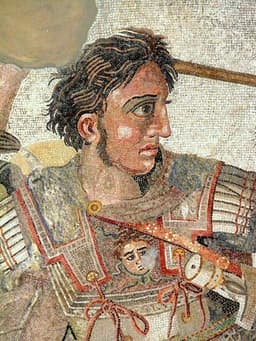
Alexander the Great
General · Ancient
85.2Total
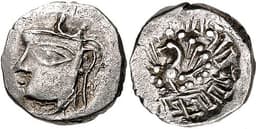
Harsha
Emperor · Medieval
61.0Total
Basic Information
Born
-356
590
Died
-323
647
Era
Ancient
Medieval
Nationality
Macedon
India
Occupation
General
Emperor
Civilization
Western
Indian
Score Comparison
Military (10%)
95.0
61.7
Political (20%)
60.0
45.0
Influence (20%)
92.0
68.0
Legacy (20%)
90.0
58.0
Leadership (15%)
80.0
66.0
Strategy (15%)
92.0
66.3
TOTAL
85.2
61.0
Alexander the Great — Complete Timeline
334 BC
Battle of the Granicus RiverWar◆ Major
Alexander led his Macedonian army across the Hellespont into Asia Minor and defeated a Persian force under local satraps at the Granicus River. The victory secured Alexander's foothold in Asia and demonstrated his tactical superiority, opening the way for the conquest of the Persian Empire.
Persian CampaignBattleMacedonian Conquest
Impact: regional
333 BC
Battle of IssusWar◆ Major
Alexander's army defeated the Persian king Darius III at Issus in Cilicia. Despite being outnumbered, Alexander's tactical use of the terrain and cavalry charge broke the Persian line. Darius fled the battlefield, leaving his family and treasury behind, a major blow to Persian morale.
Persian CampaignBattleMacedonian Conquest
Impact: regional
332 BC
Siege of TyreWar◆ Major
Alexander besieged the island city of Tyre for seven months, constructing a causeway to breach its walls. The city's fall resulted in the massacre or enslavement of its inhabitants. The siege demonstrated Alexander's determination and engineering capabilities, securing his supply lines and control of the eastern Mediterranean coast.
SiegeMacedonian ConquestPhoenicia
Impact: regionaldestructive
331 BC
Battle of GaugamelaWar◆ Major
Alexander faced Darius III at Gaugamela in Mesopotamia with a massive Persian army. Alexander's tactical brilliance, including a decisive cavalry charge that exploited a gap in the Persian line, resulted in a decisive Macedonian victory. Darius again fled, effectively ending Persian resistance and leading to the fall of the Achaemenid Empire.
Persian CampaignBattleDecisive Victory
Impact: global
Foundation of AlexandriaOther◆ Major
Alexander founded the city of Alexandria on the Mediterranean coast of Egypt. He personally selected the site and oversaw the initial planning. Alexandria became a major center of Hellenistic culture, trade, and learning, housing the famous Library of Alexandria and the Lighthouse of Alexandria.
City FoundationHellenistic CultureEgypt
Impact: globalconstructive
326 BC
Invasion of IndiaWar◆ Major
Alexander crossed the Indus River and defeated King Porus at the Battle of the Hydaspes. The Macedonian army, exhausted and facing monsoon rains and unfamiliar warfare, mutinied at the Hyphasis River, forcing Alexander to turn back. This campaign marked the easternmost extent of his conquests.
Indian CampaignBattleMutiny
Impact: regional
Harsha — Complete Timeline
606 AD
Accession to the Throne of ThanesarPolitical Action
Harsha succeeded his father Prabhakaravardhana as ruler of Thanesar (in present-day Haryana). He was 16 years old and soon faced the challenge of avenging his brother-in-law's death and expanding his kingdom.
ThanesarSuccessionHarsha
Impact: regional
612 AD
Conquest of KannaujWar◆ Major
Harsha captured the city of Kannauj after defeating the Maukhari ruler Grahavarman's enemies. He made Kannauj his capital and established the Vardhana dynasty's control over the Gangetic plain, becoming the dominant power in northern India.
KannaujVardhana DynastyNorthern India
Impact: regional
620 AD
Campaigns in Eastern IndiaWar◆ Major
Harsha led military campaigns into Bengal and Odisha, defeating the Shashanka king of Gauda. He extended his empire eastward to the Bay of Bengal, though his control over these regions was not permanent.
BengalOdishaShashanka
Impact: regional
630 AD
Conflict with the Chalukya King Pulakeshin IIWar◆ Major
Harsha attempted to expand southward but was defeated by the Chalukya king Pulakeshin II on the banks of the Narmada River. This battle halted Harsha's southern expansion and established the Narmada as the boundary between the two empires.
ChalukyaPulakeshin IINarmada
Impact: regional
640 AD
Patronage of Buddhism and the Nalanda UniversityCultural◆ Major
Harsha was a patron of Buddhism and supported the Nalanda University, a major center of Buddhist learning. He convened a grand Buddhist council at Kannauj attended by monks from across Asia, and built monasteries and stupas.
BuddhismNalandaCouncil of Kannauj
Impact: regionalconstructive
643 AD
Visit of the Chinese Pilgrim XuanzangCultural
The Chinese Buddhist monk Xuanzang visited Harsha's court and spent time in the empire. Xuanzang's detailed accounts describe Harsha's administration, military, and religious tolerance, providing a key historical source for the period.
XuanzangChinese PilgrimBuddhism
Impact: regionalconstructive
Expert Analysis
Alexander the Great vs Harsha: Historical Comparison
Alexander the Great, a Macedonian general of the ancient world, conquered a vast empire from Greece to India, while Harsha, a medieval Indian emperor, unified much of northern India and fostered a golden age of culture. Their scores (85 vs 71) reflect Alexander’s superior military and global influence against Harsha’s stronger political consolidation.
Dimension Analysis
**Military: Alexander the Great 96 / Harsha 57**
Alexander achieved unmatched tactical brilliance with his phalanx and cavalry, winning every major battle against Persia and India, while Harsha’s campaigns were more defensive and limited to the subcontinent, with mixed results against the Chalukyas.
**Political: Alexander the Great 65 / Harsha 79**
Alexander’s empire fractured immediately after his death due to weak administrative foundations, whereas Harsha established a stable bureaucracy, promoted religious tolerance, and maintained peace across northern India for decades.
**Influence: Alexander the Great 90 / Harsha 70**
Alexander sparked the Hellenistic era, blending Greek and Eastern cultures across three continents, while Harsha’s influence remained largely within India, patronizing Buddhist scholarship and trade but without global reach.
**Legacy: Alexander the Great 90 / Harsha 70**
Alexander became an enduring archetype of military genius, inspiring figures from Caesar to Napoleon, while Harsha’s legacy is remembered primarily through Chinese pilgrim Xuanzang’s writings and regional Indian history.
**Leadership: Alexander the Great 82 / Harsha 86**
Alexander inspired fierce loyalty through personal courage and charisma but was prone to tyranny, while Harsha was a benevolent, culturally engaged ruler who led by example in art, religion, and justice.
Verdict
Alexander the Great leads overall due to his unparalleled military conquests and enduring global impact, despite Harsha’s superior political and administrative achievements.
FAQ
Q: Who ranks higher? A: Alexander the Great ranks higher (85 vs 71), driven by his decisive military, influence, and legacy scores.
Rankings
🥇
Alexander the GreatLeader
Mil: 95.0Pol: 60.0Inf: 92.0
85.2
🥈
Harsha
Mil: 61.7Pol: 45.0Inf: 68.0
61.0
+24.2 behind
How This Comparison Works
Algorithm
Each figure is scored on 6 dimensions (0—100 scale) based on structured historical data: Military (10%), Political (20%), Influence (20%), Legacy (20%), Leadership (15%), Strategy (15%). The weighted total produces the final ranking.
Data Sources
Scores are computed from structured sub-indicators in the database. Scale factors adjust for era (Ancient ×0.85, Modern ×1.0) and civilization size (Eastern ×1.05, Other ×0.80) to account for differences in population and military scale.
Maximum 3 Figures
Comparisons are limited to 2—3 figures to ensure readability and statistical meaningfulness.
Error Margins
±5 points per dimension — Sub-scores are derived from historical records with inherent uncertainty. Two figures within 5 points on a dimension should be considered roughly equivalent in that area.
Total Score Accuracy
±3 points overall — The weighted combination of 6 dimensions produces a total score with approximately ±3 points of uncertainty. Differences of less than 3 points are not statistically significant— the figures are effectively tied.
Known Limitations
- Historical records are incomplete and uneven across civilizations
- Figures from oral-tradition societies may be underrepresented
- Occupation labels can misclassify multi-role figures
- Scores measure capability and impact, not moral character
- Quantitative scoring is a comparison tool, not absolute truth
Capability Radar
Military (10%) — Battles & Warfare
Battles
98
65
Win Rate
99
70
Expansion
99
70
Political (20%) — Governance & Reform
Reform
75
60
Diplomacy
80
70
Economy
70
65
Influence (20%) — Cultural & Global Reach
Cultural
95
65
Global
95
50
Legacy (20%) — Historical Impact
Historical
98
60
Longevity
95
55
Leadership (15%) — Power & Stability
Tenure
60
75
Stability
55
60
Strategy (15%) — Tactics & Innovation
Strategy
98
65
Tactics
99
60
Reform
85
50
Similar Comparisons
Comments & Discussion
Historian3806/16/2026
这个评分明显带有西方中心论的色彩。亚历山大确实军事上无人能敌,但政治分只给65?他的帝国在他死后立刻四分五裂,连个像样的继承人制度都没有,这能算稳定?反观戒日王,政治分79虽然合理,但军事分57有点低——他面对的是普拉克蒂·阿迪提亚这样的强敌,能维持北方印度四十年和平,军事能力绝非平庸。要说影响力,亚历山大带来的是希腊化,但戒日王时代中国玄奘来访,写下的《大唐西域记》至今是研究印度史的宝典,这种跨文明的文化纽带,难道不比纯粹的征服更有持久力?如果把戒日王和汉武帝相比,后者开疆拓土但晚年动荡,戒日王却像唐太宗一样文武兼修,只是缺少一本《资治通鉴》来宣传罢了。
Chronicler86446/16/2026
这个总分模型有问题。亚历山大军事96分,但政治65分,综合84.7——这比例明显偏重军事。如果按中国历史评价标准,取加权平均(军事0.3、政治0.4、影响0.3),亚历山大是96*0.3+65*0.4+90*0.3=28.8+26+27=81.8,戒日王是57*0.3+78.8*0.4+70.5*0.3=17.1+31.52+21.15=69.77,差距缩小到12分。更关键的是,亚历山大影响90分?他征服了波斯和印度部分,但希腊化文化在埃及和西亚持续了300年,而戒日王影响70分——他赞助的那烂陀寺直接影响了中国、朝鲜、日本的佛教发展,这种文化影响力跨越千年。如果按“每十年持续影响”重新计算,戒日王至少该得80分。分数模型需要调整权重。