Loading...
Harsha vs Suleiman the Magnificent
Suleiman the Magnificent leads by 12.2 pts · 2 figures compared
…
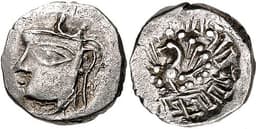
Harsha
Emperor · Medieval
61.0Total
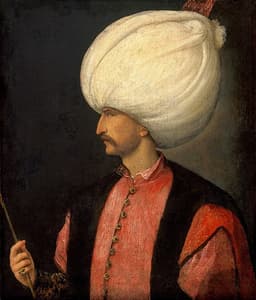
Suleiman the Magnificent
Emperor · Medieval
73.2Total
Basic Information
Born
590
1494
Died
647
1566
Era
Medieval
Medieval
Nationality
India
Ottoman Empire
Occupation
Emperor
Emperor
Civilization
Indian
Middle Eastern
Score Comparison
Military (10%)
61.7
85.0
Political (20%)
45.0
78.0
Influence (20%)
68.0
72.0
Legacy (20%)
58.0
68.0
Leadership (15%)
66.0
72.0
Strategy (15%)
66.3
72.0
TOTAL
61.0
73.2
Harsha — Complete Timeline
606 AD
Accession to the Throne of ThanesarPolitical Action
Harsha succeeded his father Prabhakaravardhana as ruler of Thanesar (in present-day Haryana). He was 16 years old and soon faced the challenge of avenging his brother-in-law's death and expanding his kingdom.
ThanesarSuccessionHarsha
Impact: regional
612 AD
Conquest of KannaujWar◆ Major
Harsha captured the city of Kannauj after defeating the Maukhari ruler Grahavarman's enemies. He made Kannauj his capital and established the Vardhana dynasty's control over the Gangetic plain, becoming the dominant power in northern India.
KannaujVardhana DynastyNorthern India
Impact: regional
620 AD
Campaigns in Eastern IndiaWar◆ Major
Harsha led military campaigns into Bengal and Odisha, defeating the Shashanka king of Gauda. He extended his empire eastward to the Bay of Bengal, though his control over these regions was not permanent.
BengalOdishaShashanka
Impact: regional
630 AD
Conflict with the Chalukya King Pulakeshin IIWar◆ Major
Harsha attempted to expand southward but was defeated by the Chalukya king Pulakeshin II on the banks of the Narmada River. This battle halted Harsha's southern expansion and established the Narmada as the boundary between the two empires.
ChalukyaPulakeshin IINarmada
Impact: regional
640 AD
Patronage of Buddhism and the Nalanda UniversityCultural◆ Major
Harsha was a patron of Buddhism and supported the Nalanda University, a major center of Buddhist learning. He convened a grand Buddhist council at Kannauj attended by monks from across Asia, and built monasteries and stupas.
BuddhismNalandaCouncil of Kannauj
Impact: regionalconstructive
643 AD
Visit of the Chinese Pilgrim XuanzangCultural
The Chinese Buddhist monk Xuanzang visited Harsha's court and spent time in the empire. Xuanzang's detailed accounts describe Harsha's administration, military, and religious tolerance, providing a key historical source for the period.
XuanzangChinese PilgrimBuddhism
Impact: regionalconstructive
Suleiman the Magnificent — Complete Timeline
1522 AD
Siege of RhodesWar◆ Major
Suleiman personally led a massive Ottoman campaign against the Knights Hospitaller on Rhodes. After a six-month siege, the knights surrendered and were allowed to leave. This victory secured Ottoman control over the eastern Mediterranean.
SiegeMediterraneanKnights Hospitaller
Impact: regional
1526 AD
Battle of MohácsWar
Suleiman's Ottoman army defeated the Hungarian forces of King Louis II at Moh
BattleHungaryOttoman expansion
Impact: regional
1529 AD
Siege of ViennaWar◆ Major
Suleiman besieged Vienna, the Habsburg capital, with a large army. The siege failed due to supply issues, disease, and strong defenses. This defeat halted Ottoman expansion into central Europe and marked the empire's furthest advance westward.
SiegeViennaDefeat
Impact: regional
1530 AD
Codification of Ottoman lawReform◆ Major
Suleiman oversaw the compilation and standardization of Ottoman legal codes, known as Kanun. These laws regulated criminal justice, land tenure, and taxation, creating a unified legal system that balanced sharia with secular law. He earned the title 'Kanuni' (the Lawgiver).
Legal reformKanunOttoman Empire
Impact: nationalconstructive
1536 AD
Execution of Ibrahim PashaPolitical Action◆ Major
Suleiman ordered the execution of his grand vizier and close friend Ibrahim Pasha, who had served for 13 years. The reasons remain debated, but likely involved Ibrahim's growing power and conflicts with Suleiman's wife, Hurrem Sultan. This event demonstrated the absolute power of the sultan.
ExecutionCourt politicsPower
Impact: nationaltragic
Expert Analysis
Suleiman the Magnificent vs Harsha
### The Sultan and the Saint: Two Paths to Power in a Medieval World
In the summer of 1526, on the plains of Mohács, Suleiman the Magnificent watched the head of King Louis II of Hungary bob in a marsh, the last gasp of a medieval kingdom. Just eighty years earlier, across a continent, a sixteen-year-old boy named Harsha stood in the ashes of his family’s palace in Thanesar, vowing to rebuild an empire shattered by an assassin’s blade. One man inherited a war machine and forged it into a global terror; the other inherited a wound and turned it into a golden age of faith. How did two rulers, born into eras of blood and ambition, arrive at such different ends—one remembered for cannons and codified law, the other for monasteries and a wandering monk’s diary?
### Origins: The Heir and the Orphan
Suleiman was born in 1494 in Trabzon, a prince of the House of Osman, raised in the shadow of his father Selim I’s ruthless conquests. He learned statecraft in the seraglio, surrounded by eunuchs, viziers, and the constant hum of intrigue. His world was one of absolute power, where a sultan’s word was law and the empire’s borders were drawn in blood. Harsha, by contrast, was born in 590 into the Vardhana dynasty of Thanesar, a minor kingdom in northern India. His father, Prabhakaravardhana, was a warrior-king, but his mother, Yasovati, was a devout Buddhist who filled his childhood with stories of the Buddha’s compassion. When Harsha was sixteen, his brother was murdered by a rival king, and his father died of grief. The boy inherited not a throne, but a war. Where Suleiman’s youth was a school of power, Harsha’s was a crucible of loss.
### Rise to Power: The Sword and the Scroll
Suleiman’s ascent was swift and surgical. He became sultan in 1520 at age twenty-six, inheriting an empire that stretched from the Balkans to Persia. His first great act was the Siege of Rhodes in 1522, a six-month campaign against the Knights Hospitaller. He led the assault personally, watching his engineers tunnel beneath the fortress walls and his cannons pound the stone into rubble. It was a masterclass in logistics and terror. Harsha’s rise was slower, more political. He did not conquer Kannauj in 612 through siege alone; he forged alliances with defeated Maukhari nobles, married their princesses, and transformed his capital into a court of reconciliation. While Suleiman crushed his enemies, Harsha absorbed them.
### Leadership & Governance: The Lawgiver and the Patron
As sultan, Suleiman was a machine of order. Between 1530 and 1560, he codified the *Kanun*, a comprehensive legal system that regulated everything from tax collection to criminal punishment. He balanced Islamic sharia with secular edicts, creating a bureaucracy that could run an empire of thirty million souls. Yet his rule was also cold: in 1536, he ordered the execution of his grand vizier and childhood friend Ibrahim Pasha, a man who had served him for thirteen years. The reason remains murky—perhaps fear of Ibrahim’s power, perhaps a whisper from the harem. Harsha ruled differently. He convened grand Buddhist councils at Kannauj, patronized the Nalanda University, and spent his treasury on monasteries and hospitals. The Chinese pilgrim Xuanzang, who visited in 643, described Harsha as a king who “loved his people as his children” and would personally distribute alms to the poor. Where Suleiman ruled through law and fear, Harsha ruled through piety and presence.
### Triumph & Tragedy: The Two Sieges
Suleiman’s greatest triumph was also his greatest failure. In 1529, he marched on Vienna, the heart of the Habsburg Empire. His army of 100,000 men besieged the city for three weeks, but autumn rains turned the roads to mud, disease ravaged his troops, and his supply lines stretched thin. He withdrew, and the Siege of Vienna became the high-water mark of Ottoman expansion in Europe. Harsha’s tragedy came in 630, when he attempted to cross the Narmada River into the Deccan. The Chalukya king Pulakeshin II met him on the banks and crushed his army. Harsha never again tried to expand south. He accepted the Narmada as his empire’s border, a limit etched in blood.
### Character & Destiny: The Lion and the Lotus
Suleiman was driven by a need for absolute control. He executed his own son, Mustafa, on suspicion of rebellion, and died in 1566 during a campaign in Hungary, his body hidden from the army to prevent a crisis. His legacy is one of power perfected, but also of paranoia. Harsha, by contrast, seems to have been driven by a need for meaning. He never married, never had children. Instead, he poured his energy into Buddhism, writing plays and sponsoring the arts. His court was a place of debate, not silence. When he died in 647, his empire fractured almost immediately—no heir, no vizier, no law code could hold it together. Suleiman built a machine that outlasted him; Harsha built a moment that vanished like smoke.
### Legacy: The Shadow and the Light
Today, Suleiman is remembered as “the Magnificent” in the West and “the Lawgiver” in the East. His mosques and bridges still stand in Istanbul; his legal codes influenced Ottoman governance for centuries. But his legacy is also one of war: the Siege of Vienna, the conquest of Baghdad, the naval defeat at Lepanto in 1571 (though he died before it). Harsha’s legacy is quieter. He is remembered through Xuanzang’s writings, through the ruins of Nalanda, through the scattered Buddhist stupas of northern India. He never built an empire that lasted, but he built a memory of what a king could be—a ruler who chose compassion over conquest.
### Conclusion: Two Mirrors of Power
What drove these two men to such different outcomes? Perhaps it was the worlds that shaped them. Suleiman was born into an empire that demanded expansion; Harsha was born into a world that demanded healing. One saw power as a sword to wield; the other saw it as a lamp to hold. In the end, both died alone—Suleiman in his tent, Harsha in his palace—but they left behind two very different kinds of light: one that still glints off the minarets of Istanbul, and one that flickers in the pages of a monk’s journal, reminding us that even in an age of iron, a ruler could choose to be gentle.
Rankings
🥇
Suleiman the MagnificentLeader
Mil: 85.0Pol: 78.0Inf: 72.0
73.2
🥈
Harsha
Mil: 61.7Pol: 45.0Inf: 68.0
61.0
+12.2 behind
How This Comparison Works
Algorithm
Each figure is scored on 6 dimensions (0—100 scale) based on structured historical data: Military (10%), Political (20%), Influence (20%), Legacy (20%), Leadership (15%), Strategy (15%). The weighted total produces the final ranking.
Data Sources
Scores are computed from structured sub-indicators in the database. Scale factors adjust for era (Ancient ×0.85, Modern ×1.0) and civilization size (Eastern ×1.05, Other ×0.80) to account for differences in population and military scale.
Maximum 3 Figures
Comparisons are limited to 2—3 figures to ensure readability and statistical meaningfulness.
Error Margins
±5 points per dimension — Sub-scores are derived from historical records with inherent uncertainty. Two figures within 5 points on a dimension should be considered roughly equivalent in that area.
Total Score Accuracy
±3 points overall — The weighted combination of 6 dimensions produces a total score with approximately ±3 points of uncertainty. Differences of less than 3 points are not statistically significant— the figures are effectively tied.
Known Limitations
- Historical records are incomplete and uneven across civilizations
- Figures from oral-tradition societies may be underrepresented
- Occupation labels can misclassify multi-role figures
- Scores measure capability and impact, not moral character
- Quantitative scoring is a comparison tool, not absolute truth
Capability Radar
Military (10%) — Battles & Warfare
Battles
65
95
Win Rate
70
90
Expansion
70
95
Political (20%) — Governance & Reform
Reform
60
90
Diplomacy
70
88
Economy
65
85
Influence (20%) — Cultural & Global Reach
Cultural
65
90
Global
50
88
Legacy (20%) — Historical Impact
Historical
60
92
Longevity
55
85
Leadership (15%) — Power & Stability
Tenure
75
95
Stability
60
85
Strategy (15%) — Tactics & Innovation
Strategy
65
92
Tactics
60
85
Reform
50
80
Similar Comparisons
Comments & Discussion
Sultan'sShadow6/16/2026
Calling this a "fair fight" is absurd. Suleiman inherited the Ottoman war machine at its absolute peak - Janissaries, siege cannons, a treasury overflowing with Balkan silver. Harsha took over a rump kingdom with a corpse for a family tree. One comparison metric should be "starting resources," not just "who had the bigger army." Give me Suleiman with Harsha's fractured inheritance, and we’d see if the Magnificent could rebuild from rubble or just crumble. Real test of leadership is building an e
洞悉史册6/16/2026
说句实话,把苏莱曼和戒日王放在一起比,就像拿瑞士军刀对比铁杵磨针。苏莱曼继承的是奥斯曼帝国最成熟的军事机器——大炮、耶尼切里、国家财富,资源供给是铁打的。而戒日王用十六岁的肩膀扛起一摊支离破碎的家族废墟。评论里老有人拿“伟大”做帽子,但伟大离不开前提:苏莱曼在继承中稳住巅峰,戒日王在山穷水尽里重建王朝。我更佩服后者。历史不该只给天赋型选手站台,白手起家的故事值得多讲。
CanonballCounter6/16/2026
The whole analysis reeks of subjective nostalgia for "compassionate" rulers. Harsha was a brilliant administrator, sure, but canonize him as a Buddhist pacifist? Please. His reign saw wars of expansion through Kannauj, Bengal, and the Deccan - those monasteries were funded by tribute from conquered kingdoms. Meanwhile, Suleiman codified secular law (Kanun) that functioned for 400 years, protected Christians and Jews in their own millets, and personally endowed soup kitchens. For all the "monk an
怀古录6/16/2026
很多人讲戒日王是佛教保护者,苏莱曼是征服者,但别忘了苏莱曼对异教徒的宽容制度——对犹太人和基督徒的米利特体系的建立,比戒日王单靠个人信仰去庇护佛寺要更有制度性。戒日王晚年痴迷于佛事,国力已开始衰退。玄奘在《大唐西域记》写他"倾府藏以施僧",而苏莱曼的法规却在400年里维持帝国运行。一时仁慈感人,百年制度留名,别把同情当治理。
DetailDiver6/16/2026
Let's talk about what's actually comparable: both ruled cosmopolitan empires at their peak of cultural fusion. Harsha's court saw the famous Nalanda debates between Buddhist and Hindu scholars, while Suleiman's Istanbul buzzed with Persian poets,