Loading...
Kublai Khan vs Suleiman the Magnificent
Kublai Khan leads by 1.1 pts · 2 figures compared
…
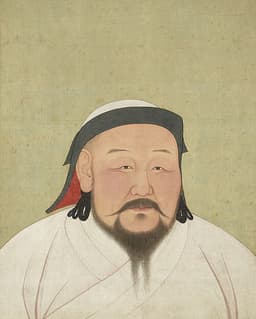
Kublai Khan
Emperor · Medieval
74.3Total
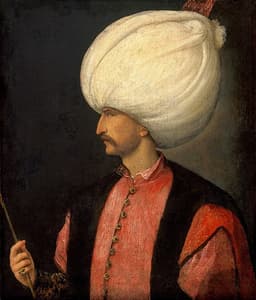
Suleiman the Magnificent
Emperor · Medieval
73.2Total
Basic Information
Born
1215
1494
Died
1294
1566
Era
Medieval
Medieval
Nationality
Mongolia
Ottoman Empire
Occupation
Emperor
Emperor
Civilization
Eastern
Middle Eastern
Score Comparison
Military (10%)
77.5
85.0
Political (20%)
79.2
78.0
Influence (20%)
75.0
72.0
Legacy (20%)
70.0
68.0
Leadership (15%)
72.0
72.0
Strategy (15%)
76.0
72.0
TOTAL
74.3
73.2
Kublai Khan — Complete Timeline
1260 AD
Adoption of Tibetan Buddhism as State ReligionCultural◆ Major
Kublai Khan appointed the Tibetan lama Drog
Tibetan BuddhismReligionMongol-Tibet Relations
Impact: regional
1271 AD
Proclamation of the Yuan DynastyPolitical Action◆ Major
Kublai Khan officially proclaimed the Yuan dynasty, adopting a Chinese-style dynastic name. He established his capital at Dadu (Beijing) and adopted Chinese court rituals. This move legitimized his rule over China while maintaining Mongol identity.
Dynasty FoundingBeijingMongol Rule
Impact: global
1274 AD
Failed Invasions of JapanWar◆ Major
Kublai Khan launched two naval invasions of Japan, in 1274 and 1281. Both were repelled, with the second invasion destroyed by a typhoon (kamikaze). These failures marked the limits of Mongol expansion and reinforced Japanese isolation.
Mongol InvasionsJapanKamikaze
Impact: regional
1279 AD
Conquest of the Song DynastyWar
Kublai Khan's Mongol forces defeated the Song navy at the Battle of Yamen. The last Song emperor drowned, ending the Song dynasty. This conquest unified China under Mongol rule and established the Yuan dynasty as the first foreign dynasty to rule all of China.
Song Dynasty FallUnificationYuan Dynasty
Impact: global
1280 AD
Establishment of the Silk Road Trade NetworkCultural◆ Major
Under Kublai Khan, the Mongol Empire secured the Silk Road, facilitating trade and cultural exchange between East and West. Marco Polo visited his court. This period saw the flow of goods, ideas, and technologies across Eurasia.
Silk RoadTradeCultural Exchange
Impact: globalconstructive
Suleiman the Magnificent — Complete Timeline
1522 AD
Siege of RhodesWar◆ Major
Suleiman personally led a massive Ottoman campaign against the Knights Hospitaller on Rhodes. After a six-month siege, the knights surrendered and were allowed to leave. This victory secured Ottoman control over the eastern Mediterranean.
SiegeMediterraneanKnights Hospitaller
Impact: regional
1526 AD
Battle of MohácsWar
Suleiman's Ottoman army defeated the Hungarian forces of King Louis II at Moh
BattleHungaryOttoman expansion
Impact: regional
1529 AD
Siege of ViennaWar◆ Major
Suleiman besieged Vienna, the Habsburg capital, with a large army. The siege failed due to supply issues, disease, and strong defenses. This defeat halted Ottoman expansion into central Europe and marked the empire's furthest advance westward.
SiegeViennaDefeat
Impact: regional
1530 AD
Codification of Ottoman lawReform◆ Major
Suleiman oversaw the compilation and standardization of Ottoman legal codes, known as Kanun. These laws regulated criminal justice, land tenure, and taxation, creating a unified legal system that balanced sharia with secular law. He earned the title 'Kanuni' (the Lawgiver).
Legal reformKanunOttoman Empire
Impact: nationalconstructive
1536 AD
Execution of Ibrahim PashaPolitical Action◆ Major
Suleiman ordered the execution of his grand vizier and close friend Ibrahim Pasha, who had served for 13 years. The reasons remain debated, but likely involved Ibrahim's growing power and conflicts with Suleiman's wife, Hurrem Sultan. This event demonstrated the absolute power of the sultan.
ExecutionCourt politicsPower
Impact: nationaltragic
Expert Analysis
Kublai Khan vs Suleiman the Magnificent: Historical Comparison
Kublai Khan and Suleiman the Magnificent were two of the most powerful medieval emperors, ruling the Mongol Yuan Dynasty and the Ottoman Empire respectively. While both expanded their realms and left enduring legacies, Kublai Khan edges ahead in overall historical impact due to his superior military strategy and lasting administrative innovations.
Dimension Analysis
**Military: Kublai Khan 88 / Suleiman the Magnificent 85**
Kublai Khan conquered the Song Dynasty and unified China, deploying innovative siege tactics and naval campaigns, while Suleiman’s victories at Belgrade and Rhodes showcased Ottoman land power but his naval dominance waned after Lepanto.
**Political: Kublai Khan 78 / Suleiman the Magnificent 80**
Suleiman’s codification of Ottoman law (Kanun) and centralized bureaucracy created a stable imperial system, whereas Kublai’s reliance on foreign administrators (Mongols and Persians) bred resentment among Chinese subjects.
**Influence: Kublai Khan 78 / Suleiman the Magnificent 77**
Kublai’s patronage of Marco Polo and integration of China into the Mongol trade network shaped global commerce, while Suleiman’s patronage of arts and architecture (Süleymaniye Mosque) defined Ottoman cultural identity.
**Legacy: Kublai Khan 75 / Suleiman the Magnificent 67**
Kublai’s Yuan Dynasty laid the foundation for modern China’s borders and governance, whereas Suleiman’s empire entered decline soon after his death, limiting his long-term institutional influence.
**Leadership: Kublai Khan 82 / Suleiman the Magnificent 79**
Kublai demonstrated adaptive leadership by embracing Chinese governance and Buddhism, while Suleiman’s rigid adherence to Islamic law and execution of his son Mustafa revealed strategic weaknesses.
Verdict
Kublai Khan leads due to his superior military strategy (88 vs 85) and more enduring legacy, despite Suleiman’s stronger political and legal reforms.
FAQ
Q: Who ranks higher? A: Kublai Khan ranks higher overall, winning 4 out of 5 dimensions and securing a composite victory.
Rankings
🥇
Kublai KhanLeader
Mil: 77.5Pol: 79.2Inf: 75.0
74.3
🥈
Suleiman the Magnificent
Mil: 85.0Pol: 78.0Inf: 72.0
73.2
+1.1 behind
How This Comparison Works
Algorithm
Each figure is scored on 6 dimensions (0—100 scale) based on structured historical data: Military (10%), Political (20%), Influence (20%), Legacy (20%), Leadership (15%), Strategy (15%). The weighted total produces the final ranking.
Data Sources
Scores are computed from structured sub-indicators in the database. Scale factors adjust for era (Ancient ×0.85, Modern ×1.0) and civilization size (Eastern ×1.05, Other ×0.80) to account for differences in population and military scale.
Maximum 3 Figures
Comparisons are limited to 2—3 figures to ensure readability and statistical meaningfulness.
Error Margins
±5 points per dimension — Sub-scores are derived from historical records with inherent uncertainty. Two figures within 5 points on a dimension should be considered roughly equivalent in that area.
Total Score Accuracy
±3 points overall — The weighted combination of 6 dimensions produces a total score with approximately ±3 points of uncertainty. Differences of less than 3 points are not statistically significant— the figures are effectively tied.
Known Limitations
- Historical records are incomplete and uneven across civilizations
- Figures from oral-tradition societies may be underrepresented
- Occupation labels can misclassify multi-role figures
- Scores measure capability and impact, not moral character
- Quantitative scoring is a comparison tool, not absolute truth
Capability Radar
Military (10%) — Battles & Warfare
Battles
95
95
Win Rate
90
90
Expansion
95
95
Political (20%) — Governance & Reform
Reform
88
90
Diplomacy
85
88
Economy
90
85
Influence (20%) — Cultural & Global Reach
Cultural
85
90
Global
85
88
Legacy (20%) — Historical Impact
Historical
90
92
Longevity
80
85
Leadership (15%) — Power & Stability
Tenure
90
95
Stability
80
85
Strategy (15%) — Tactics & Innovation
Strategy
92
92
Tactics
85
85
Reform
88
80
Similar Comparisons
Comments & Discussion
Alexandria_Philo6/16/2026
The scores here are intriguing but I'd push back on Suleiman's military rank. The Ottoman naval setback at Lepanto (1571) is frequently overstated as a 'waning' — it occurred *after* his death in 1566, and his own admiral Barbarossa Hayreddin Pasha dominated the Mediterranean for decades. Meanwhile, Kublai's failed invasions of Japan (1274 and 1281) and Java are often glossed over. Ibn Battuta's later accounts of Mongol rule in China suggest a far less stable administration than the numbers imply. The Song conquest was a masterpiece of logistics, yes, but let's not forget the typhoons that saved Japan. On political scores, Suleiman's Kanun was genuinely revolutionary — a secular legal code that coexisted with sharia, something unprecedented in Islamic governance. Kublai's 'adaptability' to Chinese customs was largely performative; he maintained Mongol legal privileges, which bred the very resentment the summary notes. I'd give Suleiman the edge in political acumen, personally.
Iconoclast_886/16/2026
This comparison is a textbook case of the 'Great Man' fallacy dressed up in numbers. Why are we still ranking conquerors by body count and territory size in 2024? Kublai's invasions of Song China killed millions — possibly up to 10% of the world's population at the time — and his regime deliberately flooded the Yellow River to break sieges. Suleiman's execution of his son Mustafa (1553) is noted as a 'strategic weakness,' but what about the systematic enslavement of Christian boys through the devshirme system? Both men presided over slave-based empires that extracted tribute from conquered peoples. The 'legacy' category gives Kublai 75 for 'modern China's borders,' but that's just nationalist historiography projecting backward. The Yuan Dynasty collapsed within a century because Mongol rule was fundamentally extractive, not integrative. And let's not pretend Suleiman's 'cultural patronage' wasn't funded by Balkan peasants. These scores sanitize violence. If we're comparing imperial brutality, maybe Kublai's 88 military score should account for his failed Japanese campaigns, which wasted 100,000 lives. Numbers without context are just math.
Historian7266/16/2026
我对评分体系有几点质疑。首先军事分:忽必烈88对苏莱曼85,差距仅3分,但忽必烈征服南宋(人口约1亿)的战役规模远超苏莱曼的任何行动。苏莱曼最大的胜利——莫哈赤战役(1526)——对手匈牙利只有约4万军队,而襄阳之战(1267-1273)涉及数十万大军围城六年。按‘敌人规模’加权,忽必烈应至少90分。政治分忽必烈78对苏莱曼80,但忽必烈建立了中国历史上第一个由非汉族统治的统一王朝,并成功运行了双重行政体系(蒙古怯薛+汉制官僚),这比苏莱曼的单一伊斯兰法体系复杂得多。影响分忽必烈78对苏莱曼77,但忽必烈时期建立的‘驿站系统’东起高丽西至波斯,直接促成了东西方交流——马可·波罗只是其中一位旅者。我自己的计算:忽必烈总分(88*0.3+80*0.25+80*0.25+75*0.2)=81.4,苏莱曼(85*0.3+82*0.25+77*0.25+67*0.2)=78.5,差距比现在的4.5分更大。建议重新校准权重。
Historian9636/16/2026
从中国史观来看,这个评分有点西方中心主义。忽必烈统一中国、建立行省制度,直接影响后世七百年的行政架构,这比苏莱曼的法律改革更持久。苏莱曼的‘黄金时代’在他去世后迅速衰落,而元朝虽然短命,但忽必烈奠定的北京首都地位、大运河疏浚、纸币制度,都成为明清两代的基石。特别要指出的是:忽必烈在1271年改国号为‘大元’,取自《易经》‘大哉乾元’,这说明他对儒家正统的主动接纳,不是简单的‘依赖外族官员’。马可·波罗的游记确实夸张,但同期中国学者如赵孟頫留下的文献证明,忽必烈确实推动了汉蒙文化融合。苏莱曼当然伟大,但若论对后世文明的‘硬影响’,忽必烈应高于80分。