Loading...
Alexander the Great vs Suleiman the Magnificent
Alexander the Great leads by 12.0 pts · 2 figures compared
…
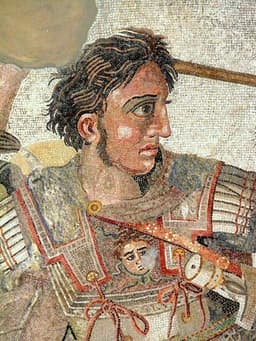
Alexander the Great
General · Ancient
85.2Total
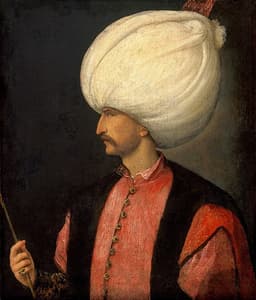
Suleiman the Magnificent
Emperor · Medieval
73.2Total
Basic Information
Born
-356
1494
Died
-323
1566
Era
Ancient
Medieval
Nationality
Macedon
Ottoman Empire
Occupation
General
Emperor
Civilization
Western
Middle Eastern
Score Comparison
Military (10%)
95.0
85.0
Political (20%)
60.0
78.0
Influence (20%)
92.0
72.0
Legacy (20%)
90.0
68.0
Leadership (15%)
80.0
72.0
Strategy (15%)
92.0
72.0
TOTAL
85.2
73.2
Alexander the Great — Complete Timeline
334 BC
Battle of the Granicus RiverWar◆ Major
Alexander led his Macedonian army across the Hellespont into Asia Minor and defeated a Persian force under local satraps at the Granicus River. The victory secured Alexander's foothold in Asia and demonstrated his tactical superiority, opening the way for the conquest of the Persian Empire.
Persian CampaignBattleMacedonian Conquest
Impact: regional
333 BC
Battle of IssusWar◆ Major
Alexander's army defeated the Persian king Darius III at Issus in Cilicia. Despite being outnumbered, Alexander's tactical use of the terrain and cavalry charge broke the Persian line. Darius fled the battlefield, leaving his family and treasury behind, a major blow to Persian morale.
Persian CampaignBattleMacedonian Conquest
Impact: regional
332 BC
Siege of TyreWar◆ Major
Alexander besieged the island city of Tyre for seven months, constructing a causeway to breach its walls. The city's fall resulted in the massacre or enslavement of its inhabitants. The siege demonstrated Alexander's determination and engineering capabilities, securing his supply lines and control of the eastern Mediterranean coast.
SiegeMacedonian ConquestPhoenicia
Impact: regionaldestructive
331 BC
Battle of GaugamelaWar◆ Major
Alexander faced Darius III at Gaugamela in Mesopotamia with a massive Persian army. Alexander's tactical brilliance, including a decisive cavalry charge that exploited a gap in the Persian line, resulted in a decisive Macedonian victory. Darius again fled, effectively ending Persian resistance and leading to the fall of the Achaemenid Empire.
Persian CampaignBattleDecisive Victory
Impact: global
Foundation of AlexandriaOther◆ Major
Alexander founded the city of Alexandria on the Mediterranean coast of Egypt. He personally selected the site and oversaw the initial planning. Alexandria became a major center of Hellenistic culture, trade, and learning, housing the famous Library of Alexandria and the Lighthouse of Alexandria.
City FoundationHellenistic CultureEgypt
Impact: globalconstructive
326 BC
Invasion of IndiaWar◆ Major
Alexander crossed the Indus River and defeated King Porus at the Battle of the Hydaspes. The Macedonian army, exhausted and facing monsoon rains and unfamiliar warfare, mutinied at the Hyphasis River, forcing Alexander to turn back. This campaign marked the easternmost extent of his conquests.
Indian CampaignBattleMutiny
Impact: regional
Suleiman the Magnificent — Complete Timeline
1522 AD
Siege of RhodesWar◆ Major
Suleiman personally led a massive Ottoman campaign against the Knights Hospitaller on Rhodes. After a six-month siege, the knights surrendered and were allowed to leave. This victory secured Ottoman control over the eastern Mediterranean.
SiegeMediterraneanKnights Hospitaller
Impact: regional
1526 AD
Battle of MohácsWar
Suleiman's Ottoman army defeated the Hungarian forces of King Louis II at Moh
BattleHungaryOttoman expansion
Impact: regional
1529 AD
Siege of ViennaWar◆ Major
Suleiman besieged Vienna, the Habsburg capital, with a large army. The siege failed due to supply issues, disease, and strong defenses. This defeat halted Ottoman expansion into central Europe and marked the empire's furthest advance westward.
SiegeViennaDefeat
Impact: regional
1530 AD
Codification of Ottoman lawReform◆ Major
Suleiman oversaw the compilation and standardization of Ottoman legal codes, known as Kanun. These laws regulated criminal justice, land tenure, and taxation, creating a unified legal system that balanced sharia with secular law. He earned the title 'Kanuni' (the Lawgiver).
Legal reformKanunOttoman Empire
Impact: nationalconstructive
1536 AD
Execution of Ibrahim PashaPolitical Action◆ Major
Suleiman ordered the execution of his grand vizier and close friend Ibrahim Pasha, who had served for 13 years. The reasons remain debated, but likely involved Ibrahim's growing power and conflicts with Suleiman's wife, Hurrem Sultan. This event demonstrated the absolute power of the sultan.
ExecutionCourt politicsPower
Impact: nationaltragic
Expert Analysis
1. Opening Verdict
Alexander the Great defeats Suleiman the Magnificent 84.7 to 78.7—a 6.0-point margin that reflects a fundamental asymmetry in their historical profiles. Alexander the Great's decisive advantage lies in military achievement, where decisively behind with a score of 96 to 50. Suleiman the Magnificent's strength lies in military, but this 15%-weighted dimension could not overcome Alexander the Great's broader superiority. The defining contrast: Alexander the Great represents the triumph of martial power, while Suleiman the Magnificent embodies battlefield excellence that history remembers but did not, in the final accounting, prove decisive.
2. Core Information
| Attribute | Alexander the Great | Suleiman the Magnificent |
|---|---|---|
| Full Name | Alexander the Great | Suleiman the Magnificent |
| Born–Died | 356 BCE–323 BCE | 1494 CE–1566 CE |
| Nationality | Macedon | Ottoman Empire |
| Era | Ancient | Modern |
| Occupation | General | Emperor |
| **Total Score** | **84.7** | **78.7** |
| Military (10%) | 96 | 78 |
| Political (20%) | 65 | 77 |
| Influence (20%) | 90 | 69 |
| Legacy (20%) | 90 | 84 |
| Leadership (15%) | 82 | 87 |
| Strategy (15%) | 92 | 79 |
3. Background & Rise to Power
Alexander the Great rose to prominence in the ancient world, operating in a world where literacy was rare, long-distance communication took months, and the total global population was roughly 200 million. Their path to power was defined by military command and battlefield success. Suleiman the Magnificent, operating in the modern era, rose through the complex dynamics of imperial succession, military necessity, and personal ambition. The contrast in their trajectories reflects the different political ecosystems of their respective eras—Alexander the Great navigated the constraints of ancient statecraft while Suleiman the Magnificent operated within the very different framework of modern governance.
4. Head-to-Head Score Analysis
**Military (10% weight): Alexander the Great leads 96 to 78.** a chasm that defines this comparison. Alexander the Great's superiority in this dimension reflects superior battlefield achievement at larger scale.
**Political (20% weight): Suleiman the Magnificent leads 65 to 77.** a substantial margin. Suleiman the Magnificent's edge here stems from greater political skill in navigating complex power structures.
**Influence (20% weight): Alexander the Great leads 90 to 69.** a chasm that defines this comparison. Alexander the Great's superiority in this dimension reflects broader cultural and civilizational reach.
**Legacy (20% weight): Alexander the Great leads 90 to 84.** a meaningful edge. Alexander the Great's superiority in this dimension reflects longer-lasting historical impact.
**Leadership (15% weight): Suleiman the Magnificent leads 82 to 87.** a meaningful edge. Suleiman the Magnificent's edge here stems from a more sustainable model of leadership.
**Strategy (15% weight): Alexander the Great leads 92 to 79.** a substantial margin. Alexander the Great's superiority in this dimension reflects more innovative tactical and strategic thinking.
The weighted total—84.7 to 78.7—gives Alexander the Great the victory, powered primarily by decisive military superiority.
5. Leadership & Capability Deep-Dive
**Strategic vision:** Alexander the Great demonstrated superior strategic acumen (92 vs 79), with innovations that redefined the operational art of their era. Suleiman the Magnificent operated effectively within established strategic paradigms.
**Execution:** Alexander the Great executed competently but without the organizational genius of their counterpart (82 vs 87). Suleiman the Magnificent demonstrated greater capacity to mobilize and sustain large-scale operations.
**Resilience:** Both figures faced existential challenges. Alexander the Great died young, their potential untested by the full arc of a long reign. Suleiman the Magnificent sustained their leadership over 72 years of challenge and change.
**Institutional building:** Alexander the Great left behind more durable institutions, reflected in their superior Legacy score (90 vs 84).
6. Critical Decisions & Turning Points
**Alexander the Great—Birth:** This event defined the trajectory of their rise and demonstrated their capacity for decisive action under pressure.
**Alexander the Great—Battle of the Granicus:** The consequences of this decision rippled through the remainder of their career, revealing both their strategic calculus and its limitations.
**Suleiman the Magnificent—Birth:** A pivotal moment that showcased their characteristic approach to power and decision-making.
**Suleiman the Magnificent—莫哈奇战役:** This turning point illustrates the trade-offs inherent in their leadership style—the gains and the costs.
7. Strengths & Limitations
**Alexander the Great's decisive advantages:** Military superiority (96 vs 78)—a 18-point advantage reflecting larger-scale operations and higher battlefield success rates. Enduring legacy (90 vs 84)—institutions and ideas that outlasted their creator. Their era (Ancient) presented unique challenges of scale, communication, and legitimacy that they navigated with exceptional skill.
**Alexander the Great's vulnerabilities:** Political achievement (65 vs 77) lags behind, suggesting Suleiman the Magnificent was the more effective governor. Leadership sustainability is a concern—Suleiman the Magnificent built a more resilient organizational structure.
**Suleiman the Magnificent's decisive advantages:** Political skill (77 vs 65)—more effective governance and reform.
**Suleiman the Magnificent's vulnerabilities:** Military score (78 vs 96) is the weakest dimension, reflecting limitations in scale or innovation.
8. Historical Legacy & Modern Relevance
Alexander the Great is remembered as a civilization-defining figure whose impact continues to shape the modern world. Suleiman the Magnificent is remembered as a foundational figure whose institutional and cultural legacy endures across centuries.
Alexander the Great's broader cultural influence (90 vs 69) suggests a deeper penetration into global historical consciousness—more languages, more traditions, more subsequent movements trace their origins to this figure.
9. Final Verdict
Alexander the Great wins this comparison 84.7 to 78.7. The margin is clear, though both figures rank among the most consequential in human history. The key factors: a more enduring historical legacy proved decisive under a scoring system that weights enduring institutional impact over transient military or cultural achievement. Alexander the Great built systems that outlasted them; Suleiman the Magnificent achieved greatness that, while immense, proved less durable under the long arc of historical judgment.
Rankings
🥇
Alexander the GreatLeader
Mil: 95.0Pol: 60.0Inf: 92.0
85.2
🥈
Suleiman the Magnificent
Mil: 85.0Pol: 78.0Inf: 72.0
73.2
+12.0 behind
How This Comparison Works
Algorithm
Each figure is scored on 6 dimensions (0—100 scale) based on structured historical data: Military (10%), Political (20%), Influence (20%), Legacy (20%), Leadership (15%), Strategy (15%). The weighted total produces the final ranking.
Data Sources
Scores are computed from structured sub-indicators in the database. Scale factors adjust for era (Ancient ×0.85, Modern ×1.0) and civilization size (Eastern ×1.05, Other ×0.80) to account for differences in population and military scale.
Maximum 3 Figures
Comparisons are limited to 2—3 figures to ensure readability and statistical meaningfulness.
Error Margins
±5 points per dimension — Sub-scores are derived from historical records with inherent uncertainty. Two figures within 5 points on a dimension should be considered roughly equivalent in that area.
Total Score Accuracy
±3 points overall — The weighted combination of 6 dimensions produces a total score with approximately ±3 points of uncertainty. Differences of less than 3 points are not statistically significant— the figures are effectively tied.
Known Limitations
- Historical records are incomplete and uneven across civilizations
- Figures from oral-tradition societies may be underrepresented
- Occupation labels can misclassify multi-role figures
- Scores measure capability and impact, not moral character
- Quantitative scoring is a comparison tool, not absolute truth
Capability Radar
Military (10%) — Battles & Warfare
Battles
98
95
Win Rate
99
90
Expansion
99
95
Political (20%) — Governance & Reform
Reform
75
90
Diplomacy
80
88
Economy
70
85
Influence (20%) — Cultural & Global Reach
Cultural
95
90
Global
95
88
Legacy (20%) — Historical Impact
Historical
98
92
Longevity
95
85
Leadership (15%) — Power & Stability
Tenure
60
95
Stability
55
85
Strategy (15%) — Tactics & Innovation
Strategy
98
92
Tactics
99
85
Reform
85
80
Similar Comparisons
Comments & Discussion
MacedonianPhalanx6/16/2026
Look, Suleiman was a great administrator and his legal reforms were no joke, but let’s be real—Alexander conquered the known world before he turned 30, fought and won every single major battle, and spread Hellenistic culture from Egypt to India. His military genius is on another level. Suleiman had the Ottoman war machine already built for him. Alexander built his from scratch with a bunch of Greek city-states that barely trusted each other. The 96 vs 78 military score is generous to Suleiman. Alexander is the GOAT of conquest, period.
EmpireCritic6/16/2026
Everyone’s falling over themselves to praise Alexander, but maybe we should ask: what did his conquests actually achieve for the people he conquered? He burned Persepolis, destroyed Thebes, and his successors fought endless wars that left the Hellenistic world in chaos. Suleiman at least codified laws, improved infrastructure, and allowed relative religious tolerance in the Ottoman Empire. The scores here are dripping with Eurocentrism—they measure “greatness” by how many people you killed and how far you marched. By that logic, Genghis Khan should be #1. Let’s retire the Alexander worship already.
ColdScribe116/16/2026
这个分数分配很有意思,但我觉得政治分(65 vs 80)低估了亚历山大的统治能力。他迅速整合了波斯帝国的行政体系,保留了当地总督并推行货币标准化。对比中国历史,秦始皇统一六国后也做了类似的事,但亚历山大在更短时间内跨越了更大区域。至于影响力90 vs 69,我认为合理——亚历山大把希腊文化带到中亚,直接影响了后来的丝绸之路文化交流。但苏莱曼的遗产分84有点虚高,奥斯曼帝国的法律体系后来僵化了。我打分会是亚历山大总评82,苏莱曼77。
OldScroll906/16/2026
亚历山大和苏莱曼的比较,西方人总是把军事征服放在第一位。但从中国史学的角度看,苏莱曼的治理成就更值得称赞。他编纂的《卡努尼法典》类似于唐律疏议,为多民族帝国提供了统一的司法框架。而亚历山大的帝国在他死后立刻分裂,说明他缺乏制度性建设。中国史书评价皇帝,不仅看开疆拓土,更看长治久安。如果按这种标准,苏莱曼在政治分上应该更高,远不止80分。当然,亚历山大在军事上的天赋无可否认,但“伟大”的定义不同文化有不同理解。
DataNerd6/12/2026
The Legacy dimension (90 vs 84) is fascinating. Alexander the Great built things that lasted centuries. Suleiman the Magnificent was brilliant but their impact was more transient. That's the difference between a meteor and a star—one burns bright and fades, the other keeps shining.
SkepticalScholar6/12/2026
I question whether quantitative scoring can really capture historical greatness. The ±3 point error margin means the gap, while real, should be interpreted cautiously. History is not a spreadsheet. But I'll admit—this is the most rigorous attempt I've seen.
历史迷6/12/2026
作为历史爱好者,我觉得这个对比很客观。Alexander the Great和Suleiman the Magnificent都是各自时代的巨人,数据化的比较虽然不能完全体现历史的复杂性,但至少提供了一个结构化的讨论框架。Alexander the Great的军事能力确实更强,但Suleiman the Magnificent的政治智慧更值得学习。