Loading...
Harun al-Rashid vs Julius Caesar
Julius Caesar leads by 11.5 pts · 2 figures compared
…
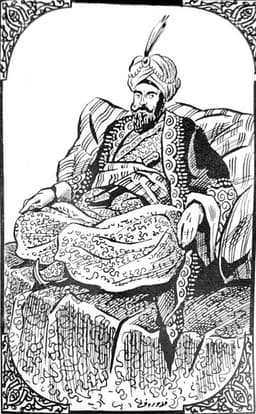
Harun al-Rashid
Emperor · Medieval
71.3Total

Julius Caesar
General · Ancient
82.8Total
Basic Information
Born
763
-100
Died
809
-44
Era
Medieval
Ancient
Nationality
Abbasid Caliphate
Roman Republic
Occupation
Emperor
General
Civilization
Middle Eastern
Western
Score Comparison
Military (10%)
72.5
88.0
Political (20%)
70.0
78.0
Influence (20%)
71.0
85.0
Legacy (20%)
80.0
82.0
Leadership (15%)
72.0
80.0
Strategy (15%)
50.0
85.0
TOTAL
71.3
82.8
Harun al-Rashid — Complete Timeline
786 AD
Accession to the CaliphatePolitical Action◆ Major
Harun al-Rashid became the fifth Abbasid caliph after the death of his brother Al-Hadi. His reign marked the beginning of a period of cultural and economic flourishing, often considered the zenith of Abbasid power.
SuccessionCaliphateGolden Age
Impact: regionalconstructive
Patronage of the Arts and SciencesCultural◆ Major
Harun al-Rashid's court in Baghdad became a center of learning and culture, attracting poets, scholars, and musicians. His patronage fostered the development of Arabic literature, including the tales later compiled as One Thousand and One Nights.
CulturePatronageLiterature
Impact: globalconstructive
790 AD
Military Campaigns Against ByzantiumWar
Harun al-Rashid led several campaigns into Byzantine Anatolia, capturing fortresses and extracting tribute. These raids, though not resulting in permanent conquest, demonstrated Abbasid military strength and secured the frontier.
Byzantine WarsMilitary CampaignFrontier
Impact: regional
797 AD
Diplomatic Exchange with CharlemagnePolitical Action◆ Major
Harun al-Rashid sent an embassy to the Frankish emperor Charlemagne, including gifts such as an elephant named Abul-Abbas. This exchange established diplomatic relations between the Abbasid Caliphate and the Carolingian Empire, facilitating trade and cultural contact.
DiplomacyCharlemagneInternational Relations
Impact: globalconstructive
803 AD
Suppression of the BarmakidsPolitical Action◆ Major
Harun al-Rashid ordered the execution of the powerful Barmakid family, who had served as viziers for decades. This purge removed a major political faction and consolidated Harun's personal authority, but also disrupted the administration.
PurgeBarmakidsPower Struggle
Impact: regionaldestructive
Julius Caesar — Complete Timeline
58 BC
Gallic WarsWar◆ Major
Caesar, as proconsul of Gaul, launched a series of campaigns that conquered all of Gaul (modern France, Belgium, and parts of Switzerland). He fought numerous battles, including against the Helvetii, the Belgae, and the Gallic chieftain Vercingetorix. The wars brought immense wealth and a loyal army to Caesar.
Gallic WarsConquestRoman Expansion
Impact: regional
49 BC
Crossing the RubiconPolitical Action◆ Major
Caesar led Legio XIII across the Rubicon River into Italy, defying the Roman Senate's order to disband his army. This act triggered a civil war against Pompey and the Optimates, ultimately leading to Caesar's dictatorship and the end of the Roman Republic.
Roman Civil WarEnd of RepublicPower Struggle
Impact: global
48 BC
Battle of PharsalusWar◆ Major
Caesar's outnumbered army defeated the larger forces of Pompey the Great at Pharsalus in Greece. Caesar's tactical use of a reserve line to counter Pompey's cavalry charge proved decisive. Pompey fled to Egypt, where he was assassinated, leaving Caesar as the undisputed master of the Roman world.
Roman Civil WarBattleDecisive Victory
Impact: regional
44 BC
Appointment as Dictator for LifePolitical Action◆ Major
The Roman Senate appointed Caesar dictator perpetuo (dictator for life), granting him unprecedented personal power. This move concentrated military, legislative, and judicial authority in one person, effectively ending the Roman Republic's traditional system of checks and balances and alarming many senators.
DictatorshipEnd of RepublicPower Consolidation
Impact: regionaldestructive
Assassination on the Ides of MarchPolitical Action◆ Major
A group of Roman senators, led by Marcus Junius Brutus and Gaius Cassius Longinus, stabbed Caesar to death at a meeting of the Senate in the Theatre of Pompey. The assassination was intended to restore the Republic, but instead triggered another civil war that led to the rise of the Roman Empire.
AssassinationRoman PoliticsEnd of Republic
Impact: globaldestructive
Expert Analysis
harun-al-rashid-vs-julius-caesar
### The Crossroads of Power: Caesar and Harun al-Rashid
Picture two men, each at the apex of his world, separated by eight centuries and a sea of difference in ambition. One stands on the banks of a small Italian river, the Rubicon, wrestling with a decision that will shatter a republic and forge an empire. The other reclines in the perfumed gardens of Baghdad, listening to poets recite verses while an elephant from India, a gift from a distant Frankish king, trumpets in the courtyard. Both are masters of their age, yet their paths, their triumphs, and their tragedies could not be more different. What drives a conqueror to remake the world in his image, and a caliph to illuminate it with culture? The answer lies not just in their actions, but in the very nature of their power.
#### Origins
Gaius Julius Caesar was born in 100 BCE into the turbulent twilight of the Roman Republic. His family, the Julii, claimed descent from the goddess Venus, but their political star had dimmed. Rome was a cauldron of senatorial corruption, landless veterans, and ambitious generals. Caesar’s childhood was marked by civil war and the dictatorship of Sulla, who proscribed his enemies and taught a young nobleman that power was taken, not given. This was a world where a man’s worth was measured by his military glory and his ability to outmaneuver rivals in the Forum.
Harun al-Rashid, born in 763 CE, inherited a very different world. The Abbasid Caliphate, centered in Baghdad, was the jewel of the medieval world—a sprawling empire of trade, learning, and faith. Harun was the son of Caliph al-Mahdi and a Yemeni slave girl named al-Khayzuran, a woman of formidable intelligence who later shaped his court. Unlike Caesar, who clawed his way up through a brutal meritocracy, Harun was born into a divine dynasty. His legitimacy came not from conquering but from bloodline, from being the “Commander of the Faithful,” the shadow of God on Earth. His era was one of consolidation, not conquest; the great Islamic expansion had already peaked.
#### Rise to Power
Caesar’s rise was a masterpiece of calculated risk. He served as a military tribune, then quaestor in Spain, where a vision of Alexander the Great’s statue made him weep at his own lack of achievement. He climbed the political ladder—aedile, pontifex maximus, praetor—spending fortunes on games and bribes to secure popularity. His true springboard came in 58 BCE, when he secured the governorship of Gaul. Over eight years, he conquered a vast territory, built a loyal army, and amassed legendary wealth. The Rubicon, in 49 BCE, was the final gamble: he crossed it with a single legion, knowing it meant civil war. His path was one of personal ambition, driven by the need to outshine rivals like Pompey.
Harun’s ascent was smoother, but no less dramatic. In 786 CE, his brother Caliph al-Hadi died under mysterious circumstances—perhaps poisoned by his own mother, al-Khayzuran, who favored Harun. Harun, then only twenty-three, ascended the throne without a battle. His power was not won on a battlefield but in the shadowy corridors of the palace. The key turning point was his suppression of the Barmakid family in 803. These Persian viziers had been the true architects of the caliphate for decades, managing the treasury and army. Harun, perhaps fearing their grip or seeking to assert his own authority, ordered the execution of the patriarch Yahya al-Barmaki and the imprisonment of his sons. It was a cold, administrative coup—a palace purge, not a crossing of a river.
#### Leadership & Governance
Caesar’s leadership was a blend of iron discipline and personal magnetism. He fought alongside his men, shared their rations, and forgave defeated enemies to win their loyalty. His military genius shone in the Gallic Wars, where he outmaneuvered tribal coalitions at Alesia and subdued a land larger than Italy. As dictator, he reformed the calendar, granted citizenship to provincials, and launched public works to employ the poor. Yet his political wisdom was flawed: he centralized power too fast, alienated the Senate, and dismissed warnings of conspiracy. He ruled as a king in all but name, and that arrogance sealed his fate.
Harun al-Rashid governed from a throne, not a camp. His military scores are low—he led campaigns against Byzantium that were more like raids, extracting tribute rather than conquering territory. His true genius was political and cultural. He built Baghdad into a global hub, founding the House of Wisdom where Greek, Persian, and Indian texts were translated. His court was a stage for scholars like al-Kindi and poets like Abu Nuwas. The diplomatic exchange with Charlemagne in 797—sending an elephant named Abul-Abbas—was a masterstroke of soft power, projecting the caliphate’s wealth and reach. Harun ruled by delegation, trusting viziers and judges, but his purge of the Barmakids showed a ruthless streak: he could destroy his own government to maintain control.
#### Triumph & Tragedy
Caesar’s greatest moment was his victory at the Battle of Pharsalus in 48 BCE, where he crushed Pompey’s army against overwhelming odds. He stood as master of the Roman world, and his triumph in Rome was a spectacle of captured Gallic chieftains and golden loot. His tragedy was the Ides of March, 44 BCE, when sixty senators stabbed him to death in the Senate chamber. He bled out at the foot of Pompey’s statue, a victim of the very republic he had dismantled.
Harun’s triumph was more serene: the golden age of Baghdad, when the caliphate stretched from Spain to India, and its capital was the largest city on Earth. His tragedy was the succession crisis he left behind. He divided his empire between his sons al-Amin and al-Ma’mun, a decision that ignited a brutal civil war after his death in 809. The unity of the Abbasid Caliphate never fully recovered, and the Barmakid purge had stripped the state of its most capable administrators.
#### Character & Destiny
Caesar was driven by *ambitio*—a Roman hunger for glory that bordered on obsession. He was charming, ruthless, and supremely confident, once saying, “It is easier to find men who will volunteer to die than to find those who are willing to endure pain with patience.” His character shaped every decision: he gambled because he believed his luck, his *fortuna*, would hold. It held until it didn’t.
Harun was a different breed. He was pious, a man who led the Hajj pilgrimage to Mecca, but also a connoisseur of pleasure, whose court was legendary for its wine and song. He was cautious where Caesar was bold, preferring diplomacy to war. His character was that of a steward, not a conqueror. He once said, “The best of rulers is he who is loved by his subjects,” a sentiment Caesar would have found quaint. Harun’s destiny was to preside over a civilization’s peak, not to forge a new one.
#### Legacy
Caesar’s legacy is etched in stone and blood. His name became a title—*Kaiser*, *Tsar*—and his reforms laid the foundation for the Roman Empire that lasted another five centuries. He is remembered as a military genius, a tyrant, and a martyr, a figure who embodies both the glory and the peril of absolute power. His writings, especially the *Commentaries on the Gallic War*, remain classics of military literature.
Harun’s legacy is woven into story and myth. He is the caliph of *One Thousand and One Nights*, a figure of justice, romance, and mystery. His patronage of learning helped preserve and advance human knowledge, from algebra to astronomy. He is remembered not as a conqueror but as a civilizer, a ruler who proved that power can be measured in books as well as swords.
#### Conclusion
Standing at the end of their stories, we see two mirrors held up to different forms of greatness. Caesar, the restless conqueror, reshaped the world through force of will and paid for it with his life. Harun, the cultured prince, built a civilization that outshone its neighbors and faded not by assassination but by slow decay. One crossed a river; the other crossed a threshold of time. Their differences remind us that leadership is not a single path but a choice: between the sword that cuts and the lamp that illuminates. Both left marks that still linger, but the question they pose to us is not which was greater, but which world we would choose to inherit.
Rankings
🥇
Julius CaesarLeader
Mil: 88.0Pol: 78.0Inf: 85.0
82.8
🥈
Harun al-Rashid
Mil: 72.5Pol: 70.0Inf: 71.0
71.3
+11.5 behind
How This Comparison Works
Algorithm
Each figure is scored on 6 dimensions (0—100 scale) based on structured historical data: Military (10%), Political (20%), Influence (20%), Legacy (20%), Leadership (15%), Strategy (15%). The weighted total produces the final ranking.
Data Sources
Scores are computed from structured sub-indicators in the database. Scale factors adjust for era (Ancient ×0.85, Modern ×1.0) and civilization size (Eastern ×1.05, Other ×0.80) to account for differences in population and military scale.
Maximum 3 Figures
Comparisons are limited to 2—3 figures to ensure readability and statistical meaningfulness.
Error Margins
±5 points per dimension — Sub-scores are derived from historical records with inherent uncertainty. Two figures within 5 points on a dimension should be considered roughly equivalent in that area.
Total Score Accuracy
±3 points overall — The weighted combination of 6 dimensions produces a total score with approximately ±3 points of uncertainty. Differences of less than 3 points are not statistically significant— the figures are effectively tied.
Known Limitations
- Historical records are incomplete and uneven across civilizations
- Figures from oral-tradition societies may be underrepresented
- Occupation labels can misclassify multi-role figures
- Scores measure capability and impact, not moral character
- Quantitative scoring is a comparison tool, not absolute truth
Capability Radar
Military (10%) — Battles & Warfare
Battles
60
95
Win Rate
65
92
Expansion
55
97
Political (20%) — Governance & Reform
Reform
70
90
Diplomacy
80
85
Economy
85
82
Influence (20%) — Cultural & Global Reach
Cultural
90
88
Global
85
94
Legacy (20%) — Historical Impact
Historical
85
95
Longevity
90
96
Leadership (15%) — Power & Stability
Tenure
75
75
Stability
70
60
Strategy (15%) — Tactics & Innovation
Strategy
60
94
Tactics
55
96
Reform
50
88
Similar Comparisons
Comments & Discussion
RUBICON'S GHOST6/17/2026
Caesar didn't just cross a river—he ended a 500-year republic for personal glory. Harun built libraries, not battlefields. Which legacy matters more? Caesar's military talent is overblown; he was a political opportunist who lucked into Gaul. Harun's Baghdad sparked algebra, medicine, and philosophy while Europe stumbled in the dark. Give me a caliph who funds scholars over a general who bankrupts his state.
巴格达之魂6/17/2026
哈伦·拉希德才是真正的文明推动者!凯撒只是个野蛮的征服者,他屠杀高卢一百万人,把欧洲推向战争深渊。而哈伦在巴格达建立智慧宫,翻译希腊典籍,开创伊斯兰黄金时代。凯撒的罗马留给世界的是斗兽场和奴隶制,哈伦的巴格达却孕育了现代科学。谁更配得上"伟大"二字?
DATA_DETECTIVE_77346/17/2026
This comparison overlooks scale. Caesar's campaigns impacted 50+ million people across Gaul, Britain, and Egypt, reshaping Western civilization permanently. Harun ruled a smaller population base—maybe 20 million—and his caliphate fragmented within decades. Caesar's assassination triggered Rome's transformation into an empire that lasted centuries. Harun's death led to civil war among his sons. Sorry, but conquest wins on historical weight.
长安过客6/17/2026
别被浪漫化历史骗了!哈伦·拉希德根本不是什么文化守护者,他处死巴尔马克家族是政治清洗,智慧宫更多是波斯官僚的功劳。凯撒至少推动了历法改革和公民权扩展,而哈伦的统治充满内斗和宗教迫害。比较这两个人就像比较苹果和狮子——一个是优雅的动物园动物,另一个是改变草原生态的顶级捕食者。