Loading...
Hasdrubal Barca vs Julius Caesar
Julius Caesar leads by 34.7 pts · 2 figures compared
…
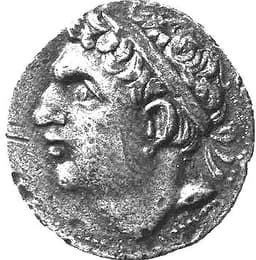
Hasdrubal Barca
General · Ancient
48.1Total

Julius Caesar
General · Ancient
82.8Total
Basic Information
Born
-245
-100
Died
-207
-44
Era
Ancient
Ancient
Nationality
Carthage
Roman Republic
Occupation
General
General
Civilization
Middle Eastern
Western
Score Comparison
Military (10%)
74.0
88.0
Political (20%)
25.0
78.0
Influence (20%)
53.3
85.0
Legacy (20%)
45.8
82.0
Leadership (15%)
40.4
80.0
Strategy (15%)
61.3
85.0
TOTAL
48.1
82.8
Hasdrubal Barca — Complete Timeline
218 BC
Commanded Carthaginian Forces in SpainWar◆ Major
Hasdrubal Barca was left in command of Carthaginian forces in Spain while Hannibal invaded Italy. He defended Carthaginian territories against Roman attacks, including a victory at the Battle of the Ebro River in 217 BC.
Second Punic WarSpainMilitary Command
Impact: regional
208 BC
Defeated at the Battle of BaeculaWar◆ Major
Hasdrubal Barca was defeated by Scipio Africanus at the Battle of Baecula in Spain. Despite the loss, he managed to escape with a significant portion of his army and decided to march to Italy to reinforce Hannibal.
Second Punic WarBattleSpain
Impact: regionaltragic
207 BC
Killed at the Battle of the MetaurusWar
Hasdrubal Barca was defeated and killed at the Battle of the Metaurus in Italy while attempting to join forces with Hannibal. His head was thrown into Hannibal's camp as a sign of defeat, ending the Carthaginian threat to Italy.
Second Punic WarBattleDeath
Impact: regionaltragic
Julius Caesar — Complete Timeline
58 BC
Gallic WarsWar◆ Major
Caesar, as proconsul of Gaul, launched a series of campaigns that conquered all of Gaul (modern France, Belgium, and parts of Switzerland). He fought numerous battles, including against the Helvetii, the Belgae, and the Gallic chieftain Vercingetorix. The wars brought immense wealth and a loyal army to Caesar.
Gallic WarsConquestRoman Expansion
Impact: regional
49 BC
Crossing the RubiconPolitical Action◆ Major
Caesar led Legio XIII across the Rubicon River into Italy, defying the Roman Senate's order to disband his army. This act triggered a civil war against Pompey and the Optimates, ultimately leading to Caesar's dictatorship and the end of the Roman Republic.
Roman Civil WarEnd of RepublicPower Struggle
Impact: global
48 BC
Battle of PharsalusWar◆ Major
Caesar's outnumbered army defeated the larger forces of Pompey the Great at Pharsalus in Greece. Caesar's tactical use of a reserve line to counter Pompey's cavalry charge proved decisive. Pompey fled to Egypt, where he was assassinated, leaving Caesar as the undisputed master of the Roman world.
Roman Civil WarBattleDecisive Victory
Impact: regional
44 BC
Appointment as Dictator for LifePolitical Action◆ Major
The Roman Senate appointed Caesar dictator perpetuo (dictator for life), granting him unprecedented personal power. This move concentrated military, legislative, and judicial authority in one person, effectively ending the Roman Republic's traditional system of checks and balances and alarming many senators.
DictatorshipEnd of RepublicPower Consolidation
Impact: regionaldestructive
Assassination on the Ides of MarchPolitical Action◆ Major
A group of Roman senators, led by Marcus Junius Brutus and Gaius Cassius Longinus, stabbed Caesar to death at a meeting of the Senate in the Theatre of Pompey. The assassination was intended to restore the Republic, but instead triggered another civil war that led to the rise of the Roman Empire.
AssassinationRoman PoliticsEnd of Republic
Impact: globaldestructive
Expert Analysis
hasdrubal-barca-vs-julius-caesar
### The Shadow of the Titan: Why Hasdrubal Barca Could Never Be Caesar
On a spring day in 207 BCE, a severed head was hurled into a Carthaginian camp in southern Italy. The head belonged to Hasdrubal Barca, and the man who ordered its delivery was his own brother, Hannibal. As the grisly trophy landed at Hannibal’s feet, the great general reportedly wept—not for the loss of a sibling, but for the death of a final hope. Fifteen years later, on the Ides of March in 44 BCE, another general lay bleeding on the floor of the Roman Senate, his body pierced by sixty daggers. Julius Caesar’s last moments were not a defeat but a climax, a final act of a life that had already reshaped the world. Why did one brother’s death mark the end of a doomed cause, while another’s assassination became the birth of an empire? The answer lies not in the stars, but in the men themselves—their origins, their choices, and the invisible forces of their times.
### Origins: The Forge of Two Worlds
Julius Caesar was born into the patrician Julian clan, a family that claimed descent from the goddess Venus. Yet his Rome was a Republic in agony, torn between the old senatorial aristocracy and the rising populist generals. Caesar’s childhood was marked by civil war and political proscription; his father died suddenly when he was sixteen, leaving him to navigate a world where a man’s worth was measured in military command and public favor. He absorbed the Greek education of a Roman elite—rhetoric, philosophy, and history—but he also learned the brutal calculus of power: that in Rome, glory and survival were the same coin.
Hasdrubal Barca, by contrast, was born into a mercantile oligarchy that had already lost one war to Rome. His father, Hamilcar Barca, had fought the Romans in Sicily, and his older brother Hannibal was the family’s star. The Barcid family was not a royal dynasty but a clan of warrior-nobles who had carved out a Spanish empire to fund their revenge. Hasdrubal’s youth was spent in the shadow of his father’s death and his brother’s legend. While Caesar learned to debate in the Forum, Hasdrubal learned to march in the Iberian mountains. One was trained to conquer a system from within; the other, to fight a war of annihilation from without.
### Rise to Power: The Path and the Trap
Caesar’s ascent was a masterpiece of calculated risk. He climbed the Roman political ladder—quaestor, aedile, praetor—but he was constantly in debt and on the edge of ruin. His turning point came in 58 BCE, when he secured the governorship of Gaul. Over eight years, he conquered a territory larger than Italy, fought over a million men, and wrote his own propaganda in the *Commentaries*. He returned to Rome not as a senator but as a general with a loyal army, a populist’s popularity, and a rival in Pompey. When the Senate ordered him to disband his forces, he crossed the Rubicon River in 49 BCE, gambling everything on civil war. It was a gamble that paid off: within four years, he was dictator for life.
Hasdrubal’s rise was different. He was not a rebel against his own system; he was a lieutenant in a family war. In 218 BCE, as Hannibal marched over the Alps into Italy, Hasdrubal was left in command of Carthaginian forces in Spain. His task was to hold the family’s Spanish base, raise reinforcements, and eventually join Hannibal in Italy. But Spain was a chessboard of Roman and Iberian forces, and Hasdrubal was never the master of the game. He fought well—defending Carthaginian cities, skirmishing with Roman generals—but he lacked his brother’s genius for turning disaster into victory. His key turning point came in 208 BCE, at the Battle of Baecula. Scipio Africanus, a young Roman commander, outflanked him. Hasdrubal escaped with part of his army, but he lost the field and, more importantly, the initiative. He was now a fugitive, racing to reach Italy before Rome cut him off.
### Leadership & Governance: The Art of Command
Caesar governed like a man building a new world. As dictator, he reformed the calendar—giving us the Julian calendar still used in the Eastern Orthodox Church—granted citizenship to provincials, redistributed land to veterans, and centralized tax collection. He was ruthless but pragmatic: he pardoned many of his enemies, including Brutus, who would later kill him. His military genius lay in speed and logistics. At the Battle of Alesia in 52 BCE, he built a double ring of fortifications to besiege the Gauls while simultaneously fighting a relief army. It was a feat of engineering and discipline that still stuns military historians. His leadership was personal—he fought alongside his men, shared their rations, and called them by name.
Hasdrubal’s leadership was competent but constrained. He was a good defensive commander, capable of holding a province and avoiding annihilation. But he was not a reformer. Carthage was a commercial republic that relied on mercenaries and allied tribes, and Hasdrubal governed Spain as a military outpost, not a new society. He lacked the political vision to turn his Spanish base into a stable power center. His strategy was always reactive: defend, delay, escape. When he finally crossed into Italy in 207 BCE, he was not a conqueror arriving to save his brother; he was a desperate man trying to keep a dying war alive.
### Triumph & Tragedy: The Heights and the Abyss
Caesar’s greatest triumph was his conquest of Gaul, which doubled Rome’s territory and made him the richest man in the Republic. His greatest tragedy was the Ides of March. He had centralized power so completely that the old Republic could not survive him, yet he failed to build a succession plan. When he was stabbed in the Senate, he fell not as a tyrant but as a symbol of a system that had broken itself.
Hasdrubal’s triumph was his escape from Baecula—a tactical retreat that saved a core of his army. His tragedy was the Battle of the Metaurus in 207 BCE. He had marched through Gaul and crossed the Alps, just as Hannibal had done, but his army was smaller and his supply lines thinner. When he met the Roman consuls at the Metaurus River, he was outnumbered and outmaneuvered. He fought bravely—the Romans later said he died like a soldier—but his head was cut off and thrown into Hannibal’s camp. The message was clear: the Barcid dream was over.
### Character & Destiny: The Man and the Moment
Caesar was audacious, calculating, and egomaniacal. He believed in his own destiny, and he was right. His character drove him to take risks that would have destroyed lesser men—crossing the Rubicon, pardoning enemies, seizing power. But his destiny was also shaped by the crisis of the Roman Republic, a system that was already dying. He did not create the empire alone; he was the surgeon who performed the fatal operation.
Hasdrubal was loyal, competent, and doomed. He was not a fool—he managed to hold Spain for years against Roman pressure—but he was not a revolutionary. He was fighting for a family cause in a world where Carthage had already lost its empire. His character was defined by duty, not ambition. He could not change the course of history because he was not trying to; he was trying to fulfill his brother’s plan. When that plan failed, he had no backup, no vision, no legacy.
### Legacy: What They Left Behind
Caesar’s legacy is the Roman Empire itself. His name became a title—*Caesar*—used by emperors for centuries, from Augustus to the Russian *Tsar* and German *Kaiser*. His writings shaped Western military thought, and his political reforms laid the foundation for imperial governance. He is remembered as a genius and a tyrant, a man who destroyed a republic to save it.
Hasdrubal Barca’s legacy is a footnote. He is remembered, if at all, as the brother who failed to save Hannibal. His military scores—a strategic rating of 72.0, a leadership score of 33.4—reflect a competent general in an impossible position. He is a cautionary tale: that loyalty and skill are not enough when history demands greatness.
### Conclusion
Standing at the Metaurus River in 207 BCE, Hasdrubal Barca must have known he was losing. He was a good soldier in a bad war, a brother trying to keep a promise. Across the sea, in Gaul, a young Julius Caesar was beginning his political climb, unaware that his path would lead to the Senate floor. History does not always reward the competent; it rewards those who seize the moment and reshape it. Caesar understood that the Republic was dying and that only a strong man could save it. Hasdrubal understood only that he had to reach his brother. One built an empire; the other became a severed head. The difference was not in their bloodlines or their armies, but in their vision of what was possible. And that, perhaps, is the cruelest lesson of all.
Rankings
🥇
Julius CaesarLeader
Mil: 88.0Pol: 78.0Inf: 85.0
82.8
🥈
Hasdrubal Barca
Mil: 74.0Pol: 25.0Inf: 53.3
48.1
+34.7 behind
How This Comparison Works
Algorithm
Each figure is scored on 6 dimensions (0—100 scale) based on structured historical data: Military (10%), Political (20%), Influence (20%), Legacy (20%), Leadership (15%), Strategy (15%). The weighted total produces the final ranking.
Data Sources
Scores are computed from structured sub-indicators in the database. Scale factors adjust for era (Ancient ×0.85, Modern ×1.0) and civilization size (Eastern ×1.05, Other ×0.80) to account for differences in population and military scale.
Maximum 3 Figures
Comparisons are limited to 2—3 figures to ensure readability and statistical meaningfulness.
Error Margins
±5 points per dimension — Sub-scores are derived from historical records with inherent uncertainty. Two figures within 5 points on a dimension should be considered roughly equivalent in that area.
Total Score Accuracy
±3 points overall — The weighted combination of 6 dimensions produces a total score with approximately ±3 points of uncertainty. Differences of less than 3 points are not statistically significant— the figures are effectively tied.
Known Limitations
- Historical records are incomplete and uneven across civilizations
- Figures from oral-tradition societies may be underrepresented
- Occupation labels can misclassify multi-role figures
- Scores measure capability and impact, not moral character
- Quantitative scoring is a comparison tool, not absolute truth
Capability Radar
Military (10%) — Battles & Warfare
Battles
70
95
Win Rate
65
92
Expansion
60
97
Political (20%) — Governance & Reform
Reform
20
90
Diplomacy
50
85
Economy
30
82
Influence (20%) — Cultural & Global Reach
Cultural
30
88
Global
30
94
Legacy (20%) — Historical Impact
Historical
45
95
Longevity
30
96
Leadership (15%) — Power & Stability
Tenure
40
75
Stability
35
60
Strategy (15%) — Tactics & Innovation
Strategy
70
94
Tactics
75
96
Reform
30
88
Similar Comparisons
Comments & Discussion
战术大师6/17/2026
作为数据发烧友,我查了死亡率:凯撒在高卢战役中损失约3万人,而迦太基在第二次布匿战争后几乎灭种。这叫“势”的差别。凯撒的每一步都踩在共和国垂死的身躯上,他有元老院叛徒、高卢叛军和庞培军团可分化;哈斯德鲁巴面对的却是统一指挥的罗马军团,后排还有西庇阿虎视眈眈。拿终极结果评判个人能力,就像比较打一局扑克和下一盘围棋。
历史重构者6/17/2026
哈斯德鲁巴的失败不在战术,而在战略层面:他试图与汉尼拔会师意大利,但罗马人早用“拖延战术”锁死了地中海。凯撒进攻高卢时,罗马战舰可以沿海岸补给,而迦太基的舰队在伊利帕海战后早已断缆。更致命的是——哈斯德鲁巴多线作战:西班牙同时面对西庇阿兄弟、蛮族叛乱和罗马海军封锁。凯撒在高卢只需打服一个Vercingetorix。这根本不是个人能力的较量,而是时代与后勤的碾压。
The Cynic6/17/2026
Stop romanticizing severed heads. Hasdrubal Barca was a competent general in a losing war—so what? His best move, the Metaurus River crossing, ended with his head on a pole. Caesar crossed the Rubicon, won a civil war, and died in bed surrounded by aristocrats who pretended to love him. That’s the difference: one fought for a cause that had already lost (Carthage’s hyper-extension),
Historian3446/17/2026
Here's the thing—comparing military leadership across centuries is like comparing apples to siege engines. Hasdrubal fought Rome when it was already a superpower with infinite reserves; Caesar conquered Gauls who barely had organized logistics. Show me Hasdrubal crossing the Alps with war elephants and winter snow, then we can talk. Caesar was brilliant, sure, but he never faced a Hannibal with a fresh army breathing down his neck. Hasdrubal's headless corpse proves Rome's strategy: attrition ov