Loading...
Hassan Nasrallah vs Qin Shi Huang
Qin Shi Huang leads by 31.6 pts · 2 figures compared
…

Hassan Nasrallah
Revolutionary · Modern
53.6Total
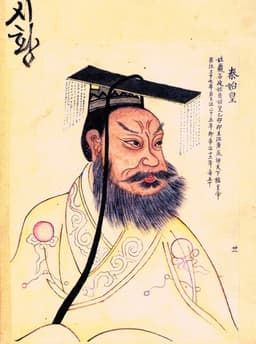
Qin Shi Huang
Emperor · Ancient
85.2Total
Basic Information
Born
1960
-259
Died
—
-210
Era
Modern
Ancient
Nationality
Lebanon
China
Occupation
Revolutionary
Emperor
Civilization
Middle Eastern
Eastern
Score Comparison
Military (10%)
47.5
80.0
Political (20%)
68.0
90.0
Influence (20%)
58.0
85.0
Legacy (20%)
47.5
90.0
Leadership (15%)
48.8
78.0
Strategy (15%)
50.0
82.0
TOTAL
53.6
85.2
Hassan Nasrallah — Complete Timeline
1992 AD
Election as Hezbollah Secretary-GeneralPolitical Action◆ Major
Nasrallah was elected Secretary-General of Hezbollah in February 1992 after the assassination of Abbas al-Musawi by Israel. At age 32, he became the leader of the Shia militant group, overseeing its transformation into a major political and military force.
HezbollahLeadershipShia Militancy
Impact: regional
2006 AD
2006 Lebanon WarWar◆ Major
Nasrallah led Hezbollah during the 34-day war with Israel in July-August 2006, triggered by a Hezbollah cross-border raid. The conflict ended with a UN-brokered ceasefire, and Hezbollah claimed a 'divine victory' despite significant destruction in Lebanon.
Israel-Hezbollah WarMilitary ConflictCeasefire
Impact: regionaldestructive
2008 AD
Assassination of Imad MughniyehPolitical Action◆ Major
Nasrallah accused Israel of assassinating Hezbollah military commander Imad Mughniyeh in Damascus in February 2008. He vowed retaliation, leading to increased tensions and a period of heightened conflict along the Lebanon-Israel border.
AssassinationHezbollahIsrael
Impact: regionaltragic
2013 AD
Intervention in Syrian Civil WarWar◆ Major
Nasrallah publicly committed Hezbollah fighters to support the Syrian government in the Syrian Civil War in May 2013. Hezbollah's intervention was crucial in battles like Qusayr, helping to turn the tide in favor of Bashar al-Assad's forces.
Syrian Civil WarMilitary InterventionAssad
Impact: regionaldestructive
2018 AD
Political Dominance in LebanonPolitical Action◆ Major
Under Nasrallah's leadership, Hezbollah and its allies won the 2018 Lebanese parliamentary elections, securing a majority. This solidified Hezbollah's political dominance, allowing it to influence government formation and policy despite international sanctions.
ElectionsPolitical PowerHezbollah
Impact: national
Qin Shi Huang — Complete Timeline
246 BC
Construction of the Mausoleum and Terracotta ArmyOther◆ Major
Qin Shi Huang commissioned a vast mausoleum complex near Xi'an, guarded by thousands of life-sized terracotta soldiers, horses, and chariots. The project employed hundreds of thousands of workers and reflected his obsession with immortality and imperial power.
Impact: global
230 BC
Conquest of the Six Warring StatesWar
From 230 to 221 BCE, Ying Zheng led the Qin state in a series of campaigns that conquered the Han, Zhao, Wei, Chu, Yan, and Qi states. This unified China under a single ruler for the first time, ending the Warring States period.
Impact: global
221 BC
Standardization of Writing, Currency, and MeasurementsReform◆ Major
Qin Shi Huang ordered the standardization of Chinese script, currency, and weights and measures across the unified empire. This facilitated administration, trade, and cultural integration, laying a foundation for future dynasties.
Impact: globalconstructive
Proclamation of the Qin DynastyPolitical Action
After conquering the last independent state, Ying Zheng declared himself Shi Huangdi (First Emperor), founding the Qin Dynasty. He adopted a new title to signify his supreme authority and initiated centralized imperial rule.
Impact: global
214 BC
Initiation of the Great Wall ConstructionOther◆ Major
Qin Shi Huang ordered the connection and extension of existing northern fortifications to create a unified defensive wall against nomadic Xiongnu raids. This project involved massive conscripted labor and became the precursor to the later Great Wall.
Impact: regional
213 BC
Burning of Books and Burying of ScholarsPolitical Action◆ Major
On the advice of Li Si, Qin Shi Huang ordered the burning of historical records and philosophical texts not aligned with Legalist doctrine. He also had 460 Confucian scholars buried alive to suppress dissent and consolidate ideological control.
Impact: nationaldestructive
Expert Analysis
hassan-nasrallah-vs-qin-shi-huang
# The Emperor and the Revolutionary
On a winter day in 221 BCE, a thirty-eight-year-old king stood before his assembled generals in the city of Xianyang, having just crushed the last independent state of a war-torn land. He declared himself *Shi Huangdi*—the First Emperor—and set in motion a vision of unity that would echo across millennia. Two thousand two hundred years later, in the spring of 1992, a thirty-two-year-old cleric in black robes stood before a grieving crowd in Beirut, elected to lead a militant movement after an Israeli helicopter strike had killed his predecessor. Both men inherited chaos. Both sought to forge order from fragmentation. But while one built an empire that defined a civilization, the other built a militia that could paralyze a state. Why did their paths diverge so dramatically? The answer lies not merely in their personalities, but in the worlds that shaped them.
Origins
Ying Zheng was born in 259 BCE, the son of a prince held hostage in the state of Zhao. His childhood was spent in the shadow of betrayal and uncertainty—his father had been a pawn in the brutal chess game of the Warring States period, where seven kingdoms fought ceaselessly for supremacy. When Ying Zheng ascended the throne of Qin at age thirteen, he inherited a state already hardened by Legalist philosophy, which taught that human nature was inherently selfish and that only strict law and harsh punishment could maintain order. The Qin had been preparing for conquest for generations, stockpiling grain, perfecting iron weapons, and drilling a peasant army into a disciplined machine. Young Zheng absorbed this world: survival meant strength, unity meant victory, and mercy was a luxury for the weak.
Hassan Nasrallah was born in 1960 in the impoverished Shia neighborhood of Karantina in East Beirut. Lebanon was then a fragile mosaic of sects—Maronite Christians, Sunni Muslims, Druze, and Shia—held together by a delicate political bargain that favored the Christian minority. Nasrallah’s family, like many Shia, had been marginalized for generations, their villages neglected by the state, their identity submerged in a nation that treated them as second-class citizens. The 1967 Arab defeat by Israel radicalized the region, and Nasrallah, still a teenager, joined the Amal movement, a Shia political organization. He later traveled to the Shia holy city of Qom in Iran to study theology, where he absorbed the revolutionary ideology of Ayatollah Khomeini: that Islam was not merely a faith but a political program, that the oppressed must rise against the oppressor, and that martyrdom was the highest honor. Nasrallah’s world was not one of ancient kingdoms but of modern nation-states, colonial borders, and a seemingly invincible Israel backed by the world’s superpower.
Rise to Power
Ying Zheng’s rise was methodical and absolute. At twenty-two, he crushed a rebellion by his own regent, Lü Buwei, and began consolidating power. From 230 to 221 BCE, he unleashed a series of campaigns that historians still marvel at for their efficiency: the Han fell first, then the Zhao, the Wei, the Chu, the Yan, and finally the Qi. Each conquest was a masterpiece of logistics and psychological warfare. Zheng did not just defeat armies; he dismantled their identities—noble families were relocated, local scripts were abolished, and the defeated states were absorbed into a single administrative grid. By the time he declared himself emperor, he had already won the war; the empire was merely a formality.
Nasrallah’s rise was slower, more contingent. He became Secretary-General of Hezbollah in 1992 at the age of thirty-two, a position that came with immense risk. His predecessor, Abbas al-Musawi, had been killed by an Israeli helicopter strike, and Nasrallah knew he was next on the list. But he possessed a rare combination of charisma and calculation. He spoke in a calm, measured tone that contrasted with the fiery rhetoric of other Islamist leaders. He understood that Hezbollah’s strength lay not in conventional warfare but in guerrilla tactics, social services, and political infiltration. While Ying Zheng conquered through overwhelming force, Nasrallah conquered through patience: he built hospitals, schools, and clinics in Shia villages that the Lebanese state had abandoned, creating a parallel society that owed loyalty to Hezbollah alone.
Leadership & Governance
Qin Shi Huang ruled through terror and uniformity. He standardized writing, currency, weights, and measures—a set of reforms that seems bureaucratic but was revolutionary. Before him, each state had its own script, its own axle width for chariots, its own system of taxation. The First Emperor made China legible to itself. He connected the northern fortifications into what would become the Great Wall, a monument to his ambition and his paranoia. But his governance had a dark side: in 213 BCE, he ordered the burning of all historical records and philosophical texts not aligned with Legalist doctrine, and had hundreds of scholars buried alive. He believed that the past was a threat to the future, that memory itself must be erased to ensure obedience.
Nasrallah’s governance was more adaptive. He did not seek to erase Lebanon’s diversity but to dominate it. Under his leadership, Hezbollah became a state within a state: it ran its own military, its own media network (Al-Manar television), its own financial system. In 2006, when Hezbollah’s cross-border raid triggered a devastating 34-day war with Israel, Nasrallah’s forces fought the Israeli army to a standstill, a feat that shocked the world and elevated him to hero status across the Arab world. But that war also devastated Lebanon, and Nasrallah’s decision to intervene in the Syrian Civil War in 2013—sending thousands of fighters to prop up Bashar al-Assad—turned him into a divisive figure, praised by his Shia base but reviled by many Sunni Arabs.
Triumph & Tragedy
The First Emperor’s greatest triumph was his mausoleum. Near Xi’an, he commissioned a vast underground complex guarded by thousands of life-sized terracotta soldiers, each with a unique face, as if he intended to command an army in the afterlife. It was a masterpiece of ambition and paranoia, a testament to his belief that even death could be conquered. But his tragedy came swiftly: after his death in 210 BCE, his dynasty collapsed within three years, torn apart by rebellions and the weakness of his successors. The empire he built survived—but the Qin dynasty did not.
Nasrallah’s greatest triumph was the 2006 war, which he framed as a “divine victory” against Israel. His tragedy is more ambiguous. He has outlasted his enemies, but at a terrible cost. Hezbollah’s involvement in Syria has drained its resources and alienated many in the Arab world. The 2018 parliamentary elections gave Hezbollah and its allies a majority, but Lebanon’s economy has collapsed, its currency devalued by 90%, and its people trapped between a paralyzed state and a heavily armed militia. Nasrallah rules a broken country.
Character & Destiny
Qin Shi Huang was consumed by fear of death and betrayal. He sent expeditions in search of the elixir of immortality, built elaborate palaces, and never slept in the same room twice for fear of assassination. His personality—ruthless, visionary, paranoid—shaped a China that would endure for two millennia, but it also ensured that his dynasty would not. He could not delegate, could not trust, could not imagine a future without him.
Nasrallah is more pragmatic, more patient. He has survived multiple assassination attempts, but he knows he is mortal. He has positioned Hezbollah not as a transient militia but as a permanent institution, embedded in Lebanon’s fabric. His personality—charismatic, calculating, ideologically rigid yet tactically flexible—has allowed Hezbollah to survive where other movements have crumbled. But he has also trapped himself: the more Hezbollah dominates, the more it is blamed for Lebanon’s ruin.
Legacy
Qin Shi Huang’s legacy is the idea of China itself. The script he standardized is still used today, the Great Wall still stands, and the administrative divisions he created still shape the country. He is remembered as both a unifier and a tyrant, a figure of awe and horror. His tomb remains unopened, a final mystery.
Nasrallah’s legacy is more contested. To his supporters, he is the defender of the Shia, the man who stood up to Israel and America. To his detractors, he is a warlord who hijacked a state and dragged it into ruin. Hezbollah is now more powerful than ever, but at a price that may yet be measured in Lebanon’s survival.
Conclusion
One man built an empire that lasted two thousand years. The other built a militia that has lasted thirty. The difference is not merely in scale but in vision: Qin Shi Huang sought to create a world, while Hassan Nasrallah sought to resist one. Both succeeded, but success in history is measured not by power alone, but by what endures. The First Emperor’s empire outlived him; Nasrallah’s movement may yet outlive him. But as the terracotta soldiers stand silent in the Xi’an earth, and as the rockets lie hidden in the hills of southern Lebanon, one wonders: which is more lasting—the ambition to unite, or the will to resist?
Rankings
🥇
Qin Shi HuangLeader
Mil: 80.0Pol: 90.0Inf: 85.0
85.2
🥈
Hassan Nasrallah
Mil: 47.5Pol: 68.0Inf: 58.0
53.6
+31.6 behind
How This Comparison Works
Algorithm
Each figure is scored on 6 dimensions (0—100 scale) based on structured historical data: Military (10%), Political (20%), Influence (20%), Legacy (20%), Leadership (15%), Strategy (15%). The weighted total produces the final ranking.
Data Sources
Scores are computed from structured sub-indicators in the database. Scale factors adjust for era (Ancient ×0.85, Modern ×1.0) and civilization size (Eastern ×1.05, Other ×0.80) to account for differences in population and military scale.
Maximum 3 Figures
Comparisons are limited to 2—3 figures to ensure readability and statistical meaningfulness.
Error Margins
±5 points per dimension — Sub-scores are derived from historical records with inherent uncertainty. Two figures within 5 points on a dimension should be considered roughly equivalent in that area.
Total Score Accuracy
±3 points overall — The weighted combination of 6 dimensions produces a total score with approximately ±3 points of uncertainty. Differences of less than 3 points are not statistically significant— the figures are effectively tied.
Known Limitations
- Historical records are incomplete and uneven across civilizations
- Figures from oral-tradition societies may be underrepresented
- Occupation labels can misclassify multi-role figures
- Scores measure capability and impact, not moral character
- Quantitative scoring is a comparison tool, not absolute truth
Capability Radar
Military (10%) — Battles & Warfare
Battles
65
85
Win Rate
60
90
Expansion
50
90
Political (20%) — Governance & Reform
Reform
55
95
Diplomacy
65
75
Economy
50
90
Influence (20%) — Cultural & Global Reach
Cultural
60
95
Global
60
85
Legacy (20%) — Historical Impact
Historical
60
95
Longevity
55
95
Leadership (15%) — Power & Stability
Tenure
70
70
Stability
55
65
Strategy (15%) — Tactics & Innovation
Strategy
65
85
Tactics
70
80
Reform
55
95
Similar Comparisons
Comments & Discussion
周秦观史6/17/2026
一个是统一度量衡、文字、道路的千古一帝,一个是靠宗教动员和火箭弹绑架国家命脉的军阀头子。始皇用铁腕和制度构建了延续两千年的帝国骨架,纳斯鲁拉用教派认同和恐袭堆砌出一个脆弱的武装山头。拿他们比较本身就是一种对文明的侮辱。始皇帝在巅峰期坐拥六合,纳斯鲁拉的巅峰不过是让黎巴嫩沦为真主党的赌桌。
QinDataSkeptic6/17/2026
This comparison is manipulative framing dressed up as analysis. You're romanticizing a totalitarian ruler who burned books and buried scholars alive, and you're sanitizing a modern terrorist leader. Qin Shi Huang's "empire" lasted 15 years after his death before collapsing into rebellion—hardly a blueprint for stable civilization. Nasrallah's Hezbollah actually provides functioning schools, hospitals, and governance in southern Lebanon. Both men used violence to consolidate power. Stop pretendin
MrMapsAndEdicts6/17/2026
Let's talk about actual state capacity, not vague "vision." Qin Shi Huang enforced standardized axle widths, currency, and script across a landmass of 3 million square kilometers—a logistical miracle for 221 BCE. Nasrallah's achievement is running an underground missile network and a welfare system funded by Iran. One built a functioning administrative machine that lasted centuries; the other built a dependency on foreign proxies that shackles his own population. There's no equivalence in outcom
铁血刀笔吏6/17/2026
拿一个两千年前的古代帝王和一个现代代理人武装头目并列,完全是英雄史观的劣质消遣。始皇帝面对的是地理分裂和百家争鸣,所以他用郡县制和书同文来整合天下。纳斯鲁拉面对的是宗派和解体后的权力真空,所以他选择绑架黎巴嫩主权、接收伊朗指令、用什叶派认同构筑立身之基。两人都很务实,但一个是开创者,一个是寄生虫。