Loading...
Heinrich Friedrich Karl vom Stein vs Napoleon Bonaparte
Napoleon Bonaparte leads by 13.5 pts · 2 figures compared
…
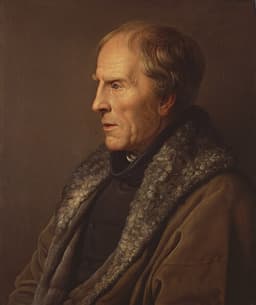
Heinrich Friedrich Karl vom Stein
Politician · Modern
57.4Total

Napoleon Bonaparte
General · Modern
70.9Total
Basic Information
Born
1757
1769
Died
1831
1821
Era
Modern
Modern
Nationality
Prussia
France
Occupation
Politician
General
Civilization
Western
Western
Score Comparison
Military (10%)
47.9
94.0
Political (20%)
72.0
72.0
Influence (20%)
55.0
40.0
Legacy (20%)
55.0
80.0
Leadership (15%)
68.0
78.0
Strategy (15%)
41.5
90.0
TOTAL
57.4
70.9
Heinrich Friedrich Karl vom Stein — Complete Timeline
1807 AD
October EdictReform
Stein issued the October Edict, which abolished serfdom in Prussia. The reform granted personal freedom to peasants and allowed them to own land, ending feudal obligations.
SerfdomEmancipationReform
Impact: nationalprogressive
1808 AD
Prussian Municipal OrdinanceReform◆ Major
Stein introduced the Prussian Municipal Ordinance, granting cities self-government. The reform established elected city councils and mayors, reducing royal control over local administration.
Local GovernmentReformPrussia
Impact: nationalprogressive
Exile by NapoleonPolitical Action◆ Major
Napoleon forced Stein to resign and exiled him from Prussia after Stein's anti-French activities. Stein fled to Austria and later Russia, where he advised Tsar Alexander I on German affairs.
ExileNapoleonPrussia
Impact: nationaltragic
1815 AD
Congress of ViennaPolitical Action◆ Major
Stein attended the Congress of Vienna as an advisor to Tsar Alexander I. He advocated for a unified German state but failed to achieve his goal, settling for the German Confederation.
Congress of ViennaGerman UnificationDiplomacy
Impact: global
Napoleon Bonaparte — Complete Timeline
1799 AD
Coup of 18 BrumaireOther◆ Major
Napoleon Bonaparte, with support from his brother Lucien and key political figures, overthrew the Directory in a bloodless coup. He established the Consulate with himself as First Consul, effectively becoming the ruler of France. This event ended the French Revolution's most unstable period.
French RevolutionCoupRise to Power
Impact: regional
1804 AD
Promulgation of the Napoleonic CodeOther◆ Major
Napoleon enacted the Civil Code of the French, known as the Napoleonic Code, a comprehensive set of laws that replaced the fragmented feudal legal systems. The code established legal equality, protected property rights, and secularized law. It became the basis for legal systems in many European and world countries.
Legal ReformNapoleonic CodeCivil Law
Impact: globalconstructive
1805 AD
Battle of AusterlitzWar◆ Major
Napoleon's Grande Arm
Napoleonic WarsBattleDecisive Victory
Impact: global
1812 AD
Invasion of RussiaWar◆ Major
Napoleon led the Grande Arm
Napoleonic WarsInvasionDisaster
Impact: globaldestructive
1815 AD
Battle of WaterlooWar◆ Major
Napoleon's French army was defeated by the combined forces of the Duke of Wellington's Anglo-Allied army and Gebhard Leberecht von Bl
Napoleonic WarsBattleFinal Defeat
Impact: globaldestructive
Expert Analysis
heinrich-friedrich-karl-vom-stein-vs-napoleon-bonaparte
# The Conqueror and the Reformer
On a crisp October morning in 1807, two men who would never meet sat in very different rooms, each drawing up plans that would reshape Europe. In Paris, Napoleon Bonaparte, fresh from his triumph at Jena, was dictating the terms of a peace that would make him master of the continent. In Königsberg, Heinrich Friedrich Karl vom Stein, a Prussian nobleman in his fiftieth year, was writing an edict that would abolish serfdom in his defeated homeland. One man built an empire that collapsed within a decade; the other planted reforms that would flourish for a century. The question of why their paths diverged so dramatically is not merely a matter of military versus political genius—it is a story about how character meets circumstance, and how different kinds of greatness leave different marks on history.
Origins
Napoleon was born in 1769 on Corsica, an island that had become French only the year before. His family was minor nobility, poor and resentful of French rule. This marginality shaped him: he spoke French with an Italian accent, was mocked at military school for his provincial manners, and carried throughout his life a sense that he had something to prove. He was a child of the Enlightenment who learned his warfare from studying Caesar and Alexander, but his deepest drive was not intellectual—it was the burning ambition of an outsider.
Stein, born in 1757, came from the opposite world. His family were imperial knights of the Holy Roman Empire, an ancient nobility that had served the German states for centuries. He studied at Göttingen, where he absorbed the ideas of Adam Smith and the British constitutional tradition. Where Napoleon saw the world as something to be conquered, Stein saw it as something to be governed. His passion was not glory but order—specifically, the kind of order that comes from law, representation, and the gradual emancipation of human potential.
Rise to Power
Napoleon’s ascent was a rocket. At twenty-four, he drove the British out of Toulon; at twenty-six, he commanded the Army of Italy; at thirty, he made himself First Consul; at thirty-five, he crowned himself Emperor. Each step was a gamble that paid off. The French Revolution had destroyed the old officer class, and Napoleon filled the vacuum with sheer talent. He was not just a soldier but a political entrepreneur who understood that in revolutionary France, audacity was the only currency that mattered.
Stein’s rise was a staircase. He entered Prussian service in 1780 as a mining official, then moved into trade and economic policy, slowly climbing through the bureaucracy. By 1804, he was a minister, but his real power came only after Prussia’s catastrophic defeat at Jena in 1806. That defeat was his opportunity. The old Prussian state, built on serfdom and royal absolutism, had collapsed. King Frederick William III, desperate for salvation, turned to the one man who had been warning for years that reform was necessary. Stein’s rise was not a conquest but a rescue mission.
Leadership & Governance
As a ruler, Napoleon was a genius of centralized control. He reformed French law through the Napoleonic Code, standardizing the chaos of regional customs into a rational system that still shapes European jurisprudence. He created the Bank of France, stabilized the currency, and built a network of lycées that educated a new elite. But his governance was always a means to an end: war. Every reform was designed to feed his armies, every treaty was a breathing space for the next campaign. He governed as he fought—brilliantly, but without rest.
Stein governed differently. His October Edict of 1807 did not simply abolish serfdom; it transformed the relationship between state and citizen. Prussian peasants were granted personal freedom, and land could now be bought and sold freely. The following year, his Municipal Ordinance gave cities elected councils and self-government. These were not reforms imposed from above but invitations for society to govern itself. Stein believed that a nation strong enough to resist Napoleon could only be built from the ground up, by free citizens who had a stake in their country.
Triumph & Tragedy
Napoleon’s greatest moment was Austerlitz in 1805, where he destroyed the armies of Austria and Russia in a single day. His worst was Waterloo in 1815, where he gambled everything and lost. But his tragedy was deeper than a lost battle. He had conquered Europe but could not hold it. His Continental System, designed to starve Britain, instead starved his own allies. His invasion of Russia in 1812 consumed half a million men. He was a man who could win any battle except the one against his own ambition.
Stein’s triumph was quieter but more lasting. The reforms he set in motion survived Napoleon’s fall and became the foundation of modern Germany. His tragedy was that he never saw his larger dream realized. At the Congress of Vienna in 1815, he argued for a unified German state, but the princes who gathered there preferred the old patchwork of kingdoms. He died in 1831, a respected but frustrated figure, having watched his reforms succeed piecemeal while his vision of a united Germany remained unfinished.
Character & Destiny
Napoleon was restless, brilliant, and incapable of moderation. “Power is my mistress,” he once said, and he meant it. He could not stop because he did not know how. His character was his destiny: the same drive that made him emperor also made him a prisoner on St. Helena.
Stein was stubborn, principled, and self-righteous. He made enemies easily, including Napoleon, who forced him into exile in 1808. But his rigidity was also his strength. He refused to compromise on serfdom, refused to accept half-measures, and in doing so, he created reforms that could not be undone. His character made him difficult, but it also made him indispensable.
Legacy
Napoleon’s legacy is a paradox. He spread the ideals of the French Revolution—equality before the law, meritocracy, secular government—across Europe, but he did so at the point of a bayonet. His name evokes both the glory of conquest and the tragedy of overreach. Today, he is remembered as a military genius whose shadow still falls over European history.
Stein’s legacy is quieter but deeper. The abolition of serfdom, the introduction of self-government, the creation of a professional bureaucracy—these were the foundations on which Germany would later build its unification under Bismarck. Stein is not a household name, but his ideas are embedded in the fabric of modern Europe. He did not conquer; he reformed. And reforms, unlike empires, do not fall.
Conclusion
Standing at the edge of the same historical moment, Napoleon and Stein chose opposite paths. One sought to dominate the world; the other sought to change it. The conqueror’s flame burned bright and died fast; the reformer’s fire smoldered for generations. In the end, Stein’s question proved more lasting than Napoleon’s answer. For what is a victory if it leaves the world unchanged? And what is a defeat if it plants a seed that will one day grow?
Rankings
🥇
Napoleon BonaparteLeader
Mil: 94.0Pol: 72.0Inf: 40.0
70.9
🥈
Heinrich Friedrich Karl vom Stein
Mil: 47.9Pol: 72.0Inf: 55.0
57.4
+13.5 behind
How This Comparison Works
Algorithm
Each figure is scored on 6 dimensions (0—100 scale) based on structured historical data: Military (10%), Political (20%), Influence (20%), Legacy (20%), Leadership (15%), Strategy (15%). The weighted total produces the final ranking.
Data Sources
Scores are computed from structured sub-indicators in the database. Scale factors adjust for era (Ancient ×0.85, Modern ×1.0) and civilization size (Eastern ×1.05, Other ×0.80) to account for differences in population and military scale.
Maximum 3 Figures
Comparisons are limited to 2—3 figures to ensure readability and statistical meaningfulness.
Error Margins
±5 points per dimension — Sub-scores are derived from historical records with inherent uncertainty. Two figures within 5 points on a dimension should be considered roughly equivalent in that area.
Total Score Accuracy
±3 points overall — The weighted combination of 6 dimensions produces a total score with approximately ±3 points of uncertainty. Differences of less than 3 points are not statistically significant— the figures are effectively tied.
Known Limitations
- Historical records are incomplete and uneven across civilizations
- Figures from oral-tradition societies may be underrepresented
- Occupation labels can misclassify multi-role figures
- Scores measure capability and impact, not moral character
- Quantitative scoring is a comparison tool, not absolute truth
Capability Radar
Military (10%) — Battles & Warfare
Battles
31
95
Win Rate
34
90
Expansion
34
95
Political (20%) — Governance & Reform
Reform
85
95
Diplomacy
70
80
Economy
75
85
Influence (20%) — Cultural & Global Reach
Cultural
65
85
Global
65
90
Legacy (20%) — Historical Impact
Historical
75
95
Longevity
70
90
Leadership (15%) — Power & Stability
Tenure
40
85
Stability
60
70
Strategy (15%) — Tactics & Innovation
Strategy
36
95
Tactics
40
98
Reform
43
92
Similar Comparisons
Comments & Discussion
Iron Duke6/17/2026
The comparison is absurd. Napoleon conquered Europe in a decade; Stein couldn't even hold his own against French troops without Russian help. The "reformer" label is overblown—Stein's serfdom abolition was a desperate wartime measure, not a philosophical revolution. Napoleon's Code Civil still governs half of Europe. Stein's legacy? A few German bureaucrats. One left an empire, the other left memos. Next.
数字史家6/17/2026
拿破仑的军事数据根本经不起推敲——他统治期内的战争导致至少300万人死亡,而斯坦因的改革直接奠定了普鲁士现代化基础,间接催生了德意志统一。把"征服者"和"改革者"并列,就像把流星和恒星相提并论。拿破仑的辉煌短暂且破坏性极大,斯坦因的影响持久且建设性强。数据不会说谎。
Gibbon's Ghost6/17/2026
Both men shaped Europe, but Stein's quiet reforms outlasted Napoleon's grand ambitions. Napoleon's fall in 1815 left France weakened; Stein's 1807 edict sparked a Prussian revival that birthed Bismarck's Germany. The comparison should be about longevity, not spectacle. Stein didn't just abolish serfdom—he redefined citizenship. Napoleon gave France glory; Stein gave Germany a future.
纸上谈兵家6/17/2026
你们都被斯坦因的"改革家"光环骗了!他的土地改革本质上是容克贵族的自救策略——用自由农换取军事忠诚,根本不是为了解放农民。拿破仑虽然独裁,但打破了全欧洲的封建枷锁,斯坦因那套不过是旧瓶装新酒。真正的革命者是那个科西嘉人,不是这个普鲁士官僚。
Scharnhorst's Shadow6/17/2026
The real story is about reinvention. Napoleon's empire was built on conquest; Stein's Prussia rebuilt itself from defeat. Stein didn't just abolish serfdom—he created the modern civil service, reformed education, and empowered municipalities. Napoleon gave France glory; Stein gave Prussia resilience. One man's empire crumbled; the other's reforms made Germany. That's the verdict.