Loading...
Heng Swee Keat vs Qin Shi Huang
Qin Shi Huang leads by 35.8 pts · 2 figures compared
…

Heng Swee Keat
Politician · Modern
49.4Total
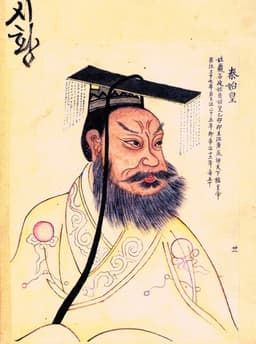
Qin Shi Huang
Emperor · Ancient
85.2Total
Basic Information
Born
1961
-259
Died
—
-210
Era
Modern
Ancient
Nationality
Singapore
China
Occupation
Politician
Emperor
Civilization
Eastern
Eastern
Score Comparison
Military (10%)
15.1
80.0
Political (20%)
72.0
90.0
Influence (20%)
51.0
85.0
Legacy (20%)
39.2
90.0
Leadership (15%)
72.0
78.0
Strategy (15%)
37.9
82.0
TOTAL
49.4
85.2
Heng Swee Keat — Complete Timeline
2011 AD
Appointed Minister for EducationPolitical Action◆ Major
Heng Swee Keat was appointed Minister for Education, where he oversaw reforms in Singapore's education system, including the introduction of the 'Learn for Life' movement and changes to the PSLE scoring system.
EducationReformSingapore
Impact: nationalconstructive
Elected to Parliament for Tampines GRCPolitical Action
Heng Swee Keat was first elected to Parliament as a Member of Parliament for Tampines GRC. This marked the start of his political career in the People's Action Party.
ElectionParliamentPAP
constructive
2015 AD
Appointed Deputy Prime MinisterPolitical Action◆ Major
Heng Swee Keat was appointed Deputy Prime Minister, serving until 2024. He was widely seen as the designated successor to Prime Minister Lee Hsien Loong, but stepped aside from the succession race in 2021.
GovernmentLeadershipSuccession
Impact: national
Appointed Minister for FinancePolitical Action◆ Major
Heng was appointed Minister for Finance, overseeing Singapore's fiscal policy and economic management. He introduced the 'Singapore Together' movement and managed the budget during the COVID-19 pandemic.
FinanceEconomyBudget
Impact: nationalconstructive
2021 AD
Stepped Aside from Prime Minister SuccessionPolitical Action◆ Major
Heng Swee Keat announced he would step aside as the designated successor to Prime Minister Lee Hsien Loong, citing age and the need for a younger leader. This reshuffled the leadership succession within the People's Action Party.
SuccessionPAPLeadership
Impact: national
Qin Shi Huang — Complete Timeline
246 BC
Construction of the Mausoleum and Terracotta ArmyOther◆ Major
Qin Shi Huang commissioned a vast mausoleum complex near Xi'an, guarded by thousands of life-sized terracotta soldiers, horses, and chariots. The project employed hundreds of thousands of workers and reflected his obsession with immortality and imperial power.
Impact: global
230 BC
Conquest of the Six Warring StatesWar
From 230 to 221 BCE, Ying Zheng led the Qin state in a series of campaigns that conquered the Han, Zhao, Wei, Chu, Yan, and Qi states. This unified China under a single ruler for the first time, ending the Warring States period.
Impact: global
221 BC
Standardization of Writing, Currency, and MeasurementsReform◆ Major
Qin Shi Huang ordered the standardization of Chinese script, currency, and weights and measures across the unified empire. This facilitated administration, trade, and cultural integration, laying a foundation for future dynasties.
Impact: globalconstructive
Proclamation of the Qin DynastyPolitical Action
After conquering the last independent state, Ying Zheng declared himself Shi Huangdi (First Emperor), founding the Qin Dynasty. He adopted a new title to signify his supreme authority and initiated centralized imperial rule.
Impact: global
214 BC
Initiation of the Great Wall ConstructionOther◆ Major
Qin Shi Huang ordered the connection and extension of existing northern fortifications to create a unified defensive wall against nomadic Xiongnu raids. This project involved massive conscripted labor and became the precursor to the later Great Wall.
Impact: regional
213 BC
Burning of Books and Burying of ScholarsPolitical Action◆ Major
On the advice of Li Si, Qin Shi Huang ordered the burning of historical records and philosophical texts not aligned with Legalist doctrine. He also had 460 Confucian scholars buried alive to suppress dissent and consolidate ideological control.
Impact: nationaldestructive
Expert Analysis
heng-swee-keat-vs-qin-shi-huang
# The First Emperor and the Reluctant Successor
On a spring morning in 210 BC, Qin Shi Huang lay dying in a carriage during his fifth imperial tour, his body already beginning to decay while his chief eunuch and prime minister conspired to hide his death from the empire. Two thousand two hundred years later, on an April day in 2021, Heng Swee Keat stood before a microphone in Singapore and calmly announced he would not become the country's next prime minister, citing his age of sixty. Both men had reached the summit of power, yet their endings could not have been more different. What drives a ruler to forge an empire from blood and iron, and another to voluntarily step aside from the highest office?
Origins
Ying Zheng was born in 259 BC, a prince of the Qin state during the chaotic Warring States period. His father was a hostage in Zhao, his mother a concubine of uncertain origins. The boy grew up surrounded by intrigue, witnessing his father's escape and his own precarious position in a court where assassins lurked behind every silk curtain. By thirteen, he had become king of Qin, a realm that had already begun to eclipse its rivals through ruthless legalist reforms.
Heng Swee Keat entered the world in 1961, the year Singapore became a self-governing state within the British Empire. His father was a primary school teacher, his mother a housewife. The family lived modestly in a government flat, and young Heng studied diligently, eventually earning a scholarship to Cambridge. Where Qin Shi Huang inherited a kingdom, Heng Swee Keat inherited an education—and the quiet ambition of a meritocracy's child.
Rise to Power
The First Emperor's path was paved with severed heads. Between 230 and 221 BC, the young king of Qin unleashed a series of military campaigns that consumed the Han, Zhao, Wei, Chu, Yan, and Qi states. His generals employed siege engines, cavalry tactics, and psychological warfare. When the last king of Qi surrendered, Ying Zheng renamed himself *Shi Huangdi*—the First Emperor—and declared the beginning of a dynasty meant to last ten thousand generations.
Heng Swee Keat's ascent was quieter but no less strategic. He joined the civil service in 1980, rose through the ranks of the Ministry of Education and the Ministry of Trade and Industry, then served as Principal Private Secretary to Prime Minister Lee Kuan Yew from 1997 to 2000. In 2011, he was elected to Parliament for Tampines GRC and immediately appointed Minister for Education. By 2015, he was both Deputy Prime Minister and Minister for Finance, the designated successor to Lee Hsien Loong. The path was clear, the succession mapped.
Leadership & Governance
Qin Shi Huang governed through terror and standardization. He unified writing, currency, and measurements across his empire—achievements that would outlast his dynasty by two millennia. He connected northern fortifications into the Great Wall. But he also burned books that contradicted his ideology and buried scholars alive. His chief minister Li Si advised him that "the present must study the past only to condemn it." The First Emperor agreed.
Heng Swee Keat governed through consultation and reform. As Education Minister, he overhauled the system to reduce exam pressure and emphasize holistic learning. As Finance Minister, he introduced the SkillsFuture program to prepare workers for a changing economy. His leadership score of 86.0 reflects a consensus builder, not a tyrant. Where Qin Shi Huang demanded obedience, Heng Swee Keat sought buy-in.
Triumph & Tragedy
The First Emperor's triumph was absolute: he created China. The land between the Yellow River and the Yangtze had never been politically unified before. His standardization of script allowed a Cantonese speaker and a Mandarin speaker to communicate through writing, a gift that would bind the civilization for centuries. But his tragedy was equally absolute: he died at forty-nine, his empire collapsed within four years of his death, and his name became synonymous with tyranny.
Heng Swee Keat's triumph was more modest: he managed Singapore's economy through the COVID-19 pandemic, delivering budgets that kept businesses alive and workers employed. His tragedy was the succession itself. In 2021, he stepped aside, citing his age—he would have been sixty-five by the time he became prime minister. The decision shocked a nation accustomed to orderly transitions. Some whispered that he lacked the killer instinct. Others noted that his political score of 76.5 was the lowest among Singapore's top leadership.
Character & Destiny
Qin Shi Huang was driven by an insatiable hunger for immortality—literal and historical. He sent expeditions for the elixir of life, built a mausoleum guarded by eight thousand terracotta warriors, and believed his dynasty would last forever. His personality was forged in war and paranoia. He trusted no one, killed many, and died alone in a carriage.
Heng Swee Keat was driven by duty and pragmatism. He knew his limits. In a political culture that prizes self-awareness, he recognized that a decade as prime minister was not worth the personal cost. His leadership score of 86.0, the highest of all his metrics, suggests a man who understood that sometimes the greatest strength is knowing when to step back. Where the First Emperor grasped for eternity, Heng Swee Keat accepted his season.
Legacy
Qin Shi Huang's legacy is carved into the very landscape of China. The Great Wall, the Terracotta Army, the unified script—these survive, even if his dynasty did not. His influence score of 82.0 and legacy score of 85.0 reflect a ruler who changed the world, for better and worse. He is remembered as both founder and monster.
Heng Swee Keat's legacy is still forming, but his legacy score of 54.8 suggests a figure who will be remembered more for what he did not become than for what he achieved. He will be a footnote in Singapore's history, a capable minister who chose family over fame, stability over ambition.
Conclusion
The First Emperor built a mountain of bones to reach the sky. Heng Swee Keat built a staircase and decided not to climb it. Both men faced the same fundamental question of power: how much is enough? For Qin Shi Huang, the answer was never enough—he wanted the world, eternity, and everything in between. For Heng Swee Keat, the answer was enough—he looked at the throne and walked away. Their stories remind us that leadership is not only about how high you rise, but about what you choose to do when you reach the top. Sometimes the greatest ambition is knowing when to stop.
Rankings
🥇
Qin Shi HuangLeader
Mil: 80.0Pol: 90.0Inf: 85.0
85.2
🥈
Heng Swee Keat
Mil: 15.1Pol: 72.0Inf: 51.0
49.4
+35.8 behind
How This Comparison Works
Algorithm
Each figure is scored on 6 dimensions (0—100 scale) based on structured historical data: Military (10%), Political (20%), Influence (20%), Legacy (20%), Leadership (15%), Strategy (15%). The weighted total produces the final ranking.
Data Sources
Scores are computed from structured sub-indicators in the database. Scale factors adjust for era (Ancient ×0.85, Modern ×1.0) and civilization size (Eastern ×1.05, Other ×0.80) to account for differences in population and military scale.
Maximum 3 Figures
Comparisons are limited to 2—3 figures to ensure readability and statistical meaningfulness.
Error Margins
±5 points per dimension — Sub-scores are derived from historical records with inherent uncertainty. Two figures within 5 points on a dimension should be considered roughly equivalent in that area.
Total Score Accuracy
±3 points overall — The weighted combination of 6 dimensions produces a total score with approximately ±3 points of uncertainty. Differences of less than 3 points are not statistically significant— the figures are effectively tied.
Known Limitations
- Historical records are incomplete and uneven across civilizations
- Figures from oral-tradition societies may be underrepresented
- Occupation labels can misclassify multi-role figures
- Scores measure capability and impact, not moral character
- Quantitative scoring is a comparison tool, not absolute truth
Capability Radar
Military (10%) — Battles & Warfare
Battles
12
85
Win Rate
17
90
Expansion
21
90
Political (20%) — Governance & Reform
Reform
55
95
Diplomacy
60
75
Economy
70
90
Influence (20%) — Cultural & Global Reach
Cultural
20
95
Global
25
85
Legacy (20%) — Historical Impact
Historical
20
95
Longevity
15
95
Leadership (15%) — Power & Stability
Tenure
65
70
Stability
60
65
Strategy (15%) — Tactics & Innovation
Strategy
22
85
Tactics
24
80
Reform
27
95
Similar Comparisons
Comments & Discussion
铁血郡县6/17/2026
拿秦始皇跟尚达曼比?真是辱大秦了。始皇帝书同文车同轨,废分封立郡县,两千年前就把中国打造成一个统一国家。你新加坡建国才六十年,连个统一教科书都搞不定,算什么帝国?一个六十岁退休的财长,也配跟十三岁登基、三十九岁一统六国的千古一帝比?
TerminalSkeptic6/17/2026
This comparison is nonsense on a statistical level. You're comparing a man who ruled a population of roughly 20-30 million across a unified landmass of 4 million km² to a finance minister of a city-state with 5.6 million people. The scale difference alone makes any leadership lessons meaningless. If Heng had tried to burn books or build a Great Wall, his neighbors would have laughed him off the island.
简中霸业6/17/2026
这种跨时空对标完全忽略了制度语境。秦始皇面对的是战国七雄割据、需要暴力统一的局面,而亨在的是议会民主制下的人民行动党。把两个完全不同的制度环境拉来比较,要么是历史虚无主义,要么就是刻意拔高一个贬低另一个。建议作者先去读读钱穆的《中国历代政治得失》再来写。
DemographicRealist6/17/2026
Here's what everyone misses: demographic survival. Qin Shi Huang centralized power because he needed to mobilize millions for constant warfare and infrastructure in a low-productivity agrarian empire. Heng Swee Keat stepped aside in a post-industrial service economy where political legitimacy comes from GDP growth and social harmony, not territorial expansion. Different tools for different civilizational stages. Simple as that.