Loading...
Henri Turenne vs Koprulu Fazil Mustafa
Henri Turenne leads by 13.9 pts · 2 figures compared
…

Henri Turenne
General · Modern
72.6Total
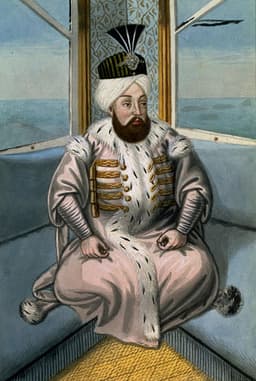
Koprulu Fazil Mustafa
General · Modern
58.7Total
Basic Information
Born
1611
1637
Died
1675
1691
Era
Modern
Modern
Nationality
France
Ottoman Empire
Occupation
General
General
Civilization
Western
Middle Eastern
Score Comparison
Military (10%)
79.9
67.5
Political (20%)
72.0
55.0
Influence (20%)
75.0
54.9
Legacy (20%)
65.0
47.5
Leadership (15%)
77.2
80.0
Strategy (15%)
72.0
61.2
TOTAL
72.6
58.7
Henri Turenne — Complete Timeline
1643 AD
Battle of RocroiWar
Turenne commanded the French right wing at Rocroi, where the French army decisively defeated the Spanish Army of Flanders. This victory ended Spanish military dominance and established France as the leading European power.
BattleVictorySpanish Decline
Impact: globalconstructive
1644 AD
Campaign in the Rhineland (1644-1645)War◆ Major
Turenne led French forces in the Rhineland, capturing Philippsburg and crossing the Rhine. His campaigns weakened the Holy Roman Empire and secured French control over Alsace, contributing to the Peace of Westphalia.
CampaignConquestAlsace
Impact: regionalconstructive
1658 AD
Battle of the DunesWar◆ Major
Turenne commanded French and English forces against the Spanish at the Battle of the Dunes near Dunkirk. The victory led to the capture of Dunkirk and forced Spain to negotiate the Treaty of the Pyrenees.
BattleVictoryTreaty
Impact: regionalconstructive
1675 AD
Death at the Battle of SasbachWar◆ Major
Turenne was killed by a cannonball while reconnoitering enemy positions at Sasbach during the Franco-Dutch War. His death was a major loss for France and ended his campaign in the Rhineland.
DeathBattleLoss
Impact: regionaltragic
Koprulu Fazil Mustafa — Complete Timeline
1689 AD
Appointment as Grand VizierPolitical Action◆ Major
Koprulu Fazil Mustafa Pasha was appointed Grand Vizier by Sultan Suleiman II during a period of military crisis. He implemented reforms to restore the Ottoman army and administration, including financial reorganization and efforts to curb corruption.
Koprulu EraReformOttoman Politics
Impact: nationalconstructive
1690 AD
Reconquest of BelgradeWar◆ Major
Koprulu Fazil Mustafa Pasha led a successful campaign to recapture Belgrade from the Habsburgs. The victory temporarily restored Ottoman control over the key fortress city and boosted morale, though it did not reverse the overall decline in the war.
Ottoman-Habsburg WarReconquestBelgrade
Impact: regionalconstructive
1691 AD
Battle of SlankamenWar◆ Major
Koprulu Fazil Mustafa Pasha led the Ottoman army against the Habsburgs at the Battle of Slankamen. He was killed in action during the battle, which ended in a decisive Ottoman defeat. His death was a major blow to the Koprulu reform efforts and the Ottoman war effort.
Ottoman-Habsburg WarBattleDeath in Battle
Impact: regionaltragic
Expert Analysis
Origins
Henri de La Tour d'Auvergne, Viscount of Turenne, was born in 1611 in Sedan, France, into a prominent Protestant family. His father was a marshal of France, and his mother was a member of the powerful House of Nassau. Turenne received military training from his uncles, Maurice of Nassau and Frederick Henry, Prince of Orange, learning the art of war in the Dutch Republic. He converted to Catholicism in 1668 to advance his career, but his early Protestant upbringing shaped his pragmatic and disciplined approach.
Koprulu Fazil Mustafa Pasha was born around 1637 in the Ottoman Empire, likely in the village of Koprulü (now in North Macedonia). He was the son of Koprulu Mehmed Pasha, the founder of the Koprulu dynasty of grand viziers. Raised in a political family, he received a classical Ottoman education in administration and military strategy. His family's reformist tradition strongly influenced his later policies.
Rise to Power
Turenne's rise began in the Thirty Years' War. By 1635, he was a colonel, and in 1638 he became a maréchal de camp. His decisive moment came at the Battle of Rocroi in 1643, where he commanded the French right wing. The French victory over the Spanish Army of Flanders ended Spanish military dominance. Turenne was promoted to marshal of France in 1643. During the Fronde (1648-1653), he initially supported the rebels but later returned to the royal side, securing Louis XIV's trust. His campaigns in the Rhineland (1644-1645) captured Philippsburg and crossed the Rhine, weakening the Holy Roman Empire.
Koprulu Fazil Mustafa Pasha rose through family influence. He served as governor of various provinces before being appointed Grand Vizier in 1689 by Sultan Suleiman II during a dire military crisis. The Ottoman Empire had suffered defeats against the Holy League, losing territory in Hungary. Koprulu Fazil Mustafa implemented reforms to restore the army's morale and finances. His first major success was the reconquest of Belgrade in 1690 from the Habsburgs, a victory that temporarily restored Ottoman control over the Danube region.
Leadership & Governance
Turenne's leadership style emphasized mobility, discipline, and logistical planning. He was known for his careful reconnaissance and avoidance of unnecessary battles. In the Battle of the Dunes (1658), he coordinated French and English forces to defeat the Spanish, capturing Dunkirk. His 1674 winter campaign in Alsace surprised the Imperial army by crossing the Vosges Mountains, a feat of strategic ingenuity. Turenne scored 79.9 in military and 77.2 in leadership, reflecting his tactical flexibility and ability to inspire troops.
Koprulu Fazil Mustafa Pasha focused on administrative and military reforms. He restored the devshirme system, reorganized the Janissaries, and improved tax collection. His leadership score of 80.0 is the highest among his attributes, indicating his ability to rally the empire. However, his political score of 55.0 reflects the limitations of his reforms amid factional resistance. His strategy score of 61.2 is lower than Turenne's 72.0, as his campaigns were less innovative.
Triumph & Tragedy
Turenne's greatest triumph was his series of victories in the Franco-Dutch War (1672-1678), particularly the 1675 Battle of Turckheim, where he defeated the Imperial army with a forced march. His death at the Battle of Sasbach in 1675, killed by a cannonball while scouting, was a tragic loss for France. Louis XIV mourned him as the greatest general of the age.
Koprulu Fazil Mustafa Pasha's triumph was the recapture of Belgrade in 1690, a major morale boost. His tragedy was his death at the Battle of Slankamen in 1691. Leading from the front, he was killed in action, and the Ottoman army was defeated by the Habsburgs. His death ended the Koprulu reform period, and the empire lost its momentum.
Character & Destiny
Turenne was methodical, cautious, and calculating. He avoided risks unless necessary, earning a reputation for reliability. His Protestant background made him pragmatic about alliances. His character shaped his destiny: his prudence kept him alive through many battles, but his fatal reconnoitering at Sasbach showed a rare lapse that cost his life.
Koprulu Fazil Mustafa Pasha was energetic and reform-minded, but also impetuous in battle. His decision to lead from the front at Slankamen reflected his commitment but led to his death. Historians note that his reforms were cut short by his demise, limiting his overall impact.
Legacy
Turenne's legacy endures as a model of 17th-century warfare. His campaigns influenced later French generals, including Napoleon. He is remembered as one of France's greatest commanders, with a legacy score of 65.0. The French military academy studies his campaigns.
Koprulu Fazil Mustafa Pasha's legacy is more modest. His reforms temporarily revived the Ottoman military, but his death prevented long-term change. His legacy score of 47.5 reflects this. He is remembered in Turkish history as a patriotic reformer who died for the empire.
Conclusion
Henri Turenne had a greater impact than Koprulu Fazil Mustafa Pasha. His military innovations and victories shaped European warfare, while his death did not diminish his achievements. Turenne's total score of 72.6 vs. 58.7 reflects his broader influence. Koprulu Fazil Mustafa Pasha's reforms were significant but cut short, and his military campaigns were less transformative. Turenne's legacy as a master of maneuver warfare surpasses the Ottoman vizier's more limited impact.
Rankings
🥇
Henri TurenneLeader
Mil: 79.9Pol: 72.0Inf: 75.0
72.6
🥈
Koprulu Fazil Mustafa
Mil: 67.5Pol: 55.0Inf: 54.9
58.7
+13.9 behind
How This Comparison Works
Algorithm
Each figure is scored on 6 dimensions (0—100 scale) based on structured historical data: Military (10%), Political (20%), Influence (20%), Legacy (20%), Leadership (15%), Strategy (15%). The weighted total produces the final ranking.
Data Sources
Scores are computed from structured sub-indicators in the database. Scale factors adjust for era (Ancient ×0.85, Modern ×1.0) and civilization size (Eastern ×1.05, Other ×0.80) to account for differences in population and military scale.
Maximum 3 Figures
Comparisons are limited to 2—3 figures to ensure readability and statistical meaningfulness.
Error Margins
±5 points per dimension — Sub-scores are derived from historical records with inherent uncertainty. Two figures within 5 points on a dimension should be considered roughly equivalent in that area.
Total Score Accuracy
±3 points overall — The weighted combination of 6 dimensions produces a total score with approximately ±3 points of uncertainty. Differences of less than 3 points are not statistically significant— the figures are effectively tied.
Known Limitations
- Historical records are incomplete and uneven across civilizations
- Figures from oral-tradition societies may be underrepresented
- Occupation labels can misclassify multi-role figures
- Scores measure capability and impact, not moral character
- Quantitative scoring is a comparison tool, not absolute truth
Capability Radar
Military (10%) — Battles & Warfare
Battles
85
65
Win Rate
88
55
Expansion
80
60
Political (20%) — Governance & Reform
Reform
60
70
Diplomacy
75
55
Economy
55
60
Influence (20%) — Cultural & Global Reach
Cultural
70
30
Global
70
30
Legacy (20%) — Historical Impact
Historical
80
40
Longevity
75
35
Leadership (15%) — Power & Stability
Tenure
70
50
Stability
65
45
Strategy (15%) — Tactics & Innovation
Strategy
90
70
Tactics
92
60
Reform
75
75
Similar Comparisons
Comments & Discussion
No comments yet. Be the first to share your thoughts!