Loading...
This comparison has not been analyzed yet.
One-time AI generation (~1 minute). Scores and timeline are already available below.
Henry Bennet vs Shavkat Mirziyoyev
Henry Bennet leads by 6.6 pts · 2 figures compared
…
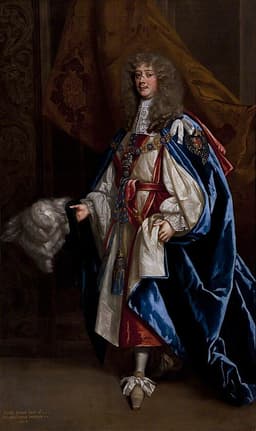
Henry Bennet
Politician · Modern
54.7Total

Shavkat Mirziyoyev
Politician · Modern
48.1Total
Basic Information
Born
1618
1957
Died
1685
—
Era
Modern
Modern
Nationality
England
Uzbekistan
Occupation
Politician
Politician
Civilization
Western
Eastern
Score Comparison
Military (10%)
50.0
10.0
Political (20%)
68.0
59.3
Influence (20%)
51.8
53.3
Legacy (20%)
45.0
40.8
Leadership (15%)
74.0
72.0
Strategy (15%)
42.0
38.6
TOTAL
54.7
48.1
Henry Bennet — Complete Timeline
1668 AD
Member of the CABAL MinistryPolitical Action◆ Major
Arlington became a leading member of the CABAL, the informal council of five ministers under Charles II. His initials formed the 'A' in the acronym, and he was instrumental in shaping foreign policy, particularly the pro-French alignment.
CABALCharles IIGovernment
Impact: national
1670 AD
Negotiated the Treaty of DoverPolitical Action◆ Major
As Secretary of State, Henry Bennet, Earl of Arlington, was a key negotiator of the secret Treaty of Dover between England and France. The treaty allied England with France against the Dutch Republic and included a secret clause for Charles II to convert to Catholicism.
Treaty of DoverAnglo-French allianceSecret diplomacy
Impact: regionaldestructive
1674 AD
Impeached and removed from officePolitical Action◆ Major
Following the Third Anglo-Dutch War, Parliament impeached Arlington for his role in the war and the Treaty of Dover. He was forced to resign as Secretary of State, though he later served as Lord Chamberlain until his death.
ImpeachmentAnglo-Dutch WarResignation
Impact: nationaltragic
Shavkat Mirziyoyev — Complete Timeline
2003 AD
Appointed Prime Minister of UzbekistanPolitical Action◆ Major
Mirziyoyev was appointed Prime Minister of Uzbekistan under President Islam Karimov. He served for 13 years, overseeing economic management. His tenure was marked by limited reforms and continued authoritarian rule. He remained loyal to Karimov and managed day-to-day governance.
Prime MinisterUzbekistanKarimov Era
Impact: national
2016 AD
Became President of Uzbekistan After Karimov's DeathPolitical Action
Following the death of Islam Karimov, Mirziyoyev was appointed interim president and then won a snap election with 88.6% of the vote. His succession marked the first transfer of power in Uzbekistan since independence. The election was criticized as not free and fair.
Presidential SuccessionUzbekistanElection
Impact: national
2017 AD
Launched Economic and Social ReformsReform◆ Major
Mirziyoyev initiated a series of reforms aimed at liberalizing Uzbekistan's economy, improving foreign relations, and easing some social restrictions. He devalued the currency, allowed greater press freedom, and released some political prisoners. The reforms were praised internationally.
Economic ReformLiberalizationHuman Rights
Impact: regionalprogressive
Improved Relations with Central Asian NeighborsPolitical Action◆ Major
Mirziyoyev pursued a foreign policy of rapprochement with Uzbekistan's neighbors, including Tajikistan, Kyrgyzstan, and Kazakhstan. He resolved long-standing border disputes and opened trade routes. This marked a shift from Karimov's isolationist policies and reduced regional tensions.
DiplomacyRegional CooperationBorder Disputes
Impact: regionalconstructive
2021 AD
Re-elected President with Overwhelming MajorityPolitical Action
Mirziyoyev was re-elected president with 80.1% of the vote in an election that international observers noted lacked genuine competition. His main opponent was a little-known candidate. The election was seen as a continuation of his reform agenda but with limited political pluralism.
Re-electionDemocracyUzbekistan
Impact: national
2023 AD
Constitutional Referendum Extending Presidential TermPolitical Action◆ Major
Mirziyoyev held a constitutional referendum that, among other changes, reset his presidential term count, allowing him to potentially rule until 2040. The referendum passed with 90% approval. Critics argued it was a move to entrench his power, undermining earlier reformist image.
Constitutional ReformTerm LimitsAuthoritarianism
Impact: national
This comparison has not been analyzed yet.
One-time AI generation (~1 minute). Scores and timeline are already available below.
Rankings
🥇
Henry BennetLeader
Mil: 50.0Pol: 68.0Inf: 51.8
54.7
🥈
Shavkat Mirziyoyev
Mil: 10.0Pol: 59.3Inf: 53.3
48.1
+6.6 behind
How This Comparison Works
Algorithm
Each figure is scored on 6 dimensions (0—100 scale) based on structured historical data: Military (10%), Political (20%), Influence (20%), Legacy (20%), Leadership (15%), Strategy (15%). The weighted total produces the final ranking.
Data Sources
Scores are computed from structured sub-indicators in the database. Scale factors adjust for era (Ancient ×0.85, Modern ×1.0) and civilization size (Eastern ×1.05, Other ×0.80) to account for differences in population and military scale.
Maximum 3 Figures
Comparisons are limited to 2—3 figures to ensure readability and statistical meaningfulness.
Error Margins
±5 points per dimension — Sub-scores are derived from historical records with inherent uncertainty. Two figures within 5 points on a dimension should be considered roughly equivalent in that area.
Total Score Accuracy
±3 points overall — The weighted combination of 6 dimensions produces a total score with approximately ±3 points of uncertainty. Differences of less than 3 points are not statistically significant— the figures are effectively tied.
Known Limitations
- Historical records are incomplete and uneven across civilizations
- Figures from oral-tradition societies may be underrepresented
- Occupation labels can misclassify multi-role figures
- Scores measure capability and impact, not moral character
- Quantitative scoring is a comparison tool, not absolute truth
Capability Radar
Military (10%) — Battles & Warfare
Battles
29
0
Win Rate
31
0
Expansion
34
0
Political (20%) — Governance & Reform
Reform
40
75
Diplomacy
70
70
Economy
30
65
Influence (20%) — Cultural & Global Reach
Cultural
20
30
Global
30
30
Legacy (20%) — Historical Impact
Historical
40
25
Longevity
30
20
Leadership (15%) — Power & Stability
Tenure
65
60
Stability
20
60
Strategy (15%) — Tactics & Innovation
Strategy
36
0
Tactics
42
0
Reform
43
5
Similar Comparisons
Comments & Discussion
No comments yet. Be the first to share your thoughts!