Loading...
Henry I of France vs Julius Caesar
Julius Caesar leads by 39.2 pts · 2 figures compared
…
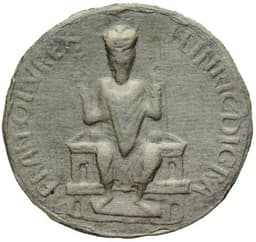
Henry I of France
Emperor · Medieval
43.6Total

Julius Caesar
General · Ancient
82.8Total
Basic Information
Born
1008
-100
Died
1060
-44
Era
Medieval
Ancient
Nationality
France
Roman Republic
Occupation
Emperor
General
Civilization
Western
Western
Score Comparison
Military (10%)
50.0
88.0
Political (20%)
29.3
78.0
Influence (20%)
47.9
85.0
Legacy (20%)
39.2
82.0
Leadership (15%)
58.8
80.0
Strategy (15%)
35.7
85.0
TOTAL
43.6
82.8
Henry I of France — Complete Timeline
1031 AD
Reign as King of the FranksPolitical Action◆ Major
Henry I succeeded his father Robert II as King of the Franks. His reign was marked by constant conflicts with powerful nobles, including his brother Robert I, Duke of Burgundy, who challenged his authority.
KingshipCapetianReign
Impact: national
1032 AD
Rebellion of Robert I of BurgundyWar◆ Major
Henry I faced a rebellion led by his brother Robert I, Duke of Burgundy, who claimed the throne. The conflict lasted several years and was resolved through a compromise, with Robert retaining Burgundy but recognizing Henry as king.
RebellionCivil WarBurgundy
Impact: regional
1047 AD
Alliance with the Duke of NormandyPolitical Action
Henry I allied with William, Duke of Normandy (later William the Conqueror), to suppress a rebellion in Normandy. The alliance helped William secure his duchy, but later soured, leading to conflict between the two.
AllianceNormandyWilliam the Conqueror
Impact: regional
1050 AD
Conflict with the County of AnjouWar
Henry I fought a series of wars against the County of Anjou under Count Geoffrey Martel. The conflicts weakened royal authority and allowed Anjou to expand its territory at the expense of the crown.
WarAnjouTerritorial Loss
Impact: regional
Julius Caesar — Complete Timeline
58 BC
Gallic WarsWar◆ Major
Caesar, as proconsul of Gaul, launched a series of campaigns that conquered all of Gaul (modern France, Belgium, and parts of Switzerland). He fought numerous battles, including against the Helvetii, the Belgae, and the Gallic chieftain Vercingetorix. The wars brought immense wealth and a loyal army to Caesar.
Gallic WarsConquestRoman Expansion
Impact: regional
49 BC
Crossing the RubiconPolitical Action◆ Major
Caesar led Legio XIII across the Rubicon River into Italy, defying the Roman Senate's order to disband his army. This act triggered a civil war against Pompey and the Optimates, ultimately leading to Caesar's dictatorship and the end of the Roman Republic.
Roman Civil WarEnd of RepublicPower Struggle
Impact: global
48 BC
Battle of PharsalusWar◆ Major
Caesar's outnumbered army defeated the larger forces of Pompey the Great at Pharsalus in Greece. Caesar's tactical use of a reserve line to counter Pompey's cavalry charge proved decisive. Pompey fled to Egypt, where he was assassinated, leaving Caesar as the undisputed master of the Roman world.
Roman Civil WarBattleDecisive Victory
Impact: regional
44 BC
Appointment as Dictator for LifePolitical Action◆ Major
The Roman Senate appointed Caesar dictator perpetuo (dictator for life), granting him unprecedented personal power. This move concentrated military, legislative, and judicial authority in one person, effectively ending the Roman Republic's traditional system of checks and balances and alarming many senators.
DictatorshipEnd of RepublicPower Consolidation
Impact: regionaldestructive
Assassination on the Ides of MarchPolitical Action◆ Major
A group of Roman senators, led by Marcus Junius Brutus and Gaius Cassius Longinus, stabbed Caesar to death at a meeting of the Senate in the Theatre of Pompey. The assassination was intended to restore the Republic, but instead triggered another civil war that led to the rise of the Roman Empire.
AssassinationRoman PoliticsEnd of Republic
Impact: globaldestructive
Expert Analysis
henry-i-of-france-vs-julius-caesar
# The Emperor and the General: Why Caesar Conquered the World While Henry I Could Not Hold His Kingdom
On a January morning in 49 BCE, Julius Caesar stood at the banks of the Rubicon River, a small stream that separated his province of Gaul from Italy proper. To cross with his army was to declare war on the Roman Republic itself. He paused, reportedly muttering in Greek, "The die is cast," and then he crossed. In that single act, Caesar set in motion events that would topple a centuries-old republic and birth an empire.
One thousand years later, in 1031, Henry I of France inherited a crown that felt more like a chain. His father, Robert II, had left him a kingdom fractured by ambitious nobles, and Henry spent his reign fighting not to conquer new lands, but simply to keep what little authority remained. Where Caesar crossed rivers, Henry could barely hold his throne.
Why did one man reshape the world while the other could barely hold his kingdom together? The answer lies not in the stars, but in the soil—the soil of their times, their training, and their very different definitions of power.
Origins
Julius Caesar was born into the patrician Julian clan, one of Rome's oldest families, but his was a world of debt and political maneuvering. His aunt had married Gaius Marius, the great populist general, and his own wife was the daughter of Marius's rival, Sulla. From childhood, Caesar learned that politics was a knife fight, and he had to be sharper than his enemies. He fled Rome during Sulla's proscriptions, lost his inheritance, and spent his early years as a fugitive—an experience that forged a man who trusted no one and calculated every move.
Henry I was born to a throne, but that throne was a hollow prize. The Capetian dynasty was barely fifty years old when he became king, and the French monarchy was little more than a title. Real power lay with dukes like William of Normandy and counts like Geoffrey Martel of Anjou. Henry's father had tried to centralize authority but left his son a kingdom where the king was just one noble among many—and not always the strongest. Henry inherited not an empire, but a problem.
Rise to Power
Caesar's rise was a masterpiece of calculated risk. He borrowed fortunes to fund public games, built alliances with the wealthy Crassus and the popular Pompey, and then secured the governorship of Gaul. There, over eight years (58–50 BCE), he conquered a territory larger than Italy itself, fighting over thirty battles and subjugating hundreds of tribes. His Commentaries on the Gallic Wars were not just history—they were propaganda, crafted to make him the hero of Rome while his enemies schemed in the Senate.
Henry's path was narrower. He became king by birthright, not conquest, and his first major act was to face a rebellion from his own brother, Robert I of Burgundy. In 1032, Robert claimed the throne, and Henry spent years fighting a civil war that drained the treasury and exposed his weakness. Unlike Caesar, who could invent opportunities, Henry could only react to crises. His rise was not a climb but a desperate defense.
Leadership & Governance
Caesar governed through audacity and speed. He reformed the calendar, extended Roman citizenship to conquered peoples, and centralized power by breaking the Senate's monopoly. His military genius lay in his ability to read a battlefield and exploit his enemy's mistakes—whether against the Gauls at Alesia (52 BCE) or against Pompey at Pharsalus (48 BCE). He was ruthless but also magnanimous; he pardoned former enemies, knowing that mercy could be more powerful than vengeance.
Henry I governed through caution and alliance. In 1047, he allied with the young Duke William of Normandy—the future Conqueror—to suppress a Norman rebellion. But when William grew too powerful, Henry turned against him, fighting a series of wars that weakened both men. Henry's military score of 33.8 reflects a king who was competent but never brilliant, who fought wars of attrition rather than annihilation. His political score of 50.6 shows a ruler who could hold his throne but never expand his power.
Triumph & Tragedy
Caesar's greatest triumph was his conquest of Gaul, which added a vast, wealthy province to Rome and made him the most powerful man in the Republic. But his tragedy came on the Ides of March, 44 BCE, when sixty senators stabbed him to death in the Senate chamber. He had collected too much power, offended too many egos, and failed to see that the Republic's old guard would rather kill their savior than accept their decline.
Henry's greatest triumph was simply surviving. He reigned for twenty-nine years, saw off his brother's rebellion, and passed the crown to his son, Philip I. But his tragedy was that he never escaped the shadow of his vassals. He fought the Count of Anjou for years and lost. He watched William of Normandy conquer England in 1066 while Henry could barely control his own dukes. His legacy score of 51.6 reflects a king who was a placeholder, not a shaper of history.
Character & Destiny
Caesar was driven by an insatiable ambition that he never pretended to hide. He lived fast, gambled big, and trusted his luck. "I came, I saw, I conquered" was not just a slogan—it was a philosophy. His personality created his destiny: the man who dared to cross the Rubicon could only end as dictator or corpse.
Henry I was cautious, conservative, and defensive. He was a survivor, not a conqueror. His personality reflected his circumstances: a king who could not afford to be bold, because every mistake cost him ground he could never recover. Where Caesar saw the world as a game to be won, Henry saw it as a fortress to be held.
Legacy
Caesar's legacy reshaped Western civilization. He ended the Roman Republic, paved the way for the empire, and left a name that became synonymous with absolute power. His reforms—the Julian calendar, Roman citizenship, centralized governance—outlasted him by centuries. Even his assassins could not undo what he had done.
Henry I's legacy is quieter. He is remembered, if at all, as a transitional figure—a king who kept the Capetian dynasty alive but did little to strengthen it. His reign is a footnote in the story of France, overshadowed by the Conqueror he once helped and later fought. He did not change the world; he merely endured it.
Conclusion
The difference between Caesar and Henry I is not a matter of talent, but of opportunity and temperament. Caesar was born into a world of chaos that rewarded audacity; Henry was born into a world of constraints that punished it. Caesar crossed the Rubicon because he could; Henry never even reached its banks. One man seized history by the throat; the other was carried along by its current. In the end, the die is cast not by fate, but by the courage to cast it.
Rankings
🥇
Julius CaesarLeader
Mil: 88.0Pol: 78.0Inf: 85.0
82.8
🥈
Henry I of France
Mil: 50.0Pol: 29.3Inf: 47.9
43.6
+39.2 behind
How This Comparison Works
Algorithm
Each figure is scored on 6 dimensions (0—100 scale) based on structured historical data: Military (10%), Political (20%), Influence (20%), Legacy (20%), Leadership (15%), Strategy (15%). The weighted total produces the final ranking.
Data Sources
Scores are computed from structured sub-indicators in the database. Scale factors adjust for era (Ancient ×0.85, Modern ×1.0) and civilization size (Eastern ×1.05, Other ×0.80) to account for differences in population and military scale.
Maximum 3 Figures
Comparisons are limited to 2—3 figures to ensure readability and statistical meaningfulness.
Error Margins
±5 points per dimension — Sub-scores are derived from historical records with inherent uncertainty. Two figures within 5 points on a dimension should be considered roughly equivalent in that area.
Total Score Accuracy
±3 points overall — The weighted combination of 6 dimensions produces a total score with approximately ±3 points of uncertainty. Differences of less than 3 points are not statistically significant— the figures are effectively tied.
Known Limitations
- Historical records are incomplete and uneven across civilizations
- Figures from oral-tradition societies may be underrepresented
- Occupation labels can misclassify multi-role figures
- Scores measure capability and impact, not moral character
- Quantitative scoring is a comparison tool, not absolute truth
Capability Radar
Military (10%) — Battles & Warfare
Battles
20
95
Win Rate
25
92
Expansion
10
97
Political (20%) — Governance & Reform
Reform
20
90
Diplomacy
30
85
Economy
20
82
Influence (20%) — Cultural & Global Reach
Cultural
15
88
Global
10
94
Legacy (20%) — Historical Impact
Historical
20
95
Longevity
15
96
Leadership (15%) — Power & Stability
Tenure
50
75
Stability
25
60
Strategy (15%) — Tactics & Innovation
Strategy
15
94
Tactics
20
96
Reform
10
88
Similar Comparisons
Comments & Discussion
RubiconRaider6/17/2026
Caesar didn't just cross rivers—he crossed into history because he built an army that worshipped him, not Rome. Henry I inherited a broken Frankish crown and spent thirty years getting slapped around by his own vassals like the Duke of Normandy. Look at their key battles: Caesar at Alesia crushed a united Gallic coalition of 80,000+ by besieging the besiegers. Henry's biggest "win" was losing the throne less than a decade in and only getting it back thanks to Norman help. One built loyalty throu
史海敲钟人6/17/2026
拿亨利一世跟恺撒比,本身就是在欺负人。你让亨利穿越到共和国末年的罗马,他也玩不转元老院那一套;你把恺撒塞到11世纪的法兰西,他一样要跟那些城堡里的土皇帝斗。核心差异就一个——恺撒有钱有兵有百年扩张传统给他托底,亨利手里只剩一堆空头支票和教会祝福。别美化选择,大多数时候是土壤决定了你能长成什么样。
BreadAndCircuses6/17/2026
The real difference isn't courage—it's infrastructure. Caesar had a professional army with supply lines, engineering corps, and a logistics network that could move legions across Gaul in weeks. Henry's "army" was feudal levies who owed him maybe 40 days of service per year, then went home to plow. Caesar could pay his soldiers with loot from Gaul; Henry had to beg his barons for cash. When you're fighting with peasants who have one sword between three men, you're not conquering anything. The Rub
故纸堆里翻跟斗6/17/2026
这场比较最大的问题是用恺撒的叙事标准去套亨利一世。恺撒是军事帝国的人格化身,亨利是封建秩序中的第一贵族。亨利的目标从来不是"征服世界",而是在卡佩王朝风雨飘摇时别让王冠掉地上。他打过的仗里,最出名的是跟弟弟同盟者亨利的冲突,结果呢?打了平手。这叫"弱小"吗?这叫11世纪法国国王的常态。别拿奥古斯都的标准去审判一个铁匠铺的学徒。