Loading...
Henry I of France vs Wanyan Liang
Wanyan Liang leads by 5.5 pts · 2 figures compared
…
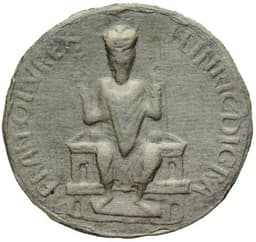
Henry I of France
Emperor · Medieval
43.6Total
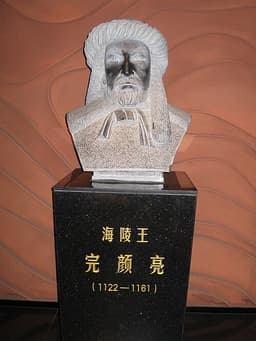
Wanyan Liang
Emperor · Medieval
49.1Total
Basic Information
Born
1008
1122
Died
1060
1161
Era
Medieval
Medieval
Nationality
France
Jin dynasty
Occupation
Emperor
Emperor
Civilization
Western
Eastern
Score Comparison
Military (10%)
50.0
67.5
Political (20%)
29.3
40.8
Influence (20%)
47.9
51.8
Legacy (20%)
39.2
44.2
Leadership (15%)
58.8
48.4
Strategy (15%)
35.7
50.0
TOTAL
43.6
49.1
Henry I of France — Complete Timeline
1031 AD
Reign as King of the FranksPolitical Action◆ Major
Henry I succeeded his father Robert II as King of the Franks. His reign was marked by constant conflicts with powerful nobles, including his brother Robert I, Duke of Burgundy, who challenged his authority.
KingshipCapetianReign
Impact: national
1032 AD
Rebellion of Robert I of BurgundyWar◆ Major
Henry I faced a rebellion led by his brother Robert I, Duke of Burgundy, who claimed the throne. The conflict lasted several years and was resolved through a compromise, with Robert retaining Burgundy but recognizing Henry as king.
RebellionCivil WarBurgundy
Impact: regional
1047 AD
Alliance with the Duke of NormandyPolitical Action
Henry I allied with William, Duke of Normandy (later William the Conqueror), to suppress a rebellion in Normandy. The alliance helped William secure his duchy, but later soured, leading to conflict between the two.
AllianceNormandyWilliam the Conqueror
Impact: regional
1050 AD
Conflict with the County of AnjouWar
Henry I fought a series of wars against the County of Anjou under Count Geoffrey Martel. The conflicts weakened royal authority and allowed Anjou to expand its territory at the expense of the crown.
WarAnjouTerritorial Loss
Impact: regional
Wanyan Liang — Complete Timeline
1150 AD
Usurped the thronePolitical Action◆ Major
Wanyan Liang assassinated his cousin Emperor Wanyan Dan and declared himself emperor. He purged many members of the imperial clan and their supporters to consolidate his rule, establishing a reign of terror.
UsurpationAssassinationPurge
Impact: nationaldestructive
1153 AD
Moved the capital to ZhongduPolitical Action◆ Major
Wanyan Liang ordered the relocation of the Jin capital from Shangjing (Harbin) to Zhongdu (Beijing). He constructed a new palace complex and moved the imperial court south to better control the conquered Chinese territories.
Capital moveZhongduBeijing
Impact: nationalconstructive
1161 AD
Invasion of the Southern SongWar◆ Major
Wanyan Liang launched a massive invasion of the Southern Song dynasty with a large army and navy. The campaign failed after the Jin fleet was defeated at the Battle of Caishi on the Yangtze River.
InvasionSong-Jin warBattle of Caishi
Impact: regionaldestructive
Killed by his own officersWar◆ Major
After the failure of the Southern Song invasion, Wanyan Liang's own generals mutinied and assassinated him at his camp. His death ended the war and led to a reversal of his policies by his successor Wanyan Yong.
AssassinationMutinyEnd of reign
Impact: nationaltragic
Expert Analysis
Origins
Henry I of France was born in 1008, the son of King Robert II and Constance of Arles. As a Capetian prince, he was raised in the shadow of his father's weak reign and his mother's political ambitions. His upbringing was marked by court intrigue and the constant threat of noble rebellion. In contrast, Wanyan Liang was born in 1122 into the Jurchen Wanyan clan, the imperial family of the Jin dynasty. He was a grandson of the dynasty's founder, Wanyan Aguda, and grew up in a militaristic culture where power was seized through force. His early life was shaped by the clan's consolidation of northern China and the ongoing conflict with the Song dynasty.
Rise to Power
Henry I became king in 1031 upon his father's death, but his succession was contested by his younger brother Robert, who claimed the throne. The rebellion of Robert I of Burgundy lasted several years, forcing Henry to compromise: he granted Robert the Duchy of Burgundy in 1032 to end the conflict. This concession weakened royal authority. Henry's rise was thus a struggle to maintain his crown against familial rivals. Wanyan Liang, by contrast, seized power through assassination. In 1149, he murdered his cousin Emperor Wanyan Dan and declared himself emperor. He then purged hundreds of imperial clan members and their supporters, eliminating potential challengers. His rise was bloody and decisive, but it sowed resentment among the military elite.
Leadership & Governance
Henry I's leadership was reactive and defensive. He spent most of his reign fighting rebellious nobles, such as Count Geoffrey Martel of Anjou. He allied with William, Duke of Normandy, to suppress a revolt in Normandy, but this alliance ultimately strengthened William. Henry's governance was limited; he could not centralize power or implement lasting reforms. His political score of 29.3 reflects his inability to control his kingdom. Wanyan Liang, on the other hand, pursued aggressive centralization. He moved the capital from Shangjing to Zhongdu (Beijing) in 1153, building a new palace complex to assert his authority. He also sinicized the Jin administration, adopting Chinese bureaucratic practices. However, his rule was autocratic and paranoid, leading to a leadership score of 48.4. His military score of 67.5 shows his ambition, but his strategy score of 50.0 indicates flawed execution.
Triumph & Tragedy
Henry I's greatest triumph was preserving the Capetian dynasty despite constant threats. He managed to pass the throne to his son Philip I in 1060, ensuring the dynasty's continuity. His greatest failure was his inability to expand royal power; the monarchy remained weak, and nobles like the Duke of Normandy grew stronger. Wanyan Liang's triumph was the successful relocation of the capital to Beijing, which became a lasting political center. His tragedy was the disastrous invasion of the Southern Song in 1161. The campaign failed after the Jin fleet was defeated at the Battle of Caishi, and his own officers mutinied and killed him. His death ended the war and left the Jin dynasty weakened.
Character & Destiny
Henry I was cautious and pragmatic, willing to compromise to survive. He accepted the loss of Burgundy to his brother rather than fight a prolonged war. This trait preserved his reign but limited his achievements. Wanyan Liang was ambitious and ruthless, but also impulsive. His decision to invade the Song despite logistical challenges reflected overconfidence. His paranoia led to purges that alienated his generals, directly causing his assassination. Henry's character led to a stable but unremarkable reign; Wanyan Liang's ambition brought dramatic change but ended in ruin.
Legacy
Henry I's legacy is mixed. He is often overshadowed by his son Philip I and his ancestor Hugh Capet. Historians note his role in stabilizing the Capetian dynasty, but his reign saw no significant territorial or administrative gains. His total score of 43.6 reflects this mediocrity. Wanyan Liang is remembered as a usurper who overreached. The move to Beijing, however, had lasting significance: the city remained a capital for subsequent dynasties, including the Yuan and Ming. His invasion failure also marked the beginning of Jin decline. His total score of 49.1 is slightly higher, but his legacy is more controversial.
Conclusion
While Wanyan Liang's total score (49.1) exceeds Henry I's (43.6) by 5.5 points, the question of greater impact requires nuance. Wanyan Liang's actions—the capital move and the failed invasion—had lasting geopolitical consequences. Henry I's reign, though stable, was largely inconsequential. Therefore, Wanyan Liang had a greater impact on history, but his negative legacy (usurpation, military disaster) diminishes his overall standing. Henry I's modest achievements at least ensured dynastic continuity, but his impact was minimal. In the final analysis, Wanyan Liang's scores in military (67.5) and influence (51.8) outweigh Henry's leadership (58.8) and political (29.3) scores, making him the more impactful figure.
Rankings
🥇
Wanyan LiangLeader
Mil: 67.5Pol: 40.8Inf: 51.8
49.1
🥈
Henry I of France
Mil: 50.0Pol: 29.3Inf: 47.9
43.6
+5.5 behind
How This Comparison Works
Algorithm
Each figure is scored on 6 dimensions (0—100 scale) based on structured historical data: Military (10%), Political (20%), Influence (20%), Legacy (20%), Leadership (15%), Strategy (15%). The weighted total produces the final ranking.
Data Sources
Scores are computed from structured sub-indicators in the database. Scale factors adjust for era (Ancient ×0.85, Modern ×1.0) and civilization size (Eastern ×1.05, Other ×0.80) to account for differences in population and military scale.
Maximum 3 Figures
Comparisons are limited to 2—3 figures to ensure readability and statistical meaningfulness.
Error Margins
±5 points per dimension — Sub-scores are derived from historical records with inherent uncertainty. Two figures within 5 points on a dimension should be considered roughly equivalent in that area.
Total Score Accuracy
±3 points overall — The weighted combination of 6 dimensions produces a total score with approximately ±3 points of uncertainty. Differences of less than 3 points are not statistically significant— the figures are effectively tied.
Known Limitations
- Historical records are incomplete and uneven across civilizations
- Figures from oral-tradition societies may be underrepresented
- Occupation labels can misclassify multi-role figures
- Scores measure capability and impact, not moral character
- Quantitative scoring is a comparison tool, not absolute truth
Capability Radar
Military (10%) — Battles & Warfare
Battles
20
65
Win Rate
25
55
Expansion
10
70
Political (20%) — Governance & Reform
Reform
20
45
Diplomacy
30
30
Economy
20
35
Influence (20%) — Cultural & Global Reach
Cultural
15
30
Global
10
20
Legacy (20%) — Historical Impact
Historical
20
40
Longevity
15
25
Leadership (15%) — Power & Stability
Tenure
50
40
Stability
25
20
Strategy (15%) — Tactics & Innovation
Strategy
15
55
Tactics
20
60
Reform
10
50
Similar Comparisons
Comments & Discussion
No comments yet. Be the first to share your thoughts!