Loading...
Henry I of France vs Napoleon Bonaparte
Napoleon Bonaparte leads by 27.3 pts · 2 figures compared
…
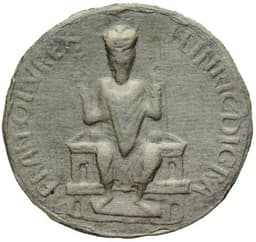
Henry I of France
Emperor · Medieval
43.6Total

Napoleon Bonaparte
General · Modern
70.9Total
Basic Information
Born
1008
1769
Died
1060
1821
Era
Medieval
Modern
Nationality
France
France
Occupation
Emperor
General
Civilization
Western
Western
Score Comparison
Military (10%)
50.0
94.0
Political (20%)
29.3
72.0
Influence (20%)
47.9
40.0
Legacy (20%)
39.2
80.0
Leadership (15%)
58.8
78.0
Strategy (15%)
35.7
90.0
TOTAL
43.6
70.9
Henry I of France — Complete Timeline
1031 AD
Reign as King of the FranksPolitical Action◆ Major
Henry I succeeded his father Robert II as King of the Franks. His reign was marked by constant conflicts with powerful nobles, including his brother Robert I, Duke of Burgundy, who challenged his authority.
KingshipCapetianReign
Impact: national
1032 AD
Rebellion of Robert I of BurgundyWar◆ Major
Henry I faced a rebellion led by his brother Robert I, Duke of Burgundy, who claimed the throne. The conflict lasted several years and was resolved through a compromise, with Robert retaining Burgundy but recognizing Henry as king.
RebellionCivil WarBurgundy
Impact: regional
1047 AD
Alliance with the Duke of NormandyPolitical Action
Henry I allied with William, Duke of Normandy (later William the Conqueror), to suppress a rebellion in Normandy. The alliance helped William secure his duchy, but later soured, leading to conflict between the two.
AllianceNormandyWilliam the Conqueror
Impact: regional
1050 AD
Conflict with the County of AnjouWar
Henry I fought a series of wars against the County of Anjou under Count Geoffrey Martel. The conflicts weakened royal authority and allowed Anjou to expand its territory at the expense of the crown.
WarAnjouTerritorial Loss
Impact: regional
Napoleon Bonaparte — Complete Timeline
1799 AD
Coup of 18 BrumaireOther◆ Major
Napoleon Bonaparte, with support from his brother Lucien and key political figures, overthrew the Directory in a bloodless coup. He established the Consulate with himself as First Consul, effectively becoming the ruler of France. This event ended the French Revolution's most unstable period.
French RevolutionCoupRise to Power
Impact: regional
1804 AD
Promulgation of the Napoleonic CodeOther◆ Major
Napoleon enacted the Civil Code of the French, known as the Napoleonic Code, a comprehensive set of laws that replaced the fragmented feudal legal systems. The code established legal equality, protected property rights, and secularized law. It became the basis for legal systems in many European and world countries.
Legal ReformNapoleonic CodeCivil Law
Impact: globalconstructive
1805 AD
Battle of AusterlitzWar◆ Major
Napoleon's Grande Arm
Napoleonic WarsBattleDecisive Victory
Impact: global
1812 AD
Invasion of RussiaWar◆ Major
Napoleon led the Grande Arm
Napoleonic WarsInvasionDisaster
Impact: globaldestructive
1815 AD
Battle of WaterlooWar◆ Major
Napoleon's French army was defeated by the combined forces of the Duke of Wellington's Anglo-Allied army and Gebhard Leberecht von Bl
Napoleonic WarsBattleFinal Defeat
Impact: globaldestructive
Expert Analysis
henry-i-of-france-vs-napoleon-bonaparte
# The Crown and the Sword: Two French Visions of Power
On a June morning in 1815, Napoleon Bonaparte watched his imperial guard march into the cannons of Wellington’s army at Waterloo, knowing the fate of Europe hung on a few thousand men. Eight centuries earlier, another French ruler, Henry I, faced a very different kind of battlefield: not a muddy field in Belgium, but the treacherous halls of his own court, where his own brother had raised a flag of rebellion. Both men wore the crown of France—but they lived in worlds so different that comparing them reveals not just two leaders, but two ages of history itself.
Origins
Napoleon Bonaparte was born in 1769 on the island of Corsica, a place only recently annexed by France. His family was minor nobility, but they were not French in the way of the Bourbon kings—they spoke Italian, nursed old grudges against the mainland, and lived on the margins of a kingdom that would soon explode into revolution. Napoleon’s world was one of upheaval, opportunity, and the sudden collapse of an entire social order. He grew up reading military manuals and the works of Rousseau, a young man shaped by Enlightenment ideas and the brutal realities of war.
Henry I, born in 1008, knew nothing of such ferment. He was the son of Robert II, a Capetian king whose authority barely extended beyond the Île-de-France. Medieval France was not a nation but a patchwork of feudal lords, each more powerful than the king. Henry was raised in a world where the crown was a symbol, not a weapon—a world where a duke could defy the king with impunity, and where the Church was the only institution that held the realm together. His education was monastic, his horizons narrow, his destiny bound by tradition.
Rise to Power
Napoleon’s ascent was a story of genius and chaos. He first distinguished himself at the Siege of Toulon in 1793, when he was only 24, a young artillery officer who saw what older commanders missed. The French Revolution had opened the ranks to talent, and Napoleon seized every crack in the old order. By 1796, he was commanding the Army of Italy, and within a decade he had crowned himself Emperor of the French. His path was forged by war, ambition, and the collapse of every institution that had once held men like him back.
Henry I’s rise was quieter and more dangerous. He succeeded his father Robert II in 1031, but his claim was immediately contested by his own brother, Robert I of Burgundy, who launched a rebellion in 1032. Henry had no grand victories to his name, no stunning campaigns—only a slow, grinding struggle to keep his throne. He survived not by brilliance but by alliances, most notably with William, Duke of Normandy, whom he helped suppress a rebellion in 1047. That alliance would later sour, but for a time it kept Henry in power. His rise was not a story of conquest but of survival.
Leadership & Governance
Napoleon governed like a force of nature. He reformed French law through the Napoleonic Code, a system that still shapes civil law across Europe. He centralized the state, created a modern bureaucracy, and built schools that taught loyalty to the nation rather than to the Church. His military genius—rated 94 in strategy—was matched by a political mind that knew when to offer peace and when to crush an enemy. Yet his rule was also autocratic: he silenced dissent, restored slavery in the colonies, and sacrificed a generation of young men to his ambition.
Henry I governed in an age when kings were little more than first among equals. His military score of 33.8 reflects a reign of constant but indecisive warfare. He fought the Count of Anjou, Geoffrey Martel, in a series of conflicts that weakened royal authority rather than strengthening it. His political score of 50.6 suggests a leader who managed to hold onto his crown but never expanded its power. Henry did not reform France; he merely kept it from falling apart. His greatest achievement was survival itself—a quiet endurance that allowed the Capetian dynasty to continue, eventually growing into the monarchy that Napoleon would one day overthrow.
Triumph & Tragedy
Napoleon’s greatest moment was probably the Battle of Austerlitz in 1805, where he crushed the combined armies of Russia and Austria in what many consider his masterpiece. His tragedy was the invasion of Russia in 1812—a disaster of hubris and logistics that destroyed his Grand Army and sealed his fate. He was exiled to Elba, returned for the Hundred Days, and finally defeated at Waterloo in 1815. His death in 1821, alone on the island of Saint Helena, was the end of a story that had burned across Europe like a comet.
Henry I’s triumphs were smaller and quieter. He survived his brother’s rebellion, outlived his rivals, and passed the crown to his son, Philip I, in 1060. His tragedy was not a single battle but a lifetime of slow erosion: the alliance with William of Normandy eventually turned into hostility, and the Norman duke—soon to be William the Conqueror—grew far more powerful than the French king. Henry died knowing that the very men he had once supported now overshadowed his throne.
Character & Destiny
Napoleon was driven by an insatiable hunger for glory. “Impossible is a word to be found only in the dictionary of fools,” he once said, and he lived by that creed. His personality—arrogant, brilliant, restless—shaped his decisions at every turn. He could not stop, could not consolidate, could not accept limits. That same fire that made him a conqueror also consumed him.
Henry I was cautious, patient, and aware of his limitations. He knew he was not the strongest lord in France, and he acted accordingly. His personality was one of calculation and endurance, not daring. He did not dream of empire; he dreamed of keeping what he had. In a feudal world where kings were weak, that was perhaps the highest wisdom.
Legacy
Napoleon’s legacy is enormous. He reshaped Europe, spread the ideals of the French Revolution, and left a legal and administrative system that endures. His influence score of 82 reflects a man who changed the course of history. Yet he is also remembered as a tyrant who brought war to a continent.
Henry I’s legacy is far smaller—a legacy score of 51.6—but not insignificant. He kept the Capetian dynasty alive at a time when it could have crumbled. Without his patient, unglamorous reign, there might have been no French kingdom for Napoleon to inherit. He is the forgotten foundation upon which later greatness was built.
Conclusion
Standing at Waterloo, Napoleon saw a world of empires and nations, of artillery and mass armies. Standing in his own court, Henry I saw a world of oaths and betrayals, of feudal loyalties and fragile alliances. Both were French kings, but they ruled different worlds. Napoleon’s story is a fire that burned bright and fast; Henry’s is a candle that flickered but never went out. In the end, history remembers the fire, but it depends on the candle.
Rankings
🥇
Napoleon BonaparteLeader
Mil: 94.0Pol: 72.0Inf: 40.0
70.9
🥈
Henry I of France
Mil: 50.0Pol: 29.3Inf: 47.9
43.6
+27.3 behind
How This Comparison Works
Algorithm
Each figure is scored on 6 dimensions (0—100 scale) based on structured historical data: Military (10%), Political (20%), Influence (20%), Legacy (20%), Leadership (15%), Strategy (15%). The weighted total produces the final ranking.
Data Sources
Scores are computed from structured sub-indicators in the database. Scale factors adjust for era (Ancient ×0.85, Modern ×1.0) and civilization size (Eastern ×1.05, Other ×0.80) to account for differences in population and military scale.
Maximum 3 Figures
Comparisons are limited to 2—3 figures to ensure readability and statistical meaningfulness.
Error Margins
±5 points per dimension — Sub-scores are derived from historical records with inherent uncertainty. Two figures within 5 points on a dimension should be considered roughly equivalent in that area.
Total Score Accuracy
±3 points overall — The weighted combination of 6 dimensions produces a total score with approximately ±3 points of uncertainty. Differences of less than 3 points are not statistically significant— the figures are effectively tied.
Known Limitations
- Historical records are incomplete and uneven across civilizations
- Figures from oral-tradition societies may be underrepresented
- Occupation labels can misclassify multi-role figures
- Scores measure capability and impact, not moral character
- Quantitative scoring is a comparison tool, not absolute truth
Capability Radar
Military (10%) — Battles & Warfare
Battles
20
95
Win Rate
25
90
Expansion
10
95
Political (20%) — Governance & Reform
Reform
20
95
Diplomacy
30
80
Economy
20
85
Influence (20%) — Cultural & Global Reach
Cultural
15
85
Global
10
90
Legacy (20%) — Historical Impact
Historical
20
95
Longevity
15
90
Leadership (15%) — Power & Stability
Tenure
50
85
Stability
25
70
Strategy (15%) — Tactics & Innovation
Strategy
15
95
Tactics
20
98
Reform
10
92
Similar Comparisons
Comments & Discussion
🔥Crown of Iron, Sword of Fire6/17/2026
Napoleon remade France with cannons and codes; Henry I could barely enforce peace beyond Paris. One conquered Europe, the other couldn't even subdue his own brother. Let's be real: this isn't a comparison, it's a contrast between a world ruler and a feudal figurehead. Waterloo was a mighty fall; Henry's whole reign was a long, weak climb.
👑数据铁蹄踏碎史诗6/17/2026
所谓“拿破仑 vs 亨利一世”,本质是把核弹跟弹弓比。拿破仑统治时期法国人口超2800万,军队数十万;亨利一世连王权都出不了法兰西岛。非对称对决毫无意义——别拿浪漫历史滤镜偷换实力差距。数据不会骗人:拿破仑打仗用整个国家,亨利打仗全家凑不齐五百骑士。
📜Legitimacy’s Long Shadow6/17/2026
The real question isn’t who was greater, but who *owned* the crown. Napoleon grabbed power with bayonets; Henry I inherited it, warts and all, from his father. One rewrote the rules of Europe; the other barely kept his own family from tearing France apart. And yet, Henry’s line ruled for 800 years. Napoleon’s empire? Dust by 1815. Longevity beats fireworks.
🏰城堡里的孤王,荒野中的雄狮6/17/2026
一个在凡尔赛的影子都没成型时就坐在摇摇欲坠的王座上,一个把整个欧洲踩在脚下又摔进大西洋。说他们同是“法国之主”?别逗了。亨利一世的一生是一场无声的防守战,连敌人都是自己亲戚;拿破仑却让全世界的国王联手才能把他扳倒。两种权力,两个维度,无可比性。
📜Revisionist’s Rebuttal6/17/2026
Actually, Napoleon and Henry I share one crucial thing: fragile power won through chaos. Henry crushed his brother’s rebellion; Napoleon purged his political rivals with military force. Both ruled over fractured France—Henry from feudal fragmentation, Napoleon after Revolutionary collapse. The scale differs, but the root challenge is identical: how to hold a country together when everyone wants your crown.