Loading...
Henry I of Guise vs Sun Li-jen
Henry I of Guise leads by 6.8 pts · 2 figures compared
…

Henry I of Guise
General · Modern
63.6Total
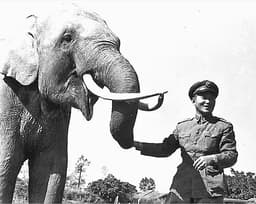
Sun Li-jen
General · Modern
56.8Total
Basic Information
Born
1550
1900
Died
1588
1990
Era
Modern
Modern
Nationality
France
China
Occupation
General
General
Civilization
Western
Eastern
Score Comparison
Military (10%)
70.0
70.0
Political (20%)
72.0
40.8
Influence (20%)
62.0
61.0
Legacy (20%)
56.0
50.0
Leadership (15%)
72.0
61.1
Strategy (15%)
55.0
67.2
TOTAL
63.6
56.8
Henry I of Guise — Complete Timeline
1584 AD
Leadership of the Catholic LeaguePolitical Action◆ Major
Henry I of Guise became the leader of the Catholic League after the death of his father. He organized the League's military and political opposition to the Protestant Henry of Navarre's claim to the French throne.
Catholic LeagueWars of ReligionLeadership
Impact: national
1587 AD
Battle of AuneauWar
Henry of Guise defeated a German Protestant army at Auneau, which had been hired by Henry of Navarre. This victory strengthened the Catholic League's position and Guise's reputation as a military commander.
BattleWars of ReligionMilitary
Impact: regional
1588 AD
Day of the BarricadesPolitical Action◆ Major
Henry of Guise led a popular uprising in Paris against King Henry III. The king was forced to flee the city, and Guise effectively controlled the capital, demonstrating his power over the monarchy.
UprisingParisCatholic League
Impact: nationaldestructive
Assassination of Henry I of GuisePolitical Action◆ Major
Henry I of Guise was assassinated on the orders of King Henry III at the Ch
AssassinationCatholic LeagueWars of Religion
Impact: nationaltragic
Sun Li-jen — Complete Timeline
1927 AD
Graduated from Virginia Military InstituteCultural
Sun Li-jen graduated from the Virginia Military Institute (VMI) in the United States. His American military education influenced his tactical approach and distinguished him among Chinese commanders.
EducationMilitary Training
Impact: national
1942 AD
Commanded the Chinese Expeditionary Force in BurmaWar◆ Major
Sun Li-jen commanded the 38th Division of the Chinese Expeditionary Force in Burma. He led his troops to victory at the Battle of Yenangyaung, rescuing trapped British forces and earning the nickname 'Rommel of the East.'
World War IIBurma CampaignAllied Cooperation
Impact: regionalconstructive
1944 AD
Commander of the New First ArmyPolitical Action◆ Major
Sun Li-jen was appointed commander of the New First Army, one of the best-equipped Nationalist units. He led the army in the Burma Campaign and later in the Chinese Civil War.
Military CommandWorld War II
Impact: regional
1955 AD
Arrested and Imprisoned by Chiang Kai-shekPolitical Action◆ Major
Sun Li-jen was arrested by Chiang Kai-shek on charges of conspiracy with the United States to stage a coup. He was placed under house arrest for 33 years, ending his military career and becoming a symbol of Nationalist repression.
Political RepressionTaiwanHouse Arrest
Impact: nationaltragic
Expert Analysis
Origins
Henry I of Guise (1550-1588) was born into the powerful House of Guise, a leading Catholic family in France. His father, Francis, Duke of Guise, was a prominent military commander. Henry inherited the title Duke of Guise after his father's assassination in 1563. He was raised in an atmosphere of religious conflict, becoming a fervent Catholic and natural leader of the Catholic League.
Sun Li-jen (1900-1990) was born in Anhui Province, China, into a scholarly family. His father was a teacher. Sun attended Tsinghua University before studying at Purdue University and later graduating from the Virginia Military Institute (VMI) in 1927. His American military education shaped his modern tactical approach.
Rise to Power
Henry of Guise rose to prominence as the leader of the Catholic League after his father's death. He organized the League's military and political opposition to the Huguenots (French Protestants). In 1588, he orchestrated the Day of the Barricades in Paris, a popular uprising that forced King Henry III to flee, effectively giving Guise control of the capital. He was at the height of his power, but his ambition threatened the monarchy.
Sun Li-jen rose through the ranks of the National Revolutionary Army of the Republic of China. He gained recognition during the Second Sino-Japanese War. In 1942, he commanded the 38th Division of the Chinese Expeditionary Force in Burma. His victory at the Battle of Yenangyaung, where he rescued 7,000 British troops, earned him the nickname "Rommel of the East" from Allied commanders. He was later appointed commander of the New First Army, one of the best-equipped Nationalist units.
Leadership & Governance
Henry of Guise was a charismatic and decisive leader who commanded loyalty from his followers. He governed the Catholic League with a mix of military force and political maneuvering. He organized the League's military campaigns effectively, but his governance was always subservient to his ultimate goal of controlling the French throne. His leadership score of 72.0 reflects his ability to mobilize and direct the League, but his political score of 72.0 also indicates a reliance on intrigue and assassination.
Sun Li-jen was a modern, professional military leader who emphasized training, discipline, and combined arms tactics. He trained his troops in modern warfare, using US equipment and doctrine. His leadership score of 61.1 is lower partly due to his inability to navigate the political landscape. He was apolitical, focusing on military effectiveness, which ultimately led to his downfall. His political score of 40.8 reflects his naivete in dealing with Chiang Kai-shek's regime.
Triumph & Tragedy
Henry of Guise's greatest triumph was the Day of the Barricades (1588), where he effectively seized control of Paris without a battle. He also won a significant victory at the Battle of Auneau (1587) against German Protestant forces. His greatest tragedy was his assassination on December 23, 1588, on the orders of King Henry III at the Château de Blois. This removed the League's leader but sparked further civil war, ultimately leading to the end of the Valois dynasty.
Sun Li-jen's greatest triumph was the Battle of Yenangyaung (1942), where he saved trapped British troops. He also led successful campaigns in Burma, recapturing key areas. His greatest tragedy was his arrest in 1955 by Chiang Kai-shek on charges of conspiracy with the United States to stage a coup. He was placed under house arrest for 33 years, until 1988, spending most of his later life in captivity.
Character & Destiny
Henry of Guise was ambitious, charismatic, and ruthless. He was a natural leader who inspired loyalty but also provoked fear. His character drove him to challenge the monarchy, but his ambition made him a target. He was assassinated at age 38, a victim of his own success. Historical assessments often describe him as a skilled politician and military leader whose death removed a key figure from the French Wars of Religion.
Sun Li-jen was disciplined, professional, and politically naive. He focused on military excellence, but his lack of political acumen made him vulnerable. His American education and close ties with the US made him suspect in Chiang's eyes. His 33-year house arrest was a tragic end for a general who had served his country well. He is remembered as a capable commander whose career was cut short by political intrigue.
Legacy
Henry of Guise's legacy is tied to the Catholic League and the French Wars of Religion. His assassination escalated the conflict, leading to the eventual victory of Henry of Navarre (Henry IV) and the Edict of Nantes (1598). The League's influence waned after his death. He is remembered primarily as a symbol of Catholic militancy and a victim of royal treachery. His influence score of 62.0 and legacy score of 56.0 reflect his limited long-term impact beyond his era.
Sun Li-jen's legacy is more positive in Taiwan and among Chinese veterans. He is celebrated as a hero of the Burma Campaign and a model of modern military leadership. His New First Army became a symbol of Nationalist military effectiveness. However, his political downfall and house arrest overshadow his achievements. In mainland China, he is often overlooked. His legacy score of 50.0 reflects his mixed recognition.
Conclusion
In comparing Henry I of Guise and Sun Li-jen, Henry's total score of 63.6 edges out Sun's 56.8 by 6.8 points. Henry had greater political influence (72.0 vs 40.8) and leadership (72.0 vs 61.1). However, Sun excelled in strategy (67.2 vs 55.0). While Henry's impact was more immediate and dramatic, his legacy is more localized to French history. Sun's impact on modern Chinese military thought and his role in the Burma Campaign arguably have broader implications. Yet, Henry's ability to shape events during his lifetime was greater. Taking a stance, Henry I of Guise had a greater impact during his era, but Sun Li-jen's legacy endures as a symbol of professional military virtue. However, by the numbers, Henry's higher total score supports the conclusion that he was the more influential figure.
Rankings
🥇
Henry I of GuiseLeader
Mil: 70.0Pol: 72.0Inf: 62.0
63.6
🥈
Sun Li-jen
Mil: 70.0Pol: 40.8Inf: 61.0
56.8
+6.8 behind
How This Comparison Works
Algorithm
Each figure is scored on 6 dimensions (0—100 scale) based on structured historical data: Military (10%), Political (20%), Influence (20%), Legacy (20%), Leadership (15%), Strategy (15%). The weighted total produces the final ranking.
Data Sources
Scores are computed from structured sub-indicators in the database. Scale factors adjust for era (Ancient ×0.85, Modern ×1.0) and civilization size (Eastern ×1.05, Other ×0.80) to account for differences in population and military scale.
Maximum 3 Figures
Comparisons are limited to 2—3 figures to ensure readability and statistical meaningfulness.
Error Margins
±5 points per dimension — Sub-scores are derived from historical records with inherent uncertainty. Two figures within 5 points on a dimension should be considered roughly equivalent in that area.
Total Score Accuracy
±3 points overall — The weighted combination of 6 dimensions produces a total score with approximately ±3 points of uncertainty. Differences of less than 3 points are not statistically significant— the figures are effectively tied.
Known Limitations
- Historical records are incomplete and uneven across civilizations
- Figures from oral-tradition societies may be underrepresented
- Occupation labels can misclassify multi-role figures
- Scores measure capability and impact, not moral character
- Quantitative scoring is a comparison tool, not absolute truth
Capability Radar
Military (10%) — Battles & Warfare
Battles
65
75
Win Rate
60
70
Expansion
50
30
Political (20%) — Governance & Reform
Reform
55
25
Diplomacy
70
35
Economy
50
20
Influence (20%) — Cultural & Global Reach
Cultural
55
45
Global
45
50
Legacy (20%) — Historical Impact
Historical
60
55
Longevity
50
40
Leadership (15%) — Power & Stability
Tenure
60
40
Stability
40
25
Strategy (15%) — Tactics & Innovation
Strategy
65
75
Tactics
70
85
Reform
55
60
Similar Comparisons
Comments & Discussion
No comments yet. Be the first to share your thoughts!