Loading...
Radomir Putnik vs Sun Li-jen
Radomir Putnik leads by 4.5 pts · 2 figures compared
…

Radomir Putnik
General · Modern
61.3Total
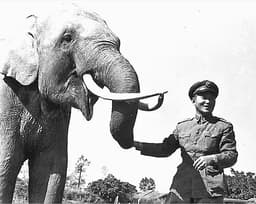
Sun Li-jen
General · Modern
56.8Total
Basic Information
Born
1847
1900
Died
1917
1990
Era
Modern
Modern
Nationality
Serbia
China
Occupation
General
General
Civilization
Western
Eastern
Score Comparison
Military (10%)
61.7
70.0
Political (20%)
68.0
40.8
Influence (20%)
60.0
61.0
Legacy (20%)
50.0
50.0
Leadership (15%)
72.0
61.1
Strategy (15%)
66.3
67.2
TOTAL
61.3
56.8
Radomir Putnik — Complete Timeline
1912 AD
Command during the Balkan WarsWar◆ Major
Putnik led the Serbian Army to victories against the Ottoman Empire in the First Balkan War and against Bulgaria in the Second Balkan War. These wars doubled Serbia's territory and established it as a regional power.
Balkan WarsTerritorial ExpansionVictory
Impact: regionalconstructive
Appointment as Chief of General StaffPolitical Action◆ Major
Putnik was appointed Chief of the General Staff of the Serbian Army. He was responsible for planning and executing military operations during the Balkan Wars and World War I.
Military CommandBalkan Wars
Impact: nationalconstructive
1914 AD
Command during the Serbian Campaign of World War IWar◆ Major
Putnik commanded the Serbian Army during the initial Austro-Hungarian invasions. Despite being ill, he directed the successful defense of Serbia, including the victories at Cer and Kolubara.
World War IDefenseVictory
Impact: regionalconstructive
1915 AD
Retreat through AlbaniaWar
Putnik led the Serbian Army and government in a winter retreat across the Albanian mountains after a combined German, Austro-Hungarian, and Bulgarian offensive. The retreat saved the army but resulted in heavy casualties from cold, disease, and enemy attacks.
World War IRetreatSurvival
Impact: regionaltragic
Sun Li-jen — Complete Timeline
1927 AD
Graduated from Virginia Military InstituteCultural
Sun Li-jen graduated from the Virginia Military Institute (VMI) in the United States. His American military education influenced his tactical approach and distinguished him among Chinese commanders.
EducationMilitary Training
Impact: national
1942 AD
Commanded the Chinese Expeditionary Force in BurmaWar◆ Major
Sun Li-jen commanded the 38th Division of the Chinese Expeditionary Force in Burma. He led his troops to victory at the Battle of Yenangyaung, rescuing trapped British forces and earning the nickname 'Rommel of the East.'
World War IIBurma CampaignAllied Cooperation
Impact: regionalconstructive
1944 AD
Commander of the New First ArmyPolitical Action◆ Major
Sun Li-jen was appointed commander of the New First Army, one of the best-equipped Nationalist units. He led the army in the Burma Campaign and later in the Chinese Civil War.
Military CommandWorld War II
Impact: regional
1955 AD
Arrested and Imprisoned by Chiang Kai-shekPolitical Action◆ Major
Sun Li-jen was arrested by Chiang Kai-shek on charges of conspiracy with the United States to stage a coup. He was placed under house arrest for 33 years, ending his military career and becoming a symbol of Nationalist repression.
Political RepressionTaiwanHouse Arrest
Impact: nationaltragic
Expert Analysis
Origins
Radomir Putnik was born on January 24, 1847, in Kragujevac, Serbia, into a modest merchant family. He graduated from the Military Academy in Belgrade in 1866, ranking low but steadily climbing the ranks through practical experience. His early career included service in the Serbian-Ottoman Wars (1876-1878) and a period as a military attaché in Sofia. Putnik's lack of aristocratic connections forced him to rely on competence, which shaped his meticulous planning style.
Sun Li-jen was born on December 8, 1900, in Lujiang, Anhui, China, into a scholarly family. He graduated from Tsinghua University in 1923 and then studied at Purdue University, earning a degree in civil engineering. However, his passion for military led him to enroll at the Virginia Military Institute (VMI), graduating in 1927. Sun's American education gave him a unique perspective, blending Western tactics with Chinese realities.
Rise to Power
Putnik's rise accelerated during the Balkan Wars (1912-1913). As Chief of the General Staff, he orchestrated the Serbian victories at Kumanovo (1912) and Bregalnica (1913), defeating Ottoman and Bulgarian forces. His reputation soared, leading to his appointment as Chief of the General Staff in 1913, a position he held through World War I. Despite his advancing age and chronic lung disease, Putnik was indispensable.
Sun Li-jen rose to prominence in the Second Sino-Japanese War. In 1937, he commanded the 88th Division's 262nd Regiment in the Battle of Shanghai, showing personal courage. His major breakthrough came in 1942 when he led the 38th Division to Burma as part of the Chinese Expeditionary Force. At the Battle of Yenangyaung (April 1942), Sun's forces rescued 7,000 British soldiers, earning him the nickname "Rommel of the East" from Allied media.
Leadership & Governance
Putnik's leadership was characterized by methodical planning and strategic patience. He believed in conserving strength and using terrain to maximum advantage. During the 1914 Austro-Hungarian invasions, he executed a flawless counterattack at the Battle of Cer (August 15-24), pushing back a larger force. His governance style was collaborative, working closely with Prime Minister Nikola Pašić, but he never sought political power himself. Putnik scored 72.0 in leadership, reflecting his steady command.
Sun Li-jen led with personal bravery and tactical innovation. He trained his troops rigorously, emphasizing marksmanship and small-unit tactics, influenced by his VMI training. At the Battle of Yenangyaung, he personally led a bayonet charge. However, his political naivety was a weakness: Sun scored only 40.8 in political skill. He openly criticized Chiang Kai-shek's strategy and refused to join the Kuomintang's internal power games, which ultimately led to his downfall.
Triumph & Tragedy
Putnik's greatest triumph was the successful defense of Serbia in 1914, inflicting heavy casualties on the Austro-Hungarian army. His strategic retreat through Albania in 1915-1916, preserving the army and government, is considered a masterful operation in adversity. But his tragedy came with the 1915 invasion by combined German, Austro-Hungarian, and Bulgarian forces. Putnik's plans were overwhelmed by sheer numbers, and he was forced into exile, dying in 1917 in Nice, France, before seeing Serbia's liberation.
Sun Li-jen's triumph was his performance in the Burma Campaign. As commander of the New First Army (1944-1945), he recaptured Myitkyina and linked up with British forces, securing the Ledo Road. His tactical score of 67.2 reflects his battlefield success. However, his tragedy was his 33-year house arrest by Chiang Kai-shek from 1955 until 1988. Sun was falsely accused of plotting a coup with U.S. support, and his career ended in obscurity, far from the battlefield.
Character & Destiny
Putnik was a quiet, determined strategist, often described as the "brain of the Serbian army." He was ailing physically but mentally sharp, making decisions from a stretcher during the 1914 campaign. His character—modest, apolitical, and focused on duty—allowed him to survive political turmoil but also limited his ability to secure resources for his army. He scored 61.7 in military skill, reflecting solid competence without brilliance.
Sun Li-jen was charismatic, outspoken, and proud. He believed in meritocracy and Western-style professionalism, which clashed with the Kuomintang's patronage system. His refusal to compromise politically, despite warnings, led to his arrest. His military score of 70.0 indicates higher tactical ability than Putnik, but his political score of 40.8 sealed his fate. Sun's destiny was shaped by his inability to navigate the complex politics of Nationalist China.
Legacy
Putnik's legacy is as the architect of Serbia's military success in the Balkan Wars and early WWI. He is honored in Serbia with streets and statues, and his strategic concepts influenced later Yugoslav military doctrine. His total score of 61.3 reflects a solid, if not spectacular, historical standing. The Serbian army's survival under his command allowed the country to be a founding member of Yugoslavia.
Sun Li-jen's legacy is more complex. In Taiwan, he is celebrated as a military hero, but in mainland China, he is often forgotten due to his Nationalist affiliation. His tactical innovations, such as building field fortifications and using firepower, influenced later Chinese military reforms. However, his political downfall overshadows his achievements. His total score of 56.8 is lower, mainly due to his political failure.
Conclusion
Radomir Putnik had a greater impact than Sun Li-jen. While Sun achieved higher military scores (70.0 vs. 61.7), Putnik's strategic decisions preserved a nation and influenced the outcome of World War I in the Balkans. Sun's tactical brilliance was confined to a secondary theater and his career cut short by his own political ineptitude. Putnik's total score of 61.3 vs. Sun's 56.8 reflects this: Putnik's balanced leadership and political acumen allowed him to shape events for longer. Sun, despite his battlefield heroics, ultimately failed to secure his legacy due to his political score of 40.8. Thus, Putnik stands as the more consequential figure.
Rankings
🥇
Radomir PutnikLeader
Mil: 61.7Pol: 68.0Inf: 60.0
61.3
🥈
Sun Li-jen
Mil: 70.0Pol: 40.8Inf: 61.0
56.8
+4.5 behind
How This Comparison Works
Algorithm
Each figure is scored on 6 dimensions (0—100 scale) based on structured historical data: Military (10%), Political (20%), Influence (20%), Legacy (20%), Leadership (15%), Strategy (15%). The weighted total produces the final ranking.
Data Sources
Scores are computed from structured sub-indicators in the database. Scale factors adjust for era (Ancient ×0.85, Modern ×1.0) and civilization size (Eastern ×1.05, Other ×0.80) to account for differences in population and military scale.
Maximum 3 Figures
Comparisons are limited to 2—3 figures to ensure readability and statistical meaningfulness.
Error Margins
±5 points per dimension — Sub-scores are derived from historical records with inherent uncertainty. Two figures within 5 points on a dimension should be considered roughly equivalent in that area.
Total Score Accuracy
±3 points overall — The weighted combination of 6 dimensions produces a total score with approximately ±3 points of uncertainty. Differences of less than 3 points are not statistically significant— the figures are effectively tied.
Known Limitations
- Historical records are incomplete and uneven across civilizations
- Figures from oral-tradition societies may be underrepresented
- Occupation labels can misclassify multi-role figures
- Scores measure capability and impact, not moral character
- Quantitative scoring is a comparison tool, not absolute truth
Capability Radar
Military (10%) — Battles & Warfare
Battles
75
75
Win Rate
70
70
Expansion
50
30
Political (20%) — Governance & Reform
Reform
40
25
Diplomacy
50
35
Economy
30
20
Influence (20%) — Cultural & Global Reach
Cultural
40
45
Global
50
50
Legacy (20%) — Historical Impact
Historical
55
55
Longevity
45
40
Leadership (15%) — Power & Stability
Tenure
55
40
Stability
45
25
Strategy (15%) — Tactics & Innovation
Strategy
78
75
Tactics
72
85
Reform
65
60
Similar Comparisons
Comments & Discussion
No comments yet. Be the first to share your thoughts!