Loading...
Nguyen Van Thieu vs Sun Li-jen
Sun Li-jen leads by 8.6 pts · 2 figures compared
…
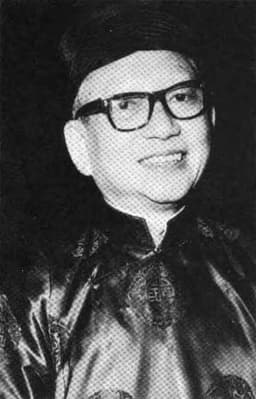
Nguyen Van Thieu
General · Modern
48.2Total
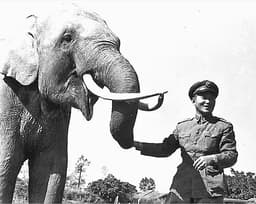
Sun Li-jen
General · Modern
56.8Total
Basic Information
Born
1923
1900
Died
—
1990
Era
Modern
Modern
Nationality
Vietnam
China
Occupation
General
General
Civilization
Eastern
Eastern
Score Comparison
Military (10%)
35.0
70.0
Political (20%)
43.7
40.8
Influence (20%)
53.3
61.0
Legacy (20%)
45.0
50.0
Leadership (15%)
67.0
61.1
Strategy (15%)
35.0
67.2
TOTAL
48.2
56.8
Nguyen Van Thieu — Complete Timeline
1967 AD
Election as President of South VietnamPolitical Action◆ Major
Nguyen Van Thieu was elected president of South Vietnam in a US-supervised election, with Nguyen Cao Ky as vice president. The election was marred by fraud and limited participation, but it provided a veneer of legitimacy for the military-dominated government during the Vietnam War.
ElectionSouth VietnamVietnam War
Impact: national
1968 AD
Tet OffensiveWar
North Vietnamese and Viet Cong forces launched the Tet Offensive, a massive surprise attack on cities and military bases across South Vietnam. Thieu's government survived the assault, but the offensive exposed the vulnerability of the regime and shifted US public opinion against the war.
Tet OffensiveVietnam WarTurning Point
Impact: globaltragic
1973 AD
Paris Peace AccordsPolitical Action◆ Major
Thieu reluctantly signed the Paris Peace Accords, which called for a ceasefire and US withdrawal from Vietnam. The agreement allowed North Vietnamese troops to remain in the South, and Thieu's government was left to fight alone, leading to its eventual collapse.
Paris AccordsPeaceVietnam War
Impact: globaldestructive
1975 AD
Fall of Saigon and ResignationPolitical Action
As North Vietnamese forces advanced on Saigon, Nguyen Van Thieu resigned the presidency and fled to Taiwan. His departure marked the end of South Vietnam, which surrendered unconditionally days later, leading to the reunification of Vietnam under communist rule.
Fall of SaigonResignationReunification
Impact: globaltragic
Sun Li-jen — Complete Timeline
1927 AD
Graduated from Virginia Military InstituteCultural
Sun Li-jen graduated from the Virginia Military Institute (VMI) in the United States. His American military education influenced his tactical approach and distinguished him among Chinese commanders.
EducationMilitary Training
Impact: national
1942 AD
Commanded the Chinese Expeditionary Force in BurmaWar◆ Major
Sun Li-jen commanded the 38th Division of the Chinese Expeditionary Force in Burma. He led his troops to victory at the Battle of Yenangyaung, rescuing trapped British forces and earning the nickname 'Rommel of the East.'
World War IIBurma CampaignAllied Cooperation
Impact: regionalconstructive
1944 AD
Commander of the New First ArmyPolitical Action◆ Major
Sun Li-jen was appointed commander of the New First Army, one of the best-equipped Nationalist units. He led the army in the Burma Campaign and later in the Chinese Civil War.
Military CommandWorld War II
Impact: regional
1955 AD
Arrested and Imprisoned by Chiang Kai-shekPolitical Action◆ Major
Sun Li-jen was arrested by Chiang Kai-shek on charges of conspiracy with the United States to stage a coup. He was placed under house arrest for 33 years, ending his military career and becoming a symbol of Nationalist repression.
Political RepressionTaiwanHouse Arrest
Impact: nationaltragic
Expert Analysis
Origins
Nguyen Van Thieu was born on December 5, 1923, in Tri Thuy, a coastal village in central Vietnam. His father was a small landowner who died when Thieu was young, leaving the family in modest circumstances. Thieu attended the French-run Pellerin School in Hue and later the National Military Academy in Dalat, graduating in 1949. He initially served in the French-backed Vietnamese National Army, gaining experience in counterinsurgency against the Viet Minh.
Sun Li-jen was born on December 8, 1900, in Lujiang, Anhui Province, China, into a scholarly family. His father was a local official. Sun studied at Tsinghua University in Beijing before earning a scholarship to Purdue University in the United States, where he graduated with a degree in civil engineering in 1923. He then attended the Virginia Military Institute (VMI), graduating in 1927. Sun's American military education shaped his tactical approach, emphasizing discipline and combined arms operations.
Rise to Power
Thieu's rise was gradual, marked by loyalty to shifting regimes. He served as a battalion commander in the French Union forces and later as a regimental commander in the Army of the Republic of Vietnam (ARVN). In 1963, he supported the coup against President Ngo Dinh Diem, then backed successive juntas. In 1965, Thieu became chairman of the National Leadership Committee, and in 1967, he was elected president of South Vietnam in a US-supervised election, with Nguyen Cao Ky as vice president. The election was marred by irregularities and limited opposition.
Sun Li-jen rose to prominence during the Second Sino-Japanese War. In 1937, he commanded a regiment in the Battle of Shanghai, where he was wounded. In 1942, he was appointed commander of the 38th Division of the Chinese Expeditionary Force in Burma. At the Battle of Yenangyaung, he rescued 7,000 British soldiers from encirclement by Japanese forces, earning international acclaim. In 1944, he was promoted to commander of the New First Army, one of the best-equipped Nationalist units, and led it in the Burma Campaign, achieving victories at Myitkyina and Bhamo.
Leadership & Governance
Thieu's leadership was characterized by political maneuvering and reliance on US support. He consolidated power by purging rivals and controlling the military. His governance was authoritarian, with limited political freedom. He implemented the 'Four Nos' policy: no negotiation with the enemy, no coalition government, no neutralization of the South, and no territorial concessions. However, his regime was plagued by corruption and inefficiency. In 1972, he launched the Land-to-the-Tiller program, redistributing land to peasants, which had some success but was undermined by the war.
Sun Li-jen's leadership was focused on military efficiency and troop welfare. He trained his soldiers rigorously, emphasizing marksmanship and physical fitness. He also took care of his men's needs, earning their loyalty. In governance, Sun was less involved, serving under the Kuomintang (KMT) hierarchy. His political naivete made him vulnerable to intrigues. After the Chinese Civil War, he retreated to Taiwan, where he served as commander of the Taiwan Garrison Command but was arrested in 1955 on charges of conspiracy with the United States to stage a coup. He was placed under house arrest for 33 years.
Triumph & Tragedy
Thieu's greatest success was maintaining South Vietnam's sovereignty for nearly a decade despite intense pressure. He oversaw the ARVN's expansion and modernization, with US support. However, his greatest failure was the collapse of South Vietnam in 1975. The Tet Offensive in 1968 exposed the vulnerability of his regime, and his refusal to negotiate with the North led to the Paris Peace Accords in 1973, which he reluctantly signed. The accords allowed North Vietnamese troops to remain in the South, leading to the final offensive. Thieu resigned on April 21, 1975, and fled to Taiwan, as Saigon fell nine days later.
Sun Li-jen's triumph was his military record in Burma, where he defeated the Japanese and earned the nickname 'Rommel of the East.' He was decorated by both the US and UK. However, his tragedy was his long house arrest. Accused of plotting a coup with US support, he was detained by Chiang Kai-shek for 33 years, from 1955 to 1988. This ended his military career and prevented him from contributing to Taiwan's defense. He was released only after Chiang's death, living quietly until his death in 1990.
Character & Destiny
Thieu was pragmatic and cautious, but also indecisive and suspicious. He concentrated power in his hands, alienating potential allies. His character led to isolation in his final days, as even his generals abandoned him. Sun Li-jen was disciplined and principled, but politically naive. His honesty and directness made him enemies in the KMT's factional politics. His fate was sealed by his association with the US and his popularity, which threatened Chiang.
Legacy
Thieu's legacy is tied to the fall of South Vietnam. He is remembered as the last president of a failed state. His scores reflect this: Military 35.0, Political 43.7, Influence 53.3, Legacy 45.0, Leadership 67.0, Strategy 35.0, Total 48.2. Sun Li-jen is remembered as a brilliant military commander, though his political legacy is tarnished by his arrest. His scores: Military 70.0, Political 40.8, Influence 61.0, Legacy 50.0, Leadership 61.1, Strategy 67.2, Total 56.8. Sun's military achievements are studied in military academies.
Conclusion
Sun Li-jen had greater impact in his field: military strategy. His scores are higher overall (56.8 vs 48.2), with significant leads in military (70.0 vs 35.0) and strategy (67.2 vs 35.0). Thieu's leadership score (67.0) is higher, but his strategic and military failures led to the collapse of his nation. Sun's victories in Burma were decisive, while Thieu's presidency ended in defeat. Therefore, Sun Li-jen is the superior figure in terms of military effectiveness and legacy.
Rankings
🥇
Sun Li-jenLeader
Mil: 70.0Pol: 40.8Inf: 61.0
56.8
🥈
Nguyen Van Thieu
Mil: 35.0Pol: 43.7Inf: 53.3
48.2
+8.6 behind
How This Comparison Works
Algorithm
Each figure is scored on 6 dimensions (0—100 scale) based on structured historical data: Military (10%), Political (20%), Influence (20%), Legacy (20%), Leadership (15%), Strategy (15%). The weighted total produces the final ranking.
Data Sources
Scores are computed from structured sub-indicators in the database. Scale factors adjust for era (Ancient ×0.85, Modern ×1.0) and civilization size (Eastern ×1.05, Other ×0.80) to account for differences in population and military scale.
Maximum 3 Figures
Comparisons are limited to 2—3 figures to ensure readability and statistical meaningfulness.
Error Margins
±5 points per dimension — Sub-scores are derived from historical records with inherent uncertainty. Two figures within 5 points on a dimension should be considered roughly equivalent in that area.
Total Score Accuracy
±3 points overall — The weighted combination of 6 dimensions produces a total score with approximately ±3 points of uncertainty. Differences of less than 3 points are not statistically significant— the figures are effectively tied.
Known Limitations
- Historical records are incomplete and uneven across civilizations
- Figures from oral-tradition societies may be underrepresented
- Occupation labels can misclassify multi-role figures
- Scores measure capability and impact, not moral character
- Quantitative scoring is a comparison tool, not absolute truth
Capability Radar
Military (10%) — Battles & Warfare
Battles
35
75
Win Rate
25
70
Expansion
10
30
Political (20%) — Governance & Reform
Reform
30
25
Diplomacy
40
35
Economy
20
20
Influence (20%) — Cultural & Global Reach
Cultural
20
45
Global
30
50
Legacy (20%) — Historical Impact
Historical
40
55
Longevity
20
40
Leadership (15%) — Power & Stability
Tenure
55
40
Stability
15
25
Strategy (15%) — Tactics & Innovation
Strategy
30
75
Tactics
30
85
Reform
40
60
Similar Comparisons
Comments & Discussion
No comments yet. Be the first to share your thoughts!