Loading...
Henry II of Castile vs Urus Khan
Henry II of Castile leads by 1.6 pts · 2 figures compared
…
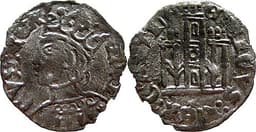
Henry II of Castile
Emperor · Medieval
47.3Total
Urus Khan
Emperor · Medieval
45.7Total
Basic Information
Born
1334
1340
Died
1379
1377
Era
Medieval
Medieval
Nationality
Castile
Golden Horde
Occupation
Emperor
Emperor
Civilization
Western
Eastern
Score Comparison
Military (10%)
25.0
50.0
Political (20%)
40.8
35.1
Influence (20%)
51.8
48.6
Legacy (20%)
45.8
40.0
Leadership (15%)
55.3
48.4
Strategy (15%)
60.0
60.0
TOTAL
47.3
45.7
Henry II of Castile — Complete Timeline
1369 AD
Battle of MontielWar◆ Major
Henry of Trastamara defeated the forces of Peter I at the Battle of Montiel. After the battle, Henry captured and killed Peter, ending the First Castilian Civil War and securing his claim to the throne.
BattleCivil WarCastile
Impact: nationaldestructive
Coronation as King of CastilePolitical Action◆ Major
Henry of Trastamara was crowned King of Castile after killing his half-brother Peter I. His coronation established the Trastamara dynasty, which would rule Castile and later Aragon for the next century.
CoronationTrastamaraCastile
Impact: national
Alliance with FrancePolitical Action◆ Major
Henry II formed a lasting alliance with France, supporting French interests in the Hundred Years' War against England. This alliance provided Castile with French military support and strengthened the Franco-Castilian axis.
AllianceFranceCastile
Impact: regionalconstructive
1370 AD
Reforms to the NobilityReform
Henry II redistributed lands and titles to his supporters, creating a new nobility loyal to the Trastamara dynasty. These reforms strengthened royal authority but also entrenched the power of the new noble class.
ReformNobilityCastile
Impact: nationalconstructive
Urus Khan — Complete Timeline
1376 AD
Conflict with TokhtamyshWar◆ Major
Urus Khan, ruler of the Blue Horde, fought against Tokhtamysh, a claimant to the Golden Horde throne. Tokhtamysh, supported by Tamerlane, challenged Urus Khan's authority, leading to military engagements that weakened Urus Khan's position.
Golden HordeCivil WarTokhtamysh
Impact: regionaldestructive
1377 AD
Death in battleWar◆ Major
Urus Khan died in battle against Tokhtamysh's forces. His death marked the end of his rule over the Blue Horde and allowed Tokhtamysh to consolidate power, eventually reuniting the Golden Horde under his leadership.
Golden HordeDeathTokhtamysh
Impact: regionaltragic
Expert Analysis
Origins
Henry II of Castile was born in 1334 as an illegitimate son of King Alfonso XI of Castile and Eleanor de Guzmán. His early life was marked by the favoritism shown to him and his siblings, which created tension with his half-brother Peter I, the legitimate heir. Henry's upbringing in the Castilian court exposed him to the intricacies of nobility and power struggles, but he lacked the formal education of a prince. His father's death in 1350 led to a power vacuum, and Henry was forced into exile after Peter I began persecuting his rivals.
Urus Khan, born around 1320, was a descendant of Genghis Khan through the Jochid line. He became the khan of the Blue Horde, the eastern part of the Golden Horde, during a period of fragmentation. His early life is poorly documented, but he likely grew up in the nomadic steppe tradition, learning warfare and leadership. He rose to prominence by consolidating power among the Mongol tribes of the region, facing challenges from rival claimants like Tokhtamysh.
Rise to Power
Henry II's rise began with the First Castilian Civil War (1351-1369), a conflict between supporters of Peter I and those of Henry. Henry gained support from the French crown and the papacy, who viewed Peter as a tyrant. In 1366, he invaded Castile with French mercenaries led by Bertrand du Guesclin, capturing major cities. The turning point came at the Battle of Montiel in 1369, where Henry's forces defeated Peter's army. Henry personally killed Peter in a duel, securing the throne and founding the Trastamara dynasty.
Urus Khan's rise was more gradual. He became khan of the Blue Horde around 1370, asserting independence from the central authority of the Golden Horde. He fought to reunify the Mongol territories and faced challenges from Tokhtamysh, a descendant of Genghis Khan who sought the throne of the Golden Horde. Urus Khan's military campaigns initially succeeded, but his inability to secure lasting alliances weakened his position. His death in battle against Tokhtamysh around 1377 marked the end of his rule.
Leadership & Governance
Henry II's leadership focused on consolidating his dynasty. He redistributed lands and titles to his supporters, creating a new nobility loyal to the Trastamara line. He formed a lasting alliance with France, supporting French interests in the Hundred Years' War, which brought Castilian naval power to bear against England. His governance was pragmatic, using patronage to secure loyalty. However, his reign saw increased power for the nobility at the expense of the crown, setting a precedent for future conflicts.
Urus Khan's governance was typical of Mongol khans, relying on tribal alliances and military strength. He maintained the traditional Mongol administrative structure but struggled to unify the fractious hordes. His leadership was more militaristic than administrative, focusing on campaigns rather than institutional reforms. His political score of 35.1 reflects his inability to build stable governance structures compared to Henry's 40.8.
Triumph & Tragedy
Henry II's greatest triumph was establishing the Trastamara dynasty, which ruled Castile for over 200 years. His victory at Montiel and the elimination of Peter I secured his legacy. His alliance with France strengthened Castile's international standing. However, his reign was marred by ongoing conflicts with Portugal and internal rebellions. His military score of 25.0 indicates limited direct military skill, relying heavily on allies like du Guesclin.
Urus Khan's triumph was his ability to maintain the Blue Horde's independence for several years, resisting Tokhtamysh's early attempts. His military score of 50.0 shows competence in battle. Yet his tragedy was dying in battle, leaving his realm fragmented. He failed to achieve his goal of reuniting the Golden Horde, and his legacy was overshadowed by Tokhtamysh's later successes.
Character & Destiny
Henry II was calculating and ruthless, as shown by his killing of his half-brother. He was a master of political maneuvering, securing foreign support and rewarding allies. His character was shaped by his illegitimate birth, driving him to legitimize his rule through force and patronage. This pragmatism allowed his dynasty to endure, but it also created a nobility that later challenged royal authority.
Urus Khan was a traditional Mongol warrior, valuing honor and direct confrontation. His decision to face Tokhtamysh in battle rather than seek diplomatic solutions may have contributed to his downfall. His personality was typical of steppe khans, prioritizing military prowess over political subtlety. This limited his ability to adapt to the changing dynamics of the Mongol empire.
Legacy
Henry II's legacy is the Trastamara dynasty, which shaped Spanish history. His reforms to the nobility created a powerful aristocracy that influenced governance for centuries. His alliance with France set the stage for Castile's involvement in European affairs. His influence score of 51.8 reflects his lasting impact on Spanish politics.
Urus Khan's legacy is more limited. He is remembered as a minor figure in the fractious history of the Golden Horde. His conflict with Tokhtamysh is a footnote in the larger narrative of Tamerlane's rise. His legacy score of 40.0 indicates his ephemeral impact, as his realm was quickly absorbed by Tokhtamysh.
Conclusion
Henry II of Castile had a greater historical impact than Urus Khan. With a total score of 47.3 versus Urus Khan's 45.7, Henry's political acumen and establishment of a long-lasting dynasty outweigh Urus Khan's military prowess. Henry's actions shaped the future of Spain and its role in Europe, while Urus Khan's death in battle left his ambitions unfulfilled. The score gap of 1.6 points, though small, reflects Henry's more enduring legacy in the annals of history.
Rankings
🥇
Henry II of CastileLeader
Mil: 25.0Pol: 40.8Inf: 51.8
47.3
🥈
Urus Khan
Mil: 50.0Pol: 35.1Inf: 48.6
45.7
+1.6 behind
How This Comparison Works
Algorithm
Each figure is scored on 6 dimensions (0—100 scale) based on structured historical data: Military (10%), Political (20%), Influence (20%), Legacy (20%), Leadership (15%), Strategy (15%). The weighted total produces the final ranking.
Data Sources
Scores are computed from structured sub-indicators in the database. Scale factors adjust for era (Ancient ×0.85, Modern ×1.0) and civilization size (Eastern ×1.05, Other ×0.80) to account for differences in population and military scale.
Maximum 3 Figures
Comparisons are limited to 2—3 figures to ensure readability and statistical meaningfulness.
Error Margins
±5 points per dimension — Sub-scores are derived from historical records with inherent uncertainty. Two figures within 5 points on a dimension should be considered roughly equivalent in that area.
Total Score Accuracy
±3 points overall — The weighted combination of 6 dimensions produces a total score with approximately ±3 points of uncertainty. Differences of less than 3 points are not statistically significant— the figures are effectively tied.
Known Limitations
- Historical records are incomplete and uneven across civilizations
- Figures from oral-tradition societies may be underrepresented
- Occupation labels can misclassify multi-role figures
- Scores measure capability and impact, not moral character
- Quantitative scoring is a comparison tool, not absolute truth
Capability Radar
Military (10%) — Battles & Warfare
Battles
45
45
Win Rate
40
40
Expansion
30
55
Political (20%) — Governance & Reform
Reform
30
25
Diplomacy
55
35
Economy
25
30
Influence (20%) — Cultural & Global Reach
Cultural
30
20
Global
20
10
Legacy (20%) — Historical Impact
Historical
40
25
Longevity
35
15
Leadership (15%) — Power & Stability
Tenure
50
40
Stability
20
20
Strategy (15%) — Tactics & Innovation
Strategy
40
50
Tactics
35
50
Reform
20
30
Similar Comparisons
Comments & Discussion
No comments yet. Be the first to share your thoughts!