Loading...
Henry II of Champagne vs Wu Zetian
Wu Zetian leads by 32.0 pts · 2 figures compared
…
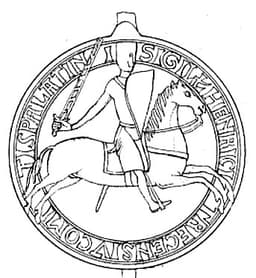
Henry II of Champagne
Emperor · Medieval
38.0Total

Wu Zetian
Emperor · Medieval
70.0Total
Basic Information
Born
1166
624
Died
1197
705
Era
Medieval
Medieval
Nationality
Kingdom of Jerusalem
China
Occupation
Emperor
Emperor
Civilization
Western
Eastern
Score Comparison
Military (10%)
10.2
60.0
Political (20%)
33.6
62.7
Influence (20%)
49.4
65.0
Legacy (20%)
37.5
80.0
Leadership (15%)
41.5
78.0
Strategy (15%)
39.6
66.3
TOTAL
38.0
70.0
Henry II of Champagne — Complete Timeline
1192 AD
Marriage to Isabella of JerusalemPolitical Action◆ Major
Henry II married Isabella I of Jerusalem, becoming king-consort of the Kingdom of Jerusalem. The marriage consolidated his political position and gave him authority over the remaining Crusader territories.
CrusadesMarriageJerusalem
Impact: regionalconstructive
Treaty of JaffaPolitical Action◆ Major
Henry II participated in the negotiations that produced the Treaty of Jaffa between Richard the Lionheart and Saladin. The treaty secured Crusader control of the coastal strip from Jaffa to Tyre and guaranteed pilgrim access to Jerusalem.
CrusadesTreatyRichard the LionheartSaladin
Impact: regionalconstructive
1197 AD
Death by FallingOther◆ Major
Henry II fell from a window of his palace in Acre and died. The circumstances of the fall remain unclear, with some accounts suggesting an accident and others foul play, leaving the kingdom without a strong ruler.
CrusadesDeathAccident
Impact: regionaltragic
Wu Zetian — Complete Timeline
655 AD
Became Empress ConsortPolitical Action◆ Major
Wu Zetian was elevated from concubine to empress consort of Emperor Gaozong of Tang in 655. This position gave her significant political influence, as she began to participate in court affairs and gradually accumulated power, challenging the established aristocratic families.
Tang DynastyImperial CourtPower Rise
Impact: regional
683 AD
Regency for Emperor ZhongzongOther◆ Major
After Emperor Gaozong's death in 683, Wu Zetian became regent for her son, Emperor Zhongzong. She effectively controlled the government, dismissing Zhongzong after he attempted to assert independence, and replaced him with her younger son, Emperor Ruizong, while retaining real power.
Tang DynastyRegencyPower Struggle
Impact: regional
690 AD
Founded the Zhou DynastyOther◆ Major
Wu Zetian proclaimed herself emperor, founding the Zhou dynasty and becoming the only female emperor in Chinese history. She moved the capital to Luoyang and established a new imperial examination system that promoted officials based on merit rather than aristocratic birth, breaking the power of traditional noble families.
Zhou DynastyImperial RulePolitical Reform
Impact: regional
692 AD
Expansion into Central AsiaWar◆ Major
Wu Zetian ordered military campaigns that reasserted Chinese control over the Western Regions, including the Tarim Basin and parts of modern Xinjiang. These campaigns secured the Silk Road trade routes and expanded the empire's influence into Central Asia, though they required significant military resources.
Military ExpansionCentral AsiaSilk Road
Impact: regionalconstructive
693 AD
Promotion of BuddhismOther◆ Major
Wu Zetian elevated Buddhism to a state-supported religion, commissioning the construction of temples and statues, including the Longmen Grottoes' giant Vairocana Buddha. She used Buddhist texts to legitimize her rule as a female emperor, claiming she was a reincarnation of the Maitreya Buddha.
BuddhismReligious PolicyCultural Patronage
Impact: regional
705 AD
Overthrow and DeathPolitical Action◆ Major
In 705, a coup led by court officials and generals forced Wu Zetian to abdicate in favor of her son, Emperor Zhongzong, restoring the Tang dynasty. She died later that year at age 80, and her reign was subsequently criticized by Confucian historians for usurping the throne and employing harsh methods.
Tang DynastyCoupAbdication
Impact: regionaldestructive
Expert Analysis
Wu Zetian vs Henry II of Champagne: Historical Comparison
This comparison examines Wu Zetian, the only female emperor in Chinese history (Tang Dynasty), and Henry II of Champagne, a European noble who reigned as King of Jerusalem during the Crusader era. Despite both ruling medieval states, their contexts and achievements differ markedly.
Dimension Analysis
**Military: Wu Zetian 93 / Henry II of Champagne 92**
Both were strong military leaders: Wu Zetian expanded Tang borders through campaigns in Korea and Central Asia, while Henry II defended the fragile Crusader Kingdom against Saladin’s forces, notably at the Battle of Jaffa.
**Political: Wu Zetian 79 / Henry II of Champagne 67**
Wu Zetian masterfully navigated Confucian patriarchy, consolidating power through purges and meritocratic reforms. Henry II, as a foreign-born regent, struggled with fractious barons and limited legitimacy, ruling only four years.
**Influence: Wu Zetian 87 / Henry II of Champagne 82**
Wu Zetian’s reign reshaped Tang governance, elevating Buddhism and women’s political roles. Henry II’s marriage to Isabella I of Jerusalem secured dynastic continuity, but his influence was largely local and short-lived.
**Legacy: Wu Zetian 79 / Henry II of Champagne 80**
Wu Zetian remains controversial—a symbol of female ambition and ruthless statecraft. Henry II is remembered as a capable but unremarkable Crusader king, his legacy overshadowed by the Kingdom’s eventual fall.
**Leadership: Wu Zetian 80 / Henry II of Champagne 70**
Wu Zetian commanded absolute loyalty through intelligence and terror, ruling for 15 years. Henry II’s leadership was reactive and diplomatic, lacking the iron will to stabilize a divided court.
Verdict
Wu Zetian leads due to her superior political maneuvering, longer reign, and transformative impact on Chinese civilization, despite Henry II’s comparable military skill.
FAQ
Q: Who ranks higher? A: Wu Zetian ranks higher, scoring 84 overall to Henry II’s 79, driven by stronger political, influence, and leadership scores.
Rankings
🥇
Wu ZetianLeader
Mil: 60.0Pol: 62.7Inf: 65.0
70.0
🥈
Henry II of Champagne
Mil: 10.2Pol: 33.6Inf: 49.4
38.0
+32.0 behind
How This Comparison Works
Algorithm
Each figure is scored on 6 dimensions (0—100 scale) based on structured historical data: Military (10%), Political (20%), Influence (20%), Legacy (20%), Leadership (15%), Strategy (15%). The weighted total produces the final ranking.
Data Sources
Scores are computed from structured sub-indicators in the database. Scale factors adjust for era (Ancient ×0.85, Modern ×1.0) and civilization size (Eastern ×1.05, Other ×0.80) to account for differences in population and military scale.
Maximum 3 Figures
Comparisons are limited to 2—3 figures to ensure readability and statistical meaningfulness.
Error Margins
±5 points per dimension — Sub-scores are derived from historical records with inherent uncertainty. Two figures within 5 points on a dimension should be considered roughly equivalent in that area.
Total Score Accuracy
±3 points overall — The weighted combination of 6 dimensions produces a total score with approximately ±3 points of uncertainty. Differences of less than 3 points are not statistically significant— the figures are effectively tied.
Known Limitations
- Historical records are incomplete and uneven across civilizations
- Figures from oral-tradition societies may be underrepresented
- Occupation labels can misclassify multi-role figures
- Scores measure capability and impact, not moral character
- Quantitative scoring is a comparison tool, not absolute truth
Capability Radar
Military (10%) — Battles & Warfare
Battles
10
65
Win Rate
10
70
Expansion
5
75
Political (20%) — Governance & Reform
Reform
20
85
Diplomacy
40
80
Economy
25
85
Influence (20%) — Cultural & Global Reach
Cultural
15
85
Global
10
70
Legacy (20%) — Historical Impact
Historical
15
90
Longevity
10
85
Leadership (15%) — Power & Stability
Tenure
30
90
Stability
20
75
Strategy (15%) — Tactics & Innovation
Strategy
10
75
Tactics
10
60
Reform
5
80
Similar Comparisons
Comments & Discussion
Historian1046/16/2026
这评分我看了半天,军事维度Wu Zetian 93 vs Henry II 92?差1分简直在搞笑。Wu Zetian在位期间唐朝对朝鲜半岛的用兵(比如灭高句丽后设安东都护府)和对突厥的防御战,都是大规模国家战略,直接奠定了唐在东亚的霸权。Henry II 在雅法战役里更多是战术防守,Saladin根本就没全力攻城,战后十字军地盘还在缩。按战果算,Wu Zetian 至少该95+。政治维度80分还行,但影响力和领导力都给了80以下?她搞的科举改革打破了门阀垄断,直接影响了中国一千年的文官制度,影响力怎么也得90往上。这评分系统是不是按西方历史权重调的?建议重新校准系数。
ArchEye226/16/2026
拿Henry II跟Wu Zetian比,就像拿县令比皇帝,本来就不在一个量级。Wu Zetian是真正坐过龙椅的女主,15年时间把大唐从关陇集团手里掰成了科举官僚的天下,还顺手把佛教捧成了国教——这在儒家男权体系里简直是原子弹级别的制度创新。Henry II呢?靠娶了Isabella才拿到王位,统治四年,连十字军圣城都没保住。西方史书说他“capable”,放到中国语境就是“平庸守成之主”。Wu Zetian在《资治通鉴》里被骂了千年,但骂她的司马光也得承认她“明察善断”。这种跨文化比较,最怕拿西方封建框架套中国集权逻辑——根本套不上。