Loading...
Henry II vs Issik Qaghan
Henry II leads by 7.7 pts · 2 figures compared
…
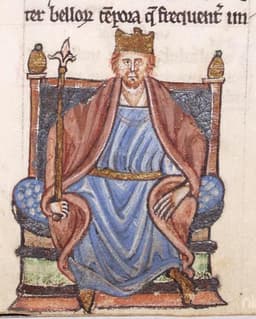
Henry II
Emperor · Medieval
54.7Total

Issik Qaghan
Emperor · Medieval
47.0Total
Basic Information
Born
973
520
Died
1024
553
Era
Medieval
Medieval
Nationality
Holy Roman Empire
Gokturk Khaganate
Occupation
Emperor
Emperor
Civilization
Western
Eastern
Score Comparison
Military (10%)
30.0
47.5
Political (20%)
68.0
36.5
Influence (20%)
60.0
50.2
Legacy (20%)
50.0
41.7
Leadership (15%)
53.2
51.9
Strategy (15%)
60.0
60.0
TOTAL
54.7
47.0
Henry II — Complete Timeline
1002 AD
Election as King of GermanyPolitical Action◆ Major
Following the death of Otto III, Henry II was elected King of Germany in 1002 after a contested succession. He secured the throne against rival claimants, including Ekkehard of Meissen, consolidating Ottonian rule.
SuccessionOttonian Dynasty
Impact: regional
1007 AD
Foundation of the Diocese of BambergCultural◆ Major
Henry II founded the Diocese of Bamberg in 1007, establishing a new bishopric in Franconia. He endowed it with extensive lands and privileges, making it a center of imperial church policy and missionary activity.
Church FoundationImperial Church System
Impact: regionalconstructive
1014 AD
Coronation as Holy Roman EmperorPolitical Action◆ Major
Pope Benedict VIII crowned Henry II Holy Roman Emperor in Rome on February 14, 1014. This coronation reaffirmed the alliance between the Empire and the Papacy and legitimized Henry's imperial authority.
CoronationImperial Authority
Impact: regionalconstructive
1021 AD
Third Italian CampaignWar
Henry II led a military campaign to southern Italy in 1021-1022 to assert imperial authority over the Byzantine catapanate and Lombard principalities. He captured the fortress of Troia but failed to permanently secure Byzantine territories.
Italian CampaignByzantine Conflict
Impact: regional
Issik Qaghan — Complete Timeline
552 AD
Accession as Khagan of the GöktürksPolitical Action◆ Major
Issik Qaghan succeeded his father Bumin Qaghan as the second ruler of the First Turkic Khaganate. His reign continued the consolidation of the newly established empire in Central Asia.
SuccessionTurkic KhaganateCentral Asia
Impact: regional
553 AD
Western expansion of the Turkic KhaganateWar◆ Major
Issik Qaghan led military campaigns westward, expanding the Turkic state's territory beyond the Altai Mountains. This expansion brought the G
Territorial ExpansionMilitary CampaignSteppe
Impact: regionalconstructive
Death and successionPolitical Action
Issik Qaghan died after a short reign of about one year. He was succeeded by his brother Muqan Qaghan, who further expanded the khaganate. Issik's brief rule set the stage for the empire's rapid growth.
SuccessionDeathTurkic Khaganate
Impact: regional
Expert Analysis
Origins
Henry II was born in 973 to Henry the Wrangler, Duke of Bavaria, and Princess Gisela of Burgundy. As a member of the Ottonian dynasty, he received a clerical education under Bishop Wolfgang of Regensburg, which shaped his deep piety and administrative skills. His early years were marked by the struggle for power in the fragmented Holy Roman Empire. In contrast, Issik Qaghan was the son of Bumin Qaghan, founder of the First Turkic Khaganate. Born around 540 CE, little is known of his early life, but he was raised in the steppe tradition of the Ashina clan, learning horsemanship and warfare. His background was one of rising Turkic power in Central Asia.
Rise to Power
Henry II rose after the death of Emperor Otto III in 1002. The succession was contested, with rival claims from Ekkehard of Meissen and Herman of Swabia. Henry secured his election as King of Germany on June 7, 1002, at Merseburg, after gaining support from key nobles and bishops. He was crowned by the Archbishop of Mainz. Issik Qaghan succeeded his father upon Bumin's death in 552 CE. Bumin had founded the khaganate by defeating the Rouran Khaganate. Issik's accession was likely smooth, as he continued his father's policies of consolidating Turkic tribes and expanding westward. His rise was swift but brief.
Leadership & Governance
Henry II's leadership was characterized by close cooperation with the Church. He founded the Diocese of Bamberg in 1007, endowing it with lands to strengthen ecclesiastical authority in Franconia. He also supported the Cluniac reforms. Politically, he scored 68.0, reflecting his ability to navigate feudal relationships. He secured the imperial crown from Pope Benedict VIII in 1014, reaffirming the Ottonian system of church-state alliance. Issik Qaghan, with a political score of 36.5, ruled as a steppe khagan, relying on personal charisma and military success. His governance was less institutionalized; he expanded the khaganate through conquest and tribute, bringing the Göktürks into contact with the Hephthalites and Sasanian Persia.
Triumph & Tragedy
Henry II's greatest triumph was his canonization in 1146, the only Holy Roman Emperor to be named a saint. His founding of Bamberg created a lasting religious center. However, his military campaigns scored only 30.0; his third Italian campaign (1021-1022) failed to permanently subdue Byzantine territories. Issik Qaghan's triumph was the westward expansion of the Turkic state, laying groundwork for later empires. His tragedy was his short reign—about one year—which limited his achievements. He died around 553 CE, succeeded by his brother Muqan. His brief rule meant he left no lasting personal legacy compared to his father or brother.
Character & Destiny
Henry II was pious and pragmatic, using religious authority to bolster his rule. His character earned him sainthood but also criticism for prioritizing church over state centralization. Issik Qaghan was likely a capable warrior, but his early death cut short his potential. Historical records are sparse, but his expansionist drive continued under his successors. Henry's destiny was shaped by his longevity (reigned 1002-1024) and church ties, while Issik's was cut short by fate.
Legacy
Henry II's legacy endures through the Diocese of Bamberg, a UNESCO World Heritage site. His canonization set a precedent for ruler sanctity. He scored 60.0 in influence and 50.0 in legacy. Issik Qaghan's legacy is indirect: his western campaigns paved the way for the Turkic Khaganate to dominate Central Asia, influencing later Turkic and Mongol empires. He scored 50.2 in influence and 41.7 in legacy. Henry's institutional impact is more tangible, while Issik's is part of a broader historical process.
Conclusion
Henry II had greater impact due to his longer reign, institutional foundations, and spiritual legacy. His political score of 68.0 versus Issik's 36.5, and total score of 54.7 versus 47.0, reflect his effectiveness. While Issik's military expansion (47.5) exceeded Henry's (30.0), Henry's contributions to church-state relations and lasting diocesan structures outweigh Issik's brief rule. Henry II shaped medieval Europe; Issik Qaghan was a transient figure in Turkic history. The data supports Henry II as the more significant historical figure.
Rankings
🥇
Henry IILeader
Mil: 30.0Pol: 68.0Inf: 60.0
54.7
🥈
Issik Qaghan
Mil: 47.5Pol: 36.5Inf: 50.2
47.0
+7.7 behind
How This Comparison Works
Algorithm
Each figure is scored on 6 dimensions (0—100 scale) based on structured historical data: Military (10%), Political (20%), Influence (20%), Legacy (20%), Leadership (15%), Strategy (15%). The weighted total produces the final ranking.
Data Sources
Scores are computed from structured sub-indicators in the database. Scale factors adjust for era (Ancient ×0.85, Modern ×1.0) and civilization size (Eastern ×1.05, Other ×0.80) to account for differences in population and military scale.
Maximum 3 Figures
Comparisons are limited to 2—3 figures to ensure readability and statistical meaningfulness.
Error Margins
±5 points per dimension — Sub-scores are derived from historical records with inherent uncertainty. Two figures within 5 points on a dimension should be considered roughly equivalent in that area.
Total Score Accuracy
±3 points overall — The weighted combination of 6 dimensions produces a total score with approximately ±3 points of uncertainty. Differences of less than 3 points are not statistically significant— the figures are effectively tied.
Known Limitations
- Historical records are incomplete and uneven across civilizations
- Figures from oral-tradition societies may be underrepresented
- Occupation labels can misclassify multi-role figures
- Scores measure capability and impact, not moral character
- Quantitative scoring is a comparison tool, not absolute truth
Capability Radar
Military (10%) — Battles & Warfare
Battles
45
45
Win Rate
50
50
Expansion
35
60
Political (20%) — Governance & Reform
Reform
55
25
Diplomacy
60
40
Economy
50
30
Influence (20%) — Cultural & Global Reach
Cultural
50
25
Global
40
15
Legacy (20%) — Historical Impact
Historical
55
30
Longevity
45
20
Leadership (15%) — Power & Stability
Tenure
65
35
Stability
55
30
Strategy (15%) — Tactics & Innovation
Strategy
45
55
Tactics
40
40
Reform
30
30
Similar Comparisons
Comments & Discussion
No comments yet. Be the first to share your thoughts!