Loading...
Agilulf vs Henry II
Henry II leads by 9.0 pts · 2 figures compared
…
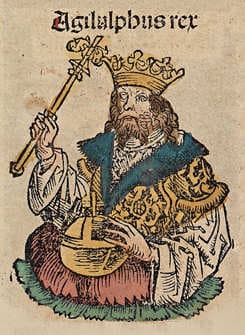
Agilulf
Emperor · Medieval
45.7Total
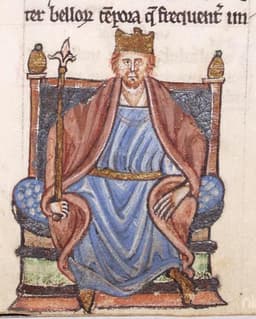
Henry II
Emperor · Medieval
54.7Total
Basic Information
Born
555
973
Died
616
1024
Era
Medieval
Medieval
Nationality
Lombards
Holy Roman Empire
Occupation
Emperor
Emperor
Civilization
Western
Western
Score Comparison
Military (10%)
50.0
30.0
Political (20%)
36.5
68.0
Influence (20%)
49.4
60.0
Legacy (20%)
40.8
50.0
Leadership (15%)
58.8
53.2
Strategy (15%)
38.6
60.0
TOTAL
45.7
54.7
Agilulf — Complete Timeline
590 AD
Conversion from Arianism to CatholicismCultural◆ Major
Agilulf converted from Arian Christianity to Catholicism, aligning the Lombard kingdom with the Papacy and the majority of the Italian population. This shift reduced religious tensions and facilitated integration with the Romanized populace.
Religious ConversionLombard KingdomCatholic Church
Impact: regionalconstructive
593 AD
Siege of RomeWar
Agilulf besieged Rome, threatening the city and Pope Gregory I. The siege was lifted after negotiations, with the Lombards withdrawing in exchange for tribute. This event highlighted the Lombard military threat to the Papacy.
SiegeLombard-Papal ConflictMilitary Campaign
Impact: regionaldestructive
598 AD
Peace Treaty with the Byzantine EmpirePolitical Action◆ Major
Agilulf negotiated a peace treaty with the Byzantine Exarch of Ravenna, ending decades of intermittent warfare. The treaty secured Lombard control over much of northern Italy and established a period of stability.
DiplomacyByzantine-Lombard RelationsPeace
Impact: regionalconstructive
Henry II — Complete Timeline
1002 AD
Election as King of GermanyPolitical Action◆ Major
Following the death of Otto III, Henry II was elected King of Germany in 1002 after a contested succession. He secured the throne against rival claimants, including Ekkehard of Meissen, consolidating Ottonian rule.
SuccessionOttonian Dynasty
Impact: regional
1007 AD
Foundation of the Diocese of BambergCultural◆ Major
Henry II founded the Diocese of Bamberg in 1007, establishing a new bishopric in Franconia. He endowed it with extensive lands and privileges, making it a center of imperial church policy and missionary activity.
Church FoundationImperial Church System
Impact: regionalconstructive
1014 AD
Coronation as Holy Roman EmperorPolitical Action◆ Major
Pope Benedict VIII crowned Henry II Holy Roman Emperor in Rome on February 14, 1014. This coronation reaffirmed the alliance between the Empire and the Papacy and legitimized Henry's imperial authority.
CoronationImperial Authority
Impact: regionalconstructive
1021 AD
Third Italian CampaignWar
Henry II led a military campaign to southern Italy in 1021-1022 to assert imperial authority over the Byzantine catapanate and Lombard principalities. He captured the fortress of Troia but failed to permanently secure Byzantine territories.
Italian CampaignByzantine Conflict
Impact: regional
Expert Analysis
Origins
Agilulf (c. 555–616) was a Lombard nobleman who became king of the Lombards in 590 after marrying Theodelinda, the widow of his predecessor Authari. The Lombards were a Germanic people who had invaded Italy in 568, establishing a kingdom in the north. Agilulf was born into the Lombard warrior aristocracy; little is known of his early life. He was initially an Arian Christian, following the Lombard tradition, but his wife Theodelinda was a devout Catholic. Her influence would shape his reign.
Henry II (973–1024) was born into the Ottonian dynasty, the son of Henry II, Duke of Bavaria, and Gisela of Burgundy. Educated by clergy, he was groomed for rule. His early years were marked by the political turmoil of the Holy Roman Empire after the death of Otto III. Henry II was elected King of Germany in 1002 after a contested succession, defeating rivals such as Hermann of Swabia.
Rise to Power
Agilulf's rise came through marriage and military prowess. He was a duke (dux) of Turin when he married Queen Theodelinda in 590, becoming king. His early reign focused on consolidating Lombard control in Italy. He faced threats from the Byzantine Empire, which still held parts of Italy, and from the Franks. In 593, he besieged Rome, threatening Pope Gregory I. The siege was lifted after negotiations, with Agilulf withdrawing in exchange for tribute. This event marked his first major confrontation with the Papacy.
Henry II's rise was more contested. After Otto III's death in 1002, Henry claimed the throne but faced opposition from several German nobles. He secured the support of the Church and key dukes, culminating in his election at Merseburg. He was crowned King of Germany on June 7, 1002. He spent years consolidating power, suppressing rebellions in Bavaria and Swabia. His coronation as Holy Roman Emperor by Pope Benedict VIII on February 14, 1014, cemented his authority.
Leadership & Governance
Agilulf's leadership was pragmatic. He converted from Arianism to Catholicism around 603, aligning the Lombard kingdom with the Papacy and the majority of the Italian population. This conversion scored high in political acumen (36.5) and leadership (58.8). He negotiated a peace treaty with the Byzantine Exarch of Ravenna in 605, securing Lombard control over northern Italy and ending decades of war. His governance focused on stability, but his military score of 50.0 reflects limited expansion.
Henry II ruled with a strong alliance with the Church. He founded the Diocese of Bamberg in 1007, endowing it with lands to strengthen imperial control in Franconia. His political score of 68.0 reflects his ability to manage the German princes and the Papacy. He led three Italian campaigns to assert imperial authority, but his military score of 30.0 indicates limited success. He relied on diplomacy and church patronage rather than warfare.
Triumph & Tragedy
Agilulf's greatest triumph was his conversion, which integrated the Lombards into Catholic Europe and reduced conflict with the Papacy. The peace with Byzantium was also a success, allowing the Lombard kingdom to flourish. His tragedy was the failure to conquer all of Italy; the Lombards remained confined to the north. The siege of Rome, though lifted, showed his inability to capture the city.
Henry II's triumph was his canonization in 1146, the only Holy Roman Emperor to become a saint. His foundation of Bamberg Diocese was a lasting legacy. His tragedy was his failure in southern Italy; his third Italian campaign (1021-1022) ended with limited gains. He also failed to secure a strong succession, as he died without children, ending the Ottonian dynasty.
Character & Destiny
Agilulf was a pragmatic ruler, willing to change religion for political gain. His conversion shows adaptability. His character shaped a destiny of stability but not greatness. He avoided conflict when possible, earning a strategy score of 38.6.
Henry II was deeply pious, earning his saintly reputation. His character was driven by a sense of duty to the Church and Empire. This piety led to his canonization but also to political entanglements with the Papacy. His leadership score of 53.2 reflects his effectiveness, but his military weakness limited his impact.
Legacy
Agilulf's legacy is the conversion of the Lombards to Catholicism, which influenced Italian history. His peace with Byzantium allowed Lombard rule to continue until Charlemagne's conquest. His influence score of 49.4 is moderate.
Henry II's legacy is greater. He strengthened the Church-State alliance, and his canonization made him a model Christian ruler. The Diocese of Bamberg remains a bishopric today. His legacy score of 50.0 is slightly higher than Agilulf's 40.8.
Conclusion
Henry II had a greater impact due to his political and religious influence. His total score of 54.7 exceeds Agilulf's 45.7. Henry's canonization and founding of Bamberg had lasting effects on European history, while Agilulf's conversion, though important, was less transformative. Henry II's role as a saint-emperor shaped medieval ideals of kingship.
Rankings
🥇
Henry IILeader
Mil: 30.0Pol: 68.0Inf: 60.0
54.7
🥈
Agilulf
Mil: 50.0Pol: 36.5Inf: 49.4
45.7
+9.0 behind
How This Comparison Works
Algorithm
Each figure is scored on 6 dimensions (0—100 scale) based on structured historical data: Military (10%), Political (20%), Influence (20%), Legacy (20%), Leadership (15%), Strategy (15%). The weighted total produces the final ranking.
Data Sources
Scores are computed from structured sub-indicators in the database. Scale factors adjust for era (Ancient ×0.85, Modern ×1.0) and civilization size (Eastern ×1.05, Other ×0.80) to account for differences in population and military scale.
Maximum 3 Figures
Comparisons are limited to 2—3 figures to ensure readability and statistical meaningfulness.
Error Margins
±5 points per dimension — Sub-scores are derived from historical records with inherent uncertainty. Two figures within 5 points on a dimension should be considered roughly equivalent in that area.
Total Score Accuracy
±3 points overall — The weighted combination of 6 dimensions produces a total score with approximately ±3 points of uncertainty. Differences of less than 3 points are not statistically significant— the figures are effectively tied.
Known Limitations
- Historical records are incomplete and uneven across civilizations
- Figures from oral-tradition societies may be underrepresented
- Occupation labels can misclassify multi-role figures
- Scores measure capability and impact, not moral character
- Quantitative scoring is a comparison tool, not absolute truth
Capability Radar
Military (10%) — Battles & Warfare
Battles
20
45
Win Rate
25
50
Expansion
20
35
Political (20%) — Governance & Reform
Reform
30
55
Diplomacy
35
60
Economy
30
50
Influence (20%) — Cultural & Global Reach
Cultural
20
50
Global
15
40
Legacy (20%) — Historical Impact
Historical
25
55
Longevity
20
45
Leadership (15%) — Power & Stability
Tenure
40
65
Stability
35
55
Strategy (15%) — Tactics & Innovation
Strategy
25
45
Tactics
20
40
Reform
15
30
Similar Comparisons
Comments & Discussion
No comments yet. Be the first to share your thoughts!