Loading...
Muhammad bin Tughluq vs Napoleon Bonaparte
Napoleon Bonaparte leads by 22.5 pts · 2 figures compared
…
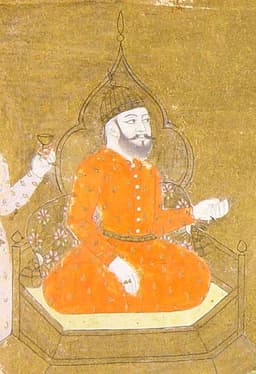
Muhammad bin Tughluq
Emperor · Medieval
48.4Total

Napoleon Bonaparte
General · Modern
70.9Total
Basic Information
Born
1290
1769
Died
1351
1821
Era
Medieval
Modern
Nationality
India
France
Occupation
Emperor
General
Civilization
Indian
Western
Score Comparison
Military (10%)
20.0
94.0
Political (20%)
40.8
72.0
Influence (20%)
57.2
40.0
Legacy (20%)
47.5
80.0
Leadership (15%)
65.0
78.0
Strategy (15%)
43.3
90.0
TOTAL
48.4
70.9
Muhammad bin Tughluq — Complete Timeline
1325 AD
Accession to the Delhi SultanatePolitical Action
Muhammad bin Tughluq succeeded his father Ghiyas-ud-din Tughluq as sultan of Delhi. He inherited a vast empire but soon embarked on ambitious and often controversial policies that would define his reign.
Delhi SultanateTughluqSuccession
Impact: regional
1327 AD
Transfer of Capital to DaulatabadPolitical Action◆ Major
Muhammad bin Tughluq ordered the transfer of the capital from Delhi to Daulatabad in the Deccan, forcing the entire population and administration to move. The plan failed due to water scarcity and logistical issues, and the capital was later moved back to Delhi.
Capital TransferDaulatabadFailed Reform
Impact: regionaldestructive
1329 AD
Introduction of Token CurrencyReform◆ Major
Muhammad bin Tughluq introduced a token currency made of copper and brass, intended to replace silver coins. The government failed to prevent counterfeiting, leading to economic chaos and the eventual withdrawal of the currency at great loss.
Token CurrencyEconomic ReformFailure
Impact: regionaldestructive
1330 AD
Campaign in the Deccan and South IndiaWar◆ Major
Muhammad bin Tughluq led military campaigns into the Deccan and southern India, attempting to consolidate control over the region. He faced rebellions from local rulers, including the Hoysala and Kakatiya, and the campaigns drained the treasury.
DeccanSouthern IndiaRebellion
Impact: regional
1335 AD
Revolt of the Nobility and Provincial GovernorsPolitical Action◆ Major
Muhammad bin Tughluq faced multiple revolts from nobles and provincial governors, including in Bengal, Gujarat, and the Deccan. These rebellions weakened the central authority and led to the fragmentation of the Delhi Sultanate, with the rise of independent states like the Bahmani Sultanate.
RevoltNobilityFragmentation
Impact: regionaldestructive
1340 AD
Famine in Northern IndiaOther◆ Major
A severe famine struck northern India during Muhammad bin Tughluq's reign, exacerbated by his failed economic policies and military campaigns. The famine caused widespread suffering and depopulation, further destabilizing the empire.
FamineEconomic CrisisDepopulation
Impact: regionaltragic
Napoleon Bonaparte — Complete Timeline
1799 AD
Coup of 18 BrumaireOther◆ Major
Napoleon Bonaparte, with support from his brother Lucien and key political figures, overthrew the Directory in a bloodless coup. He established the Consulate with himself as First Consul, effectively becoming the ruler of France. This event ended the French Revolution's most unstable period.
French RevolutionCoupRise to Power
Impact: regional
1804 AD
Promulgation of the Napoleonic CodeOther◆ Major
Napoleon enacted the Civil Code of the French, known as the Napoleonic Code, a comprehensive set of laws that replaced the fragmented feudal legal systems. The code established legal equality, protected property rights, and secularized law. It became the basis for legal systems in many European and world countries.
Legal ReformNapoleonic CodeCivil Law
Impact: globalconstructive
1805 AD
Battle of AusterlitzWar◆ Major
Napoleon's Grande Arm
Napoleonic WarsBattleDecisive Victory
Impact: global
1812 AD
Invasion of RussiaWar◆ Major
Napoleon led the Grande Arm
Napoleonic WarsInvasionDisaster
Impact: globaldestructive
1815 AD
Battle of WaterlooWar◆ Major
Napoleon's French army was defeated by the combined forces of the Duke of Wellington's Anglo-Allied army and Gebhard Leberecht von Bl
Napoleonic WarsBattleFinal Defeat
Impact: globaldestructive
Expert Analysis
muhammad-bin-tughluq-vs-napoleon-bonaparte
# The Emperor and the Sultan: Ambition, Genius, and the Price of Greatness
On a cold December morning in 1805, Napoleon Bonaparte stood on a hill overlooking the frozen battlefield of Austerlitz. Below him, the combined armies of Russia and Austria marched into a trap he had laid with surgical precision. By nightfall, he had destroyed two empires in a single day. Four centuries earlier and five thousand miles away, Muhammad bin Tughluq stood in the burning heat of Daulatabad, watching his capital city empty itself of life. The people he had forced to march eight hundred miles from Delhi were dying of thirst, disease, and exhaustion. Both men dreamed of transforming their worlds. One succeeded beyond measure. The other failed so completely that his name became a byword for folly. What separated them was not intelligence, but the shape of their ambition—and their understanding of human nature.
Origins
Napoleon was born in 1769 on the island of Corsica, a place that had just been sold to France by Genoa. His family were minor nobles, poor but proud, speaking Italian and resenting their new masters. He was short, awkward, and fiercely ambitious—a boy who read military history instead of playing games. The French Revolution, which erupted when he was twenty, shattered the old order and opened paths that had been closed to men of his birth. He seized them with both hands.
Muhammad bin Tughluq was born in 1290 into the ruling house of the Delhi Sultanate. His father was a general who had seized the throne, and Muhammad grew up in a world of court intrigue, Persian poetry, and endless war. He was brilliant—a scholar of philosophy, medicine, and astronomy, fluent in Arabic and Persian, a master of calligraphy. But he was also the son of a usurper, and he knew that every throne is surrounded by knives. Where Napoleon saw a world to be conquered, Muhammad saw a machine to be perfected.
Rise to Power
Napoleon’s rise was a masterpiece of timing and self-invention. In 1793, at age twenty-four, he drove the British out of Toulon with a brilliant artillery plan. Two years later, he saved the revolutionary government from a royalist uprising with a "whiff of grapeshot"—cannon fire into a Parisian mob. Then came Italy. In 1796, he took command of a starving, mutinous army and turned it into a conquering force, winning six battles in a single month. He was twenty-seven. The French people, tired of chaos, saw him as their savior. In 1799, he staged a coup and made himself First Consul. By 1804, he was Emperor.
Muhammad bin Tughluq’s accession in 1325 was smoother but no less dramatic. He was thirty-five, already a seasoned administrator and general. His father died while returning from a campaign in Bengal, and the nobles, weary of civil war, accepted him without resistance. The empire he inherited was the largest in India—stretching from the Indus to the Bay of Bengal, from the Himalayas to the Deccan. He had everything: a vast treasury, a loyal army, and a mind that could grasp the most complex problems. He also had something far more dangerous: a belief that intelligence alone could solve anything.
Leadership & Governance
Napoleon governed with a blend of iron discipline and calculated generosity. He centralized the state, created the Bank of France, and—most enduringly—codified French law into the Napoleonic Code, which abolished feudalism, protected property rights, and established merit-based advancement. He appointed officials based on ability, not birth. He won over his enemies by giving them titles and lands. But he also demanded absolute loyalty. When his own brother Lucien opposed him, Napoleon exiled him. When the Pope resisted his authority, he arrested him.
Muhammad bin Tughluq governed with a mind that saw only logic, never human weakness. In 1327, he ordered the transfer of his entire capital from Delhi to Daulatabad, eight hundred miles south. The reason was strategic: he wanted a capital closer to the Deccan, which he was trying to conquer. But he forced every man, woman, and child to march, and the road became a graveyard. The historian Ibn Battuta, who served in his court, wrote that "the city became a desert." In 1329, Muhammad introduced token currency—copper coins meant to replace silver. The government failed to control counterfeiting, and the economy collapsed. Merchants refused to accept the coins. Trade froze. The poor starved.
Napoleon’s military genius was his greatest weapon. At Austerlitz in 1805, he lured the allies into attacking his deliberately weakened right flank, then smashed their center with a hidden corps. At Jena in 1806, he destroyed the Prussian army in a single day. His campaigns were studied for centuries. But his political wisdom was more complex. He understood power, but he also understood people—their vanity, their greed, their need for glory. He gave them victories, and they gave him their loyalty.
Muhammad bin Tughluq was no coward. He led campaigns into the Deccan and South India, personally commanding armies and subduing rebel kingdoms. But his strategy was erratic. He would conquer a province, then leave it ungarrisoned. He would punish a rebel, then forgive him and restore his lands. The historian Barani wrote that "the sultan was a mixture of opposites: generous and cruel, just and tyrannical, wise and foolish." His reforms failed not because they were stupid, but because they were imposed without patience, without mercy, without any understanding that people cannot be moved like chess pieces.
Triumph & Tragedy
Napoleon’s greatest triumph was Austerlitz. His greatest tragedy was Russia. In 1812, he invaded with 600,000 men. He won every battle. But the Russians burned their own land, refused to surrender, and let winter do their work. Napoleon reached Moscow to find it a smoking ruin. He retreated through snow and ice, losing 500,000 men. His empire never recovered. In 1814, the allies invaded France. In 1815, he returned from exile for a hundred days, only to be crushed at Waterloo. He died in 1821 on a remote Atlantic island, abandoned by everyone.
Muhammad bin Tughluq’s tragedy was slower but more complete. By 1335, revolts had broken out across his empire. Bengal, Gujarat, the Deccan—one province after another slipped away. In 1340, a terrible famine struck northern India, made worse by his failed economic policies. The sultan watched his empire crumble, unable to stop it. He died in 1351 while campaigning in Sindh, a bitter and isolated man. His own chroniclers wrote that "no one wept for him."
Character & Destiny
Napoleon was a man of immense self-discipline and relentless energy. He slept four hours a night, read constantly, and dictated orders to multiple secretaries simultaneously. He was also arrogant, paranoid, and incapable of sharing power. His ambition was a fire that consumed everything—including himself. "Power is my mistress," he once said. "I have worked too hard at her conquest to allow anyone to take her from me."
Muhammad bin Tughluq was a man of vast learning and even vaster pride. He believed that his intellect could override reality. When his token currency failed, he blamed the merchants. When his capital transfer failed, he blamed the people. He never blamed himself. "The sultan was a philosopher," wrote Barani, "but his philosophy was the ruin of his kingdom."
Legacy
Napoleon’s legacy is written across Europe. The Napoleonic Code influenced legal systems from Latin America to Japan. His military innovations shaped warfare for a century. His name is synonymous with ambition, genius, and the terrible cost of both. He is remembered as a conqueror, a reformer, and a cautionary tale.
Muhammad bin Tughluq’s legacy is more ambiguous. In India, his name is a proverb for failed ambition, for intelligence without wisdom. Yet historians have begun to see him differently—as a visionary whose reforms were ahead of their time, a ruler who tried to modernize a medieval kingdom, a man who failed not because he was foolish but because he was too brilliant to understand ordinary people.
Conclusion
Both men reached for the stars. Napoleon grasped them, held them for a moment, and then fell. Muhammad bin Tughluq reached, missed, and fell into history’s shadows. Their differences were not of talent, but of temperament. Napoleon understood that power requires patience, that men must be led, not driven. Muhammad believed that logic alone was enough. In the end, the emperor who conquered Europe and the sultan who lost India share the same lesson: that greatness without humanity is a hollow thing, and that the greatest minds can build the deepest ruins.
Rankings
🥇
Napoleon BonaparteLeader
Mil: 94.0Pol: 72.0Inf: 40.0
70.9
🥈
Muhammad bin Tughluq
Mil: 20.0Pol: 40.8Inf: 57.2
48.4
+22.5 behind
How This Comparison Works
Algorithm
Each figure is scored on 6 dimensions (0—100 scale) based on structured historical data: Military (10%), Political (20%), Influence (20%), Legacy (20%), Leadership (15%), Strategy (15%). The weighted total produces the final ranking.
Data Sources
Scores are computed from structured sub-indicators in the database. Scale factors adjust for era (Ancient ×0.85, Modern ×1.0) and civilization size (Eastern ×1.05, Other ×0.80) to account for differences in population and military scale.
Maximum 3 Figures
Comparisons are limited to 2—3 figures to ensure readability and statistical meaningfulness.
Error Margins
±5 points per dimension — Sub-scores are derived from historical records with inherent uncertainty. Two figures within 5 points on a dimension should be considered roughly equivalent in that area.
Total Score Accuracy
±3 points overall — The weighted combination of 6 dimensions produces a total score with approximately ±3 points of uncertainty. Differences of less than 3 points are not statistically significant— the figures are effectively tied.
Known Limitations
- Historical records are incomplete and uneven across civilizations
- Figures from oral-tradition societies may be underrepresented
- Occupation labels can misclassify multi-role figures
- Scores measure capability and impact, not moral character
- Quantitative scoring is a comparison tool, not absolute truth
Capability Radar
Military (10%) — Battles & Warfare
Battles
55
95
Win Rate
40
90
Expansion
50
95
Political (20%) — Governance & Reform
Reform
40
95
Diplomacy
35
80
Economy
20
85
Influence (20%) — Cultural & Global Reach
Cultural
30
85
Global
25
90
Legacy (20%) — Historical Impact
Historical
45
95
Longevity
30
90
Leadership (15%) — Power & Stability
Tenure
65
85
Stability
15
70
Strategy (15%) — Tactics & Innovation
Strategy
45
95
Tactics
60
98
Reform
30
92
Similar Comparisons
Comments & Discussion
Daulatabad Dust6/17/2026
"Napoleon understood logistics; Tughluq didn't. Austerlitz was won by marching faster than your enemy, not forcing 800-mile death marches. Tughluq moved entire populations without supply lines—that's not ambition, it's arrogance. Napoleon respected the limits of men and horses. Tughluq treated humans as chess pieces on a burning board. Guess which one actually kept his empire?"
迟到的天才6/17/2026
“有人说Tughluq超前于时代,可我更觉得他像一场历史恶作剧。发行铜币替代银币,结果家家户户开始造假币,这经济实验简直像是新手玩家乱按代码。拿破仑至少懂得现实和计划之间要搭桥,而Tughluq直接把桥烧了,还指望人们飞过去。”
The Pragmatist’s Ghost6/17/2026
"You can't compare a man who ruled for 26 years and died in battle to one who ruled 20 and died of a broken realm. Napoleon failed at Waterloo; Tughluq's 'failure' was systemic. He alienated every class: nobles executed, peasants taxed to death, scholars under surveillance. Napoleon restored order after chaos; Tughluq turned a sultanate into a psychological collapse. One cost France a generation; the other cost India a dynasty."
双面苏丹6/17/2026
“拿破仑是时间战略家——他知道何时闪电,何时妥协。Tughluq呢?他同时进行五场改革:迁都、换币、税收增倍、入侵远方、还下令砍掉所有反对者的头。这不是野心,是策略性的精神分裂。历史记得拿破仑是大帝,而Tughluq只被记住为一个疯狂的实验者。毕竟,疯狂的最高形式,就是什么都想改,却什么都不愿等。”
Revisionist’s Lament6/17/2026
"Fine, let's defend Tughluq for a second. He built hospitals, patronized Ibn Battuta, tried to unify India under a rational state. But rational doesn't mean realistic. He thought human beings could be reordered like regiments. Napoleon understood that even in autocracy, you need consent—from elites, from peasants, from the weather. Tughluq believed willpower alone could hold an empire. Waterloo was one day; Tughluq's collapse was 20 years of slow-motion disaster."